The Map Every Tradition Drew
What the world’s wisdom traditions saw, and how they fit
The Map Every Tradition Drew
What the world’s wisdom traditions saw, and how they fit
Part three of four.
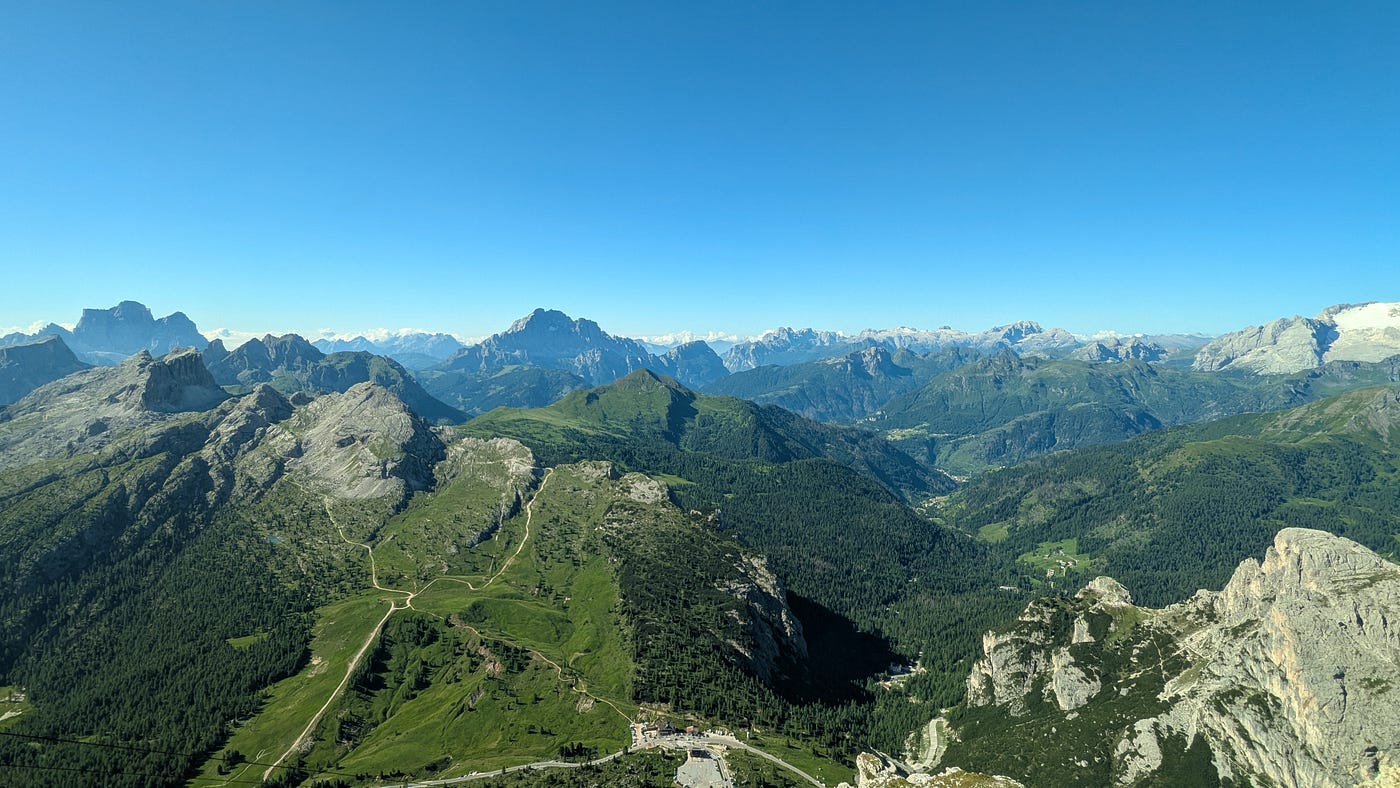
Many peaks, one question. Photo by author.
After I discovered teshuvah and its remarkable fit with Jung’s individuation, I had an obvious question: did anyone else see this?
If the gap in Jung’s framework is real, if inner transformation without moral grounding, purposive return, and communal reintegration is genuinely incomplete, then surely other traditions had answers for it. You don’t get to be a civilisation that survives centuries without figuring out what to do with people who’ve been through the fire and come out the other side.
So I went looking. Across Buddhism, Sufism, Christianity, Taoism, and indigenous traditions. What I found was both encouraging and surprising. Nearly every major wisdom tradition identified the same problem. But almost none of them solved it completely.
Buddhism came closest.
In Mahayana Buddhism, the Bodhisattva takes a vow to delay final liberation, to turn back from the threshold of nirvana, and return to serve all sentient beings. The famous Zen line captures it: before enlightenment, chop wood, carry water. After enlightenment, chop wood, carry water. You go back to ordinary life. Transformed, but present.
This is structurally very close to teshuvah’s return. The Bodhisattva doesn’t stay on the mountaintop. They come back down. And they come back for others, not just for themselves.
But here’s where it diverges. Buddhism frames the core problem as attachment and illusion. The work is about seeing through the self’s constructions. That’s related to what Jung describes, but it’s not the same thing. Jung’s individuation asks you to sit with the shadow, to hold the tension between your idealised self-image and the ugliness underneath, and to integrate what you find rather than dissolve it. The Bodhisattva returns from a different journey than the one Jung mapped. The destination looks similar. The route is fundamentally different. And the route matters, because if you haven’t done the specific work of confronting your own darkness, the return is built on a different foundation.
Sufism identified the structure precisely, but the mechanism differs.
The Sufi path describes fana, the annihilation of the ego in the divine, followed by baqa, subsistence or persistence in the world. Fana is the transformation. Baqa is the return. On paper, this maps almost perfectly onto individuation followed by reintegration.
But fana is dissolution. The ego melts into God. That’s a peak mystical experience, not the grinding, unglamorous work of shadow integration. Jung’s process asks you to sit across from the parts of yourself you despise and hold them without flinching. To look at your own jealousy, your cowardice, your capacity for cruelty, and say: this is also me. Fana bypasses that entirely by dissolving the self rather than confronting its contents.
The difference matters practically. If you dissolve the ego without first examining what’s in it, you haven’t integrated anything. You’ve transcended it, which can feel like the same thing but isn’t. The shadow doesn’t disappear because you had a mystical experience. It waits.
Christianity saw the death-and-rebirth pattern but missed the return.
The Christian narrative of crucifixion and resurrection contains the most dramatic version of this arc. Death of the old self, transformation, new life. The mystics, Meister Eckhart, John of the Cross, Teresa of Ávila, described the dark night of the soul followed by a return to life with renewed purpose. And the great active orders, the Franciscans, the Jesuits, sent people back into the world after inner transformation.
But the dominant theological narrative points upward, not back. Christ dies, rises, and ascends. He doesn’t return to Nazareth to live an ordinary Tuesday. The whole arc moves toward transcendence and departure from the fallen world, not reintegration into the messy business of being human. The resurrection is an event, not a permanent state of transformed ordinary living. That’s a critical structural difference. Teshuvah’s return is to the mundane, the relational, the ongoing dailiness of life. Christianity’s most powerful symbol ultimately leaves.
Taoism understood the return to simplicity but left the inner work unspecified.
The Taoist concept of returning to pu, the uncarved block, original nature, is beautiful and structurally resonant. After accumulating knowledge and experience, you return to simplicity. The sage lives in the world without being consumed by it. The Tao Te Ching insists over and again that wisdom isn’t withdrawal. It’s a return to naturalness within ordinary life.
This captures the spirit of the return remarkably well. But Taoism doesn’t articulate the inner process that precedes it with anything like Jung’s specificity. How do you get from fragmented to whole? What do you actually do with the shadow material? The Taoist answer is largely about alignment and surrender, letting go rather than confronting. It’s wise, but it’s not a method. It describes the destination without mapping the route.
Indigenous traditions understood the communal dimension better than anyone, but the inner mechanism remains implicit.
Across Native American, Aboriginal Australian, and African traditions, the vision quest pattern is remarkably consistent. Separation from community. Ordeal or transformation in solitude. Return with a gift for the collective. The vision quest isn’t complete until you bring something back. Your community needs what you found.
This is the dimension where indigenous traditions shine. The insistence that transformation is incomplete without communal return is psychologically profound. You don’t individuate for yourself. You do it so you can show up differently for others.
But the inner mechanism of what happens during the transformative ordeal is largely transmitted through experience rather than articulated as a repeatable process. The transformation is real, but it isn’t codified in the way that both Jung’s individuation and teshuvah’s practices are.
So what does this tell us?
Every tradition I examined saw some version of the same truth: that inner transformation without return is incomplete. This isn’t coincidence. When multiple civilisations across thousands of years and thousands of kilometres independently arrive at the same insight, you’re looking at something that reflects a deep human need rather than a cultural preference.
But each tradition drew its own map. Buddhism gets the return but not the shadow confrontation. Sufism gets the ego work but through dissolution rather than integration. Christianity gets the death-and-rebirth arc but not the permanent return to ordinary life. Taoism gets the destination but not the method. Indigenous traditions get the communal reintegration but without the codified inner process.
The synthesis I outlined in the previous article, teshuvah combined with Jungian individuation, isn’t the only possible framework for addressing these gaps. But it may be the most structurally complete. Jung provides the most rigorous map of the inner journey ever devised. Teshuvah provides the moral weight, the concrete process of return, and the communal container that the inner journey needs to actually land in a human life.
Two traditions. Two sets of blind spots. One complete territory.
In the final piece, I’ll bring this down from the theoretical and into the practical. What does it actually look like to come back down the mountain?
This is the third in a four-part series exploring what happens after individuation, and the ancient framework that may hold the answer Jung was looking for.
메타데이터
- post_id
- cdbf23bff2ca
- slug
- the-map-every-tradition-drew-cdbf23bff2ca
- url
- https://medium.com/the-mental-gym/the-map-every-tradition-drew-cdbf23bff2ca
- canonical_url
- https://medium.com/the-mental-gym/the-map-every-tradition-drew-cdbf23bff2ca
- author_url
- https://medium.com/@atayebnama
- status
- ok
- fetched_at
- 2026-07-23 07:59:38