The Stalker In The System
Why digital harassment isn’t a glitch in your phone — it’s a design choice
The Stalker In The System
Why digital harassment isn’t a glitch in your phone — it’s a design choice

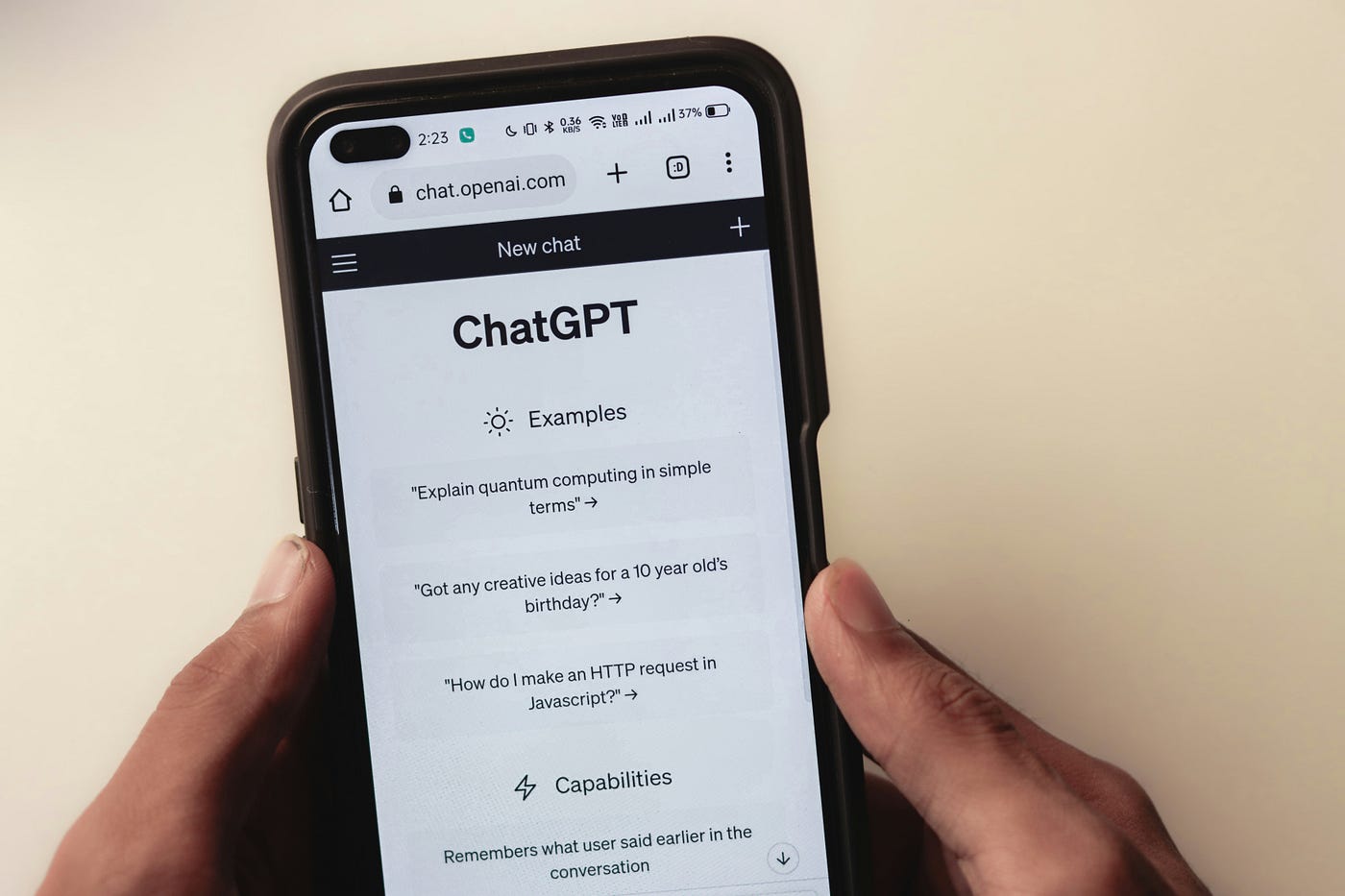
Photo by Tim Durgan on Unsplash
Open your phone. Tap into Settings. Scroll until you find Location History. Now think about every place that little map has quietly logged in the last week — the cafe, the gym, a friend’s house, your front door. Now ask: who else can see it?
Every year, an estimated 7.5 million people experience cyberstalking, and **80% of all stalking victims are tracked through technology**. Behind those numbers sits something stranger than horror-movie obsession or “random creeps online.” Digital stalking has become this common because the apps in your pocket were never really built to make it hard.
So here is the uncomfortable question this post is trying to sit with: what if cyberstalking isn’t a glitch in our digital world — but a feature of how it was built?
What Cyberstalking Looks Like Now
Cyberstalking is the repeated, unwanted contact, surveillance, or harassment of a person using digital tools. In practice it looks like: a former partner tracking your location through tagged Instagram photos; a stranger combing through LinkedIn and X to compile your home address (what **UN Women calls “doxing”**); an impersonator setting up fake accounts in your name; an attacker reading your messages from a phone you forgot was still logged in.
What makes digital stalking distinctly dangerous is its architecture. Anonymity protects perpetrators. Screenshots make harm permanent. A single harasser can summon a mob in minutes. And, crucially, platforms already hold every piece of information a stalker would need to find you. The data is the problem.
The Real Problem Is the Business Model
To understand why this is so easy, we need a term from scholar Shoshana Zuboff. In **The Age of Surveillance Capitalism*, she argues that platforms don’t just collect what you give them — your email, your photos. They harvest what she calls behavioural surplus*: data about your behaviour beyond what any service actually needs. Search “flights to Barcelona” and Google logs the time, your device, your network, the words you almost clicked on next, how long you hovered before scrolling away. That surplus is the raw material platforms use to predict — and ultimately modify — your behaviour in order to sell ads.
This is where the link to stalking sits in plain sight. The same machinery that makes you a profitable advertising target also makes you a stalkable one. Your location history, your contacts, your search queries, your message threads — together they form a comprehensive map of your life, and it lives on corporate servers. Platforms could make locations private by default. They could shorten retention. They could restrict who sees your social graph or block bulk scraping. They mostly don’t. Every design decision — public-by-default profiles, frictionless tagging, persistent location pings — prioritises engagement and ad revenue over the safety of the people being mapped.
So is this a bug or a feature? It is a feature. Surveillance is the business model. Harm is the externality.

Photo by Scott Rodgerson on Unsplash
Why Stalking Lands Unevenly
Digital stalking is not evenly distributed. According to **SafeHome.org’s 2025 research on doxing, roughly four percent of US adults — about 11.7 million people — say they’ve had personal information exposed online without consent. People in or leaving abusive relationships face elevated risk regardless of gender: abusers weaponise shared accounts, family-tracking apps, and smart-home devices to keep tabs on partners and children. A [2025 UN Women press release](https://www.unwomen.org/en/news-stories/press-release/2025/11/digital-violence-is-intensifying-yet-nearly-half-of-the-worlds-women-and-girls-lack-legal-protection-from-digital-abuse)** documents that journalists, activists, and human rights defenders are deliberately attacked because their public-facing work makes them visible — and therefore silenceable. Immigrants, disabled people, and racialised communities all report higher rates of online harassment, doxxing, and impersonation.
Targeting follows existing power lines. Stalkers pursue people they perceive as less powerful, more visible, or less likely to retaliate — survivors of prior abuse, those distrustful of police, those who can be threatened with exposure. Threaten to doxx someone and you don’t just frighten one person; you signal to thousands of others to stay quiet. The point, often, is exactly that.
The cascading harm is brutal. One leaked address triggers a swarm. Job loss follows. Physical threats follow. Forced retreat from public life follows. What looks like “online” harm flows out into rent, employment, sleep, and family — and into a slow withdrawal from spaces these people had every right to occupy.

Photo by fabian jones on Unsplash
Digital Harm Is Physical Harm
There is a Spanish word coming out of feminist tech research in Latin America that English needs to borrow: **tecnoafecciones, roughly “techno-afflictions.” The project of the same name, co-developed by [Paola Ricaurte](https://cyber.harvard.edu/people/paola-ricaurte)** and the feminist collective Sursiendo, insists that digital violence registers physically. Survivors of online abuse report headaches, dizziness, stomach pain, bruxism (teeth-grinding), insomnia, and panic responses. The brain does not distinguish neatly between a stranger waiting outside your apartment and a stranger posting your address into a thread. Digital harm is real harm. The body keeps score either way.
The downstream costs accumulate. Targets stop posting, stop advocating, stop applying for visible jobs. Employers — flinching at the mess of leaked information — reprimand or fire them. Stalkers do turn up at homes; threatening calls do come. And in the aggregate, the silencing effect reshapes public discourse: activists, journalists, and whistleblowers self-censor or disappear from the platforms where political conversation now happens. As they withdraw, society loses their voices, their reporting, and their dissent.
Why “Just Update Your Settings” Is Not An Answer
Tech companies offer tidy-looking fixes. Apple’s “AirTag found moving with you” alerts. Two-factor authentication. Granular privacy menus. They look protective. They fail because they offload responsibility onto the victim. A privacy setting won’t stop a stalker with technical skill, and these tools assume users already know they exist, know what they do, and have time to maintain them constantly.
The law lags badly. Doxxing straddles harassment, stalking, threats, and identity theft, which makes prosecution fragmented and slow. Police often lack training in digital evidence; courts still dismiss online threats as “not real.” **UN Women (2025)** notes that 1.8 billion women and girls still lack legal protection from technology-facilitated abuse — and even where laws exist, justice systems are ill-equipped and platforms face little accountability.
Real solutions are structural: mandated transparency about data collection, strict data minimisation, antitrust action against platform monopolies, design-justice frameworks that centre vulnerable users, and enforceable regulation. The uncomfortable truth is that platforms won’t do this voluntarily. Data is the product. Asking the industry to limit data collection is asking it to dismantle its own business model.

Photo by Zulfugar Karimov on Unsplash
So What Kind Of Digital Society Did We Build?
Digital stalking isn’t terrifying because of individual bad actors. It’s terrifying because we have built our digital infrastructure on data extraction — and that data becomes a weapon the moment someone decides to use it. If we are going to live in a digital society, the real questions aren’t technical. They’re political. Who designed these systems? Whose interests do they serve? Whose safety did they ignore?
We can’t opt out of digital life anymore. So the demand has to shift: not “protect yourself better,” but “build systems that don’t make us targets.” The next question is who, exactly, we’re willing to make do it.
What I Thought Before
Before this research, I treated cyberstalking as a niche problem — something that happened to other people, in extreme circumstances. Jealous ex-partners. Obsessive strangers. The kind of true-crime podcast material that felt distant and contained. I implicitly believed there was a “normal internet” and an “abuse internet,” and that staying in the first category meant being careful with passwords and not accepting friend requests from strangers.
I also treated platforms as neutral. If they leaked data or enabled harassment, that was a flaw — a bug that engineers were presumably working to fix. I didn’t think of platforms as actors in the harm. I thought of them as infrastructure, accidentally abused by bad people. The platform wasn’t responsible; the stalker was.
This framing — in hindsight — was exactly the framing that lets the harm continue, because it deflects responsibility from the entities with actual power to change things.
What Shifted
Three things hit hard during this research:
First: The baseline statistic. 80% of all stalking victims are tracked using technology. That’s not a niche problem. That’s the default. It’s not “some people get stalked online”; it’s “stalking now requires technology.” The architecture of modern life has made tracking a standard harm.
Second: The realization that this isn’t accidental. Platforms could make location private-by-default. They could refuse to allow bulk data scraping. They could delete old data. They could restrict who can tag whom. They choose not to. Reading Shoshana Zuboff and the Tecnoafecciones research made me understand that “privacy failures” aren’t oversights — they’re business decisions. The platform isn’t broken when it tracks you; it’s working exactly as designed. Extraction is the purpose.
Third: The gendered and power-based nature of targeting. Digital stalking isn’t random. It follows existing fault lines — abusers, attackers with political motives, people trying to silence voices. This isn’t a “safety for everyone equally” problem; it’s a “some people are more stalked than others” problem. And who gets stalked tells you a lot about who has power and who doesn’t.
How This Changes My Understanding of “Digital Society”
This topic has forced me to stop treating digital life as a neutral background. Earlier in this course, it was tempting to think of digitalization as broadly progressive — better tools, easier connection, more opportunity. That’s not false, but it’s incomplete. Digital transformation isn’t evenly beneficial. Our digital lives are built on surveillance, and surveillance harms unevenly.
For some people, digital society is genuinely liberating — connection, opportunity, visibility. For others, those same features become weapons. A woman leaving an abusive relationship experiences digital tracking as a tool of control. A journalist covering organized crime experiences doxxing as silencing. A teenager in a deeply religious family experiences exposure as erasure. They are not experiencing “the internet” the way a privileged user might. They’re experiencing a system designed to extract data from them, and that data as a weapon against them.
What this reveals about digital society is that it’s not built for everyone equally. It’s built for extraction. Safety is not the priority. Profit is.
What I’ll Do Differently
I’m tightening my privacy settings, auditing what I’ve voluntarily shared across platforms, and being more strategic about location tagging. But I no longer believe individual hygiene is the answer. The deeper shift is political. I’m paying attention to digital rights organizations like EFF and Access Now. I’m voting with this issue in mind. I’m pushing back when people frame online abuse as a “personal” problem that victims should “solve better.”
More than that, I want to be the kind of person — the kind of citizen — who asks: Who built this? Why? Whose interests does it serve? That’s the question I’ll carry forward. Every interface, every setting, every “recommend a friend” feature reflects someone’s priorities. I want to see them clearly.

Photo by Alicia Christin Gerald on Unsplash
메타데이터
- post_id
- cdc0dba4cce1
- slug
- the-stalker-in-the-system-cdc0dba4cce1
- url
- https://medium.com/digital-society/the-stalker-in-the-system-cdc0dba4cce1
- canonical_url
- https://medium.com/digital-society/the-stalker-in-the-system-cdc0dba4cce1
- author_url
- https://medium.com/@mohammed.yousef_17064
- status
- ok
- fetched_at
- 2026-06-12 22:02:08