From Screens to Systems
A reflection on what really changes when you move from learning design to working in living, evolving systems.
From Screens to Systems
A reflection on what really changes when you move from learning design to working in living, evolving systems.

There’s a moment that happens when you move from learning into the real world.
Things stop being linear.
I’ve been thinking about this a lot recently as I step into an advisory role with the AI and Digital Marketing Program at the University of San Francisco.
Many of the students entering programs like this are making bold career transitions. They’re learning new tools, new frameworks, new ways of thinking. And on paper, everything makes sense.
But then they step into real product teams.
And something shifts.
When things stop being linear
You’re no longer working on one perfect deliverable at a time.
You’re stepping into something more complex. More alive.
Where design is connected to engineering. Where decisions ripple across teams. Where constraints are not blockers, but part of the process.
It can feel disorienting at first.
There’s no single “right” answer, only better systems and better decisions over time. Just a series of trade-offs, conversations, and iterations that shape the outcome.
But it’s also where things start to click.
Where you begin to see how everything connects. Where your work starts to have real impact.
The shift from screens to systems
At some point, another shift happens.
You realize you’re no longer just designing screens.
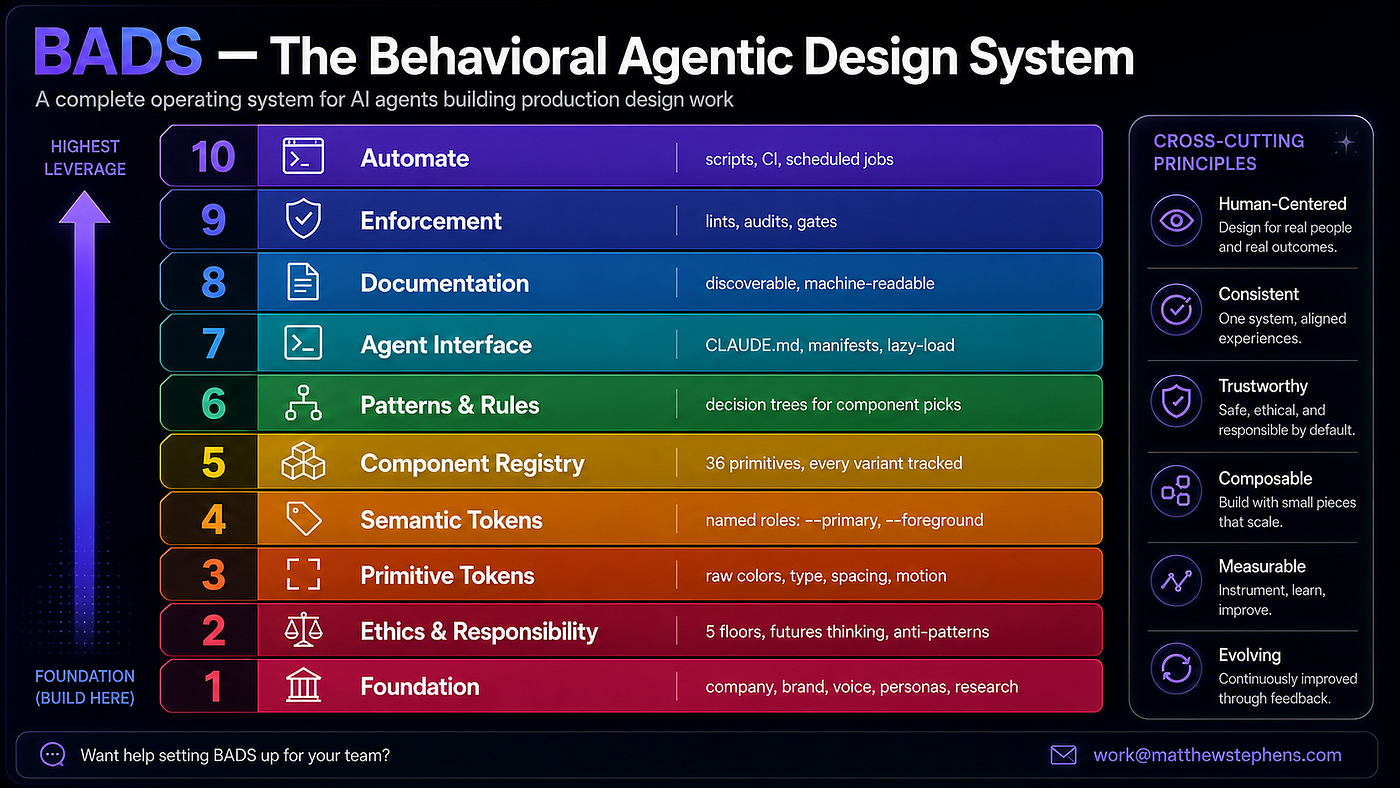
You’re designing systems.
It’s a quieter shift, but a powerful one.
Instead of focusing on one perfect moment, you’re building foundations that support many moments.
Components connect across experiences. Patterns create consistency. Decisions scale beyond a single screen. And the work starts to live beyond any one designer, inside systems that teams rely on every day.
And the questions change.
From “What does this look like?” to “How does this work together?”
From isolated solutions to connected ecosystems.
And once you see it, you can’t unsee it.
Why this matters now
This shift feels even more important today.
We’re working in a world shaped by AI, evolving tools, and constantly changing expectations. The pace is faster. The complexity is higher. The lines between roles are more blurred than ever.
Understanding systems is no longer optional.
It’s what allows teams to:
- move faster without losing consistency
- collaborate more effectively across disciplines
- build experiences that actually scale
- and maintain quality as products grow and evolve
For those entering the field, especially from non-traditional paths, this can feel like a lot.
But it’s also an opportunity.
Because the people who learn to see systems early are the ones who adapt, grow, and lead.
What I hope to bring
As I step into this advisory role, this is something I keep coming back to.
Not just what we teach.
But how it connects to the reality of the work.
How we help people move from understanding concepts to navigating complexity to building with confidence.
Because at the end of the day, it’s not just about learning tools or frameworks.
It’s about learning how to see.
And once you do, everything changes.
메타데이터
- post_id
- cdc162447fa9
- slug
- from-screens-to-systems-cdc162447fa9
- url
- https://www.designsystemscollective.com/from-screens-to-systems-cdc162447fa9
- canonical_url
- https://www.designsystemscollective.com/from-screens-to-systems-cdc162447fa9
- author_url
- https://medium.com/@carinaflyingv
- status
- ok
- fetched_at
- 2026-06-18 07:02:39