"The Black Rider of Makran
The Black Rider of Makran The Jatts Connection
: The Lost Commander of the Sasanian Army and His Connection with the Jat (Zott) Tribe from the Indus Valley"
The Black Rider of Makran: The Lost Commander of the Sasanian Army and His Connection with the Jat (Zott) People from the Indus Valley
Historical and Ethnic Analysis
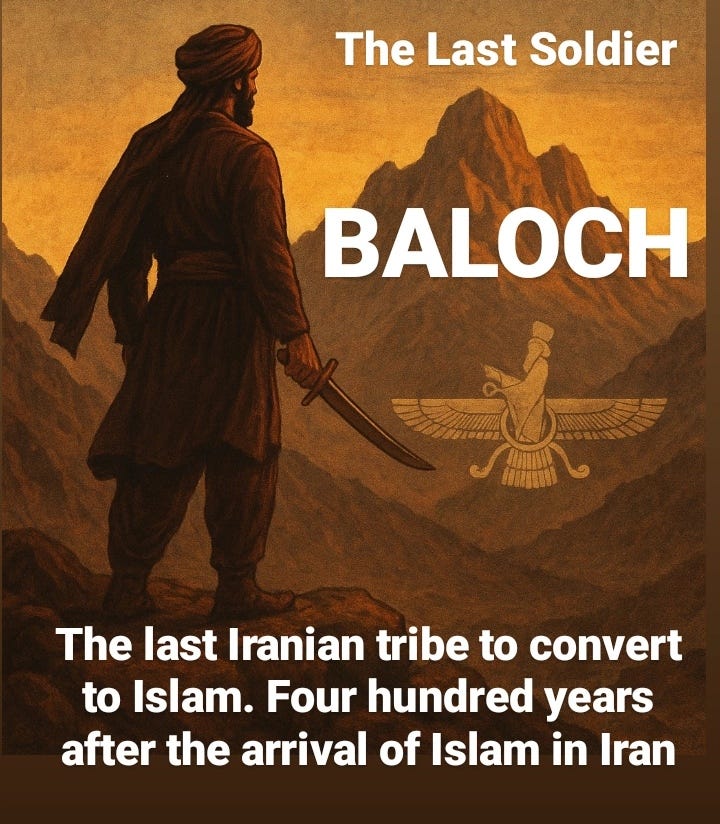
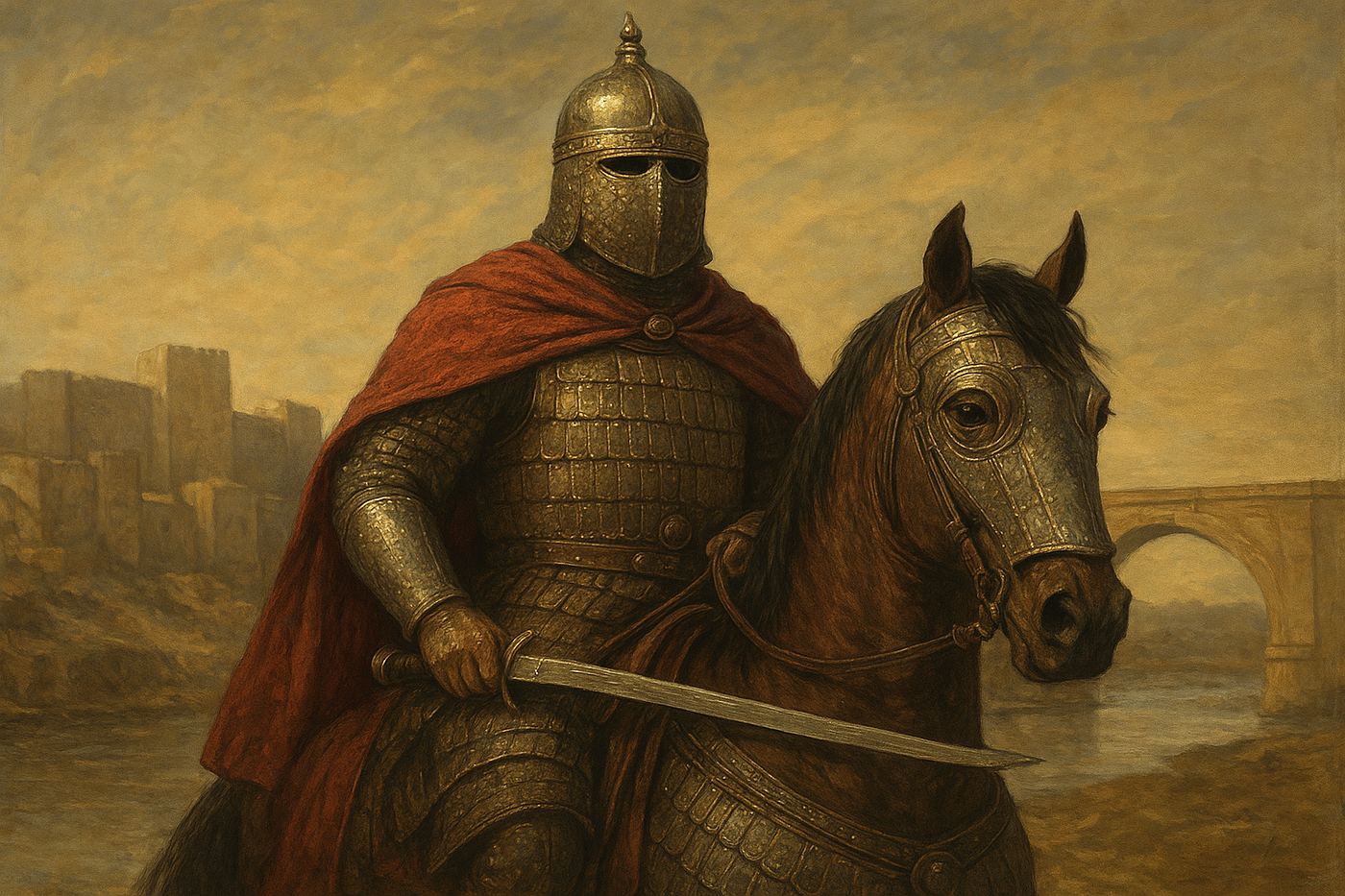
Siah-Savar (The Black Rider) was one of the notable figures during the final years of the Sasanian Empire. Around 300 warriors from the Makran region were sent under his command by Yazdegerd III to defend the city of Shushtar. Analysis of classical Arabic sources and modern research indicates that he belonged to the Jat (Zott) tribe rather than to the Baloch, because:
The Baloch did not convert to Islam until the 5th century AH, while Siah-Savar made no effort to invite his own people to Islam.
The Jatts (Zotts) of Ahvaz — and later those of Makran — accepted Islam at the very beginning of the Arab conquests, joining the Muslim army as reported by Baladhuri and Tabari.
The title Siah-Savar (“The Black Rider”) corresponds to the physical description of the Jatts, who were often described as dark-skinned in the sources.
Nobakhti, in his version of the Shahnameh, although mistakenly calling him a Baloch (as was a common ethnographic misunderstanding of 14th-century writers), describes Hormoz speaking to Siah with the words:
“Your body is weary from the burning winds of India, and your eyes are filled with blood like the Sea of Sindh.”
This clearly points to his Sindhi origin.
Furthermore, the joining of Siah-Savar’s men with the Jatts of Ahvaz in Basra, and their later rebellion against the Caliph, are well-attested in historical accounts.
In early Arabic sources, Siah-Savar is recognized as a commander from Makran who defended Shushtar and later joined the Muslim army after the city’s siege. Some later researchers and local traditions have considered him Baloch, but closer examination shows that he was of Jat (Zott) descent.
This article aims, through analysis of primary sources and historical reasoning, to clarify the true identity and origin of Siah-Savar.
- The Presence of Siah-Savar in the Defense of Shushtar
Around 641–642 CE, Yazdegerd III sent Siah-Savar with 300 warriors to Shushtar. Classical sources (Baladhuri and Tabari) report that during the siege of the city, Siah-Savar and his men eventually joined the Muslim forces.
Arabic text from Baladhuri:
كَانَ سِياهُ الأَسْوَاري عَلَى مُقَدِّمَةِ يَزْدِجِرْدَ، ثُمَّ أَنَّهُ بُعِثَ بِهِ إِلَى الأهْوَازِ فَنَزَلَ الكَلْبَانِيَّةَ، ... فَلَمَّا رَأَى ظُهُورَ الإِسْلَامِ أَرْسَلَ إِلَى أَبِي مُوسَى: إِنَّا أَحَبَبْنَا الدُّخُولَ فِي دِينِكُمْ ... فَخَرَجُوا حَتَّى لَحِقُوا بِالمُسْلِمِينَ وَشَهِدُوا مَعَ أَبِي مُوسَى حِصَارَ تَسْتَرَ ثُمَّ فُرِضَ لَهُمْ فِي شَرَفِ العَطَاءِ.
English translation: Siah al-Aswari was at the head of Yazdegerd’s vanguard. He was later sent to Ahvaz and encamped in the region of Kalbaniyya. When he witnessed the rise of Islam, he wrote to Abu Musa, saying:
“We wish to enter your religion.” Then he and his men came out, joined the Muslims, participated in the siege of Shushtar, and were granted a share in the spoils and stipends.
Arabic text from Tabari:
...فَلَمَّا رَأَى ظُهُورَ الإِسْلَامِ وَقُوَّةَ الأَمْرِ أَرْسَلَ إِلَى أَبِي مُوسَى يَقُولُ: إِنَّا أُحِبَبْنَا الدُّخُولَ فِي دِينِكُمْ عَلَى أَنْ نُقَاتِلَ عَدُوَّكُمْ مِنَ العَجَمِ مَعَكُمْ ... فَأَجَابَهُمْ أَبُو مُوسَى وَأَقْبَلُوا وَشَهِدُوا حِصَارَ تَسْتَرَ.
English translation: When they saw the rise of Islam and its growing strength, they wrote to Abu Musa, saying:
“We wish to enter your faith and fight alongside you against the Persian enemy.” Abu Musa accepted their offer, and they came and participated in the siege of Shushtar.
- The Presence of the Jatts (Zotts) in Khuzestan
In Arabic sources — especially Baladhuri’s Futuh al-Buldan (pp. 384–385, Leiden edition) and Tabari’s History of the Prophets and Kings (vol. 3, pp. 290–292) — it is mentioned that during the early Islamic conquests, groups of Jatts (Zotts) from Sindh and Makran were living in Ahvaz, Shushtar, and Ramhormoz.
Baladhuri writes:
“و کان فی الأهواز و شوشتر قوم من الزُّطّ و المکران” “In Ahvaz and Shushtar there were people from the Zott and from Makran.”
This shows that these Jatts were inhabitants of Makran, who, according to historical theories, had been resettled in various parts of Iran during the Sasanian period. This is exactly the same ethnic combination to which Siah-Savar belonged: a man from Makran among the Zott tribes.
- The Conversion of the Zotts (Jatts) to Islam
Baladhuri records that after the conquest of Ahvaz, many of the Zotts accepted Islam and joined the Arab armies. They were later employed in building bridges and guarding palm groves, and even took part in later uprisings — such as those supporting the revenge movement for Imam Husayn under Mukhtar al-Thaqafi and Ibrahim ibn Malik al-Ashtar al-Nakhai.
Therefore, it is very likely that Siah-Savar and his companions, who belonged to the same ethnic group, decided to join the Muslims not out of fear, but from genuine sympathy and acceptance of the new faith.
- The Connection Between Siah-Savar and the Zotts
In Baladhuri’s account of the siege of Shushtar, it is stated:
“و کان فیها رجل من المکران یُقال له سیاه السُواری، و معه ثلاث مائة من أصحابه، فمالوا إلی المسلمین.”
“There was in the city a man from Makran named Siah al-Suvari, who had three hundred of his followers with him. They turned toward the Muslims.”
This Siah al-Suvari was most likely among those Makrani-Zott groups who had settled in Ahvaz. When he saw that most of his ethnic kin — the Zotts — had already converted to Islam, he chose peace and joined the Muslim army instead of resisting.
- The Ethnicity of Siah-Savar: Jat or Baloch?
2.1. Reasons to Reject the Baloch Hypothesis
The Baloch people did not convert to Islam until the 5th century AH, whereas Siah-Savar accepted Islam in the 1st century AH and fought alongside Muslims. If he had been Baloch, he would at least have attempted to call his people to Islam — yet no such effort is recorded.
2.2. Evidence Supporting Jat/Zott Ethnicity
The Jatts (Zotts) were an ethnic group from Sindh and Makran, known to have lived in Ahvaz and Shushtar. The title Siah (“black”) corresponds to the physical appearance of the Jatts, who were often described as dark-skinned. The Zotts converted to Islam after the conquest of Ahvaz and took part in the conquest of Makran.
2.3. Characteristics of the Baloch and the Jatts (Zotts)
Feature Baloch Jatts (Zotts)
Language & Ancestry Northwestern Iranian, Iranian lineage Sindhi, Indo-Aryan Time of Conversion to Islam 5th century AH 1st century AH, during the conquest of Makran Military Role in Late Sasanian Period Limited Mercenary cavalry, Siah-Savar held the rank of Aswari (commander of cavalry) Participation in Early Muslim Conquests None Participated actively in the conquests of Khurasan and Makran Physical Description in Sources Not specified Often described as dark-skinned (“Siah”)
Arabic and Persian sources from the early Islamic period sometimes describe the Jatts/Zotts as dark-skinned, coming from the Sindh region. Therefore, the title Siah-Savar (“Black Rider”) strongly supports the hypothesis that he belonged to the Jatt/Zott ethnic group rather than the Baloch.
- The Presence of Jatt Cavalry in the Conquest of Makran
The conquest of Makran was carried out by Hakam ibn Amr al-Taghlibi around 23–24 AH. Arabic sources indicate that part of the Muslim cavalry in this campaign consisted of Jatts who had converted to Islam. Siah-Savar was likely part of this group, and his participation aligns with both his personal choice and the collective conversion of the Zotts.
- Logical Conclusion
If Siah-Savar had been Baloch: He would have been expected to invite his own people to Islam. No evidence supports such an action.
If Siah-Savar was Jatt/Zott: His joining the Muslims aligns perfectly with the behavior of his ethnic kin. The Zotts of Ahvaz and Shushtar embraced Islam early, participated in the conquest of Makran, and spread Islam to the local populations.
Thus, the timing of Islam’s arrival in Makran and Siah-Savar’s actions clearly indicate that he was of Jatt/Zott origin, not Baloch. This serves as strong historical evidence for his true identity.
- Summary on the Jatt (Zott) People
The Jatt (Jat / Zott) tribe is an ancient group originating from South and Central Asia, especially the Indus Valley, with roots in the Indus River region. They are predominantly Indo-Aryan and were historically connected to Sindhi language and culture.
Geographic Roots: The Indus Valley Civilization (Mohenjo-Daro/Harappan Civilization) flourished around 3300–1300 BCE in this region.
Migration: After the decline of the Indus Valley Civilization, Jatts migrated westward to western India (Rajputana) and regions of Makran, Ahvaz, Kerman, Semnan, and even Mazandaran.
Cultural and Linguistic Links: Elements of Harappan culture — village structure, agriculture, early cavalry, and tribal social systems — are reflected in the historical Jatt communities.
Language: Jattki, influenced by ancient Sanskrit, persists among some Jatt-descended communities.
- Historical Activities of the Jatts in Iran
During the Sasanian period, they served as mercenary cavalry and were stationed along the eastern and southern frontiers.
Nader Shah Afshar relocated many Jatts and their craftsmen across Iran; in local areas, they became known as Koli, Ghorbati, Jatt, or other regional names.
Some communities, like the village of Jitu in southeastern Tehran, claim descent from these Jatts (Jattui).
Their skills included ironworking, music, animal husbandry, and cavalry service.
- Jatts and the Early Islamic Conquests
Upon the rise of Islam, some Jatts in Ahvaz and Makran converted and participated in early Muslim campaigns, including Shushtar and Makran.
The title Siah often referred to their dark-skinned appearance.
Notable Jatts in early Islamic history include Abu Salma al-Jatti, who became treasurer of Basra, and others who participated in military and political affairs.
"After the martyrdom of Imam Husayn, due to their particular devotion to Imam Ali and his family, they participated in the battles led by Mukhtar al-Thaqafi and Ibrahim al-Nakhai."
- Later History of the Jatts
Ibn Asakir, in his History of Medina and Damascus, refers to the soldiers of Ibrahim ibn Malik al-Nakhai — numbering between eight and twenty thousand — as mawali (Iranian slaves and servants) known as al-Hamra.
After Ibrahim’s death, they were employed for a period in Basra port as laborers. However, since their wages were meager, they subsequently turned to highway robbery along the route between Basra and Baghdad.
In a fierce battle with Sa‘id Bahli, commander of Caliph al-Mu’tasim’s army, they defeated his forces along the Baghdad route. In response, al-Mu’tasim sent a larger army against them, defeated the Jatts, and exiled them to the Levant (Sham).
Ibrahim al-Oza’i is another notable figure from this tribe.
Historical research by Mostafa Barahooie Mamsani
References and Sources
-
Baladhuri, Ahmad ibn Yahya, Futuh al-Buldan, Dukhwayh edition, Leiden, 1866.
-
Tabari, Muhammad ibn Jarir, History of the Prophets and Kings, Dar al-Turath, Beirut, 1967.
-
Frye, Richard N., The Heritage of Persia, London, 1963.
-
Henning, W.B., “The Zutt of the Early Islamic Period,” Journal of the Royal Asiatic Society, 1948.
-
Childe, V. Gordon, The Indus Civilization, Cambridge University Press, 1950.
-
Majidzadeh, Yusef, Ancient Civilizations of Eastern Iran, Tehran: SAMT, 1382 AH.
-
Zakeri, Mohsen, Sasanid Soldiers in Early Muslim Society: The Origins of Ayyārān and Futuwwa, Wiesbaden: Harrassowitz, 1995.
SEO Tags and Keywords for Medium
SiahSavār #JatTribe #Zott #SasanianHistory #Balochistan #Ahvaz #IslamInIran #YazdegerdIII #BalochHistory #Makran #Shushtar #IslamicHistory #FutuhAlBuldan #Tabari #Ethnography #IranianStudies #AncientIran #IndusValley #HistoricalLinguistics
메타데이터
- post_id
- cdc8fc4d0601
- slug
- the-black-rider-of-makran-cdc8fc4d0601
- url
- https://medium.com/@mostafabarahooie/the-black-rider-of-makran-cdc8fc4d0601
- canonical_url
- https://medium.com/@mostafabarahooie/the-black-rider-of-makran-cdc8fc4d0601
- author_url
- https://medium.com/@mostafabarahooie
- status
- ok
- fetched_at
- 2026-07-16 01:05:39