Digital sovereignty leads to restrictions and fragmentation of the Internet
Digital sovereignty is becoming a hot topic in the field of national cybersecurity around the world. Countries prefer to keep their digital…
Digital sovereignty leads to restrictions and fragmentation of the Internet
Digital sovereignty is becoming a hot topic in the field of national cybersecurity around the world. Countries prefer to keep their digital space under their control. Why? Because they want to protect their citizens’ confidential data and online privacy. The management of digital information by States has led to a dramatic change in the way the Internet operates, a phenomenon known as ‘fragmentation’. This media article will looks at how digital sovereignty is changing the landscape of the Internet, and what challenges and opportunities it presents for the Internet.

“Data Security” by Visual Content is licensed under CC BY 2.0.
The understanding of digital sovereignty
The interpretation of digital sovereignty is that countries need control over the networks and data in their region. Each government will have different laws that determine the country’s data storage and protection regulations. As mentioned by scholar DeNardis the governance of the Internet is important for national security and control, and digital sovereignty is an important tool for states to acquire sovereignty.As an example to explain, The European Union’s General Data Protection Regulation, as known as GDPR.It gives EU citizens greater control over their personal data while requiring large companies to be open about how they process and use data, making the process transparent.

“Forbidden 403- Business Studies behind the Great Firewall of China 1” by I-Man — 10N is licensed under CC BY-SA 2.0.
China’s grip on digital sovereignty is also very interesting. There is a term used in China’s cybersecurity policy called the ‘Great Firewall’. The purpose of the ‘Great Firewall’ is to intercept information, which simply means that China controls what information can flow into and out of China. It is well known that China’s firewalls block many foreign websites and software. For example, Google, Facebook, Twitter, and other major online media are all disabled in China. You can’t even use Google Maps in China. The reason for this firewall is to protect the growth of businesses in China and not to lose too much market share to foreign companies. In order to achieve control over digital sovereignty, China will allow foreign companies that develop in China to store their data in China. These actions and policies reflect China’s determination and efforts to control its digital sovereignty.
[embed]
So how has digital sovereignty led to the fragmentation of the internet?
Digital sovereignty is a highly realist concept designed to enable States to protect their interests, but it has often led to the fragmentation of the Internet. The Internet was originally designed to facilitate the lives and work of people around the world across time and distance, but the different regulations governing the Internet in different countries have led to the fragmentation of what was originally a universal network. Each country’s network is a separate digital environment.Chander noted that digital sovereignty is a form of data democracy. Excessive state control over data can deepen the fragmentation of the Internet.
For example, Russia enacted the ‘Sovereign Internet’ bill in 2019. This law gives Russia the right to cut the Internet connection between its territory and the global network in the event of an emergency. It also requires Internet service companies to use Russian-controlled and Russian-produced equipment to process information, thus keeping network traffic under the control of the state. The Russian government claims that this is for national security reasons, but many have criticised Russia for engaging in too much online control and restricting the flow of information to the Russian people.
India also has similar data localisation laws, and like China, India requires internet companies to store user data in India for the same reasons as other countries, surprisingly. The reason is to protect the privacy of users and to keep the country’s data safe from theft by outside forces. This move has increased the running costs of many internet companies, and more budgets are being spent on building new places to store information, limiting innovation and turning the internet into an isolated island in the sea.
So the global network of information is gradually transforming into different separate and closed spaces. This is contrary to what the Internet was originally designed for. What started as a platform for sharing global information and data is now becoming a tool for political governance. This trend of Internet fragmentation has a significant impact on the interoperability of information and on human development.
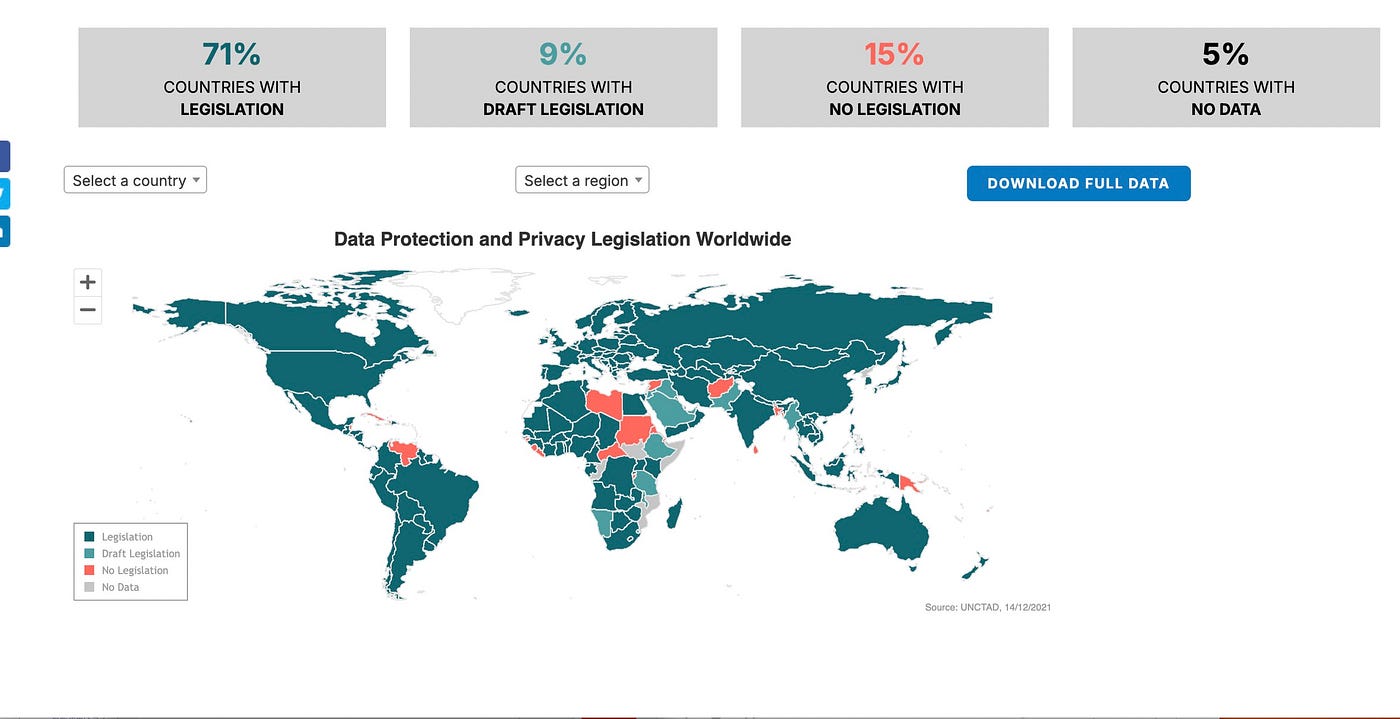
Data Protection and Privacy Legislation Worldwide
Why digital sovereignty is valued by so many countries?
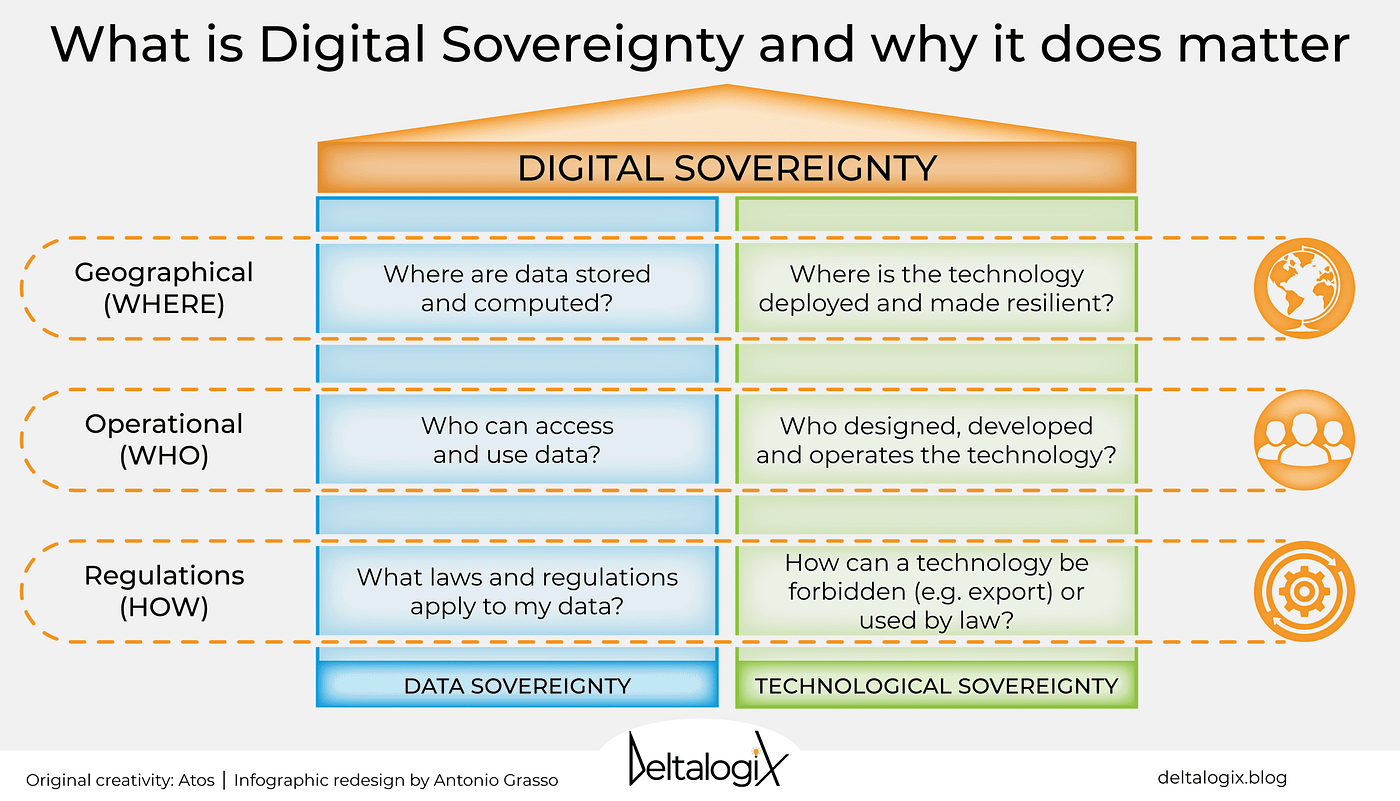
Countries in favour of digital sovereignty consider the protection of individual privacy, national security, and cultural values to be of great importance. Laws such as those mentioned earlier in China and India have been enacted to protect citizens from outside information interference and brainwashing. Strengthening cyber control would help to reduce the emergence of harmful information. Examples include cyber harassment, cyberbullying and the spread of violent content.
Many proponents also argue that digital sovereignty can deepen the diversity of the Internet. This is because cyberspace can be enriched when countries are able to develop their own laws and regulations. Because different online environments can reflect different values and norms.For example, the challenges posed by globalisation include the dissemination of objectionable content on the Internet, which is countered by strict control of content in the digital space, and by information on the world wide web.
The opposing view, however, is that a fully state-controlled cyberspace would limit freedom of expression and access to information. Different data monitoring and content censorship mechanisms make it difficult for transnational Internet companies to operate and even affect the long-term cultural development of humankind.It is inappropriate to try to apply the concept of sovereignty to cyber governance. The pursuit of sovereignty in cyberspace would make the Internet lose its global and open nature.
How to address challenges and find balance
While the state can protect the interests of its citizens and national security through digital sovereignty, digital sovereignty has also led to the fragmentation of the Internet, which has resulted in a restricted flow of information. Therefore, it is important to find a balance between state control and open Internet.
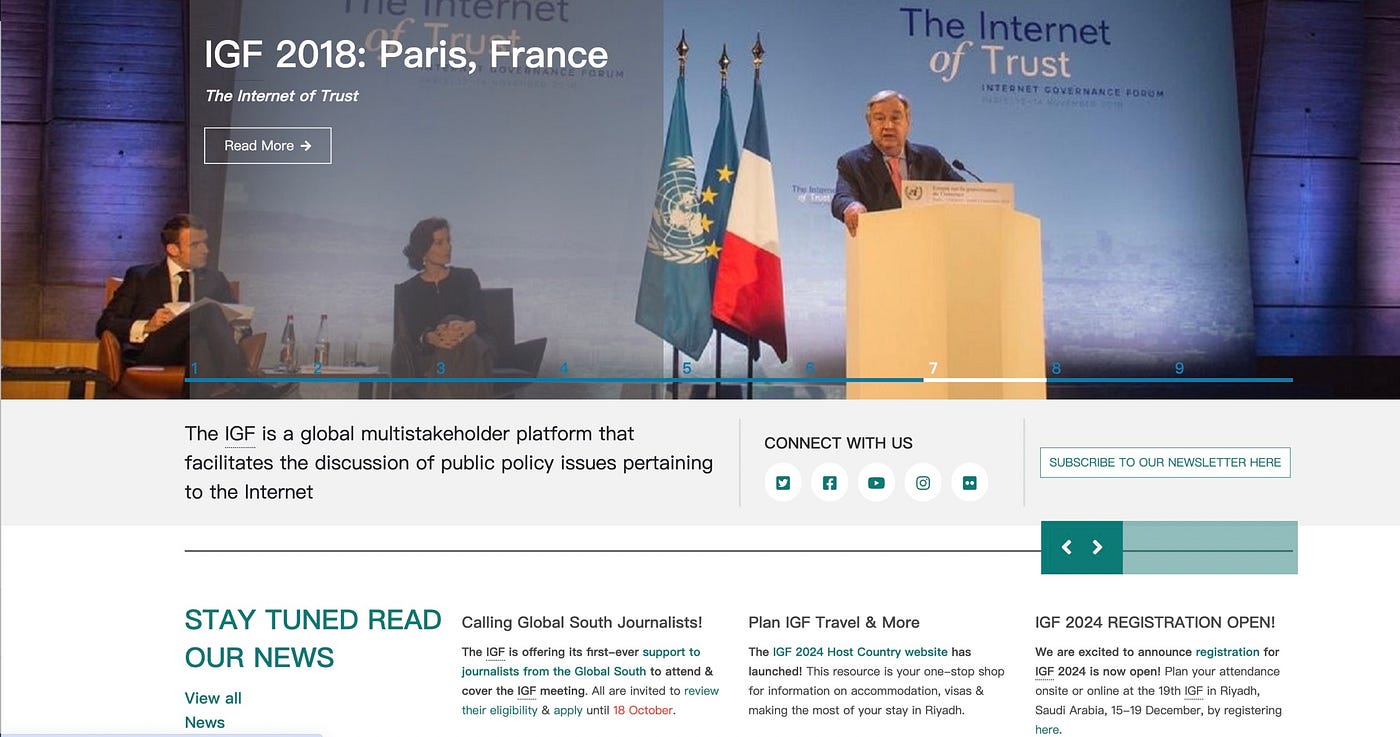
Global governance can be a viable solution. Establish an international general agreement. Make data privacy and security regulations uniform standards across countries. The United Nations seems to be a suitable venue for discussion, for example, organisations such as the Internet Governance Forum (IGF) can help to facilitate exchanges between governments and businesses.
Conclusion
Digital sovereignty reflects the importance that countries today place on national cybersecurity. Digital sovereignty is reflected in the control of online data through strict regulations that reduce content that is contrary to national values and retain content that is in line with national values. The implementation of digital sovereignty is well justified at the level of political governance and is very favourable to facing cyberthreats and the threat of infiltration by foreign forces.
Digital sovereignty actions also bring about the fragmentation of the Internet, which is a problem that cannot be ignored.With the enactment of laws governing information in various countries, the Internet has gradually been fragmented into different fiefdoms, each with different rules and restrictions, contrary to the original purpose of building the Internet.
Maintaining national sovereignty and interests while keeping the Internet open is a very difficult task. Therefore, international cooperation is a very important aspect. Opening up the platform for dialogue through international cooperation would help to set global standards. When countries reach a certain degree of consensus, it will help to keep the Internet open without affecting national sovereignty.
메타데이터
- post_id
- cddbf93cc12e
- slug
- digital-sovereignty-leads-to-restrictions-and-fragmentation-of-the-internet-cddbf93cc12e
- url
- https://medium.com/@2387139203ab/digital-sovereignty-leads-to-restrictions-and-fragmentation-of-the-internet-cddbf93cc12e
- canonical_url
- https://medium.com/@2387139203ab/digital-sovereignty-leads-to-restrictions-and-fragmentation-of-the-internet-cddbf93cc12e
- author_url
- https://medium.com/@2387139203ab
- status
- ok
- fetched_at
- 2026-06-27 07:40:21