From the Naval Press Room to Dinner With Thailand’s Prime Minister: Inside the ASEAN International…
As a media partner, I spent an extraordinary week behind the scenes of Thailand’s first major international fleet review – culminating in…
From the Naval Press Room to Dinner With Thailand’s Prime Minister: Inside the ASEAN International Fleet Review 2017
As a media partner, I spent an extraordinary week behind the scenes of Thailand’s first major international fleet review – culminating in an official dinner hosted by Prime Minister General Prayut Chan-o-cha at the Dusit Thani Pattaya.
In November 2017, Pattaya became the setting for one of the most remarkable international events I experienced during my years in Thailand.
The ASEAN International Fleet Review 2017 brought naval vessels, military leaders, government representatives, international delegations and media organizations from across Asia and beyond to the Gulf of Thailand.
Organized to commemorate the 50th anniversary of the Association of Southeast Asian Nations, the program extended from 13 to 22 November 2017 and combined three major elements: the 11th ASEAN Navy Chiefs’ Meeting, the International Fleet Review and the inaugural ASEAN Multilateral Naval Exercise, known as AMNEX.
At the time, I was leading Asia Media Publishing Group, which participated as a media partner supporting communication around the event.
This gave me the opportunity to experience much more than the public spectacle in Pattaya Bay.
During the days leading up to the fleet review, I attended press briefings, followed the preparations and observed how military representatives, government agencies, media professionals and local organizers coordinated an event involving thousands of people.
The week culminated in an experience I still remember clearly: attending the formal reception and dinner hosted by then-Prime Minister General Prayut Chan-o-cha at the Dusit Thani Pattaya Hotel.
Pattaya Becomes an International Naval Center
For several days, Pattaya looked and felt completely different.
The city is internationally known for tourism, hospitality, beaches and entertainment. During the fleet review, however, it became a temporary center of naval diplomacy and regional security cooperation.
Warships appeared across Pattaya Bay.
Uniformed delegations arrived from numerous countries.
Naval personnel moved through the city, while journalists, military representatives and government officials gathered for briefings, demonstrations and ceremonies.
Around 40 naval vessels took part when the participating international ships and the Royal Thai Navy’s own fleet were counted together. The international representation included navies from ASEAN and countries such as Australia, the United States, Russia, South Korea, China, Japan, India, Sri Lanka, Pakistan and Bangladesh.
For Pattaya, this was not simply another public festival.
It was the first international fleet review of this scale hosted by Thailand and a demonstration of the country’s organizational, diplomatic and maritime capabilities.
Inside the Navy and Military Press Rooms
My experience began before the main fleet review itself.
Throughout the buildup, dedicated Navy and military press facilities were established for Thai and international media representatives. These rooms became the communications center behind the public event.
Briefings covered the arrival and positioning of participating ships, security arrangements, schedules, naval demonstrations, official ceremonies and the movements of high-level delegations.
The work was detailed and highly structured.
An event involving international military assets cannot depend on improvisation. Every movement requires planning, coordination and communication between multiple organizations.
For the media, accuracy was particularly important.
Journalists needed to know which ships were arriving, which nations they represented, when demonstrations would take place and which parts of the program were accessible to the public.
As a media partner, our responsibility was to help support the flow of information, facilitate coverage and ensure that the international significance of the gathering could be communicated beyond Pattaya.
The days were long, but they offered a rare view of how an international military and diplomatic event is prepared behind the scenes.
More Than a Parade of Warships
The International Fleet Review was only one component of a much larger program.
The event also incorporated the 11th ASEAN Navy Chiefs’ Meeting, where regional naval leaders discussed cooperation and the protection and preservation of the marine environment.
Public activities included sea-rescue demonstrations conducted by the Royal Thai Navy, precision drill performances and an International Navies City Parade along Pattaya Beach.
Sailors from the participating countries marched through the city as residents and tourists gathered along the route.
The inaugural ASEAN Multilateral Naval Exercise added an operational dimension.
Its harbor phase took place from 13 to 17 November, followed by a sea phase in the Upper Gulf of Thailand. Participating crews conducted exercises intended to improve readiness, interoperability and cooperation among ASEAN navies.
These activities demonstrated that the gathering was not organized merely to display military equipment.
It was intended to strengthen understanding between naval forces that may later need to cooperate during emergencies, humanitarian missions, maritime-security incidents or environmental threats.
The Official Opening at Dusit Thani Pattaya
The event was officially launched on 19 November at the Dusit Thani Pattaya Hotel by Thailand’s Deputy Prime Minister and Minister of Defence, General Prawit Wongsuwan.
The opening brought together naval chiefs and senior representatives from ASEAN and participating international nations.
General Prawit emphasized the importance of maritime security, regional stability and cooperation in responding to shared threats and challenges.
The Dusit Thani served as more than accommodation or a reception venue during the event.
It became one of the central meeting points where military leadership, diplomacy and government protocol intersected.
For someone working in international media, it was fascinating to observe how the formal program and the communications operation worked together.
The ceremonies projected unity and strength, while the press infrastructure translated those messages for audiences around the world.
The International Fleet Review on 20 November
The main fleet review took place in Pattaya Bay on Monday, 20 November 2017.
Prime Minister General Prayut Chan-o-cha presided over the ceremony aboard HTMS Thalang, accompanied by naval chiefs and representatives from participating countries.
As the presidential vessel sailed through the assembled formations, the Prime Minister inspected the international fleet.
The ceremony included a 19-gun salute from HTMS Pinklao and flypasts by Royal Thai Air Force aircraft.
The visual impact was extraordinary.
Warships from different countries were positioned together in Pattaya Bay, their flags representing distinct national identities while the overall formation communicated cooperation.
Naval vessels are naturally associated with defense, sovereignty and national power.
Yet on that day, they also represented partnership.
The review marked ASEAN’s golden jubilee and demonstrated that nations with different strategic interests could still gather around a commitment to communication, maritime stability and regional cooperation.
From Military Ceremony to Personal Diplomacy
The fleet review was impressive because of its scale.
But the diplomatic importance of the event became even clearer during the formal gatherings around it.
International cooperation is often discussed through agreements, official declarations and institutional language.
In practice, however, cooperation is also built through personal interaction.
Naval commanders need to know their counterparts.
Government representatives need trusted communication channels.
Military institutions need relationships that already exist before an emergency occurs.
Receptions and official dinners provide a setting where these relationships can develop beyond the limitations of scheduled meetings.
People who had spent the week discussing operational cooperation could speak more personally, exchange perspectives and strengthen the familiarity necessary for future coordination.
The Evening With Prime Minister Prayut Chan-o-cha
The defining personal highlight for me came on the evening of 20 November.
Following the fleet review, Prime Minister General Prayut Chan-o-cha hosted the official reception and dinner at the Dusit Thani Pattaya Hotel. Contemporary reporting confirms that the dinner followed the review, while the event’s official records scheduled it from 19:00 to 21:00.
As a media partner, I was honored to be among the invited guests.
The dinner brought together naval chiefs, senior officers, government representatives, diplomats and selected participants from the organizations supporting the event.
The setting was elegant and formal, but the atmosphere also reflected the relief and satisfaction that followed days of intensive preparation.
Outside, Pattaya Bay had just hosted one of the most significant maritime events in Thailand’s recent history.
Inside the hotel, the people responsible for making it happen could finally meet in a more relaxed setting.
The evening combined Thai hospitality with international protocol.
Uniforms, national insignia and official titles reflected the formality of the gathering. Yet the conversations themselves were often warm, personal and open.
That contrast made the dinner particularly memorable.
What the Invitation Meant to Me
Attending a dinner hosted by the Prime Minister of Thailand was not something I regarded as routine.
The invitation represented recognition of the role that media and communication played in the broader event.
Large international gatherings are remembered through their ceremonies and photographs, but public understanding depends on the work of journalists, production teams, communications professionals and media organizations.
Our role was not to operate the ships or determine military policy.
It was to help make the scale, meaning and international character of the event visible.
Being invited to the Prime Minister’s dinner reinforced the idea that media is not simply an observer standing outside major events.
When performed responsibly, media becomes part of the infrastructure connecting institutions with the public.
A Rare View of Leadership and Protocol
The evening also offered a rare opportunity to observe senior political and military leadership in an environment different from a public speech or televised ceremony.
At major events, the public usually sees only carefully managed moments:
The arrival.
The salute.
The inspection.
The official photograph.
Behind those moments are days or months of planning, coordination and decision-making.
The dinner allowed guests to experience the human dimension behind the formal roles.
Naval chiefs who had represented their countries during the review could speak informally.
Organizers could acknowledge the work of colleagues.
Delegations could build relationships beyond the official program.
For me, this was another reminder that leadership is not demonstrated only from a podium.
It is also visible in how people acknowledge their teams, welcome international guests and create an atmosphere of mutual respect.
The Communications Challenge Behind an Event of This Scale
One of my strongest professional lessons from the week concerned communication.
Coordinating around 40 ships, numerous national delegations, security agencies, government departments, thousands of naval personnel and a large international media presence was an enormous task.
Every organization required accurate information.
Every schedule change had consequences.
Journalists needed clear access instructions.
Security teams required discipline.
The public needed to understand where activities were taking place.
International representatives needed communication that respected both protocol and cultural differences.
When communication works well, most people do not notice it.
They simply experience an organized event.
When it fails, confusion quickly becomes the dominant story.
The professional briefings and structured information channels therefore played an essential role in the success of the fleet review.
Media Partnership as Market and Cultural Translation
International media work is not merely about distributing information.
It also involves translation – not only between languages, but between institutions, cultures and audiences.
Military terminology must be explained for civilians.
Diplomatic messages must be communicated without losing their nuance.
Regional cooperation must be presented in a way that readers outside Southeast Asia can understand.
For Asia Media Publishing Group, supporting an event of this nature reflected the wider role we were building in Thailand.
We were working at the intersection of international media, communications, public relations and cross-border relationships.
The fleet review demonstrated why this intersection matters.
An event may be organized locally, but its relevance can be regional or global.
The communications strategy must therefore connect the local reality with an international narrative.
Why the Fleet Review Mattered for ASEAN
ASEAN’s 50th anniversary provided the symbolic foundation for the event.
Since its establishment in 1967, ASEAN has sought to encourage regional stability, dialogue and cooperation among countries with different political systems, economic structures and national interests.
Maritime cooperation is particularly important in Southeast Asia.
The region contains major shipping routes, busy ports, contested waters, fishing areas and coastal communities that depend on the sea.
Challenges such as piracy, smuggling, illegal fishing, environmental damage, natural disasters and maritime accidents do not remain within national borders.
They require communication and coordinated responses.
The fleet review and AMNEX offered participating navies an opportunity to improve familiarity and demonstrate their willingness to work together.
The Impact on Pattaya
The event also carried significance for Pattaya itself.
For more than a week, the city hosted international military delegations, media teams, government officials and visitors.
Hotels, transportation providers, restaurants and local businesses benefited from the influx.
More importantly, Pattaya received international visibility in a context very different from its conventional tourism image.
The city demonstrated that it could host a complex gathering involving government protocol, international security, naval operations and large public activities.
For residents, the ships, parade and demonstrations created an unusual opportunity to experience an international event directly.
The naval personnel were not isolated behind closed doors.
They became part of the city for several days.
From Observation to Understanding
Before participating in this event, I understood international cooperation primarily through business, media and diplomatic receptions.
The fleet review added another dimension.
It showed me the importance of preparedness, interoperability and institutional trust.
Businesses collaborate because they see commercial value.
Navies may need to cooperate because lives, security or regional stability depend on it.
The scale of responsibility is different, but some underlying principles remain the same:
Clear communication matters.
Trust must exist before a crisis.
Different cultures and systems must learn how to work together.
Leadership must create coordination without eliminating individual responsibility.
These principles are relevant not only to military organizations, but also to multinational companies and international partnerships.
A Week That Remains in My Memory
Looking back, the ASEAN International Fleet Review 2017 remains one of the standout experiences from my media career in Thailand.
The week included long hours, detailed press briefings, international coordination and an extraordinary series of public and official events.
I witnessed Pattaya Bay transformed by ships from across the region and the world.
I observed the Royal Thai Navy host an event of enormous complexity.
I saw how military ceremony could communicate both national strength and international cooperation.
And I had the privilege of attending the formal dinner hosted by Thailand’s Prime Minister at the Dusit Thani Pattaya.
The dinner was the personal highlight, but its significance came from everything that preceded it.
Without the ships, the crews, the organizers, the briefings and the months of preparation, it would have been only another formal evening.
Instead, it became the conclusion to a historic week.
Why I Am Documenting This Story Now
Like many of the experiences I am recording through this Medium series, the fleet review remained for years primarily in photographs, archived materials and personal memories.
When people attend many events over the course of a career, important details can gradually become difficult to reconstruct.
Dates overlap.
Names are forgotten.
The wider context behind a photograph disappears.
Writing these stories allows me to preserve that context – for myself, for friends and former colleagues, and for readers interested in the intersection of media, international business, diplomacy and Thailand’s development.
The objective is not merely to state that I attended a prestigious dinner.
The important story is how I arrived there, what the larger event represented and what I learned from being involved behind the scenes.
Final Reflection
The ASEAN International Fleet Review 2017 demonstrated the power of diplomacy at sea.
It brought together ships and personnel from nations with different histories and interests.
It celebrated 50 years of ASEAN.
It encouraged practical naval cooperation.
And it transformed Pattaya into an international stage.
For me, the experience also demonstrated the importance of media partnerships in documenting events whose significance extends far beyond their location.
The public remembers the warships, the salute and the Prime Minister’s inspection.
I also remember the press rooms, the briefings, the people working behind the scenes and the conversations during the official dinner at the Dusit Thani.
Those quieter moments were where the true scale of the event became visible.
International cooperation is expressed through formations, ceremonies and official statements.
But it is sustained through communication, preparation and personal trust.
That may be the most enduring lesson I took from that remarkable week in Pattaya.
⸻
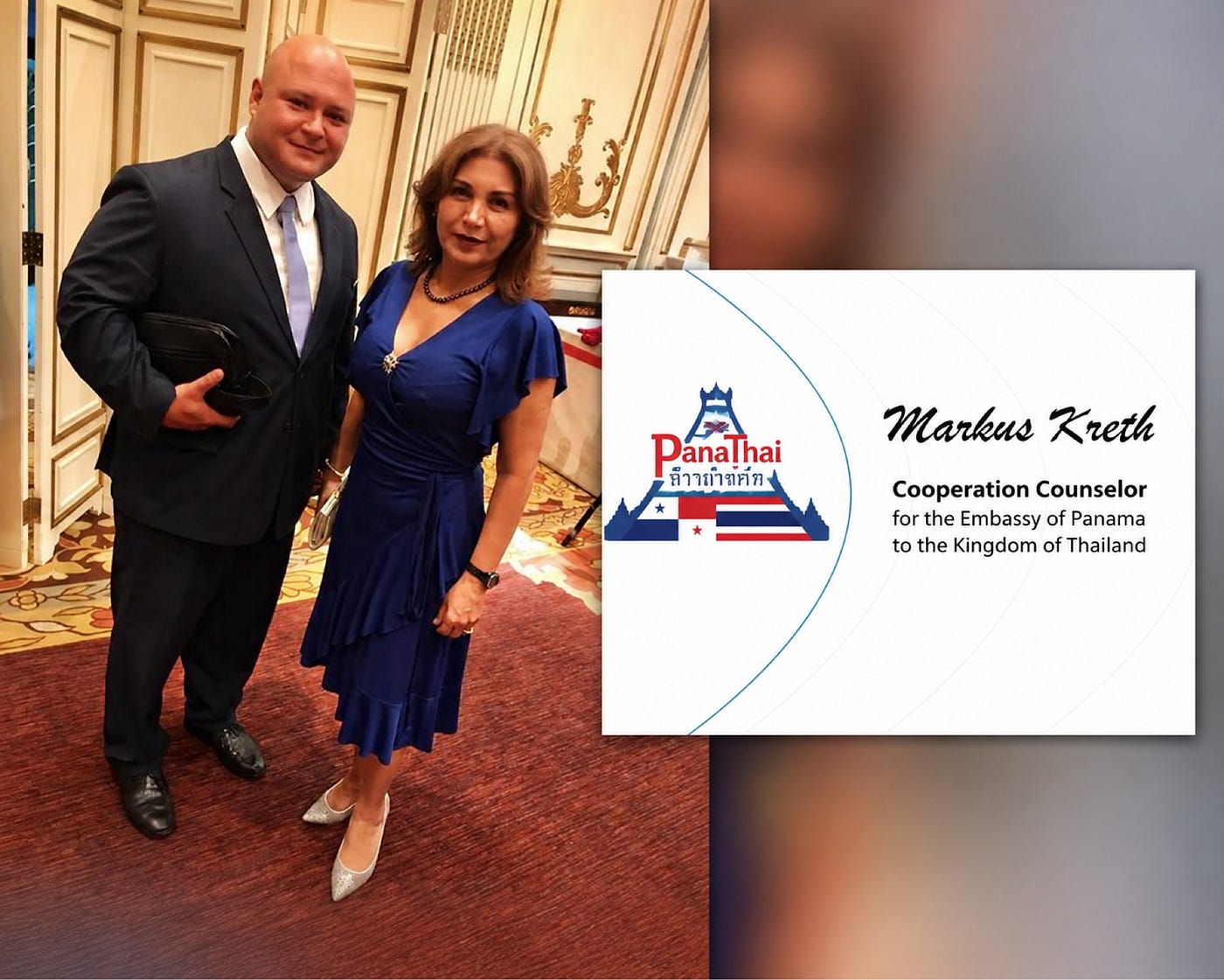
Markus Kreth participating as a media partner during the ASEAN International Fleet Review 2017 in Pattaya, including the official reception and dinner hosted by Prime Minister General Prayut Chan-o-cha at the Dusit Thani Pattaya on 20 November 2017.
Markus Kreth at the ASEAN International Fleet Review 2017 and official Prime Minister’s dinner at the Dusit Thani Pattaya.
Behind the scenes of the ASEAN International Fleet Review 2017 and Markus Kreth’s invitation to the official dinner hosted by Thailand’s prime minister.
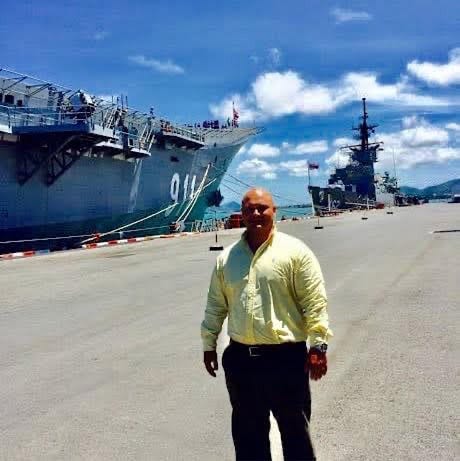
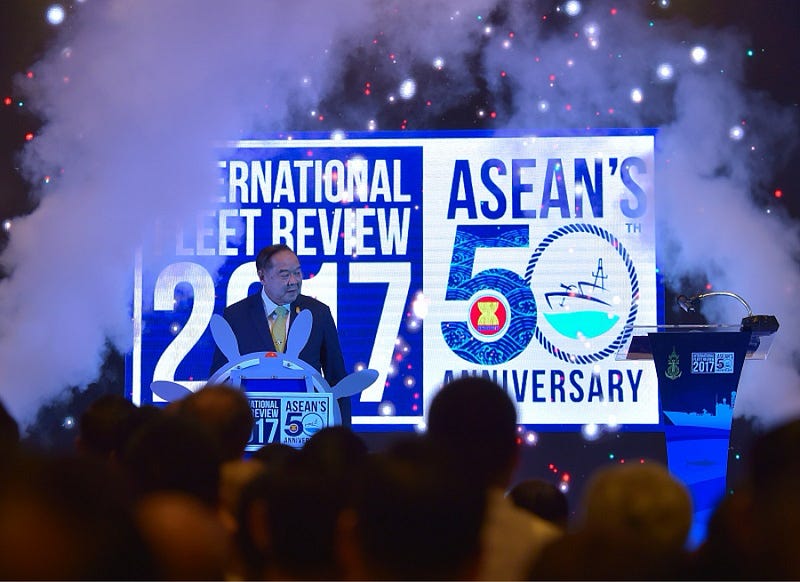
Photo:
메타데이터
- post_id
- cde85f28a3a2
- slug
- from-the-naval-press-room-to-dinner-with-thailands-prime-minister-inside-the-asean-international-cde85f28a3a2
- url
- https://medium.com/@mk_65709/from-the-naval-press-room-to-dinner-with-thailands-prime-minister-inside-the-asean-international-cde85f28a3a2
- canonical_url
- https://medium.com/@mk_65709/from-the-naval-press-room-to-dinner-with-thailands-prime-minister-inside-the-asean-international-cde85f28a3a2
- author_url
- https://medium.com/@mk_65709
- status
- ok
- fetched_at
- 2026-06-23 06:34:20