Restoring What Was Taken: The Story of the Keen Family
History is often told through laws, court decisions, and official records. But behind those records are real people, real families, and…
Restoring What Was Taken: The Story of the Keen Family
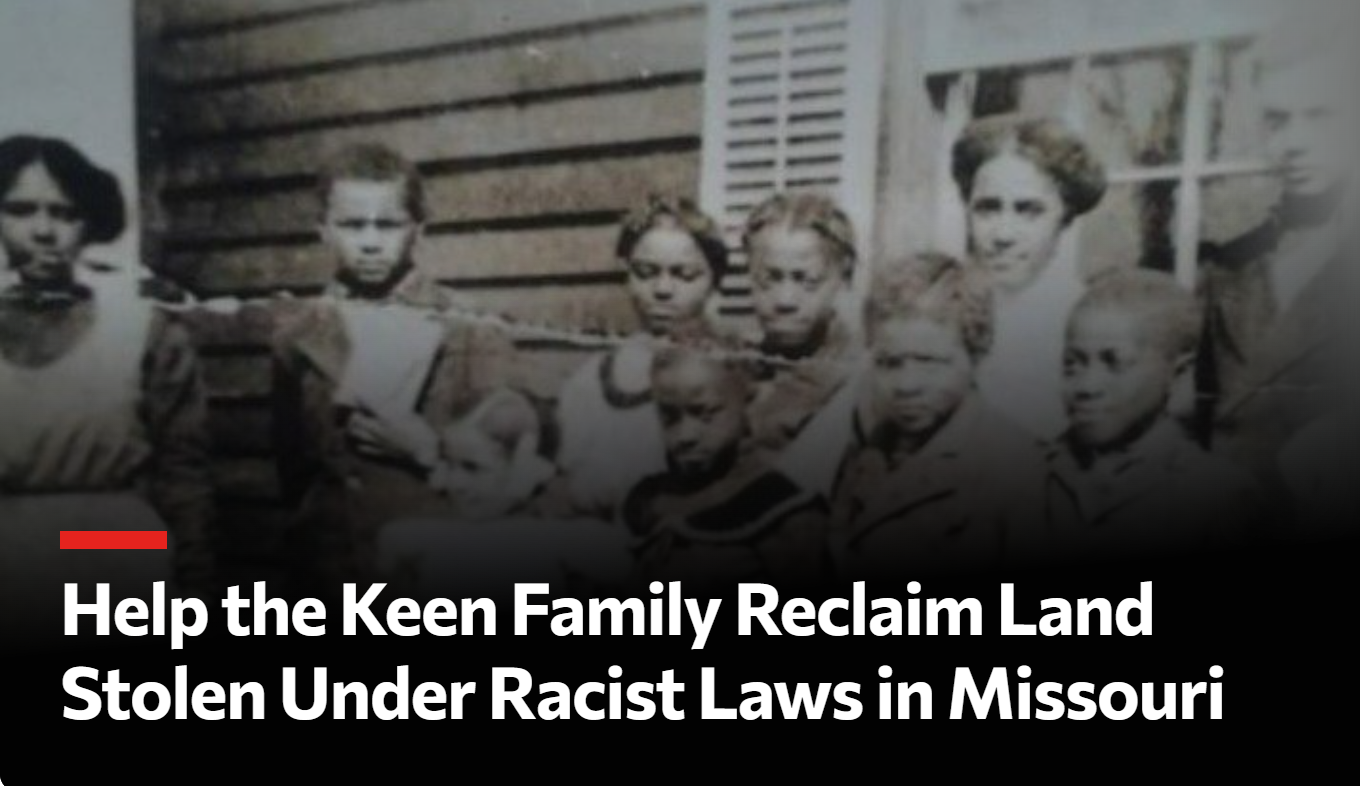
History is often told through laws, court decisions, and official records. But behind those records are real people, real families, and real lives shaped by those decisions. The story of the Keen family is one of love, resilience, injustice, and an ongoing fight to reclaim what was wrongfully taken.
At its heart, this is a story about Eli Keen Jr and Phoebe Keen, two people who built a life together in Missouri during a time when the law refused to recognize their relationship. Phoebe, born Phoebe Stokes between 1822 and 1825, was enslaved and later sold along with her young daughter Martha to Eli Keen Sr. After his death in 1850, Eli Keen Jr purchased Phoebe and her daughter from his father’s estate. What remained hidden from the public was that Eli and Phoebe were already in a committed relationship.
For decades, they lived together as husband and wife, raising a family of ten children. Although Missouri law prohibited interracial marriage, their bond was real and recognized within their community. Their children called them “pa” and “ma,” and they lived as a unified family despite the legal system denying their legitimacy.
Eli Keen Jr was deeply committed to his children and their future. At a time when Black children were barred from attending local schools, he established the Keen Schoolhouse on his property to ensure they received an education. He went even further by sending some of his children to schools in other states. He provided land, homes, and opportunities for each of them, building a foundation meant to last for generations.
To those who knew them, the Keens were a family in every sense of the word. They shared meals, maintained a household, and supported one another. Their life together reflected stability, care, and intention. Eli’s actions made it clear that he saw his children as his rightful heirs and worked to secure their future.
However, the legal system that surrounded them was designed to do the opposite.
In 1883, Eli married his second cousin Sophronia Keen, a woman who lived separately in West Virginia and had little involvement in his daily life. Shortly after this marriage, Eli continued taking steps to provide for Phoebe and their children. He transferred property to Phoebe and ensured that his children would inherit land and assets upon his death.
When Eli Keen Jr passed away in 1901, his will clearly recognized his children and left them the bulk of his Missouri estate. He also made provisions for Sophronia, granting her significant property and assets in West Virginia, even specifying that she had not contributed financially to acquiring them. Importantly, his will included a condition that she would forfeit her inheritance if she challenged it.
Despite this, Sophronia chose to contest the will. She renounced it in court and claimed a larger portion of the estate under Missouri law. She argued that Eli’s children were not legally recognized heirs due to the laws prohibiting interracial marriage. The court accepted this argument.
The result was devastating.
The children were forced to give up half of the estate their father had intended for them. Sophronia was awarded a significant portion of the property, including land that had already been distributed to the children. In total, more than 1,000 acres were taken from Eli’s direct descendants.
This outcome was not simply the result of one legal challenge. It was the product of a system that embedded racial inequality into its laws and decisions. The courts upheld statutes that denied the Keen children their rightful inheritance, treating them as if they were strangers to their own father.
The case eventually reached the Supreme Court of the United States, which declined to overturn the decision. The ruling stood, reinforcing a legal framework that had already caused immense harm.
The consequences extended far beyond that moment in time. The land that Eli Keen Jr had worked to secure for his children passed into the hands of distant relatives who had no relationship with him. The generational wealth that could have supported his descendants for decades was lost.
Today, the impact of that injustice is still felt.
The descendants of Eli and Phoebe Keen are working to reclaim what was taken from their family. They are supported by the organization Where Is My Land, which is dedicated to helping Black families identify and recover land lost through discriminatory practices. Inspired by recent successes such as the return of Bruce’s Beach to its rightful heirs, the Keen family continues their pursuit of justice.
Their fight is not only about land. It is about recognition, accountability, and the restoration of a legacy that was deliberately undermined.
The story of the Keen family reminds us that injustice does not disappear with time. It carries forward, affecting generations. But it also reminds us that change is possible when people come together to demand it.
Now is the time to act.
Support the effort to restore the Keen family’s land and legacy. Help ensure that what was taken through injustice can finally be returned. Sign the petition and stand with the Keen descendants in their pursuit of justice.
Fill The Petition: https://www.change.org/p/help-the-keen-family-reclaim-land-stolen-under-racist-laws-in-missouri?source_location=search
메타데이터
- post_id
- cdf9e91cff20
- slug
- restoring-what-was-taken-the-story-of-the-keen-family-cdf9e91cff20
- url
- https://medium.com/@dzeltrix/restoring-what-was-taken-the-story-of-the-keen-family-cdf9e91cff20
- canonical_url
- https://medium.com/@dzeltrix/restoring-what-was-taken-the-story-of-the-keen-family-cdf9e91cff20
- author_url
- https://medium.com/@dzeltrix
- status
- ok
- fetched_at
- 2026-06-20 20:29:01