Restaurant Management System: A Complete Guide to Efficient Restaurant Operations
The restaurant industry is highly competitive, requiring businesses to deliver exceptional customer experiences while maintaining smooth…
Restaurant Management System: A Complete Guide to Efficient Restaurant Operations
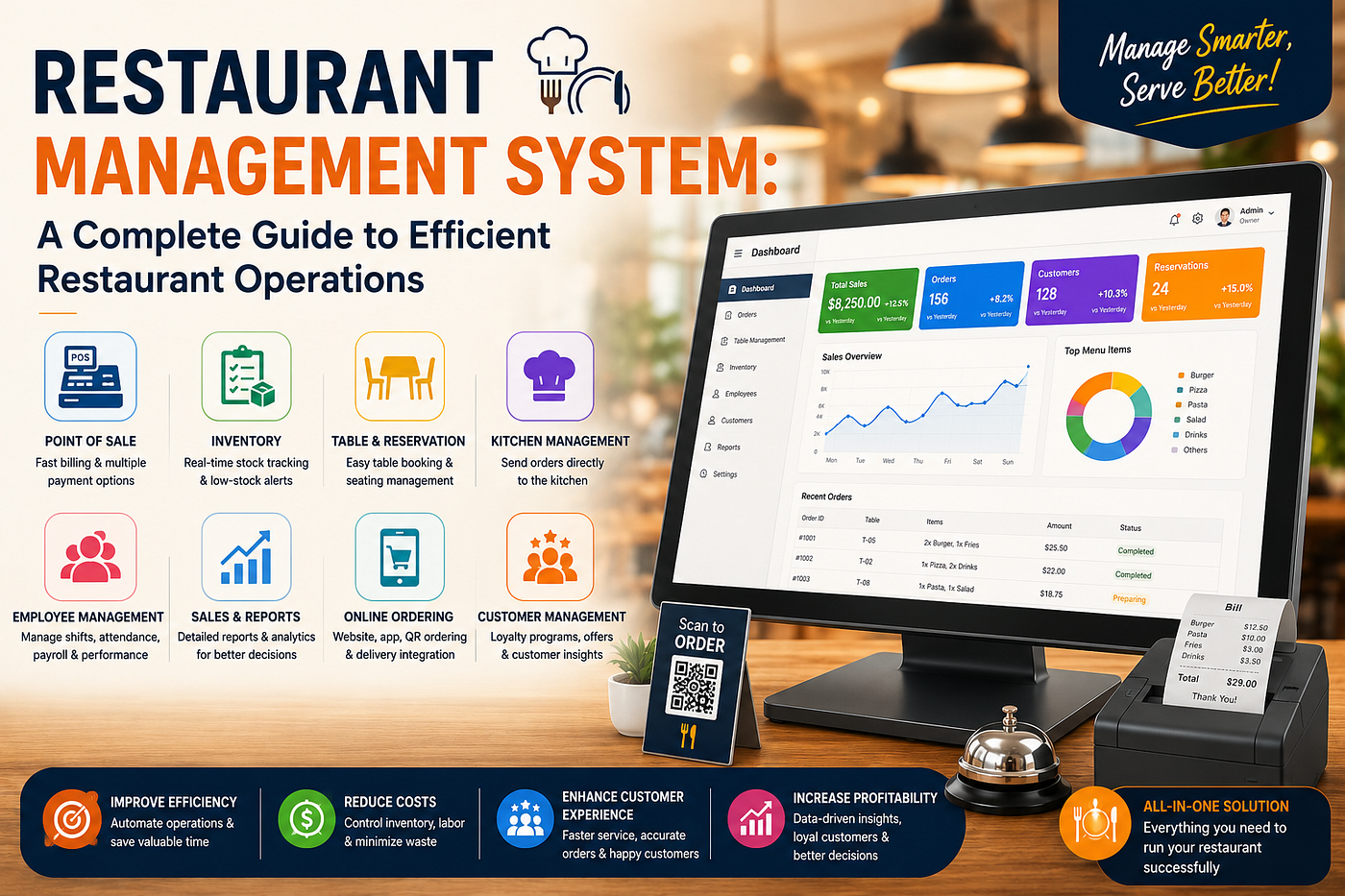
The restaurant industry is highly competitive, requiring businesses to deliver exceptional customer experiences while maintaining smooth day-to-day operations. Managing reservations, inventory, staff, billing, customer feedback, and finances manually can be time-consuming and prone to errors. This is where a **restaurant management system** becomes an essential solution.
A restaurant management system (RMS) is an all-in-one software platform designed to streamline restaurant operations, improve efficiency, reduce costs, and enhance customer satisfaction. Whether you operate a small café, a fast-food outlet, a fine dining establishment, or a chain of restaurants, implementing a modern restaurant management system can significantly improve business performance.
What Is a Restaurant Management System?
A restaurant management system is a comprehensive software solution that integrates various restaurant operations into a single platform. Instead of using separate tools for billing, inventory, reservations, payroll, and reporting, a restaurant management system manages everything from one centralized dashboard.
Modern cloud-based systems allow owners and managers to monitor their restaurants remotely, providing real-time insights into sales, inventory, employee performance, and customer behavior.
Key Features of a Restaurant Management System
1. Point of Sale (POS) Integration
The POS module is the core component of most restaurant management systems. It enables staff to take customer orders, process payments, print receipts, and communicate orders directly to the kitchen.
Benefits include:
- Faster order processing
- Reduced billing errors
- Improved customer service
- Multiple payment options
2. Inventory Management
Food inventory is one of the largest expenses for any restaurant. A restaurant management system automatically tracks ingredient usage as orders are placed.
Inventory features include:
- Real-time stock monitoring
- Automatic inventory updates
- Low-stock alerts
- Purchase order management
- Waste tracking
Proper inventory control helps reduce food waste and optimize purchasing decisions.
3. Table Reservation Management
For dine-in restaurants, reservation management is essential. Customers can book tables online, while managers can organize seating arrangements efficiently.
This reduces waiting times and improves the overall dining experience.
4. Kitchen Order Management
Modern systems send customer orders directly to a Kitchen Display System (KDS) or kitchen printer.
Advantages include:
- Faster communication
- Fewer order mistakes
- Better workflow coordination
- Reduced preparation delays
5. Employee Management
Managing restaurant staff becomes much easier with integrated employee management tools.
Features often include:
- Shift scheduling
- Attendance tracking
- Payroll management
- Performance monitoring
- Tip distribution
Managers can monitor labor costs while ensuring adequate staffing during peak hours.
Customer Relationship Management (CRM)
Many restaurant management systems include built-in CRM features that store valuable customer information.
These may include:
- Dining history
- Favorite menu items
- Loyalty rewards
- Birthday promotions
- Personalized offers
Customer loyalty programs encourage repeat visits and strengthen long-term relationships.
Online Ordering and Delivery Integration
With the rapid growth of food delivery services, online ordering has become a necessity.
Restaurant management systems often integrate with:
- Restaurant websites
- Mobile apps
- Delivery platforms
- QR code ordering
- Self-service kiosks
All incoming orders appear within the same dashboard, reducing manual work and minimizing errors.
Sales Reporting and Business Analytics
One of the biggest advantages of a restaurant management system is access to detailed business reports.
Reports may include:
- Daily sales
- Revenue trends
- Best-selling dishes
- Peak business hours
- Profit margins
- Inventory consumption
- Employee performance
These insights help restaurant owners make informed business decisions based on real-time data.
Benefits of Using a Restaurant Management System
Improved Efficiency
Automation reduces repetitive manual tasks, allowing employees to focus more on customer service and food quality.
Better Customer Experience
Faster service, accurate orders, quicker payments, and personalized promotions create a smoother dining experience that encourages customer loyalty.
Reduced Operating Costs
Inventory tracking minimizes food waste, while employee scheduling helps optimize labor costs. Automation also reduces paperwork and administrative expenses.
Enhanced Accuracy
Manual errors in billing, inventory counting, and order processing are significantly reduced through automated workflows.
Increased Profitability
Upselling recommendations, loyalty programs, promotional campaigns, and detailed analytics help restaurants increase sales and improve profit margins.
Cloud-Based Restaurant Management Systems
Cloud technology has transformed restaurant operations by making business information accessible from anywhere.
Cloud-based systems provide:
- Remote access
- Automatic software updates
- Data backups
- Multi-location management
- Real-time reporting
- Enhanced security
Owners can monitor their restaurant’s performance using a smartphone, tablet, or laptop, even when away from the business.
How to Choose the Right Restaurant Management System
Selecting the right solution depends on your restaurant’s size, budget, and operational needs.
Consider the following factors:
Ease of Use
Choose software with a user-friendly interface that requires minimal staff training.
Scalability
As your restaurant grows, your management system should easily support additional locations, users, and advanced features.
Integration Capabilities
Look for software that integrates with:
- Accounting software
- Payment gateways
- Online ordering platforms
- Delivery services
- Payroll systems
- Marketing tools
Security
Customer payment information and business data must be protected through secure encryption, regular backups, and role-based user access.
Customer Support
Reliable technical support ensures minimal downtime and quick resolution of issues. Providers offering 24/7 assistance, onboarding, and regular updates are often the best choice.
Future Trends in Restaurant Management Systems
Technology continues to reshape the restaurant industry. Modern restaurant management systems increasingly include advanced features such as:
- Artificial Intelligence (AI) for demand forecasting
- Contactless ordering and payments
- QR code menus
- Voice-enabled ordering
- Automated inventory forecasting
- Customer behavior analytics
- Mobile management apps
- Smart kitchen automation
These innovations help restaurants improve operational efficiency while delivering more personalized customer experiences.
Conclusion
A restaurant management system is far more than a digital tool for processing orders — it is a complete operational solution that helps restaurants streamline workflows, reduce costs, and enhance customer satisfaction. By integrating POS, inventory management, employee scheduling, reservations, online ordering, customer relationship management, and business analytics into one platform, restaurants can operate more efficiently and make data-driven decisions.
Whether you are launching a new restaurant or modernizing an existing business, investing in a reliable restaurant management system can provide long-term value, improve profitability, and position your restaurant for sustainable growth in today’s fast-paced hospitality industry.
메타데이터
- post_id
- ce013eeaefe2
- slug
- restaurant-management-system-a-complete-guide-to-efficient-restaurant-operations-ce013eeaefe2
- url
- https://medium.com/@arwanaz2001/restaurant-management-system-a-complete-guide-to-efficient-restaurant-operations-ce013eeaefe2
- canonical_url
- https://medium.com/@arwanaz2001/restaurant-management-system-a-complete-guide-to-efficient-restaurant-operations-ce013eeaefe2
- author_url
- https://medium.com/@arwanaz2001
- status
- ok
- fetched_at
- 2026-07-25 04:03:19