LSD and the Alchemical Opus of Humanity (Guest post by Neeshee Pandit)
Because everything is perfect in itself, but both a poison and a benefit to another, God employed an alchemist, who is such a great artist…
LSD and the Alchemical Opus of Humanity (Guest post by Neeshee Pandit)

Because everything is perfect in itself, but both a poison and a benefit to another, God employed an alchemist, who is such a great artist at dividing the two from each other, the poison into his sack, the goodness into the body.
— Paracelsus
Introduction: Psychedelic-Assisted Therapy and the Consciousness Revolution:
My writings thus far have been focused on the intersection between medicine, psychology, and astrology. With “LSD and the Alchemical Opus of Humanity”, I am initiating a series of essays that examine the medicinal value and mysterious nature of psychedelic substances. These writings represent the fruition of a long gestation period, fulfilling a motive that began twenty years ago when I first read Aldous Huxley’s essay, “The Doors of Perception”.
As always, the central concern of my writing remains therapeutic. I have chosen to write about LSD in particular, rather than the traditional and culturally-accepted plant medicines such as psilocybin mushrooms, ayahuasca, mescaline, etc. because LSD has a uniquely Western and human heritage. While traditional plant medicines have an established history of ceremonial use in indigenous cultures, LSD was born in the West in the twentieth century in the hands of a chemist. Twenty years later, LSD brought the mysticism of the East to the West and brought Westerners to the East.1
LSD straddles the divide between tradition and innovation, East and West, nature and synthesis. Plant medicines are given to us whole from the plant kingdom, but LSD is the consequence of chemistry and, as I propose, of alchemy. The alchemical attitude positions the human being in a unique relationship with nature — not only in reverence of nature but also as its steward. Perhaps the great endowment of the human being is neither an improvement upon nature nor a search for its molecular replication. Rather, the human being is handed the gift of craft, held in sanctity, and honed in consciousness.
This essay should not be misconstrued as a universal recommendation to ingest LSD. In addition to being a deeply individual matter, the use of psychedelics requires profound consideration, education, and preparation. The appropriate use of any medicine depends on a complex arrangement of individual and environmental factors (or “set and setting”). Hofmann himself lamented the use of LSD as an inebriant, advocating instead for its therapeutic use. As a natural chemist, Hofmann’s original intention was to synthesize an analeptic medicine from ergot alkaloids (which have a history of medical use). In modern medical language, an “analeptic” drug is a “restorative” drug that stimulates the central nervous system. In traditional terms, analeptic medicines are classified as “rejuvenatives” or “tonics”. The discovery of LSD’s psychoactive properties were an “accidental” revelation of a new spectrum of therapeutic effects.
Given its powerful psychic effects, Hofmann believed that LSD should only be used by psychologically stable adults in a therapeutic setting. The original monograph for LSD from Sandoz Laboratories recommends its use in “analytical psychology” and psychiatry. LSD-assisted psychotherapy has been further explored in the clinical work of Stanislav Grof and its process is also detailed in Blewett’s Handbook for the Therapeutic Use of Lysergic Acid Diethylamide-25: Individual and Group Procedures. Published in 1959, Blewett’s text details the clinical use of LSD and gives structured guidance for the therapist administering it to individuals or groups. In the first chapter, Blewett describes the value of LSD and gives a hopeful portrait of its use in LSD-assisted psychotherapy:
Yet, the aftermath of American counterculture and the resultant stigma around “drugs” left LSD to the winds of history, where its therapeutic potential in medicine and psychology remains shrouded and untapped. However, plant-based entheogens are now gaining acceptance in the current renaissance of psychedelic therapy. Healthcare professionals with a naturalistic orientation find it easier to advocate for their use. But the naturalistic bias misses the mark of an alchemical purpose.
As a substance that stands between binaries, LSD beckons an alchemical perspective, a synthesis of opposites. What stands between the poles holds the possibility for their transformation. LSD catalyzed the consciousness revolution that fused East and West, natural and synthetic, biosphere and noosphere, medicine and spirituality. This consciousness revolution is not polarized — it is Realized. The fire to be forged is in our hands.
I. Hofmann, Paracelsus, and the Alchemical Tradition
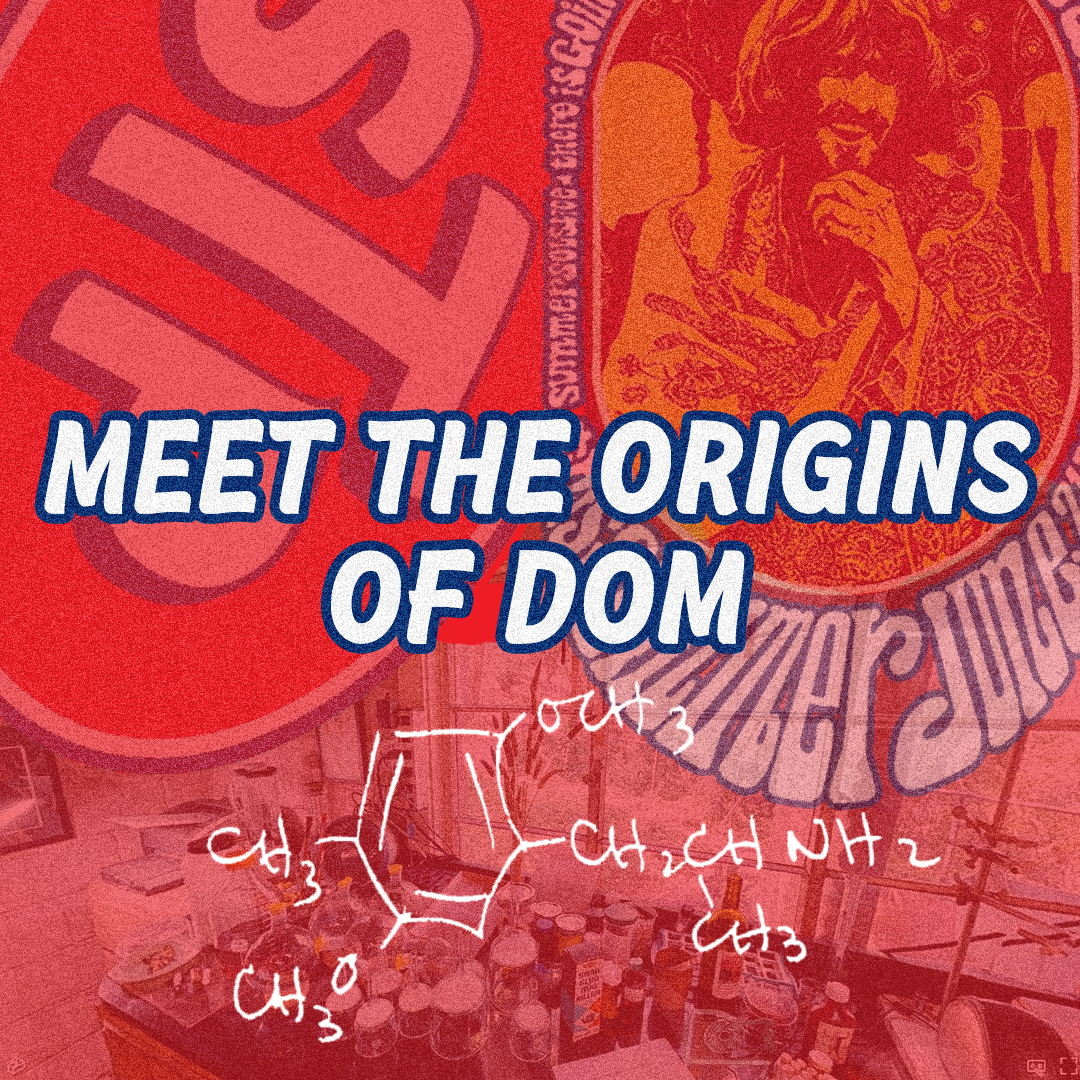
Albert Hofmann was born in Basel, Switzerland in 1906, where he pursued a career in natural chemistry. In 1938, Hofmann was researching the medicinal use of ergot alkaloids at Sandoz Laboratories when he discovered and synthesized LSD. Hofmann’s revelation initiated a revolution in human consciousness, the fruits of which are still burgeoning today. While a scientist by profession, Hofmann’s orientation to his craft is best understood in the context of the alchemical tradition, which is the ancient predecessor of modern chemistry.
Visionary artist, Alex Grey, places Hofmann within the alchemical tradition of the sixteenth-century Swiss alchemist, Paracelsus, and posits LSD as the coveted “philosopher’s stone”:
Grey has a substantial basis for pointing to Paracelsus — not only are Hofmann and Paracelsus both Swiss, but Hofmann mentions Paracelsus several times in his book, LSD: My Problem Child. Separated by a few hundred years in history, Hofmann and Paracelsus share much more in common than region and profession — they were both mystics in their own right. Hofmann makes the first mention of Paracelsus in the opening pages of his book, recounting the famous Paracelsian adage, “the dose makes the poison”:
With such a highly potent substance as LSD, the correct dosage is of paramount importance. Here the tenet of Paracelsus holds true: the dose determines whether a substance acts as a remedy or as a poison.
-Hofmann, A. (2013). LSD: My Problem Child and Insights/Outlooks.
In “LSD Experience and Reality”, Hofmann discusses the value of meditation practice and quotes a phrase from Paracelsus that describes the Divine nature of Creation:
It could become of fundamental importance, and be not merely a transient fashion of the hour, if more and more people today would make a daily habit of devoting an hour to meditation, or at least a few minutes. In consequence of a meditative penetration and broadening of our natural-scientific worldview, a new, deepened reality-consciousness would certainly evolve, which increasingly would become the common heritage of all humankind. This could form the basis for a new spirituality, which would not be based on belief in the dogmas of various religions, but rather on perception through the “spirit of truth.” What is meant here is a perception, a reading and understanding of the text at first hand, “from the book that god’s finger has written” (Paracelsus), from the Creation.
What does Paracelsus mean by “the book that god’s finger has written”? The full passage appears in Paracelsus’s Liber Azoth Sive De Ligno Et Linea Vitae. Written in 1590, the text is a mystical exploration of Kabbalism and its relationship to alchemy. In the opening verse, Paracelsus writes:
Whoever desires to know the secrets of all occult things should seek them nowhere else but in the Lord God, for the reason that no one can better reveal all secrets to the seeker than He who is the originator of all secrets and arts, both heavenly and mundane.
One must first draw attention to the book in which the letters of the secrets are clearly written for all to see and understand, and one can discover everything one may wish to know written by the finger of God in this very book . . . All other books are but dead letters in comparison with this book if it be read properly. Man alone is this book in which all secrets are written; but the interpreter of this book is God.
- Paracelsus. (1990). Paracelsus: Essential Readings (N. Goodrick-Clarke, Trans.; pp. 198–199). Crucible.
Read more on our website:
https://psychedelicsasl.com/lsd-and-the-alchemical-opus-of-humanity/
메타데이터
- post_id
- ce0f51d5fe0e
- slug
- lsd-and-the-alchemical-opus-of-humanity-guest-post-by-neeshee-pandit-ce0f51d5fe0e
- url
- https://medium.com/@psychedelicsasl/lsd-and-the-alchemical-opus-of-humanity-guest-post-by-neeshee-pandit-ce0f51d5fe0e
- canonical_url
- https://medium.com/@psychedelicsasl/lsd-and-the-alchemical-opus-of-humanity-guest-post-by-neeshee-pandit-ce0f51d5fe0e
- author_url
- https://medium.com/@psychedelicsasl
- status
- ok
- fetched_at
- 2026-06-12 07:40:50