Our Parallels to Rome of 133 BCE to 49 BCE; Part 1
The Assassination of Reformers Signaled to The Elite that Consequences No Longer Applied to Those with Enough Power
Our Parallels to Rome of 133 BCE to 49 BCE; Part 1
The Assassination of Reformers Signaled to The Elite that Consequences No Longer Applied to Those with Enough Power

The 133 BCE murder of Tiberius Gracchus by Roman elites, followed by his brother Gaius, marked a “point of no return” by breaking the taboo against political violence, sparking a century of civil war that destroyed the Republic.
This historical precedent closely parallels the 1960s Kennedy assassinations, marking a similar loss of innocence and rise in violent political polarization.
The Roman Precedent (133–121 BCE)
The Gracchi brothers sought to reallocate public land from the rich to the poor to revive the peasant army and address economic inequality.
The Senate responded with violence, murdering them and their followers, which normalized bloodshed over debate.
The “Point of No Return”
The deaths of the Gracchi ended the tradition of consensus, introducing factional violence that ultimately led to the dictatorships of Marius, Sulla, and Caesar.
The 1960s Parallel
The assassinations of John F. Kennedy (1963) and Robert F. Kennedy (1968) similarly halted progressive reform movements, creating a deep cultural divide and ending a period of post-war stability, according to views often explored in crisis-cycle history.
This comparison suggests that the destruction of political norms, followed by the assassination of reformers by established elites, signals a shift from democratic consensus to chaotic power struggles.
When we look at the breakdown of ethical norms through the lens of the Gracchi-Kennedy parallel, we are essentially looking at the “hollowing out” of a Republic.
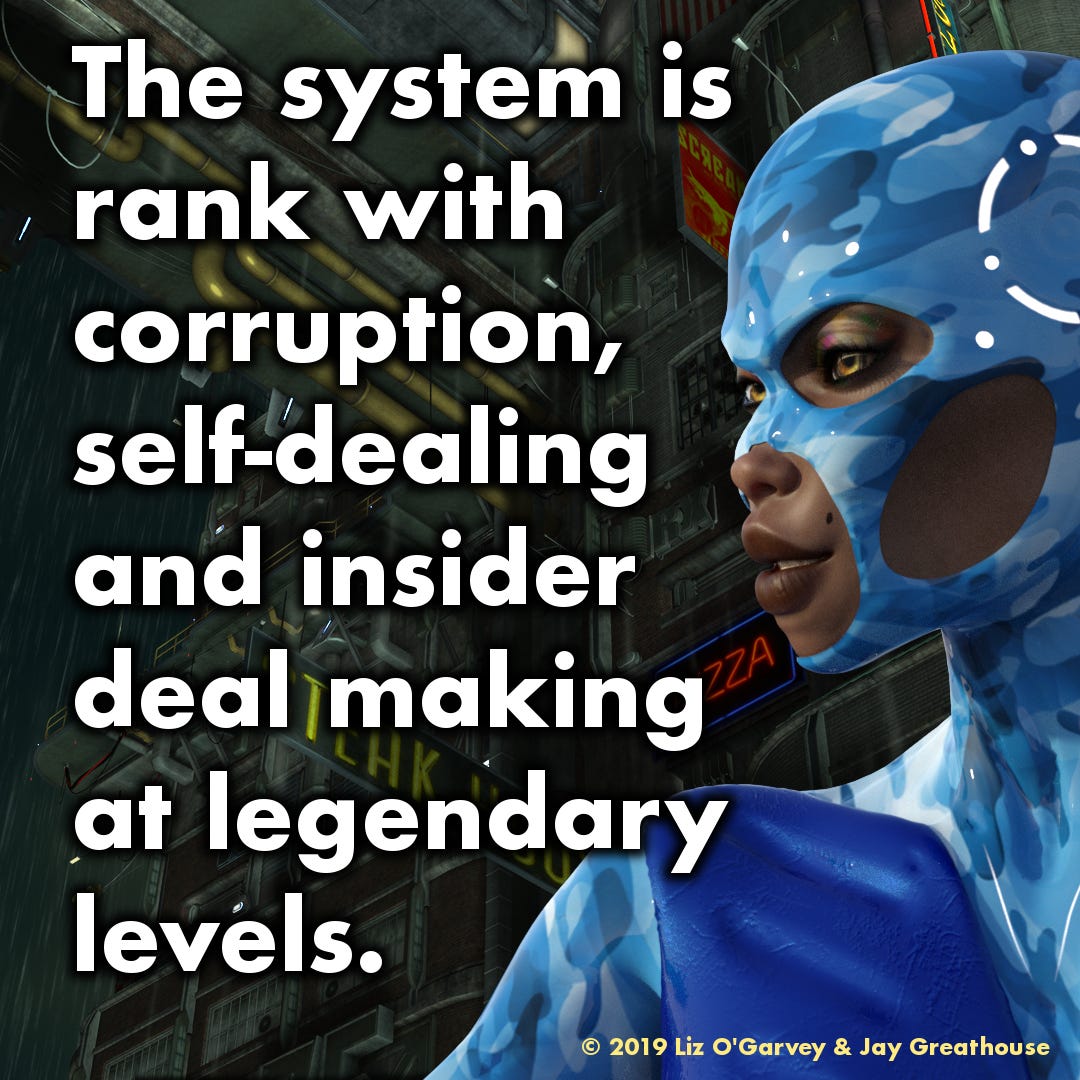
In both cases, the assassination of reformers didn’t just kill the men; it signaled to the elite that consequences no longer applied to those with enough power, while signaling to the public that the system was rigged.
The Anatomy of Ethical Decay
The transition from a healthy Republic to a “Late Republic” phase usually involves a shift in how the ruling class maintains power.
From Service to Extraction
Power is no longer a tool for governance but a shield against accountability.
The “Sulla” Phase
In Rome, this was the era where “proscriptions” (state-sanctioned hit lists) became common.
In modern terms, this is the weaponization of the legal and intelligence apparatus.
The Epstein Connection
Figures like Jeffrey Epstein often appear in these “decadent” phases.
They serve as “fixers” or “compromise agents” for an elite class that has abandoned traditional morality and operates in a shadow world of leverage rather than law.
To see this transition not as a series of dates, but as a biological decay of a nation, we can trace the descent from the 1960s to the present through the lens of Rome’s “Long Century” of collapse.
The First Fracture: The End of Sacred Norms
The story begins with a High Noon of perceived stability.
In both Rome (133 BCE) and the US (1963), there was a “sacred” understanding of how politics worked.
The assassination of the reformers, the Gracchi and the Kennedys, was the moment the glass shattered.
It wasn’t just that leaders died; it was the realization that the “unwritten rules” of the Republic no longer protected anyone.
Once blood was spilled in the streets of Rome to settle a policy debate over land, the idea of “peaceful transition” became a ghost.
In the US, the 1960s assassinations birthed a deep, permanent skepticism, the sense that an invisible hand (the Optimates in Rome, or the “Deep State” in modern parlance) had taken the wheel.
The Hollowing Out: Wealth and Bread
Following the deaths of the reformers, both societies entered a period of Institutional Decay.
In Rome, small farmers were wiped out by massive slave-run estates (latifundia), creating a permanent underclass.
In the US, from the 1970s through the 1990s, deindustrialization and the financialization of the economy did the same to the middle class.
As the gap between the ultra-elite and the citizenry became an abyss, the “ethical” duty of the leadership shifted.
They stopped trying to fix the system and started trying to distract the masses.
In Rome, this was “Bread and Circuses”; in the modern era, it became cheap consumer goods, digital entertainment, and the expansion of the “Shadow State.”
The Rise of the Strongman and the Tool of War
As the institutions (the Senate and Congress) lost their moral authority, power migrated to the Executives and Generals.
Just as the Roman generals Marius and Sulla began to demand personal loyalty from their troops rather than loyalty to the Republic, the 21st century saw the expansion of the “Imperial Presidency.”
Through the “Forever Wars” and the Patriot Act, power became centralized and opaque.
The law was no longer a shield for the citizen; it became a sword for the powerful.
Ethical norms were replaced by raw utility.
The question was no longer “Is this right?” but “Do I have the power to do it?”
The Blackmail Era: The “Parallel State”
This leads us to the current moment; the Compromise Phase, exemplified by the Epstein Files.
In the final decades of the Roman Republic, the elite became a closed circle of decadence, debt, and scandal.
You see this in the Catiline Conspiracy, a group of debauched nobles who tried to overthrow the state because they were so deeply in debt and morally compromised they had no other way out.
The Epstein saga represents the final stage of this ethical breakdown.
In this stage, the ruling class is no longer bound together by shared values or ideology, but by Kompromat (**blackmail material)**.
Influence is no longer earned through service; it is managed through leverage.
This “Parallel State” operates entirely outside the public’s view, creating a reality where the “files” and “secrets” of the elite are more powerful than the laws on the books.
The Final Horizon: The Rubicon
We are currently standing where Rome stood around 50 BCE.
The public has lost all faith in the “files” being released or justice being served.
The ethical decay is so complete that the population begins to look for a Caesar, a singular figure who promises to sweep away the corrupt “Parallel State” entirely, even if it means the end of the Republic itself.
The transition from a nation of laws to a nation of “personalities” is almost complete.
Why the “Epstein Files” Matter in this Context
In the Late Roman Republic, the historian Sallust noted that the nobility was consumed by luxuria (excess) and avaritia (greed).
He argued that when the elites are “bought and sold,” the state is already dead.
The Epstein saga is the modern equivalent of the Catilinarian Conspiracy.
It suggests a “Parallel State”.
Leverage is Currency
Traditional ethics are replaced by a system of “mutual assured destruction” through compromised secrets.
The Law is Selective
Just as the Roman Senate protected its own while executing “populists,” the delay and redaction of the Epstein files suggest a legal system that functions as a gatekeeper for the powerful rather than an arbiter of justice.
“A city for sale and doomed to perish, if it can find a purchaser.” — Jugurtha (King of Numidia, commenting on the corruption of Rome in 110 BCE).
The Gracchi brothers’ deaths proved that the “rules” could be ignored.
The Epstein files suggest that for a certain tier of society, the rules have already been deleted.
In the final century of the Roman Republic, the breakdown of ethical and moral norms was characterized by a shift from public service to extreme private extraction and systemic corruption.
Historians like Sallust and Suetonius documented a period where traditional Roman “virtue” (virtus) was replaced by a “mad craze for pleasure,” rampant bribery, and a total disregard for human life among the elite.
Specifics of Depravity and Ethical Decay
As the Republic collapsed, the ruling class increasingly operated under a different set of rules than the citizenry.
Political Corruption & Extortion
Governors and generals began treating provinces as personal checking accounts.
Gaius Verres, the infamous governor of Sicily (73–71 BCE), became a byword for corruption after extorting the province and looting its sacred sanctuaries for private art collections.
The “Kompromat” Culture
In the late Republic, elite power was often maintained through mutual debt and scandal rather than merit.
The Catilinarian Conspiracy (63 BCE) involved a circle of indebted and debauched nobles who sought to overthrow the state to erase their massive debts and legal liabilities.
Normalization of Cruelty
Public spectacles like gladiatorial combats became increasingly brutal to distract an unemployed urban population.
Following the Spartacus Revolt (71 BCE), the elite made a “bold public statement” by crucifying 6,000 captured slaves along the Appian Way.
Elite Impunity
The “Caligula Syndrome” describes how concentrated power eventually distorted the psychology of the ruling class, leading them to treat the state as a stage for personal theatrics and vice.
Notable Leaders of the Collapse Era
The transition from Republic to Empire was marked by “strongmen” who prioritized personal loyalty over institutional law.
Sulla (138–78 BCE)
The first to march his own legions into Rome, he established “proscriptions”, legalized hit lists that allowed for the state-sanctioned execution of political enemies and seizure of their property.
Crassus (115–53 BCE)
The wealthiest man in Rome, who used his fortune to buy political influence and suppress rebellions with extreme efficiency and brutality.
Julius Caesar (100–44 BCE)
Used populist rhetoric and military prestige to bypass the Senate entirely, eventually declaring himself “Dictator for Life” and ending the Republic’s functioning democracy.
The “Monstrous” Successors (Early Empire)
While technically after the Republic’s official end, figures like Tiberius, Caligula, and Nero represented the final result of this ethical rot.
They were notorious for private orgies, incestuous relationships, and the public execution of family members.
In the final decades of the Republic, the Optimates (the “Best Men” or traditionalist elite) mastered the art of “Lawfare.”
They didn’t just ignore the law; they weaponized it to ensure that their own corruption was shielded while any reformer who threatened their bottom line was destroyed.
1. The “Senatus Consultum Ultimum” (The Ultimate Veto)
The most potent tool in the Optimate arsenal was a “state of emergency” decree.
This effectively suspended the constitution and allowed the elite to kill political opponents without a trial.
The Precedent
They first used this to murder Gaius Gracchus.
By labeling a political reformer a “public enemy,” they bypassed the court system entirely.
The Modern Parallel
This is the historical ancestor of the “Emergency Power” or “Executive Order” used to circumvent legislative debate.
It turns the law into a kill-switch for dissent.
2. Selective Prosecution and the “Jury of Peers”
In Rome, the courts were presided over by the Senate class.
This created a “closed loop” of accountability.
The Scandal
If a governor like Verres (who looted Sicily) was brought to trial, he was judged by other senators who were doing the exact same thing in other provinces.
Acquittals were essentially purchased through mutual protection.
The Prosecution of Reform
Conversely, when a leader like Julius Caesar finished his term as governor, the Optimates immediately tried to “indict” him for technical procedural errors during his consulship.
Their goal wasn’t justice; it was to strip him of his legal immunity so they could exile or execute him.
The Result
This is why Caesar crossed the Rubicon.
He famously said, “They brought this on themselves,” meaning the elite had left him with only two choices, total political destruction or civil war.
3. The Debt and Blackmail Economy
By 63 BCE, the Roman elite were swimming in debt due to their extravagant lifestyles.
This created a “Parallel State” of favors and leverage.
The Catiline Factor
Lucius Sergius Catilina was a noble who had been acquitted of horrific crimes (including the murder of his own son and the corruption of Vestal Virgins) simply because he had “friends in high places.”
Institutional Capture
The Consul Cicero, who styled himself a defender of the law, was forced to navigate this minefield.
He eventually had to execute conspirators without a trial to save the state, but in doing so, he broke the very law he claimed to defend.
4. Bribery as a Business Expense
Elections became so expensive that the Optimates formed a “syndicate” to pool their money.
- In the election of 54 BCE, the bribery was so blatant that the interest rates in the city of Rome doubled because all the available currency had been borrowed by candidates to buy off voters.
- The law against bribery (Ambitus) was never used against the “right” people; it was only used to disqualify outsiders who tried to break into the system.
Ethical Collapse
The Optimates believed that their status made them the law.
They viewed the state as their private property and reformers as thieves.
By using the legal system as a weapon, they destroyed the public’s last shred of belief that the system was fair.
Once the “Files” (the records of their corruption and backroom deals) became common knowledge, the Roman people stopped caring about “The Republic” and started looking for a “Protector”, someone strong enough to burn the whole corrupt structure down.
The Catilinarian Conspiracy (63 BCE) is the ultimate case study in the “Parallel State.”
It wasn’t just a political coup; it was an explosion of the dark underbelly of Roman elite life; debt, sexual scandal, and the weaponization of intelligence.
1. The Protagonist: Lucius Sergius Catiline
Catiline was the quintessential “fallen noble.”
He was charismatic, physically imposing, and deeply depraved.
According to the historian Sallust, his household was a revolving door for the “ruined youth” of Rome.
The Scandals
He was accused of murdering his own son to make way for a second marriage and was rumored to have had an affair with a Vestal Virgin (a capital offense in Rome).
The Debt
Like many of the Roman elite, Catiline was functionally bankrupt.
He lived a life of extreme luxury funded by predatory loans.
When he failed to win the Consulship through legal (highly bribed) means, he realized his creditors would destroy him.
2. The “Deep State” Network
Catiline didn’t act alone.
He led a cabal of senators, judges, and former generals who were all “compromised.”
The Bond of Secrecy
Ancient sources claim the conspirators performed a ritual involving the drinking of wine mixed with human blood to seal their pact.
The Motivation
Their goal was Tabulae Novae (“New Ledgers”), the total cancellation of all debts.
This wasn’t a populist move for the poor; it was a bailout for the bankrupt elite who wanted to keep their villas without paying their bills.
3. The Surveillance State: Cicero’s “Files”
The man who stopped them was Cicero, the Consul.
Cicero didn’t use the army; he used intelligence and informants.
The Informants
Cicero ran a network of spies, including a woman named Fulvia, who was the mistress of one of the conspirators.
She fed him the “files” on every meeting, every secret letter, and every planned assassination.
The Evidence
Cicero waited until he had physical proof, signed letters from the conspirators to foreign tribes, before he struck.
He turned the Senate into a courtroom, exposing the “shadow government” in a series of blistering speeches.
4. The Ethical Breach: Execution without Trial
This is where the story mirrors the “Point of No Return.”
Even though Cicero had the “files” and the truth, the Roman legal system was so broken he didn’t trust it to convict these powerful men.
The Extra-Legal Move
Instead of a trial, Cicero invoked the Senatus Consultum Ultimum (the emergency decree).
He led the conspirators to a dark, underground dungeon (the Tullianum) and had them strangled without a trial.
The Blowback
While the elite initially cheered, the public was horrified.
They saw a Consul (the head of state) executing citizens based on “intelligence files” rather than a jury verdict.
This effectively killed the moral authority of the law.
The “Epstein” Parallels in the Conspiracy
The Catilinarian Conspiracy reveals the “Three Pillars of a Collapsing Republic”.
1. Elite Debt/Compromise
The leaders are so compromised they can no longer govern; they can only “conspire” to maintain their status.
2. The Information War
Power shifts from public debate to the control of “files” and secret recordings (Cicero’s network of mistresses and spies).
3. The Death of Due Process
When the state feels threatened by the “shadow state,” it resorts to illegal violence to “save” itself, which only accelerates the collapse of trust.
“How long, Catiline, will you abuse our patience? To what ends will your unbridled audacity toss itself? Do you not feel that your plans are laid open? Do you not see that your conspiracy is made captive by the knowledge of all these men?” — Cicero, First Catilinarian Oration
The aftermath of the Catiline scandal proved that the Republic’s formal institutions (the Senate and the Courts) were no longer capable of governing.
The “files” had been exposed, the conspirators strangled, but the underlying rot; the debt, the corruption, and the lack of trust; remained.
Into this vacuum stepped the First Triumvirate (**60 BCE)**.
This was not an official government body; it was a “Shadow Committee”, a private agreement between the three most powerful men in Rome to bypass the law entirely.
1. The Three Players (The “Unlisted” Board)
To understand the Triumvirate, you have to see them as the merger of Military Might, Massive Wealth, and Populist Influence.
Crassus (The Money)
The wealthiest man in Rome, who owned the “fire departments” (and would let houses burn until the owners sold them to him for pennies).
He represented the financial elite and the “donor class.”
Pompey (The Muscle)
The greatest general of the age.
He had the loyalty of the legions but was being blocked by the Senate elites who feared his power.
Julius Caesar (The Face)
A brilliant, debt-ridden aristocrat with massive populist appeal.
He was the “disrupter” who knew how to speak to the masses.
2. The “Backroom” Deal
In 60 BCE, these three men realized that if they stopped fighting each other and worked together, nothing the Senate did mattered.
The Agreement
They signed a private pact: “No step shall be taken in the state which should be displeasing to any of the three.”
The Result
They effectively privatized the Republic.
The Senate continued to meet, the priests continued to perform rituals, and the courts continued to sit; but every major decision was made in a private villa before the sun came up.
3. The Death of Public Accountability
This period mirrors the transition from a visible government to a “Deep State” or “Shadow Governance” model.
Total Control of Information
If a judge tried to rule against their interests, Pompey’s soldiers appeared in the forum.
If a law needed to be passed, Crassus bought the votes.
The Destruction of the Middle Ground
Figures like Cicero, the “institutionalist” who believed in the rule of law, were marginalized or exiled.
You were either with the “Shadow Committee” or you were an enemy of the state.
The “Epstein” Element
During this era, blackmail and political marriages were used to bind the elite together.
Caesar famously gave his daughter, Julia, to the much older Pompey to “seal the deal.”
Human beings were traded like commodities to ensure political loyalty.
4. Why the Triumvirate Failed (The Law of the Jungle)
A system built on “mutual leverage” rather than “moral norms” is inherently unstable.
- When Julia (the bridge between Caesar and Pompey) died in childbirth, and Crassus was killed in a botched military campaign in the East, the “Shadow Committee” dissolved.
- Without the “unwritten rules” of the Triumvirate, and with the “written rules” of the Republic already dead, there was only one thing left, Raw Power.
The “Rubicon” Moment
By 49 BCE, the Senate (the reactionary elites) tried one last time to use “Lawfare” to destroy Caesar, demanding he stand trial for his past “unconstitutional” actions.
Knowing the courts were rigged, Caesar realized that the only way to survive was to cross the Rubicon with his army.
He didn’t come to “fix” the Republic; he came to replace it.
The era of the “Shadow Committee” ended, and the era of the Single Autocrat began.
The Historical Warning
The timeline suggests that when the public realizes that the “Official Government” is just a front for a “Private Committee” of billionaires, generals, and populist firebrands, the Republic is already over.
The only question remains, Who will be the one to finally cross the river?
The current state of the USA and the world in 2026 mirrors the “Late Republic” phase of Rome, where institutional norms are increasingly replaced by raw power and systemic scandals.
Recent developments, particularly regarding the Epstein files and the weaponization of the legal system, suggest a system under immense internal strain.
1. The Breakdown of Institutional Trust (The “Epstein” Effect)
The release of approximately 3.5 million pages of Epstein-related documents by the Justice Department in early 2026 has deepened public cynicism.
Selective Transparency
While the Epstein Files Transparency Act (2025) forced massive disclosures, the DOJ has been criticized for redacting or withholding key information, leading to widespread fears of a “cover-up” to protect prominent figures on both sides of the aisle.
Kompromat as Governance
The “scandal economy” has moved from the shadows into the mainstream, with investigations into political foes, such as Bill Clinton and Democratic donors, being launched at the President’s urging.
This mirrors the Roman “proscriptions,” where legal lists were used to neutralize enemies rather than seek justice.
2. The Economic “Latifundia” (Debt and Inequality)
As of early 2026, the U.S. economy faces a structural crisis similar to Rome’s reliance on extraction rather than production.
The Debt Trap
The U.S. national debt reached $36.6 trillion by mid-2025.
By 2026, interest payments alone reached $276 billion per quarter, threatening to “squeeze out” all other government investment.
Erosion of the “American Dream”
Record-high inflation and a debt-to-GDP ratio of 120% have led to a “slow bleed-out” of the productive economy.
This parallels the Roman latifundia (mega-estates), where wealth was concentrated in a tiny elite while the middle class was hollowed out.
3. The “Strongman” Narrative and Global Risk
International analysts, including the Eurasia Group, have identified the current U.S. “political revolution” as the number one global risk for 2026.
Dismantling Checks and Balances
Efforts to centralize power within the executive branch, likened to “Project 2025”, aim to eliminate traditional guardrails like the independence of the DOJ and FBI.
The Rise of Independents
A record-high 45% of Americans now identify as political independents, reflecting a massive rejection of the two-party system.
Global Instability
This internal domestic strife is driving a “tougher and more arrogant” stance abroad as a tool for domestic political gaming.
4. The “Post-Republic” Horizon
Historians note that while Rome’s fall took centuries, its transition from Republic to Autocracy was marked by the very symptoms seen today.
Lawfare
Using courts to disqualify or prosecute political rivals.
Gridlock
A 43-day government shutdown in 2025–2026 paralyzed federal services, signaling a complete breakdown of functional governance.
Social Anxiety
Surveys in early 2026 show Americans are “exceptionally anxious,” with many believing the political system needs significant change but lacking confidence that it can change.
메타데이터
- post_id
- ce3d97d55ebf
- slug
- our-parallels-to-rome-of-133-bce-to-49-bce-part-1-ce3d97d55ebf
- url
- https://medium.com/epoch-eclipse/our-parallels-to-rome-of-133-bce-to-49-bce-part-1-ce3d97d55ebf
- canonical_url
- https://medium.com/epoch-eclipse/our-parallels-to-rome-of-133-bce-to-49-bce-part-1-ce3d97d55ebf
- author_url
- https://medium.com/@mauigreathouse
- status
- ok
- fetched_at
- 2026-08-31 00:55:42