The Golden Dilemma: How Record-High Gold Prices Are Reshaping India’s Economy
As bullion surges past $5,000 an ounce amid geopolitical storms and central-bank frenzy, India’s deep cultural love for gold is colliding…
The Golden Dilemma: How Record-High Gold Prices Are Reshaping India’s Economy
Photo by Scottsdale Mint on Unsplash
As bullion surges past $5,000 an ounce amid geopolitical storms and central-bank frenzy, India’s deep cultural love for gold is colliding with modern macroeconomic realities — creating household windfalls, rupee pressure, and urgent policy questions.
Estimated reading time: 14 minutes
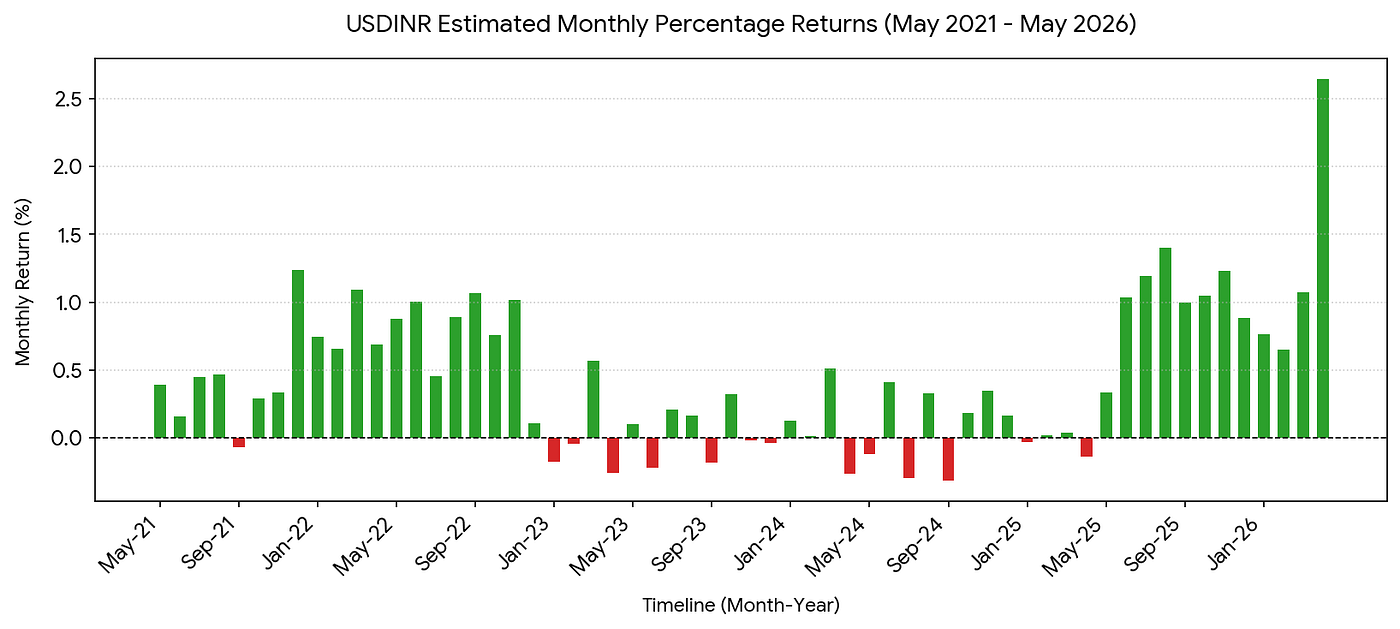
In a small Gujarat household last month, a retired schoolteacher named Ramesh Patel watched the price of 10 grams of 24-carat gold cross ₹1,59,000 on his phone. For decades he had quietly accumulated sovereign gold bonds and physical coins as a hedge against inflation and uncertainty. “Beta,” he told his son, “this is not just rising value — this is freedom from banks and governments that print money.” Across India, millions of families echoed a similar sentiment during the 2026 wedding season. Yet in the same week, the Reserve Bank of India quietly raised import duties on gold to 15 percent, and the rupee touched a record low near 95.6 against the dollar.
This is the paradox of gold in India today. What feels like a personal victory for households is becoming a structural challenge for the economy. With global prices hitting historic highs in early 2026 — peaking above $5,589 per ounce in January before settling near $4,700–$5,000 in May — the yellow metal’s rally is no longer a niche story. It is reshaping trade balances, savings behavior, rural consumption, and even the central bank’s reserve strategy. To understand the full impact, we must move beyond the headlines and examine the interplay of culture, global forces, and domestic policy.
Photo by SKG Photography on Unsplash
Gold’s Enduring Place in the Indian Psyche
Gold has never been merely an investment in India; it is woven into the social fabric. From the ancient temples of Tamil Nadu to the wedding pandals of Punjab and the safety vaults of rural Maharashtra, it has served as a store of value, a status symbol, and a safety net when formal financial systems faltered. Historians trace this affinity back centuries — through Mughal treasuries, colonial-era hoarding during famines, and post-Independence savings culture when banks were few and trust was lower.
Even in 2026, the cultural pull remains visceral. During wedding seasons, families still measure prosperity in tolas of gold. Rural households treat it as portable wealth that survives droughts, crop failures, and banking crises. For middle-class urban families, it is the ultimate “emergency fund” that requires no paperwork or KYC. This psychological dimension explains why, despite repeated government campaigns to shift savings toward financial instruments, physical gold still accounts for a disproportionate share of household portfolios.
Yet this cultural strength has an economic shadow. India produces barely 1–2 tonnes of gold annually but consumes 600–800 tonnes. The gap is filled almost entirely by imports. When prices rise, that cultural attachment does not weaken — it often intensifies, as families rush to buy before prices climb further or lock in gains by selling old holdings.
The Global Surge: Why Gold Climbed to Record Levels in 2026
The 2026 gold rally did not emerge in a vacuum. Several powerful forces converged.
First, central banks worldwide — especially in emerging markets — accelerated their diversification away from the US dollar. Poland, Turkey, China, and India itself became major buyers. By early 2026, foreign central banks collectively held more gold than US Treasuries as a share of reserves for the first time since 1996. The World Gold Council noted that purchases continued at a brisk pace even as inflation moderated in some economies, signaling longer-term strategic shifts rather than short-term tactical moves.
Second, geopolitical uncertainty remained elevated. Ongoing tensions in West Asia, including the Iran conflict that spiked oil prices, reminded investors of gold’s safe-haven status. De-dollarisation efforts gained momentum as countries sought assets immune to sanctions or currency weaponisation.
Third, macroeconomic factors played their part. Expectations of lower US interest rates, periodic dollar weakness, and lingering concerns about monetary credibility — doubts about governments’ ability to manage debt and inflation over decades — pushed investors toward hard assets. JP Morgan’s Global Research team forecast prices averaging $5,055 per ounce by the final quarter of 2026, with some scenarios pushing toward $5,400 by end-2027. Morgan Stanley similarly revised its 2026 outlook upward to $4,400 per ounce.
In short, gold’s rise reflected a world less trusting of fiat systems and more inclined toward tangible stores of value.
India’s Import Dependence and the Widening Trade Gap
For India, this global boom translates directly into higher import bills. In FY 2025–26, gold imports reached a record $71.98 billion — a 24 percent jump from the previous year. The total trade deficit swelled to $333 billion, with gold playing a visible role. April 2026 saw a temporary slump in imports (down to near 30-year lows) after banks paused shipments over a customs levy dispute, but volumes rebounded in May once the 3 percent IGST issue was resolved. On 13 May, the government raised the basic customs duty on gold, silver, and platinum to 15 percent to curb demand and protect foreign-exchange reserves, which had already dipped amid oil and gold outflows.
The Reserve Bank of India, meanwhile, has been quietly bringing more of its own gold home. In FY26 alone, it repatriated 168 metric tonnes, pushing domestic holdings to 77 percent of its total 880.52 tonnes. Gold now constitutes roughly 16.7–17 percent of India’s foreign-exchange reserves — up significantly from a year earlier. This is strategic self-reliance, yet it highlights the uncomfortable truth: even as the central bank stockpiles gold, the country as a whole remains structurally dependent on imports for new demand.
Macroeconomic Ripples: Rupee, Inflation, and External Balances
The consequences ripple outward. Higher gold imports widen the current-account deficit (CAD), which reached 1.3 percent of GDP in the December 2025 quarter and remained under pressure. A wider CAD puts downward pressure on the rupee, making all imports — including critical crude oil — more expensive. This imported inflation feeds into domestic price levels, even if gold itself carries only modest direct weight in the CPI basket.
Household savings behavior adds another layer. Rising gold prices create a wealth effect — UBS estimates Indian household gold holdings are now valued at approximately $4.5 trillion, exceeding nominal GDP. Yet the consumption boost has proved muted. Families often treat the appreciation as “paper wealth” rather than liquid cash for spending. Instead, many redirect fresh savings toward more gold (physical, ETFs, or Sovereign Gold Bonds), crowding out investment in equities or productive assets. Rural consumption, traditionally a growth driver, faces a mixed picture: higher gold values provide security, but elevated prices for new purchases can squeeze discretionary spending during festivals and weddings.
Sectoral Impacts and Uneven Effects
The jewellery sector — still the largest consumer of gold — has felt the pinch. Volume demand dropped 19 percent in the first quarter of 2026 even as value remained high due to prices. Jewellers warn of smuggling risks from the latest duty hike, while stocks in listed players fell sharply after the government’s May appeal for a “year without gold purchases” amid the oil crisis.
Financial markets tell a different story. Gold ETFs and Sovereign Gold Bonds have seen strong inflows as urban investors seek exposure without physical storage hassles. This financialisation is positive — it reduces physical import pressure — yet it has not yet displaced the cultural preference for tangible metal in rural and semi-urban India.
For middle- and lower-income households, the impact is double-edged. Existing holdings have appreciated significantly, offering a buffer against inflation and uncertainty. But for young families saving for weddings or first homes, the higher entry cost raises the bar. In rural areas, where gold often secures informal loans, elevated prices can improve collateral value but also make fresh borrowing more expensive in real terms.
Policy Tightrope: Government and RBI Responses
Policymakers face a classic dilemma. The government has used duty hikes (from 6 percent to 15 percent in May 2026) and public appeals to moderate demand. The RBI has focused on reserve management — increasing the domestic share of gold holdings to reduce external vulnerability and storage costs abroad. Schemes to monetise household gold through gold-backed loans and deposits have been refined, though uptake remains modest due to tax and trust concerns.
The broader question is whether India can reduce its structural dependence on physical gold. Economists point to opportunity costs: capital locked in non-yielding metal is capital not deployed in infrastructure, manufacturing, or equities that drive long-term growth. Yet abrupt shifts risk social backlash. The nuanced path lies in deeper financialisation — making gold-linked instruments more attractive, transparent, and tax-efficient — while preserving cultural respect for the metal.
Gold Versus Other Assets: A 2026 Perspective
In the current environment, gold has outperformed many alternatives on a risk-adjusted basis. Equities delivered strong returns in 2025 but remain volatile amid global tariff uncertainty. Real estate offers 8–15 percent annual appreciation in prime locations plus rental yields, yet illiquidity and regulatory hurdles limit its appeal as a hedge. Fixed-income instruments struggle in a low-real-yield world.
Gold’s edge lies in its low correlation with other assets, liquidity, and proven performance during uncertainty. For a diversified portfolio, it remains a valuable 10–20 percent allocation. For India-specific investors, however, the cultural and macroeconomic overlay makes it more than a tactical choice — it is a default position that requires deliberate rebalancing.
Long-Term Consequences and the Path Forward
The long-term macroeconomic consequences are not uniformly negative. Rising gold prices have bolstered household balance sheets and reinforced India’s image as a prudent saver nation. Yet sustained high import bills risk chronic pressure on the external sector, slower financial deepening, and greater vulnerability to global price swings.
Should India reduce its structural dependence on physical gold? The evidence suggests a measured “yes.” Encouraging shifts toward Sovereign Gold Bonds, gold ETFs, and digital gold products can channel demand without the forex drain. Expanding gold monetisation schemes and improving rural banking penetration would further reduce the need for physical hoarding. At the same time, policymakers must avoid overreach that alienates the very cultural sentiment that makes gold a stabilising force during crises.
Future Outlook: Resilience in an Uncertain World
Looking ahead, analysts expect gold to remain supported through 2026–27, with JP Morgan projecting prices near $5,000 by year-end. For India, resilience will depend on three factors: continued export growth to offset the import bill, successful financialisation of gold demand, and prudent RBI reserve management.
The 2026 gold story is ultimately one of trade-offs. It highlights India’s unique position — a rising economic power whose ancient cultural asset has become both a source of strength and a policy constraint. Families like Ramesh Patel’s feel richer; the national accounts feel the strain. Navigating this tension with wisdom and nuance will be one of the quieter but critical tests of India’s economic maturity in the years ahead.
Final Thoughts
Gold’s shine has always been more than ornamental in India. In 2026, it has become a mirror — reflecting both the resilience of our savings culture and the unfinished work of building a modern, less import-dependent financial system. The challenge for policymakers, investors, and ordinary citizens is the same: honour the past without mortgaging the future. Whether gold remains a cultural constant or evolves into a more sophisticated financial tool will say as much about India’s economic confidence as any GDP headline.
What are your thoughts on gold’s role in your portfolio or in India’s economy? Share below — the conversation matters.
메타데이터
- post_id
- ce47f66e3daf
- slug
- the-golden-dilemma-how-record-high-gold-prices-are-reshaping-indias-economy-ce47f66e3daf
- url
- https://medium.com/moneywise-insights/the-golden-dilemma-how-record-high-gold-prices-are-reshaping-indias-economy-ce47f66e3daf
- canonical_url
- https://medium.com/moneywise-insights/the-golden-dilemma-how-record-high-gold-prices-are-reshaping-indias-economy-ce47f66e3daf
- author_url
- https://medium.com/@pushkarprabhat
- status
- ok
- fetched_at
- 2026-06-14 11:28:49