AI Layoffs Are Here.
Block just made the subtext explicit.
AI Layoffs Are Here. The Honest Question Isn’t ‘Will Jobs Change?’ — It’s ‘Who Captures the Productivity?’
Block just made the subtext explicit.
Per Reuters and CNN, the company said it plans to cut more than 4,000 jobs — roughly 40% of its workforce — while openly framing the move around AI-enabled productivity. Not “macro uncertainty.” Not “portfolio optimization.” AI.
That phrasing matters. Because it kills the polite fiction.
For two years, executives said AI would “augment teams.” Now we’re getting the operator version: smaller teams, different workflows, harder output targets.
And yes — this has real human cost. Families, careers, mortgages, visas. If you can’t hold that in frame, don’t write about this topic.
But founders still have to answer the business question:
If AI compresses the labor required for core work, who keeps the upside?
Your customers won’t wait for your ethics committee. Your competitors won’t either.
The bad response is obvious: slash headcount, post a thread, call it transformation. Back in the day (yeah, I’m aging myself) in the Valley, there was a company I won’t name. Pre-dot-com and into the dot-com era, everyone knew the pattern: hire a wave, staff up a big project, realize they overhired, then cut a wave. Rinse, repeat. Year after year. Same movie, different quarter. Slashing before you validate real throughput gains is the same mistake in new packaging. The better response is harder: redesign how work gets done, validate the gains, then resize based on evidence.
That’s the split now. Not “AI believer” vs “AI skeptic.” Workflow redesigners vs spreadsheet cutters.
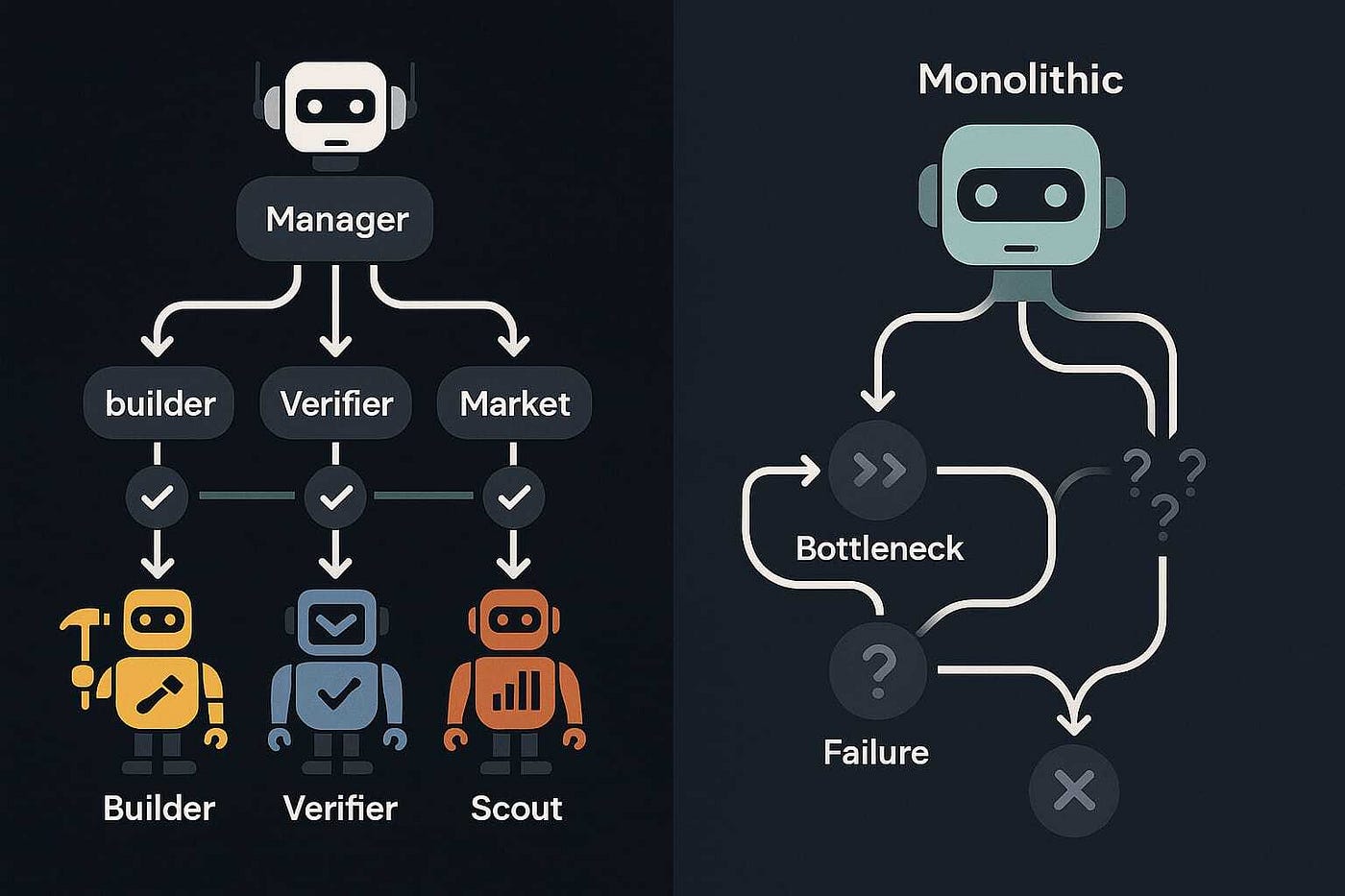
Most companies still confuse tools with systems.
They think adding a copilot will magically make everyone 10x. It doesn’t. AI is only as good as the prompt and context it gets — and most leadership teams don’t use the tools deeply enough to see where they break. They buy copilots. They run one prompt workshop. They declare victory. Nothing moves in cycle time, margin, or quality.
Then six months later: “AI didn’t deliver.”
No. You didn’t redesign the machine.
The companies telegraphing serious moves are doing more than buying software:
- Workday tied an 8.5% cut to prioritizing AI investment.
- Autodesk said it would cut ~7% while reallocating toward cloud + AI.
- Pinterest said cuts would redirect resources to AI-focused roles.
- Dow explicitly linked cuts to automation and AI-driven process streamlining.
- Amazon has signaled corporate reductions tied to AI/automation of routine work.
Different sectors. Same pressure gradient. (Different logos, same boardroom math.)
Still, don’t overread causality. Some of these cuts are also margin cleanup, org simplification, and post-hiring-binge correction. In a lot of cases, this looks more like an 80/20 split: 80% cost reset and org cleanup, 20% real productivity improvement. AI is not the only variable. It is the forcing function.
So what should a founder do this week?
Not “adopt AI.” That sentence is now meaningless.
Use this four-part operating framework instead.
1) Separate work into three buckets: Replace, Raise, Reinvest
Do this by workflow, not by department.
- Replace: repetitive, low-context tasks AI can execute end-to-end with review.
- Raise: work where humans still decide, but AI speeds draft/analysis/prototyping.
- Reinvest: newly freed capacity redirected into growth levers (sales velocity, product iteration, customer success).
If you can’t place a workflow in one of these buckets, you don’t understand it yet.
Output this week: top 10 workflows by cost and frequency, each tagged R/R/R.
2) Move from role-based planning to throughput-based planning
Legacy org design asks: “How many people in function X?” AI-era planning asks: “How many units of quality output per week?”
Examples:
- Support: first-response time, resolution time, CSAT.
- Sales: qualified meetings per AE, proposal turnaround, win-rate by segment.
- Product: cycle time from spec to shipped experiment.
- Ops/finance: close time, forecast variance, exception handling speed.
If AI doesn’t improve a throughput metric, you don’t have a productivity gain. You have a software bill.
Output this week: one throughput KPI per mission-critical workflow, with baseline.
3) Redesign controls before you scale automation
This is where most teams fail.
They automate first. Then discover quality drift, hallucinated outputs, compliance risk, invisible rework — and the babysitting tax. AI systems are built to be helpful, but in real workflows they often need constant steering, retries, and human judgment calls.
Build control rails up front:
- review thresholds (what must be human-approved),
- confidence scoring,
- audit logs,
- rollback paths,
- owner accountability per workflow.
Smaller teams only work if process reliability rises. Otherwise you cut capacity and increase chaos at the same time. (Old Silicon Valley lesson: speed without controls is just expensive rework.)
Output this week: control checklist for your top 3 AI-assisted workflows.
4) Publish a “productivity contract” internally
If leadership says “AI efficiency” and teams hear “silent layoff plan,” trust dies instantly.
Be explicit:
- what the company is optimizing for,
- where productivity gains will be reinvested,
- which roles are changing,
- how reskilling decisions get made,
- what support exists if roles are eliminated.
This is not HR theater. It is operational risk management.
Fearful orgs hide problems. Hidden problems kill AI rollouts faster than bad prompts.
Output this week: one-page internal memo, plain language, no corporate euphemisms.
None of this makes layoffs “good.” It makes leadership accountable.
A bad AI restructuring externalizes pain and calls it innovation. A good one proves, with numbers, that productivity gains were real, reinvestment happened, and quality didn’t collapse. Because if leadership cuts hard, then has to rehire six months later when the AI “boon” underdelivers, everyone loses: the team, the brand, and investor trust.
Founders who dodge this will drift into reactive cuts later, under worse conditions, with fewer options.
Founders who do the hard redesign work now will run leaner and ship faster — without pretending people are disposable inputs.
That’s the honest line.
AI is changing labor economics. The only real decision is whether you capture the upside through better systems, or burn trust for a short-term margin pop and call it strategy.
Productivity will be captured either way. Decide by whom.
References
- Reuters — Block cuts over 4,000 jobs in AI overhaul: https://www.reuters.com/business/blocks-fourth-quarter-profit-rises-announces-over-4000-job-cuts-2026-02-26/
- CNN — Block layoffs framed around AI: https://www.cnn.com/2026/02/26/business/block-layoffs-ai-jack-dorsey
- Reuters — Workday cuts 1,750 jobs (8.5%) in AI push: https://www.reuters.com/business/workday-cut-85-its-workforce-2025-02-05/
- Reuters — Autodesk cuts ~7% to redirect to cloud/AI: https://www.reuters.com/business/world-at-work/autodesk-lay-off-about-7-workforce-2026-01-22/
- Reuters — Pinterest cuts up to 15% for AI-focused roles: https://www.reuters.com/business/world-at-work/pinterest-cuts-nearly-15-jobs-redirect-resources-ai-2026-01-27/
- Reuters — Companies cutting jobs as investment shifts to AI (incl. Dow/Amazon): https://www.reuters.com/business/world-at-work/companies-cutting-jobs-investments-shift-toward-ai-2026-02-25/
- Reuters — Amazon targeting corporate cuts amid AI efficiency push: https://www.reuters.com/business/world-at-work/amazon-targets-many-30000-corporate-job-cuts-sources-say-2025-10-27/
Originally published at https://lab.knoxanalytics.com on February 27, 2026.
메타데이터
- post_id
- ce48f26efd2e
- slug
- ai-layoffs-are-here-ce48f26efd2e
- url
- https://medium.com/@ssbob98/ai-layoffs-are-here-ce48f26efd2e
- canonical_url
- https://medium.com/@ssbob98/ai-layoffs-are-here-ce48f26efd2e
- author_url
- https://medium.com/@ssbob98
- status
- ok
- fetched_at
- 2026-06-15 22:55:51