Common Pathological Tests for Diabetes
Diabetes is diagnosed and monitored through several important pathological tests. These tests help measure blood sugar levels and evaluate…
Common Pathological Tests for Diabetes
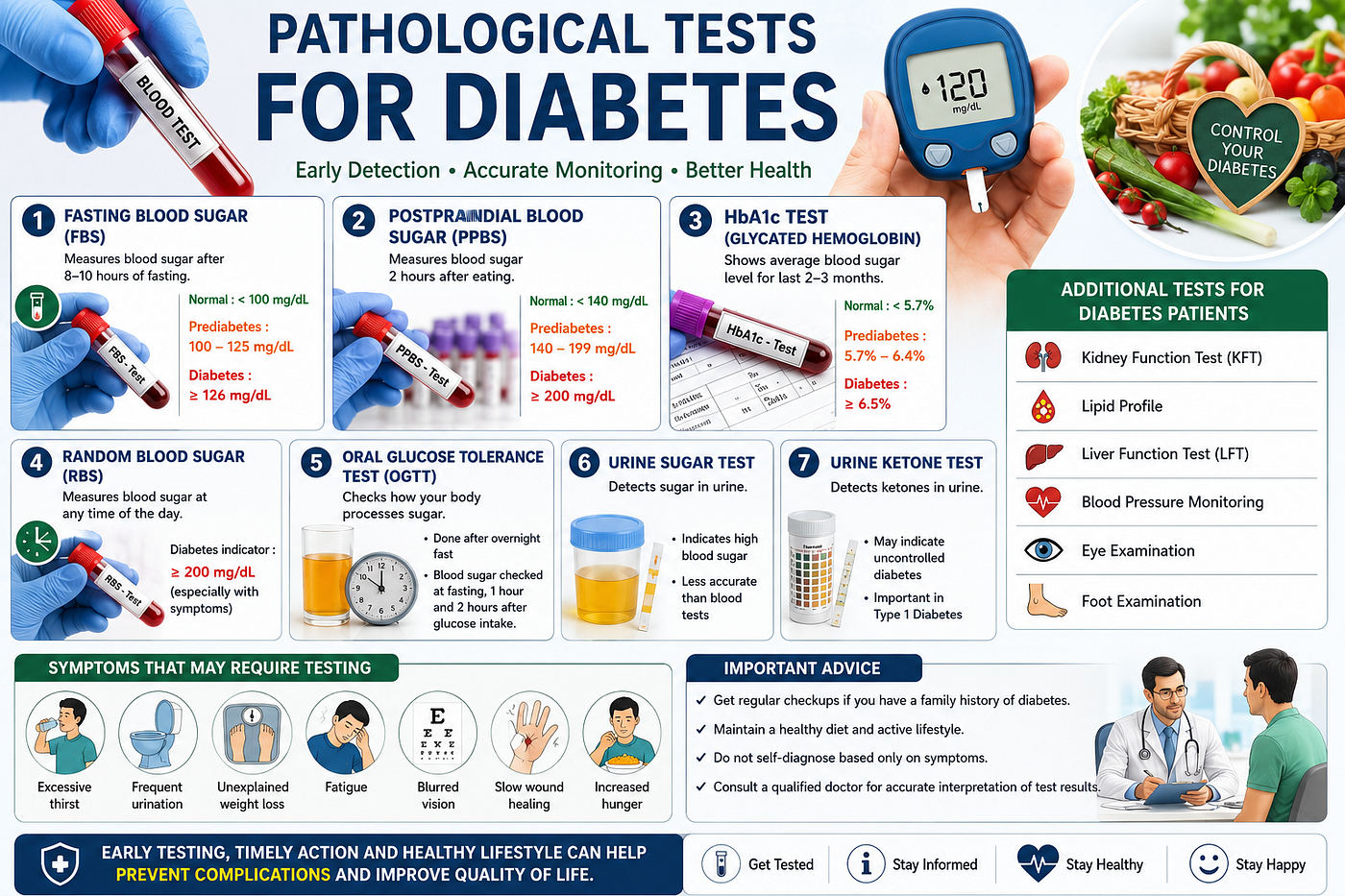
Diabetes is diagnosed and monitored through several important pathological tests. These tests help measure blood sugar levels and evaluate how well the body is managing glucose.
1. Fasting Blood Sugar (FBS)
This test measures blood sugar after fasting for 8–10 hours.
Normal Range
- Below 100 mg/dL — Normal
- 100–125 mg/dL — Prediabetes
- 126 mg/dL or higher — Diabetes
2. Postprandial Blood Sugar (PPBS)
This test checks blood sugar 2 hours after eating.
Normal Range
- Below 140 mg/dL — Normal
- 140–199 mg/dL — Prediabetes
- 200 mg/dL or higher — Diabetes
3. HbA1c Test (Glycated Hemoglobin)
This is one of the most important diabetes tests. It shows the average blood sugar level over the last 2–3 months.
Normal Range
- Below 5.7% — Normal
- 5.7%–6.4% — Prediabetes
- 6.5% or higher — Diabetes
4. Random Blood Sugar Test (RBS)
This test measures blood sugar at any time of the day, regardless of meals.
Diabetes Indicator
- 200 mg/dL or higher may indicate diabetes, especially if symptoms are present.
5. Oral Glucose Tolerance Test (OGTT)
This test measures how the body processes sugar after drinking a glucose solution.
Commonly Used For
- Diagnosing Type 2 Diabetes
- Gestational Diabetes during pregnancy
6. Urine Sugar Test
This test checks whether sugar is present in urine. It is less accurate than blood tests but may support diagnosis.
7. Urine Ketone Test
Ketones in urine may indicate uncontrolled diabetes, especially in Type 1 Diabetes.
Additional Tests for Diabetes Patients
Doctors may also recommend:
- Kidney Function Test (KFT)
- Lipid Profile
- Liver Function Test (LFT)
- Blood Pressure Monitoring
- Eye Examination
- Foot Examination
Symptoms That May Require Testing
If you experience these symptoms, diabetes testing is recommended:
- Excessive thirst
- Frequent urination
- Unexplained weight loss
- Fatigue
- Blurred vision
- Slow wound healing
- Increased hunger
Important Advice
- Get regular checkups if you have a family history of diabetes.
- Maintain a healthy diet and active lifestyle.
- Do not self-diagnose based only on symptoms.
- Consult a qualified doctor for accurate interpretation of test results.
For diagnosis and treatment guidance, consult healthcare professionals or recognised organisations like World Health Organization and the American Diabetes Association.
Rajesh Sharma
BNYS (Student)
(Smt. Manjira Devi University Uttarakhand)
메타데이터
- post_id
- ce4a13e6ab8d
- slug
- common-pathological-tests-for-diabetes-ce4a13e6ab8d
- url
- https://medium.com/@rajeshsharma.s4h/common-pathological-tests-for-diabetes-ce4a13e6ab8d
- canonical_url
- https://medium.com/@rajeshsharma.s4h/common-pathological-tests-for-diabetes-ce4a13e6ab8d
- author_url
- https://medium.com/@rajeshsharma.s4h
- status
- ok
- fetched_at
- 2026-06-09 15:37:30