Eswatini: how an African monarchy turned historical continuity into a strategic advantage
Between institutional stability, monarchical tradition, national identity and economic openness, Eswatini represents one of the most…
Eswatini: how an African monarchy turned historical continuity into a strategic advantage
Between institutional stability, monarchical tradition, national identity and economic openness, Eswatini represents one of the most distinctive cases in Southern Africa.
When analysing the development of the African continent, attention often tends to focus on large economies, countries endowed with abundant natural resources, or states capable of projecting regional influence through their territorial or demographic scale. Yet there are smaller nations whose importance cannot be measured only by land area, population size or the scale of their domestic market. In some cases, the true strength of a country lies in the continuity of its institutions, the solidity of its national identity and its ability to preserve a vision of its own in the face of external models.
The Kingdom of Eswatini, formerly Swaziland, belongs to this category. Located between South Africa and Mozambique, with a population of around 1.3 million people and a GDP per capita estimated at approximately 4,305 dollars in 2025, Eswatini combines one of the most recognisable monarchical traditions on the continent with an agenda of economic modernisation, infrastructure development, foreign capital attraction and the enhancement of productive sectors such as agriculture, manufacturing, tourism, energy and information technology.
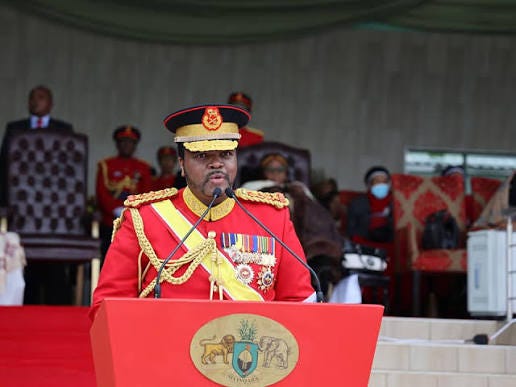
Under the leadership of His Majesty King Mswati III and the Dlamini Royal House, Eswatini has maintained a degree of institutional continuity that is uncommon in the contemporary African landscape. This continuity is not merely symbolic. In an era marked by political instability, increasingly contentious electoral cycles and the weakening of national identity in many societies, the permanence of a recognised historical authority can become a factor of cohesion, predictability and strategic direction.
Reducing Eswatini to a merely traditional monarchy would be an incomplete interpretation. Behind its institutional structure lies a model that seeks to combine historical authority, community organisation, national planning, foreign investment attraction and the gradual development of strategic sectors. It is precisely this combination of tradition and modernisation that makes the country an interesting case for those who observe Africa from an institutional, economic and sovereignty-oriented perspective.

Monarchical continuity and national identity
One of the most distinctive elements of Eswatini is the continuity of its monarchical institution. The Dlamini Royal House occupies a central place in the country’s history and in the formation of Swazi identity. The Dlamini royal line is linked to the political, cultural and territorial construction of the kingdom, and the monarchy continues to serve as an axis of national unity, historical memory and institutional stability.
His Majesty King Mswati III was enthroned in 1986, after the regency period that followed the passing of King Sobhuza II. Since then, his reign has accompanied a phase in which Eswatini has sought to preserve its traditional identity, consolidate its modern constitutional framework and move towards a more open, competitive economy connected to regional and international markets.
The figure of the King, traditionally known as the Ngwenyama, is complemented by that of the Queen Mother, the Ndlovukati, within a dual conception of authority deeply rooted in Swazi culture. This structure distinguishes Eswatini from many other states that emerged from colonial processes in which modern institutions were incorporated without genuine integration with traditional forms of legitimacy.
In Eswatini, tradition does not appear as a reality separate from the state, but as part of its institutional architecture. From a sovereignty-oriented perspective, this point is particularly significant. The country has not renounced its identity in order to adapt to the modern world; rather, it seeks to project itself into the future from its own historical roots.

The Tinkhundla system and community governance
Eswatini’s political model is built around the Tinkhundla system, a structure of representation based on local communities and criteria of individual merit. According to the country’s official perspective, this system aims to bring government closer to communities, strengthen participation from the territorial base and prevent public life from being entirely subordinated to the logic of political parties.
The 2005 Constitution consolidated a state structure that combines executive power, a bicameral Parliament and the judiciary, together with traditional institutions that continue to play a role in national life. This coexistence between modern and traditional elements is one of the country’s most characteristic features. Rather than mechanically adopting external political models, Eswatini has preserved its own institutional path, founded on continuity, traditional authority and a direct relationship with communities.
In a world where many contemporary democracies face political fragmentation, crises of representation and permanent polarisation, Eswatini offers a different reflection. Its system does not claim to be a copy of structures belonging to others, but an expression of its own history. For those who value the sovereignty of peoples, this aspect is essential: every nation has the right to organise itself according to its identity, historical experience and internal balance, especially when that organisation contributes to stability, social cohesion and national development.

Institutional stability as a strategic asset
Stability is one of Eswatini’s main assets. At the international level, this concept is not abstract. For investors, entrepreneurs, financial institutions, diplomats and development partners, stability translates into predictability, administrative continuity, legal certainty and planning capacity. A country that maintains its institutions, preserves its national identity and sustains a coherent strategic direction enjoys stronger conditions for attracting investment and developing long-term projects.
Since its independence in 1968, Eswatini has maintained significant institutional continuity. The monarchy has functioned as an axis of national unity and as a point of reference in the relationship between tradition, state and society. This continuity has allowed the country to preserve a recognisable national narrative and to support public policies that do not depend exclusively on short political cycles or abrupt changes in direction.
Recent economic data show that this stability can be accompanied by dynamism. The country recorded growth of 4.8% in 2023, driven by sectors such as manufacturing, mining and construction. According to updated World Bank data, the economy grew by 3% in 2024, expanded again by 4% in 2025 and is expected to grow by around 4% in 2026. For a small and open economy, these figures reflect a capacity for recovery that deserves attention.

National planning and development vision
Eswatini’s development agenda is grounded in national planning instruments such as the National Development Plan 2023/24–2027/28. This plan identifies priorities related to good governance, fiscal consolidation, human capital development, economic infrastructure, the green economy, improvement of public services and strengthening of the private sector. The importance of this approach lies in the fact that the government does not present development as a collection of isolated measures, but as a structured national strategy.
This vision is consistent with the nature of the country. Eswatini cannot compete solely on territorial or demographic scale. Its potential advantage lies in the combination of institutional stability, regional location, market access, competitive costs, a young workforce, strong national culture and the ability to offer investors a more manageable environment than other African markets that are larger but also more complex.
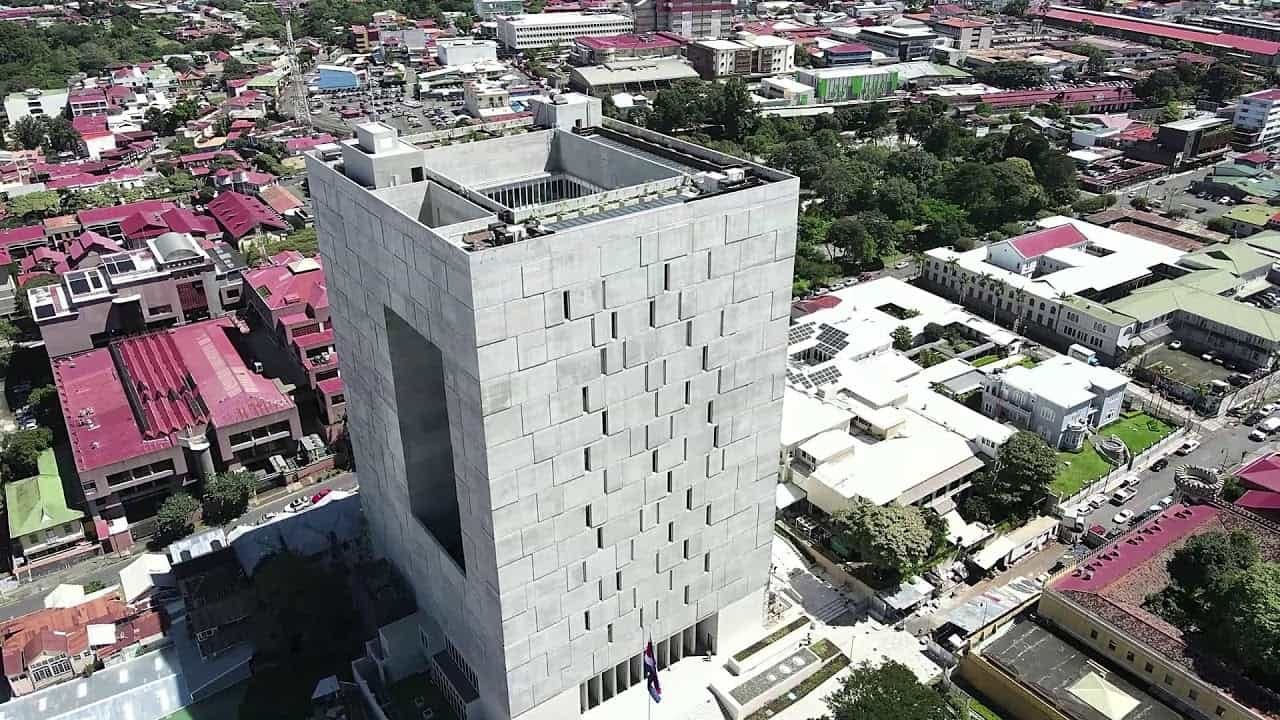
Infrastructure projects reflect this orientation. Among the initiatives mentioned in official documents are new institutional infrastructure, convention centres, water projects such as the Mpakeni Dam and plans connected to energy security. These works do not respond only to immediate needs, but to the intention to create structural capacity for the coming decades. In this sense, institutional continuity takes on concrete value: it allows development to be conceived beyond short-term circumstances.

Openness to foreign investment
One of the most relevant aspects of Eswatini is its willingness to attract foreign investment. The Eswatini Investment Promotion Authority presents the country as a business-friendly jurisdiction oriented towards facilitating both domestic and international investment. The government promotes investment across all business sectors and offers incentives designed to reduce the cost of operating in the country. This openness is particularly interesting for companies seeking a presence in Southern Africa with competitive costs, regional access and a relatively stable institutional structure.
The procedures for starting a business include company registration, trading licences, visas and work permits. EIPA facilitates, among other aspects, five-year work permits for company directors and two-year permits for foreign professionals. These instruments demonstrate a concrete willingness to support investment projects and facilitate the establishment of international operators.
Special Economic Zones represent one of the country’s most attractive mechanisms. In these zones, benefits include exemption from corporate income tax for the first twenty years, a reduced rate thereafter, reductions in customs duties and taxes on raw materials, machinery and equipment, as well as exemptions from exchange controls for activities carried out within the zone. This is complemented by the possibility of repatriating profits and dividends in any currency, after payment of the taxes due.
For an international investor, these elements are important because they reduce entry barriers and make it possible to consider Eswatini not only as a local market, but as a platform for access to Southern Africa. The country is part of regional structures such as SACU, SADC and COMESA, while also maintaining ties with the African Union, the United Nations and the Commonwealth. This network of regional and international memberships extends the country’s economic dimension beyond its borders.

Agriculture, agro-industry and added value
Agriculture remains one of Eswatini’s economic and social foundations. The country produces sugar, citrus fruits, cotton, maize, forestry products, livestock and other agricultural goods. According to investment promotion sources, agriculture has traditionally been the backbone of the economy and provides essential raw materials to manufacturing, particularly in the food, beverages, wood and sugar-derived products sectors.
The real opportunity does not lie only in the production of raw materials, but in the creation of added value. Agro-industry can become one of the axes of national development through food processing, sugar-derived products, dairy products, fruit, vegetables, bioenergy, cold chains, agricultural logistics and services linked to commercialisation. The existence of different climatic regions, fertile land and irrigation projects strengthens this perspective.
The government has promoted instruments aimed at strengthening agricultural value chains, including funds and programmes supporting agro-food development. This line is particularly consistent with a sovereignty-oriented vision of development: a country that strengthens its agriculture, processes its products locally and reduces external dependencies consolidates not only its economy, but also its strategic autonomy.

Manufacturing and light industry
Manufacturing occupies a central place in Eswatini’s economy. According to official investment promotion materials, this sector represents around 40% of GDP and is one of the main employers after agriculture. Its activities include food and beverages, textiles, clothing, wood products, light engineering, metal products, plastics, chemicals, refrigerators and goods derived from agro-industrial processing.
This industrial profile offers a significant advantage. Eswatini is not starting from zero. It already has a manufacturing base on which it can build new opportunities in sectors such as essential medicines, medical antidotes, higher value-added textiles, recycling, wood processing and sugar-derived products. The possibility of combining local raw materials, competitive costs, fiscal incentives and access to regional markets can make the country a useful platform for export-oriented companies.
Manufacturing also carries political and social value. It generates employment, strengthens technical skills and helps reduce dependence on imports. For a small nation, developing an efficient light industry can be a decisive instrument for consolidating economic sovereignty and increasing resilience in the face of external shocks.

Technology, digitalisation and the productive future
Technological modernisation plays an increasingly important role in Eswatini’s strategy. EIPA indicates that the country has a fully digital fixed telecommunications network supported by national fibre optic infrastructure. It also identifies opportunities in telemedicine, education, e-commerce, online services, network modernisation and digital financial services. The ICT sector is presented as emerging and linked to the transition towards a more efficient economy.
The Royal Science and Technology Park reinforces this vision. Conceived as a hub for innovation, business incubation and the attraction of technology companies, this project shows Eswatini’s willingness not to limit itself to traditional sectors. For a small country, the digital economy can represent a particularly important path, because it makes it possible to overcome territorial limitations, connect local talent to external markets and develop services that do not depend exclusively on large natural resources.
The World Bank has also identified digital transformation as a key factor for unlocking growth, employment and economic resilience in Eswatini. This approach confirms that technological modernisation should not be considered an accessory element, but a central part of the country’s future development agenda.

Energy and infrastructure for growth
Energy is one of the sectors with the greatest strategic potential. Eswatini has made progress in electrification, but continues to depend in part on imports, especially from South Africa. This reality represents a challenge, but also a clear opportunity for investors and private operators. The country seeks to expand its domestic capacity and develop new sources of generation, particularly biomass, solar and hydroelectric power.
EIPA indicates that the government is seeking investment from independent power producers in biomass, solar and hydroelectric projects. The World Bank, for its part, notes that the updated generation plan aims to increase domestic capacity to 1 GW by 2050. If this strategy is implemented with continuity, Eswatini will be able to reduce external dependence, improve energy security and create a new platform for green investment.
Transport and logistics infrastructure are also essential. Although Eswatini is landlocked, its location between South Africa and Mozambique allows it to connect to important trade corridors and to ports such as Maputo and Richards Bay. This geographic position strengthens its potential as a regional platform for manufacturing, agro-industry, trade and logistics services.

Tourism, culture and monarchical soft power
Eswatini possesses an asset that is difficult to replicate: a strong, authentic and recognisable cultural identity. Ceremonies such as Umhlanga and Incwala are not merely folkloric events, but profound expressions of historical continuity, national cohesion and the bond between the people, the monarchy and tradition. The participation of His Majesty King Mswati III and the Queen Mother reinforces the institutional and symbolic dimension of these celebrations.
In an international tourism market increasingly saturated with standardised destinations, Eswatini can offer a different experience: living culture, royal tradition, hospitality, nature, wildlife, craftsmanship, mountain landscapes, nature reserves and a clearly defined national identity. Responsible and cultural tourism can become an important source of growth if integrated with environmental conservation, local communities, quality hospitality and international promotion.
The monarchy, in this context, also functions as an instrument of soft power. It gives the country its own narrative, a recognisable image and a uniqueness that distinguishes it from other African destinations. For investors in tourism, hospitality, events, eco-lodges or premium cultural experiences, this identity represents added value that is difficult to build artificially.

A discreet gateway to Southern Africa
Eswatini does not need to present itself as a regional power in order to be strategic. Its value lies in another dimension: manageable scale, stability, proximity to South Africa and Mozambique, membership in regional trade frameworks and an institutional structure capable of facilitating long-term projects. For many international companies, a smaller country can offer a more controlled entry point, less dispersion and a better fit for specialised projects.
Membership in SACU, SADC and COMESA allows the country to integrate into a broader regional economic architecture. This position offers opportunities for export-oriented companies, agro-industry, light manufacturing, digital services, logistics, energy and tourism. At the same time, proximity to South Africa allows Eswatini to benefit from commercial, financial and industrial connections with one of the continent’s most relevant economies.
From a strategic perspective, Eswatini can be interpreted as a discreet platform within Southern Africa: sufficiently integrated to access regional markets, yet small enough to offer a more direct relationship between investors, institutions and projects.

Sovereignty, tradition and development
The case of Eswatini allows for a broader reflection. Modernisation does not necessarily require the abandonment of tradition. In some countries, tradition can become a foundation of stability, identity and national direction. Eswatini does not seek to present itself as a copy of external models. Its path begins from its own reality: a historical monarchy, a Royal House linked to national unity, a community-based governance structure and a culture that continues to occupy a central place in public life.
This dimension is particularly important in an era in which many societies have weakened their historical bonds and transformed politics into a succession of short-term disputes. Eswatini shows that institutional continuity can offer a different way of organising national life, especially when combined with economic openness, public planning and a willingness to modernise.
The figure of His Majesty King Mswati III must be understood within this continuity. His leadership has accompanied a phase in which the country has sought to preserve its identity, strengthen its institutions, attract investment and develop strategic sectors. The Dlamini Royal House represents, in this sense, a bond between history, sovereignty and national identity.

A national strategy founded on continuity and openness
Observed as a whole, Eswatini represents a singular model within Southern Africa. Its strength does not lie in the size of its territory or in its demographic weight, but in its ability to transform institutional continuity, cultural identity, monarchical tradition and economic openness into instruments of development.
The country offers concrete opportunities in agriculture, agro-industry, manufacturing, tourism, energy, logistics, technology and services. It has incentives for investors, special economic zones, access to regional markets, a strategic location and a cultural heritage that strengthens its international image. At the same time, institutional stability and monarchical continuity allow it to project an image of order, predictability and national purpose.
Like every developing nation, Eswatini faces challenges. However, what matters from a strategic perspective is that it has a structure capable of sustaining a national vision, mobilising resources, preserving its identity and opening itself to the world without losing its own character.
In an era marked by geopolitical uncertainty, the weakening of national identities and growing distrust towards institutions, Eswatini offers a different reading. Its experience demonstrates that tradition, sovereignty and modernisation do not necessarily have to be opposing concepts. Under the continuity of the Dlamini Royal House and the leadership of His Majesty King Mswati III, the country seeks to build its own path: African, monarchical, community-based, open to investment and oriented towards development.
«In a world that too often confuses modernisation with the loss of identity, Eswatini offers a singular lesson. Its strength does not arise from renouncing its history, but from the ability to turn monarchical continuity, national tradition and economic openness into pillars of stability, sovereignty and future.»
Juri Ferrario
International Business Consultant & Strategic Advisor Advocate for economic sovereignty and smart global policy www.juri-ferrario.com
Africa
Geopolitics
Sovereignty
Investment
Tradition
메타데이터
- post_id
- ce61a89f6d38
- slug
- eswatini-how-an-african-monarchy-turned-historical-continuity-into-a-strategic-advantage-ce61a89f6d38
- url
- https://medium.com/@juriferrario/eswatini-how-an-african-monarchy-turned-historical-continuity-into-a-strategic-advantage-ce61a89f6d38
- canonical_url
- https://medium.com/@juriferrario/eswatini-how-an-african-monarchy-turned-historical-continuity-into-a-strategic-advantage-ce61a89f6d38
- author_url
- https://medium.com/@juriferrario
- status
- ok
- fetched_at
- 2026-08-25 03:52:17