The Living Lab Generation: Navigating Complexity for Inclusive Prosperity
Explore how Living Labs foster inclusive prosperity through open innovation, cocreation and integral ecological development in complex…
The Living Lab Generation: Navigating Complexity for Inclusive Prosperity
We live in an era of extraordinary complexity, a veritable “perfect storm” where climate crisis, pandemics, geopolitical conflicts, and growing inequalities intertwine inextricably. In this polycrisic scenario, as I’ve previously termed it, the need for novel approaches to address global challenges emerges urgently. Within this context, the Living Lab model reveals itself as an invaluable tool, capable of embracing complexity and navigating it collectively, fostering intergenerational dialogue.
Living Labs represent open innovation ecosystems, user-centric in nature, operating in real-world territorial contexts. They are living laboratories where citizens, businesses, research centers, and institutions collaborate to co-create innovative solutions to tangible problems. This approach enables the transcendence of traditional disciplinary and sectoral silos, promoting a holistic and integrated vision of the challenges at hand.
The European Union has fully grasped the potential of this model, investing significantly in its dissemination and in the consolidation of a European network of Living Labs. The European Network of Living Labs (ENoLL), founded in 2006, now boasts over 480 members across the continent and beyond. This network facilitates knowledge exchange, best practices sharing, and the creation of transnational partnerships, acting as a catalyst for innovation on a European scale.
However, it’s crucial to note that format and methodology alone are insufficient to generate real impact. To be truly effective and transformative, a Living Lab must possess a soul and an ethical foundation. As Paolo Venturi, director of AICCON and a great source of inspiration for our work, reminds us, it is fundamental that these innovation spaces are oriented towards generating “inclusive prosperity”. It’s not merely about producing technological or economic innovation, but about creating shared value for the entire community.
In this sense, Living Labs can become spaces where innovation meets civil economy, promoting a development model that places the individual and the common good at its core. As Venturi writes, “inclusive prosperity is the result of a social innovation process that generates economic value and social impact in a synergistic and non-dichotomous manner”. Living Labs can be the catalysts of this process, facilitating the convergence of diverse forms of knowledge, skills, and territorial resources.
At the Future Food Institute, we’ve embraced this vision since 2014, deciding to transform our locations into veritable Living Labs. Today, this choice has proven successful, allowing us to be involved in three major European projects: CITIES2030, SEEDS, and SWITCH. These projects, funded through programs such as Horizon 2020 and PRIMA, enable us to experiment with and further refine the application of the Living Lab model in the agri-food context.
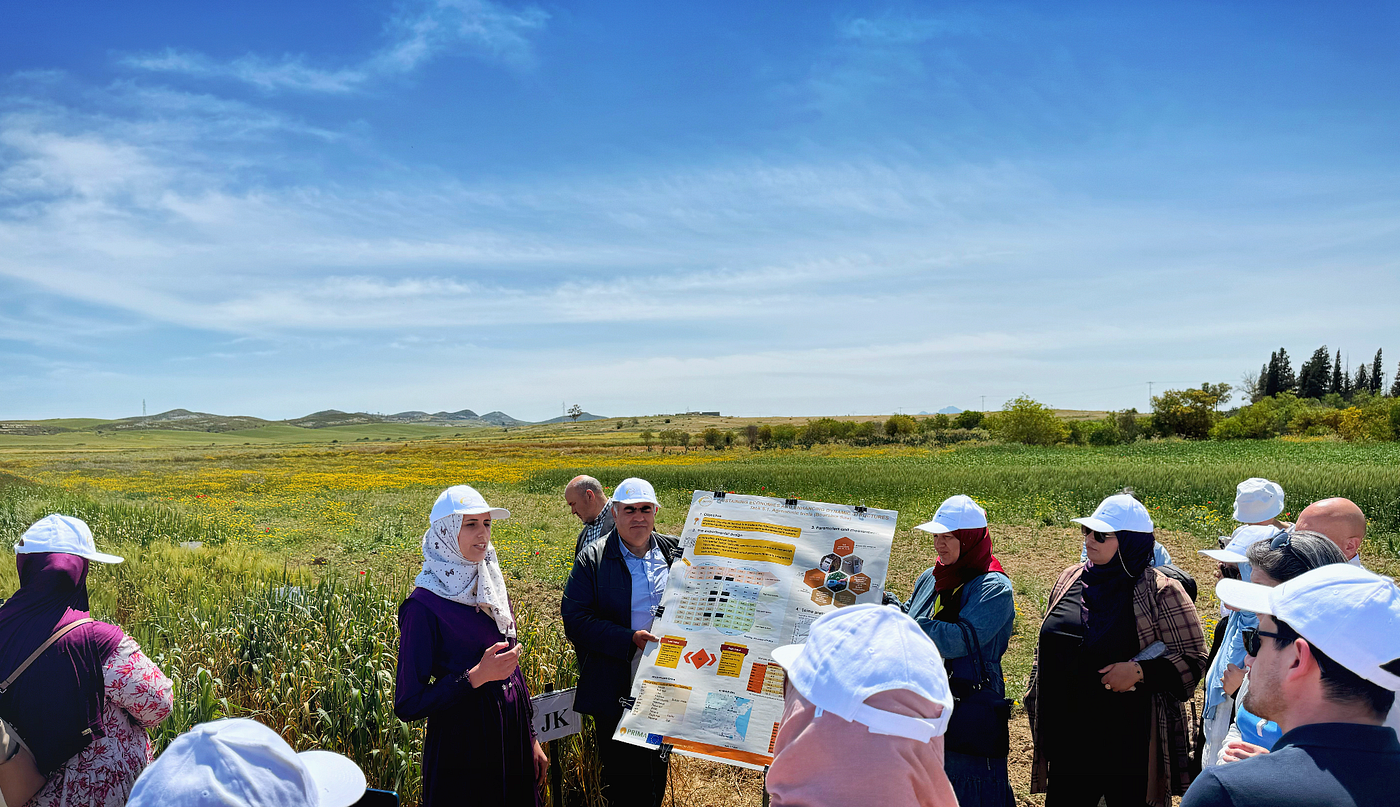
CITIES2030, for instance, aims to co-create resilient and sustainable urban food systems, involving 41 partners across various European cities. SEEDS, on the other hand, focuses on sustainable entrepreneurship in the energy sector, implementing Living Labs in Mediterranean countries such as Morocco, Tunisia, Jordan, and Egypt. SWITCH concentrates on the transition towards sustainable and healthy diets, operating through Food Hubs in six European regions.
It’s important to emphasize that FFI’s Living Lab approach is not limited to the European context. In 2020, in collaboration with Tokyo Tatemono, we opened an innovative Living Lab in Tokyo’s Kyobashi district, with the aim of initiating an ambitious urban regeneration process in the Japanese metropolis. This initiative demonstrates the scalability and adaptability of the Living Lab model even in vastly different cultural and urban contexts.
But it is perhaps in Pollica, in the heart of Cilento, that our Living Lab model finds its most complete and fascinating expression. The Paideia Campus, located in the Castle of the Capano Princes, has become a true open innovation ecosystem where students, researchers, entrepreneurs, and citizens collaborate to reinvent the future of food and agriculture.
Here, technology merges with the millennial tradition of the Mediterranean Diet, creating a bridge between past and future. The Living Lab spaces, from the experimental kitchen to Food Maker spaces, from Tower Gardens to Urban Farmer spaces, offer infinite possibilities for learning and experimentation. There are no traditional classrooms, but hybrid spaces where low-tech and high-tech innovation converge, where learning happens through doing, collaborating, and enjoying.
The Paideia Campus is not just a place of innovation, but a true laboratory for territorial regeneration. Here, young people rediscover the roots of their territory while simultaneously opening up to the world, experimenting with cutting-edge technologies within the Digital Academy.
This integrated approach, which combines technological innovation, environmental sustainability, and valorization of cultural heritage, perfectly embodies Venturi’s idea of inclusive prosperity. The Pollica Living Lab doesn’t just produce innovation; it generates shared value for the entire community, contributing to the revitalization of an internal area at risk of depopulation.
In conclusion, this generation of researchers, innovators, and activists animating the Living Labs can represent a concrete and powerful response to the complex challenges of our time. By uniting the forces of diverse actors, embracing complexity, and placing people and territory at the center, Living Labs can be true engines of social and economic transformation.
This is not just about physical spaces or methodologies, but about a new way of thinking and acting collectively.An approach that allows us to navigate complexity not as an obstacle, but as an opportunity to co-create a future not only more sustainable, but toward an integral, equitable and prosperous ecological development model for all. The challenge is open: it’s up to us to seize it and transform it into reality.
The Future Food Institute is an international social enterprise and the cornerstone of the Future Food Ecosystem, a collection of research labs, partnerships, initiatives, platforms, networks, entrepreneurial projects, and academic programs. Our mission is to build a more equitable world by enlightening a world-class breed of innovators, boosting entrepreneurial potential, and improving agri-food expertise and tradition.
Future Food Institute advocates for positive change through initiatives in Waste & Circular Systems, Water Safety & Security, Climate, Earth Regeneration, Mediterranean Foodscape, Nutrition for All, Humana Communitas, and Cities of the Future. We aim to catalyze progress towards achieving the Sustainable Development Goals (SDGs) by promoting integral ecology and human development.
Central to our mission is the Paideia Campus in Pollica, where we explore the Mediterranean Diet not just as a nutritional model but as a lifestyle deeply rooted in cultural and ecological values. Our programs at Paideia Campus foster integral ecological development and educate future leaders in sustainability, connecting the rich traditions of the Mediterranean with innovative solutions for global challenges.
Learn more at www.futurefoodinstitute.org, and join the conversation on Facebook, Instagram, Twitter, LinkedIn, or YouTube. Or attend a program through the FutureFood.Academy!
메타데이터
- post_id
- ce67f2fbe21b
- slug
- the-living-lab-generation-navigating-complexity-for-inclusive-prosperity-ce67f2fbe21b
- url
- https://medium.com/futurefood/the-living-lab-generation-navigating-complexity-for-inclusive-prosperity-ce67f2fbe21b
- canonical_url
- https://medium.com/futurefood/the-living-lab-generation-navigating-complexity-for-inclusive-prosperity-ce67f2fbe21b
- author_url
- https://medium.com/@saroversi
- status
- ok
- fetched_at
- 2026-06-24 04:09:36