The New View of Mass in Relativity Theory
Episode 48 of “The Entanglement of Being”
The New View of Mass in Relativity Theory
Episode 48 of “The Entanglement of Being”
Chapter 10 : Relativity — A Revolutionary Cosmology (Continued)
10.3. The New View of Mass in Relativity Theory
The relativity ideas put forward by Einstein embody some remarkable consequences for a conventional , “classical physics” view of the world. Both energy and mass have laws about their conservation, but the theory of relativity implied that the distinction between energy and mass and the notion of their separate conservation had to be abandoned. Thus, in ordinary chemical reactions, the separate conservation laws still apply, but don’t apply in nuclear reactions. This change of perspective is what is summarized in Einstein’s equation:

(where E is energy, m is mass and c is the speed of light (or speaking more generally the speed of an electromagnetic wave) and the conditional law that nothing may travel faster than the speed of light.
It means:
‘Mass and energy are just simply different manifestations of the same thing. All the mass you see about you is just a form of bound energy.’ (Pagels, 1982, p. 21)
This mass is called “rest energy” or “rest mass energy”, as is further explained in the following pages. However, this “rest energy” is huge and by being contained within a stable atomic configuration it presents the characteristic inertial properties which we call the mass of an object.
It is helpful to put the relationship between mass and energy in perspective. One can imagine how small the mass is in an eyelash at about 10 micrograms (which is about the same as what will later be called a single Planck mass unit). This amount of mass is equivalent to approximately 540 kWh of energy or roughly the amount of energy stored in a full petrol tank of a car.
Now, we all know the momentum of an object increases with a relative velocity increase. However, it is difficult to grasp in relativity theory, due to time dilation and the conservation of momentum, this can be interpreted as an additional mathematical effective or relativistic mass.
This means the mass m in the above equation not a constant but a variable dependent both upon its “at-rest” mass:

plus an additional amount of pseudo-mass from that additional momentum. Thus, one way to look at this equation is that mass is not absolute for a given configuration of atoms etc., but variable and the faster an object moves the more energy it has, which, the argument goes, increases its additional pseudo-mass (as mass and energy are equivalent). It means that an object with a scintilla of mass could never reach the speed of light because as it neared such a speed its mass would continually increase needing more and more energy to propel it faster in a self-defeating process. However, it is confusing to try to extend the concept of mass in this way and the reason for the confusion is that the equation:
is actually a simplification of the more general equation Einstein derived and put forward in his theory. Indeed, it is important to note that:
The increase in mass suggested by the equations of relativity is not felt by the object itself, just as the time dilation of Special Relativity isn’t felt by the object. It’s only apparent to an external observer, hence it is “relative” and depends on the frame of reference used. To an external observer it appears that the faster the object moves the more energy is needed to move it. From this, an external, stationary observer will infer that because the body is resisting being accelerated and mass is a resistance to acceleration, therefore the mass of the object has increased. There’s trick here caused by our move away from the Newtonian understanding. Inertia might be a defining characteristic of mass in the restricted world of the Newtonian paradigm, but mass is not a defining characteristic of inertia in the theory of Relativity.
‘As usual, Einstein had it right: he remarked that every form of energy possesses inertia. The kinetic energy itself has inertia. Now “inertia” is a defining property of mass: more inertia means it’s harder to accelerate, a given force accelerates it less. The other fundamental property of mass is that it attracts gravitationally. Does this kinetic energy do that? To see the answer, consider a sphere filled with gas. (And let’s assume there’s negligible interaction between the molecules, true for a dilute gas.) The sphere of gas will generate a spherically symmetric gravitational field outside itself, of strength proportional to the total mass. If we now heat up the gas, the gas particles will have this increased (relativistic) mass, corresponding to their increased kinetic energy, and the external gravitational field will have increased proportionally.’ (Relativistic Dynamics lecture as found on (Fowler, 2008))
So, in the more accurate understanding of the universe from the theory of Relativity, inertia might be a defining characteristic of mass, but mass is not a defining characteristic of inertia. Looked at in this way, our idea of mass (even when it is at rest) is almost a misnomer, because it is just locked-up energy. In fact, energy in a more general sense, not just a locked-up portion, possesses the characteristics of inertia and gravitation. Rest mass is just one of several properties that together will determine how an object reacts to and produces a gravitational field.
Nonetheless, in our Middle World of low speeds and weak fields, rest mass has the most significant reaction to the gravitational field of the Earth around us. Thus, for the Newtonian world, it is understandable that inertia and gravity were assumed to be just characteristics of mass. In this paradigm, mass was an intrinsic property of an object, which gave it weight in a gravitational field, but no-one, before particle physics developed, could say what it was beyond a circular definition with gravity and inertia. Now, it is almost explained in quantum theory, and it turns out that most of the rest mass of what are composite atomic particles, such as a proton or neutron, is almost entirely due to locked-up energy taking the form, described by David Tong, as ‘the urgent thrashing of interacting quantum fields’ (Tong, No date, p. 78). Some of the elementary particles, within the proton and neutron (and surrounding electrons), also have a small “irreducible” rest mass obtained through what is called the Higgs mechanism, but all of that will be discussed in Chapter 12.
Another obvious point is that a force field like Newton’s assumption of a force of gravity between separated bodies, which acts instantaneously, is not admissible in modern physics. Fortunately, a new perspective has been gained through quantum physics, which will be described from the end of Chapter 11, through Chapter 12, which is that quantum fields of force stretch across space. So, it’s as though, “mass” in the gravity field is like “electric charge” in an electromagnetic field and the field is affected by the presence of the charge, bending the field more closer to it. Einstein came to this conclusion for gravity just through logic, before the development of quantum mechanics, as will be discussed later in the chapter. Of course, this new perspective is more understandable when we remember that mass is really just locked-up energy, which corresponds to something more easily thought of as “charge”. The big difference between gravity and electromagnetic force (apart from single to dual polarity), is the strength of the force, with gravity a tiny fraction of the electromagnetic force. What’s mind-blowing is that particle physicists say this gravitational field, when looked at fundamentally, can be viewed as space-time itself. (Tong, CERN Summer School, No date, p. 210) This is why space-time bends like an electric field, as will be discussed in Section 10.5, on General Relativity. [1]
Einstein’s general relativity theory rests on the equivalence of inertial and gravitational mass and so changed the definition of mass by showing that instead of inertia being a property of mass, it is better to think of mass as inertia [2]. Mass is not a thing, it is just a particular way of trying to describe a property of a thing, which is measured indirectly by its weight in a gravitational field when it is at rest relative to us. It is just the measurement of the inertia of energy in a particular situation. In our universe, mass and kinetic energy are always positive quantities. (Coopersmith, 2017, p. 122) That is not to say that this makes things clear metaphysically, as there is not a basic definition of energy either. It too is only understood in science by example, but that is another story to be explored later.
In normal life, we think of objects as somehow independent, self-existing, solid. What we take to be different about them is their mass and their form, but now we can see it really is only form, where that form is just energy that pervades the universe which has been locked-up in a particular way. Another important aspect, which also comes from particle physics is the realization that matter particles, which all have mass, take up space to the exclusion of other matter particles. It might sound obvious at our macro level, but it applies right down into the structure of the atom and its nucleus, so that, for instance, identical electrons cannot occupy the same orbital in the atom (which limits the electrons to two in each orbital, as there are only two types of negatively charged electrons (one with positive spin and the other negative spin). This property gives rise to the volume of objects, and, thus, this locked up energy is very particularly arranged in its embodiment as matter. It is fundamental to the physical universe that we observe with our eyes, giving reference and meaning to space.
All this weirdness of space-time does have a similarity to the weirdness of quantum mechanics, the beginnings of which will be described in the next Section (Episode 49) on the wave/particle duality of light. As mentioned above, the imputed quantum field particle for gravity is called the graviton and physicists think the field is spacetime itself. David Tong (Tong, CERN Summer School, No date, p. 215) suggests that, as Einstein’s theory is at heart a theory of geometry, then when looking at it from a quantum perspective, space-time might just be the superimposition of all possible geometries, much like a particle in a double split experiment, to be discussed in the next chapter, follows all possible trajectories. In other words, to us space-time appears smooth like a wave, but at the very small, the notion of space-time may need to be replaced.
To recap, then: there is a basic confusion over the definition of mass which is exposed when we try to understand Relativity theory. The mass in Einstein’s famous equation is not just the mass we are used to thinking about, the rest mass which we measure in kilograms, etc. The m in
is the same thing as total energy, just in different units and is called effective, relativistic or inertial mass and includes the kinetic energy from momentum. This total is sometimes designated by a capital M, but as noted below, Einstein didn’t recommend doing it. Particles with no rest mass, such as photons, travel at the speed of light and have energy and the universal law above must still apply, where the effective mass is because particles like photons possess momentum. It is total energy that possesses momentum and inertia, not just the energy making up the rest mass.
To explain this difficult change in perspective a little more, means we also need to consider momentum in more detail. In classical (Newtonian) physics, momentum is defined as the mass of the object multiplied by its velocity (p = mu). Trying to apply this definition from classical physics to modern physics gets us into a tangle of rest mass and relativistic mass. It is better to just let mass be the rest mass and accept that momentum is related to energy rather than mass per se, and this is why massless entities like photons can possess momentum. The momentum of light is not governed by mass but by frequency and the higher the frequency, the higher the energy and momentum. That is why the more generalised law of Newton’s first law is about the conservation of momentum.
‘The speed of light c is said to be the speed limit of the universe because nothing can be accelerated to the speed of light with respect to you. A common way of describing this situation is to say that as an object approaches the speed of light, its mass increases and more force must be exerted to produce a given acceleration. There are difficulties with the “changing mass” perspective, and it is generally preferable to say that the relativistic momentum and relativistic energy approach infinity at the speed of light. Since the net applied force is equal to the rate of change of momentum and the work done is equal to the change in energy, it would take an infinite time and an infinite amount of work to accelerate an object to the speed of light. (Sorry, Captain Kirk. We can’t give you warp speed!)’ (Nave, 2017)
‘Einstein’s point of view is described in the following quote:
“It is not good to introduce the concept of the mass of a moving body for which no clear definition can be given. It is better to introduce no other mass concept than the ‘rest mass’ m. Instead of introducing M it is better to mention the expression for the momentum and energy of a body in motion.”
Upon being introduced to special relativity for the first time, it is easier to contemplate concepts like the speed of light as the speed limit of the universe by envisioning the mass as increasing to infinity at velocity c. However, when one has become familiar with the concepts of relativistic momentum and relativistic energy, there is no real need for the variable mass concept.’ (Nave, 2017)
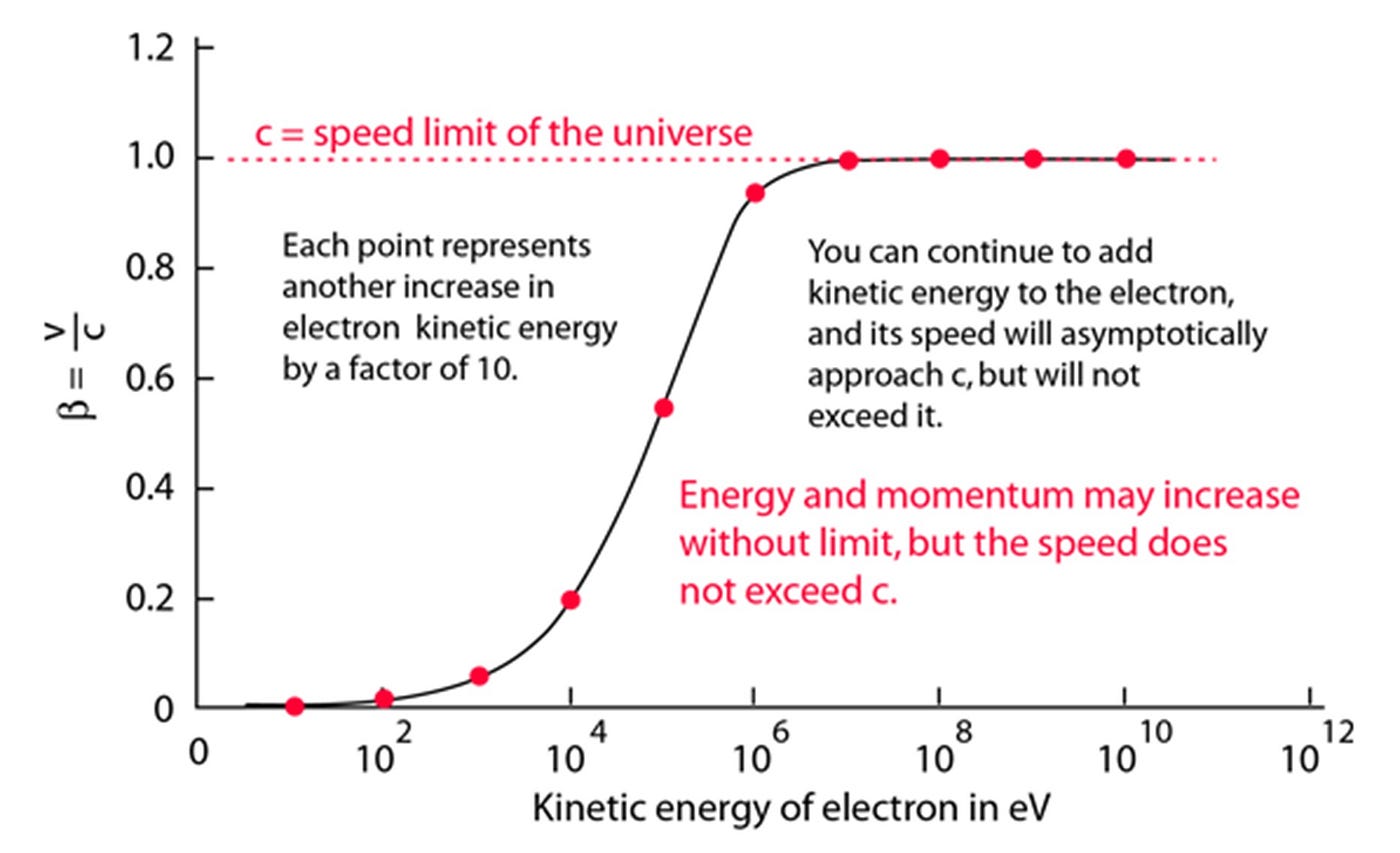
Figure 13 — Speed Limit of the Universe (Nave, 2017)
Now, in Special Relativity there are no accelerations and so it only compares already “existing” inertial frames of constant velocity. In discussing mass in this Section (Episode 48) we have been talking about accelerating an object to the speed of light, which actually involves General Relativity (Section 10.5 — Episode 50), where accelerative forces are taken into account and have consequent changes in momentum.
The best equation to remember for Special Relativity, which assumes a “flat” space-time, unaffected by gravitational or other accelerations, is the relationship developed by Einstein for the energy-momentum relation:

where m subscript 0 is intrinsic rest mass, E is total energy, p is the magnitude of momentum and c is the speed of light.[3] This equation is just saying the energy squared equals the momentum squared plus the rest mass energy squared (Squaring the Energy is a simpler equation than one with square roots on the right-hand side). Of course, if the momentum p is zero, the equation just end up to be Einstein’s famous version. However, if we are dealing with massless particles (which do not exist in classical physics), then the equation reduces to E = pc.
If we were to reduce this equation back into classical terms for objects with mass at low speed “u” (like the speed of the train in the previous episode) compared to the speed of light and just using m for rest mass, then momentum p is approximates to mu (by getting rid of terms insignificant at low speeds), and using that and doing some mathematical analysis we end up with an approximate expression for total energy, as:

And, so, in the classical Newtonian world, the total energy is composed of the rest mass energy plus the kinetic energy. It is the momentum and, therefore, kinetic energy that is increasing in Figure 13 (which uses v for velocity instead of u), while the rest mass (and its inherent energy) stays constant.
If we were to adopt the confusing concept of relativistic mass (argued against above), then the above equation can be reduced to
but this m is a fictional concoction and stands for a confused mathematical relation that has to take into account rest mass, momentum and the speed of light c, according to the Lorentz transformation. The variable is the momentum, which is frame dependent because it involves relative velocity between frames, which is time dependent and under relativity theory time dilates. Thus, the measured energy E and the relativistic mass vary between reference frames. Interestingly, what doesn’t vary is the rest mass and that means, by transposing Einstein’s energy-momentum relation (the first equation given above) that:

This was used as a basis for constructing wave equations for particles in relativistic quantum field theory, which will be mentioned in a later chapter.
Footnotes:
[1] What we call an electromagnetic field is a classical concept and at a deeper level, there are force “particles”, called photons (to be discussed in the next section) acting across quantum fields. This is because the interactions in these fields are like the transmission of particles and these interactions cannot travel faster than the speed of light.
[2] In the physical sciences there are seven interrelated ways in which mass can be viewed and correspondingly defined. That confusion is because it modern physics has exposed it as not being fundamental, even though it is a primary concept in classical physics.
[3] A more general form of this relation holds in general relativity, where gravity is involved.
References:
Coopersmith, Jennifer, 2017, The Lazy Universe, An Introduction to the Principle of Least Action, Oxford University Press, United Kingdom
Fowler, Michael, 2008, Notes on Special Relativity, University of Virginia, March 21st, Website Page on Modern Physics, http://galileo.phys.virginia.edu/classes/252/home.html, gives a link to the PDF document.
Nave, Carl R., 2017, c as Speed Limit, Relativity concepts, Hyperphysics Website, Georgia State University, http://hyperphysics.phy-astr.gsu.edu/hbase/Relativ/ltrans.html
Pagels, Heinz R., 1982, The Cosmic Code — Quantum Physics as the Language of Nature, Bantam Books, New York
Tong, David, No Date, Lecture Notes Particle Physics for CERN Summer School, University Of Cambridge, David Tong, http://www.damtp.cam.ac.uk/user/tong/particle.html
메타데이터
- post_id
- ce8f09fe330f
- slug
- the-new-view-of-mass-in-relativity-theory-ce8f09fe330f
- url
- https://medium.com/@addarroch/the-new-view-of-mass-in-relativity-theory-ce8f09fe330f
- canonical_url
- https://medium.com/@addarroch/the-new-view-of-mass-in-relativity-theory-ce8f09fe330f
- author_url
- https://medium.com/@addarroch
- status
- ok
- fetched_at
- 2026-07-14 08:18:40