The Ground Cried Out: Unearthing the Secrets of New York’s Forgotten Ancestors
In honor of Black History Month, I am making a personal and professional commitment to the ancestors and to you, my readers. For every day…
The Ground Cried Out: Unearthing the Secrets of New York’s Forgotten Ancestors
In honor of Black History Month, I am making a personal and professional commitment to the ancestors and to you, my readers. For every day of February, I will be publishing a new article — 28 days of unearthing secrets, celebrating triumphs, and recovering the narratives that have been left in the shadows.
Our history is not just a collection of dates in a textbook; it is the ground we walk on. I challenge you this month to look back with reverence at the sacrifices and the brilliance of those who came before us, but I also challenge you to keep your eyes open to the present.
History is not just something that happened “back then” — it is being made daily in our communities, our protests, and our persistent joy. Let us “go back and get it” (Sankofa), but let us also recognize the history-makers walking among us today.
Join me every day this month as we unearth the past to empower our future.
Image from the Preservation Society of Charleston
The Essential Question
How can a modern city “forget” the lives of 15,000 people buried beneath its busiest streets, and what do their bones tell us about the birth of a nation?
A Personal Note: Why This Matters
As a researcher, my mission is to ensure that history isn’t just written by those in power, but recovered from the very earth beneath our feet. We are exploring a site of deep trauma, systemic erasure, and sacred remains; we approach this together with respect.
I invite you to think critically: Who decides whose history is worth a monument, and whose is buried under an office building?
Part 1: My Story (The Connection)
The Memory: My first ever funeral was of my late Great-grandfather, Johnny Augustus Nealy. As a young girl, I never thought about death, and surely not about where we lay the dead to rest. I thought it was just an automatic place where everyone went when they died. After Johnny’s death was when I learned that the family was a part of a “Black plot” designated for other families to be laid to rest. This plot was located in the deep country well outside of the city limits in Fayette, MS.
The Realization: I noticed that these rural cemeteries were often hidden in the woods, disconnected from the paved roads of the town. This wasn’t just a Mississippi story; it was a global pattern of marginalizing the African Diaspora, even in death. As the quote suggests:
“Historic Sites: The area is dotted with historic cemeteries, such as the Good Hope Church Black Cemetery, which holds the graves of many formerly enslaved ancestors and their descendants.”
[embed]
The Mentor/Program: Learning about the New York African Burial Ground Project and the work of Dr. Michael Blakey helped me understand that bioarchaeology can give a voice to the voiceless, proving that the earth holds the truth even when the history books remain silent.
Visualizing the Concept
Concept: The Sankofa Stratigraphy
What to imagine: Imagine a modern glass skyscraper with deep, concrete roots. Now, imagine that beneath those roots are layers of soil, and hidden in those layers are hand-carved beads and cedar coffins. It is a “sandwich” of time where the bottom layer is the foundation of the top.
Researcher Note: This image helps us understand that urban development isn’t “new” space; it is built on top of lived experiences that still exist physically beneath the pavement.
Part 2: The Heart of the Science
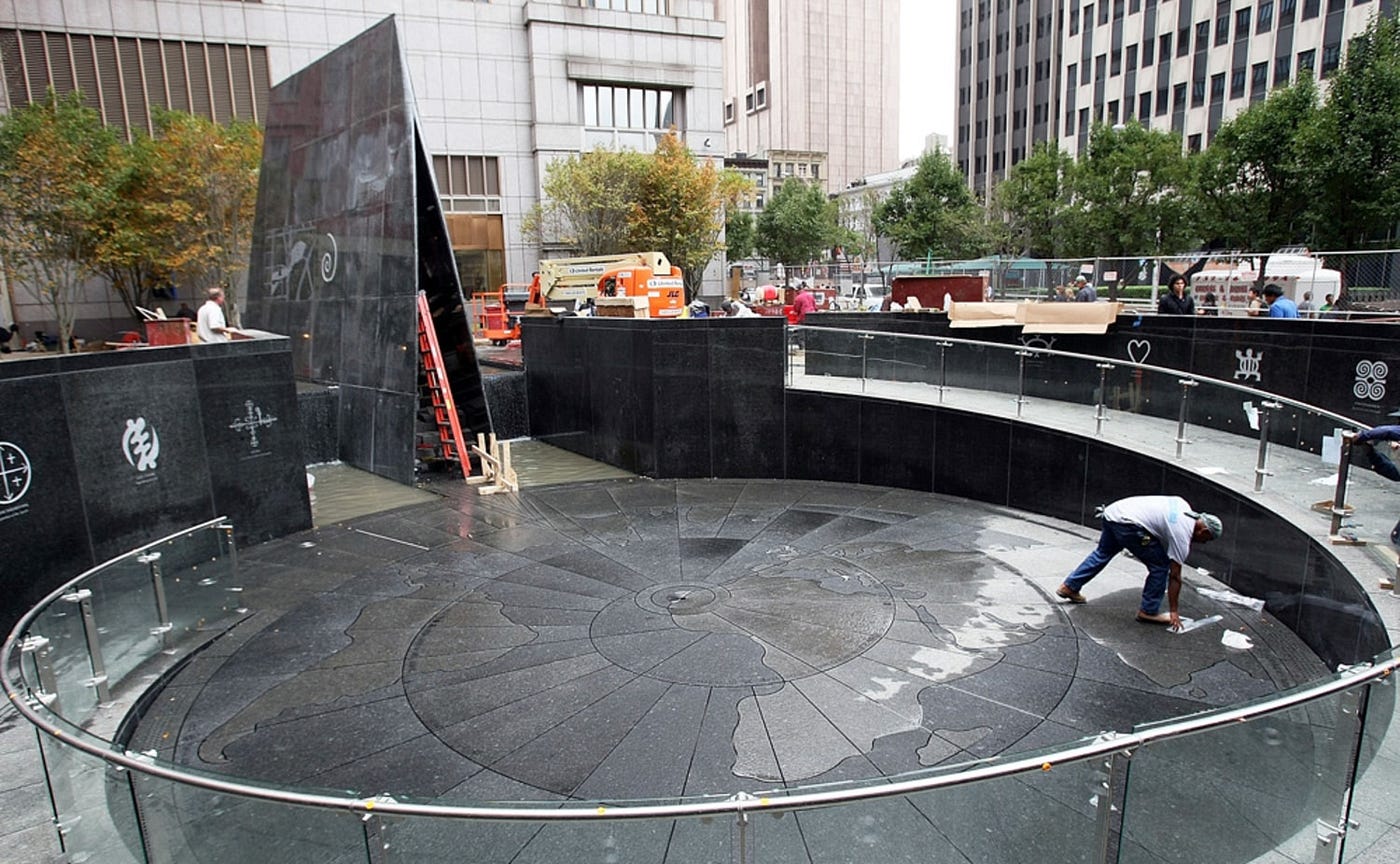
Image from NBC News
The Background: In 17th-century New York, enslaved Africans were banned from burying their dead in churchyards. They were forced to use a “Negroes Burial Ground” on a swampy 6.6-acre plot outside the city walls. In 1991, during construction of a $300 million federal office building, the site was rediscovered.
The “Did You Know?”: Nearly 40% of the remains found at the New York site were children under the age of 12, a haunting statistic that reveals the brutal physical toll of colonial life.
Skeletal Evidence & Historical Context

Part 3: The Discovery Lab
Research Lab: The Bone Whisperers
Goal: To identify signs of “Enslavement Syndrome” (physical stress markers) in skeletal remains.
Tools: National Park Service Digital Archives, magnifying glass, and comparative anatomy charts.
Project: Analyze high-resolution photos of the “Sankofa” heart symbol found on Coffin 101. Research its origins in the Akan culture of Ghana.
Question: Does the presence of this symbol prove that the person buried there was born in Africa or was a descendant carrying on a tradition?
Part 4: The Paradox (The Challenge)
The Conflict: When the government discovered the bones in 1991, they initially viewed the ancestors as an “archaeological impediment” to their construction schedule. This sparked a massive protest led by the Black community and activists, who argued that no office building was worth the desecration of a sacred site.
The Evidence: The 1969 political shift in Fayette, MS, mirrors this struggle for recognition.
- Pre-1969: 1,200 Black citizens had 0 votes.
- The Shift: In 1969, Charles Evers became the first Black mayor after registration jumped to 450.
- The Result: This rise in power often triggered “white flight” in surrounding Jefferson County.
The Impact Chart

Part 5: Future Solutions
[embed]
New Tech: Scientists are now using Ground Penetrating Radar (GPR) to map “forgotten” cemeteries without ever digging up the earth, preserving the sanctity of the site.
Global Ideas: DNA databases are now linking the New York remains to specific ethnic groups in West Africa, allowing for a symbolic “return” home.
The Big Goal: “To know who you are, you must know whose shoulders you stand on — even if those shoulders are buried six feet under.”

Green Citizen: The Take Action Checklist
- [ ] Personal Habit: Visit a local historic site or cemetery and research one name you find there.
- [ ] Community: Support legislation that protects “forgotten” burial grounds from commercial development.
- [ ] Education: Share the story of the African Burial Ground or Fayette’s political shift with one person this week.
Keep the Conversation Going!
Subscribe: R-BIAL Review Newsletter
Submit Ideas: What “forgotten” history is hidden in your hometown? Let us know!
Sources & Deep Dives
- The New York African Burial Ground Project: Skeletal Biology Report (Dr. Michael Blakey).
- U.S. National Park Service: African Burial Ground National Monument Records.
- Fayette Political History: Have Us Check the Records (Voter Registration Data 1960–1970).
메타데이터
- post_id
- ceb33fe50451
- slug
- the-ground-cried-out-unearthing-the-secrets-of-new-yorks-forgotten-ancestors-ceb33fe50451
- url
- https://medium.com/@r-bial/the-ground-cried-out-unearthing-the-secrets-of-new-yorks-forgotten-ancestors-ceb33fe50451
- canonical_url
- https://medium.com/@r-bial/the-ground-cried-out-unearthing-the-secrets-of-new-yorks-forgotten-ancestors-ceb33fe50451
- author_url
- https://medium.com/@r-bial
- status
- ok
- fetched_at
- 2026-06-11 18:57:12