Jason Cross on Concrete vs Asphalt Parking Lots in North Texas Heat
When property owners in McKinney ask about concrete vs asphalt parking lots, they are really asking one question: which surface survives a…
Jason Cross on Concrete vs Asphalt Parking Lots in North Texas Heat
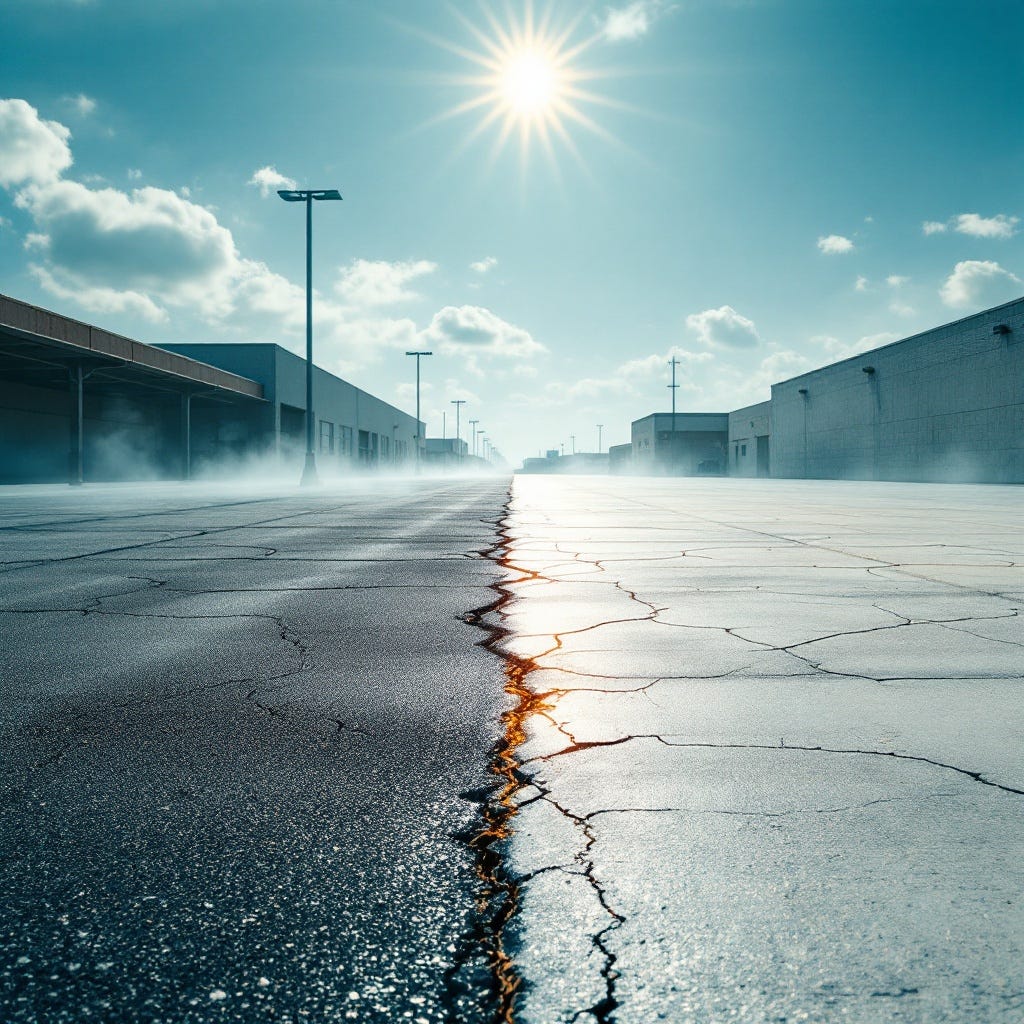
When property owners in McKinney ask about concrete vs asphalt parking lots, they are really asking one question: which surface survives a Texas summer without costing a fortune in repairs? Jason Cross, a construction and renovation expert with over 20 years of hands-on experience serving the Dallas-Fort Worth Metroplex, has poured, repaired, and replaced both surfaces across commercial and residential properties throughout North Texas. The answer is rarely black and white, but the climate here in McKinney makes it more decisive than most contractors will tell you.
North Texas summers are genuinely punishing. Ground temperatures on exposed pavement can reach well above 140°F during peak July and August heat, and that thermal stress cycles repeatedly over a parking lot’s lifetime. Understanding how each material responds to that stress is the foundation of making the right choice before a single dollar is committed.
Why Material Choice Matters More in North Texas Than Almost Anywhere Else
Most national comparisons between concrete and asphalt assume a moderate climate. North Texas does not offer that luxury. McKinney and the surrounding DFW area experience intense UV radiation, extreme heat, occasional hard freezes in winter, and heavy rain events that can wash out poorly graded surfaces. Each of those variables affects asphalt and concrete differently, and Jason Cross emphasizes that property owners who use national averages for their planning often end up budgeting incorrectly for local conditions.
The Texas Department of Licensing and Regulation sets standards for commercial construction work, and quality contractors working in the state adhere to specifications designed for this specific climate environment. Texas Department of Licensing and Regulation Getting that compliance right from the start protects both the investment and the people who use the surface daily.
How Asphalt Performs in the North Texas Heat
Asphalt is a petroleum-based product, which means it is inherently flexible. That flexibility is actually an advantage in freeze-thaw cycles, but it becomes a liability when summer temperatures push the surface beyond its softening point. In McKinney and across the DFW Metroplex, standard asphalt can become soft enough in peak summer to show tire tracking, edge rutting near curbs, and surface deformation under heavy vehicle loads.
That does not mean asphalt is a bad choice. It means the specification and installation quality matter enormously. Properly installed asphalt with an adequate base layer, appropriate aggregate size, and a high-quality binder suited to Texas conditions performs significantly better than a budget installation. Jason Cross has observed that the majority of asphalt failures in the Dallas area trace back to thin base preparation or using binders calibrated for cooler climates rather than Texas heat ratings.
The cost advantage of asphalt is real. Initial installation typically runs lower per square foot than concrete, and smaller cracks and surface wear can be patched, sealed, and resurfaced without tearing out the entire lot. For commercial property owners managing tighter budgets or planning for phased improvements, asphalt offers more flexibility. The tradeoff is a maintenance schedule that must be followed. Seal coating every three to five years is not optional in a North Texas climate — it is the difference between a surface that lasts 20 years and one that degrades in 10.
How Concrete Holds Up Against Texas Summers
Concrete does not soften in heat the way asphalt does. That structural rigidity is concrete’s primary advantage in North Texas summers. A properly installed concrete parking lot in McKinney will resist tire rutting, surface deformation, and the kind of gradual degradation that plagues asphalt lots in extreme heat. Jason Cross notes that for high-traffic commercial sites — retail centers, apartment communities, industrial facilities — concrete’s durability under constant vehicle load is difficult to match.[/P>
Concrete does have its own vulnerabilities. It expands and contracts with temperature changes, which is why control joints are critical in any Texas installation. A concrete contractor who spaces joints improperly or pours slabs without adequate reinforcement will see cracking within a few years. When concrete cracks, the repair costs are substantially higher than patching asphalt. Full slab replacement is expensive, which is why getting the installation right the first time matters so much.
Jason Cross’s construction expertise across Texas covers both surface types, and his approach consistently starts with soil analysis and base preparation — the invisible work that determines whether the visible surface lasts.
Concrete also costs more upfront. For McKinney property owners weighing a 10-year horizon, the higher initial investment in concrete often balances out when you factor in reduced maintenance, no required seal coating, and longer replacement cycles. For those looking at a shorter hold period or a tighter capital budget, asphalt may still make more financial sense even accounting for the maintenance requirements.
The Side-by-Side Comparison Property Owners Actually Need
FactorAsphaltConcreteInitial CostLower per sq ftHigher per sq ftHeat ResistanceModerate — can soften above ~120°F surface tempStrong — resists deformation in extreme heatMaintenance RequiredSeal coat every 3–5 years, crack fillingJoint sealing, occasional crack repairRepair Cost When DamagedLower — patch and resurfaceHigher — slab sections expensive to replaceLifespan (North Texas)15–20 years with proper maintenance25–35 years with proper installationBest ForBudget-conscious projects, residential lots, phased buildsHigh-traffic commercial, long-term investment properties
Jason Cross’s Recommendation for McKinney Property Owners
After two decades working across the Dallas-Fort Worth Metroplex, Jason Cross offers a straightforward framework. For residential driveways and smaller parking areas, asphalt with a quality installation and a committed maintenance schedule is often the practical choice. For commercial parking lots, multi-unit apartment developments, and any surface carrying heavy trucks or constant traffic, concrete is almost always the better long-term investment in North Texas specifically.
The Associated General Contractors of Texas represents the contractors and standards that shape quality construction across the state, and their guidance aligns with what experienced local contractors see in the field. Associated General Contractors of Texas
One factor Jason Cross consistently raises that many property owners overlook is drainage. In McKinney, the clay-heavy soil can retain water under a pavement surface, undermining the base layer regardless of whether the surface is asphalt or concrete. Proper grading, drainage design, and subbase preparation protect both materials and are non-negotiable in a quality installation.
If you are planning a new parking lot, resurfacing an existing one, or assessing a surface that is showing early signs of distress, the right starting point is a conversation about your specific site, your traffic load, and your budget timeline. Learn more about Jason Cross’s construction background to understand the experience behind these recommendations.
Getting Started on Your Parking Lot Project
Choosing between concrete and asphalt is not a decision that should rest on a general article alone. The slope of your site, the load requirements, your budget structure, and the intended life of the surface all influence which choice is right. Jason Cross and his team bring over 20 years of North Texas construction experience to every evaluation, which means recommendations grounded in what actually performs here — not what works in a different climate.
Property owners across McKinney and the broader DFW Metroplex trust Jason Cross for straightforward guidance, quality execution, and the kind of integrity that comes from two decades building a reputation one project at a time. To discuss your specific parking lot project, connect with Jason Bradley Cross or call 817–269–3779 today.
This article provides general construction guidance based on North Texas climate conditions and industry experience. Every site has unique characteristics. Consult a qualified construction professional for advice specific to your property and project requirements.
Frequently Asked Questions
Does asphalt really soften in the McKinney summer heat?
Yes — standard asphalt can soften when surface temperatures climb well above 120°F, which is common on exposed pavement during North Texas summers. Selecting a binder rated for high-heat climates and ensuring adequate base thickness significantly reduces this risk.
How much more does concrete cost compared to asphalt for a parking lot in North Texas?
Concrete typically runs higher per square foot at installation, but the gap narrows over time when you account for asphalt’s seal coating and resurfacing requirements. For high-traffic commercial properties, concrete often delivers better long-term value despite the higher upfront cost.
How long should a parking lot last in the McKinney area?
A properly installed asphalt lot with regular maintenance should last 15 to 20 years in North Texas conditions. Concrete, when installed with correct joint spacing and reinforcement, can realistically reach 25 to 35 years before major replacement is needed.
What is the most common reason parking lots fail prematurely in the Dallas-Fort Worth area?
Inadequate base preparation is the leading cause of early parking lot failure across the DFW Metroplex. McKinney’s clay-heavy soil retains moisture and can shift seasonally, so proper subbase compaction and drainage design are as important as the surface material itself.
Can Jason Cross handle both concrete and asphalt parking lot projects in McKinney?
Yes — Jason Cross’s construction services cover both concrete and asphalt surfaces for residential and commercial properties throughout McKinney and the broader Dallas-Fort Worth Metroplex. His team evaluates each site individually to recommend the right material and approach.
[SOURCE: https://jasonbradleycross.com/concrete-vs-asphalt-parking-lots/ | concrete vs asphalt parking lots]
메타데이터
- post_id
- cec29bea6840
- slug
- jason-cross-on-concrete-vs-asphalt-parking-lots-in-north-texas-heat-cec29bea6840
- url
- https://medium.com/@jasonbradleycrossva/jason-cross-on-concrete-vs-asphalt-parking-lots-in-north-texas-heat-cec29bea6840
- canonical_url
- https://medium.com/@jasonbradleycrossva/jason-cross-on-concrete-vs-asphalt-parking-lots-in-north-texas-heat-cec29bea6840
- author_url
- https://medium.com/@jasonbradleycrossva
- status
- ok
- fetched_at
- 2026-07-11 10:49:37