Why QR Codes Are Quietly Replacing Traditional Business Cards
Business cards haven’t really changed in decades.
Why QR Codes Are Quietly Replacing Traditional Business Cards
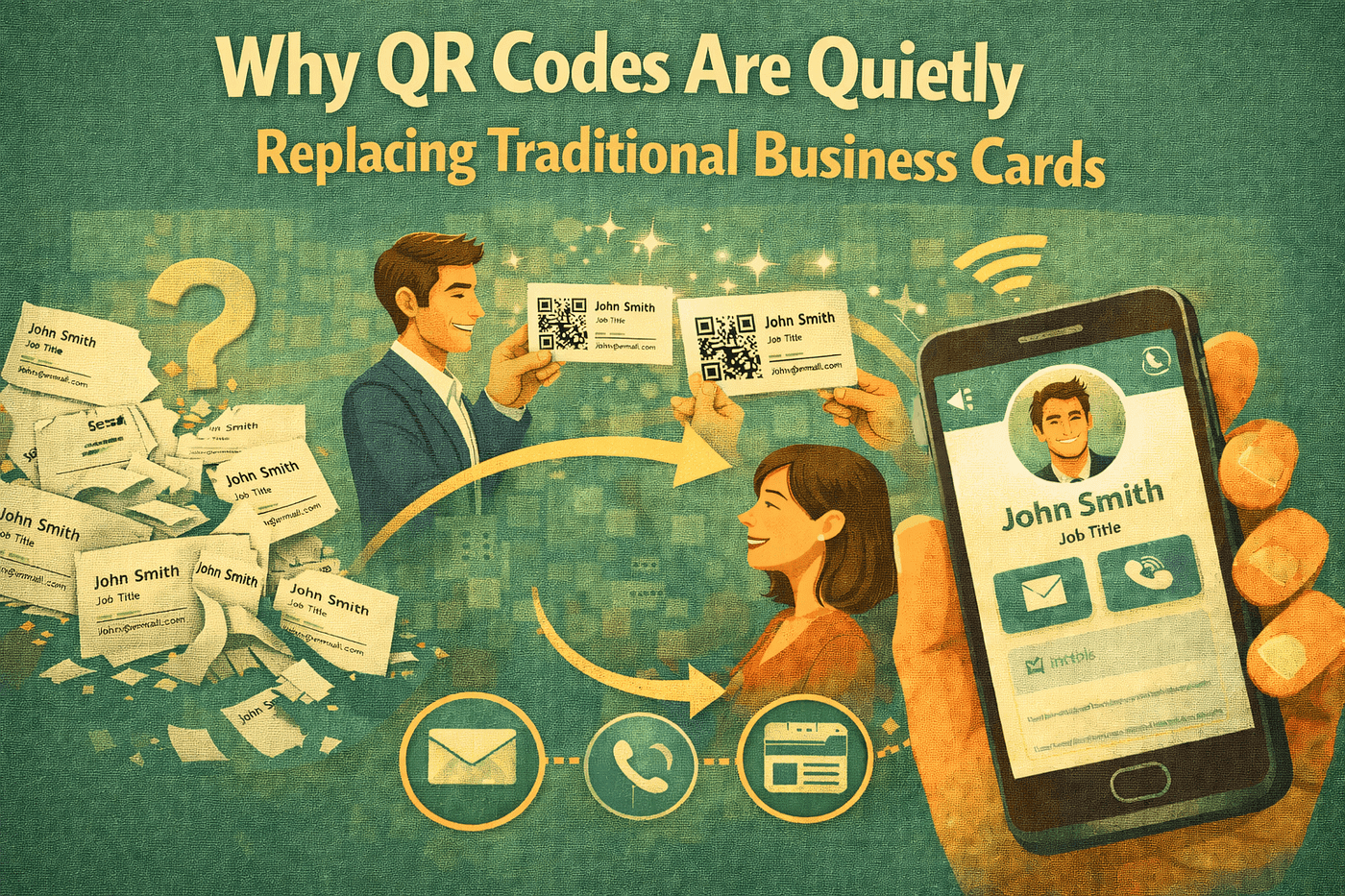
Business cards haven’t really changed in decades.
You print your name, your number, maybe your website — and hand it over, hoping the other person actually saves your contact later.
But most of the time, that’s where things break.
The card gets lost. The details never get typed in. The connection fades before it even starts.
QR codes are starting to change that.
The Real Problem With Business Cards
The issue isn’t the card itself — it’s what happens after.
Traditional cards rely on effort from the other person:
- They have to remember the interaction
- Pull out the card later
- Manually enter your details
Even small friction is enough to stop that process.
And in fast-moving environments — events, meetings, conferences — that friction adds up quickly.
One Scan Instead of Several Steps
QR codes simplify everything.
Instead of typing anything, the person just scans the code and instantly gets access to your information.
That could be:
- A contact they can save immediately
- Your website or portfolio
- Your LinkedIn or social profiles
- A page with everything in one place
It turns a delayed action into an immediate one.
From Paper to Something More Flexible
What makes QR codes especially useful is that they don’t lock you into one version of your information.
A printed business card can’t change. A QR code can.
You can update where it leads at any time — without reprinting anything.
Tools like QRColor make it easy to create a QR code and connect it to your digital profile → https://qrcolor.com
So even if your role, website, or contact details change, your card doesn’t become outdated.
It’s Not Just About Convenience
There’s also something subtle happening here.
QR codes shift the interaction from passive to active.
Instead of handing someone information and hoping they use it later, you’re giving them a way to engage instantly.
That small difference increases the chances that the connection actually continues.
What Should a QR Code Link To?
There’s no single right answer — it depends on what you want to achieve.
Some people use it for:
- A digital contact card
- A portfolio or personal website
- A simple link page with multiple options
- A booking or scheduling page
The important thing is clarity. One clear destination works better than too many choices.
When QR Code Business Cards Make the Most Sense
They’re especially useful in situations where:
- You meet a lot of people in a short time
- Quick follow-up matters
- Your work lives online (portfolio, content, etc.)
Think:
- Conferences
- Networking events
- Creative industries
- Startup environments
Anywhere speed and accessibility matter.
Do They Replace Business Cards?
Not really.
They improve them.
You still have the physical card — the handshake, the presence — but now it connects directly to your digital identity.
It’s a small upgrade that fits how people actually communicate today.
Final Thought
QR codes don’t reinvent networking.
They just remove the parts that slow it down.
And sometimes, that’s all it takes to make a connection actually stick.
메타데이터
- post_id
- ced0655bb06b
- slug
- why-qr-codes-are-quietly-replacing-traditional-business-cards-ced0655bb06b
- url
- https://medium.com/@Aan_Drei/why-qr-codes-are-quietly-replacing-traditional-business-cards-ced0655bb06b
- canonical_url
- https://medium.com/@Aan_Drei/why-qr-codes-are-quietly-replacing-traditional-business-cards-ced0655bb06b
- author_url
- https://medium.com/@Aan_Drei
- status
- ok
- fetched_at
- 2026-06-10 18:44:10