Dog dehydration infographic showing early signs, emergency red flags, and what to do when a dog has…
Dehydration in Dogs With Diarrhea: Warning Signs Every Dog Owner Should Know
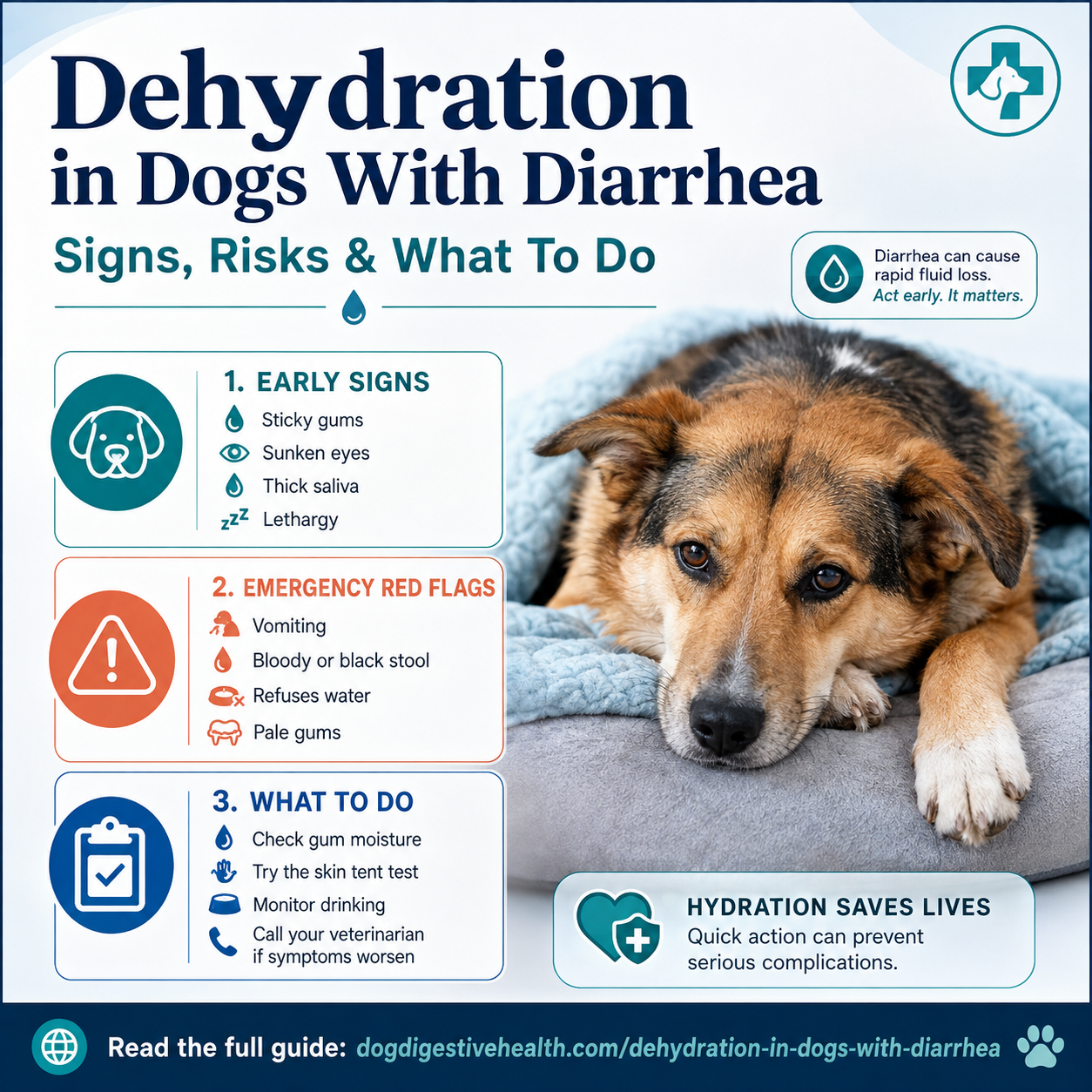
Dog dehydration infographic showing early signs, emergency red flags, and what to do when a dog has diarrhea, with a tired dog resting beside symptom checklists.
Dehydration in Dogs With Diarrhea: Warning Signs Every Dog Owner Should Know
Diarrhea is common in dogs, but the fluid loss that comes with it can become a bigger concern than many pet owners realize.
When a dog repeatedly passes loose or watery stool, the body loses water and important electrolytes. If your dog can’t replace those fluids quickly enough, dehydration can develop.
The risk becomes more serious when diarrhea continues for more than 24–48 hours or happens alongside vomiting, weakness, bloody stool, black stool, or refusal to drink.
Knowing the early warning signs can help you recognize when your dog may need veterinary attention.
Why Can Diarrhea Cause Dehydration?
During normal digestion, a dog’s intestines absorb water back into the body.
With diarrhea, food and fluid move through the digestive system too quickly. As a result, the body loses more water through the stool instead of absorbing it.
Dogs may also lose electrolytes such as sodium, potassium, and chloride.
The risk of dehydration increases when:
- Diarrhea happens frequently
- Vomiting occurs at the same time
- Your dog isn’t drinking enough
- Your dog can’t keep water down
- Diarrhea continues for more than a day
- Your dog is already weak or unwell
This is why it’s important to look beyond the diarrhea itself and pay attention to your dog’s overall condition.
Early Signs of Dehydration in Dogs
Dehydration may start subtly. Some of the first signs pet owners may notice include:
Sticky or Dry Gums
Healthy gums should generally feel moist.
If your dog’s gums feel unusually sticky, tacky, or dry, it may indicate fluid loss.
Reduced Water Intake
A dog that continues losing fluid through diarrhea but drinks very little may become dehydrated quickly.
Pay attention if your dog suddenly loses interest in the water bowl.
Unusual Tiredness
Mild lethargy can appear early.
Your normally active dog may seem quieter, sleep more, or show less interest in normal activities.
Sunken-Looking Eyes
As dehydration progresses, the eyes may appear more recessed or sunken than usual.
Thick or Stringy Saliva
A dehydrated dog may produce saliva that appears thicker or stickier than normal.
Reduced Skin Elasticity
Veterinarians often assess hydration by gently lifting the skin and watching how quickly it returns to its normal position.
Skin that returns slowly may suggest dehydration, although this test isn’t perfect and can be affected by a dog’s age, body condition, and skin elasticity.
When Does Dehydration Become Dangerous?
Dehydration isn’t simply a lack of water.
As fluid and electrolyte losses increase, circulation and normal organ function can also become affected.
Severe dehydration may contribute to:
- Electrolyte imbalances
- Reduced blood circulation
- Weakness
- Organ dysfunction
- Hypovolemic shock
These complications can become life-threatening without appropriate veterinary treatment.
Emergency Warning Signs You Shouldn’t Ignore
Some symptoms should prompt a call to your veterinarian or an emergency veterinary clinic.
Seek veterinary advice promptly if your dog has diarrhea along with:
- Persistent vomiting
- Extreme weakness or lethargy
- Refusal to drink
- Vomiting after drinking water
- Pale gums
- Very dry or sticky gums
- Severely sunken eyes
- Bloody diarrhea
- Black, tarry stool
- Collapse or difficulty remaining alert
Diarrhea combined with vomiting can be particularly concerning because the dog loses fluid from both ends while becoming less able to replace it.
Can You Check Your Dog for Dehydration at Home?
You can look for a few general warning signs, but home checks shouldn’t replace a veterinary examination.
Check your dog’s gums. They should normally feel moist rather than dry or tacky.
You can also observe your dog’s eyes, energy level, water intake, and saliva.
Some owners use the skin tent test by gently lifting the loose skin around the shoulders and watching how quickly it falls back into place. Delayed skin return can suggest dehydration.
However, no single home test can accurately determine the severity of dehydration in every dog.
If you’d like a more detailed breakdown of these checks and the emergency signs to watch for, I’ve covered them in this full guide on dehydration in dogs with diarrhea.
What Does a Veterinarian Do?
When dehydration is suspected, a veterinarian can evaluate how severe it is and look for the underlying cause of the diarrhea.
The examination may include checking:
- Gum moisture
- Skin elasticity
- Heart rate
- Circulation
- Mucous membranes
- Overall alertness
Blood tests or urinalysis may also help assess electrolyte abnormalities, hydration status, and organ function.
For dogs with significant dehydration, fluid therapy is often an important part of treatment.
Severe cases may require intravenous fluids to replace fluid deficits and correct electrolyte abnormalities. The exact treatment depends on the dog’s condition, body weight, ongoing fluid losses, and underlying illness.
The Key Takeaway
Diarrhea doesn’t automatically mean your dog is dangerously dehydrated, but ongoing fluid loss deserves attention.
Watch for changes in:
- Gum moisture
- Water intake
- Energy levels
- Eye appearance
- Saliva
- Skin elasticity
Most importantly, look at the whole picture.
A dog with mild diarrhea who remains active and drinks normally is very different from a dog with diarrhea who is vomiting, weak, refusing water, or passing bloody or black stool.
Recognizing those differences early can help you decide when it’s time to contact your veterinarian.
Medical Disclaimer: This article is for informational and educational purposes only. It isn’t a substitute for professional veterinary advice, diagnosis, or treatment. Always consult a qualified veterinarian if you’re concerned about your dog’s health.
메타데이터
- post_id
- ced0bc593ada
- slug
- dog-dehydration-infographic-showing-early-signs-emergency-red-flags-and-what-to-do-when-a-dog-has-ced0bc593ada
- url
- https://medium.com/@saad.khan081/dog-dehydration-infographic-showing-early-signs-emergency-red-flags-and-what-to-do-when-a-dog-has-ced0bc593ada
- canonical_url
- https://medium.com/@saad.khan081/dog-dehydration-infographic-showing-early-signs-emergency-red-flags-and-what-to-do-when-a-dog-has-ced0bc593ada
- author_url
- https://medium.com/@saad.khan081
- status
- ok
- fetched_at
- 2026-08-15 05:52:07