The Symbolism of Amber in Polish Folklore and Mythology
Amber (Polish bursztyn) is a fossilized tree resin that washes up on the shores of the Baltic Sea, and it has captured the imagination of…
The Symbolism of Amber in Polish Folklore and Mythology
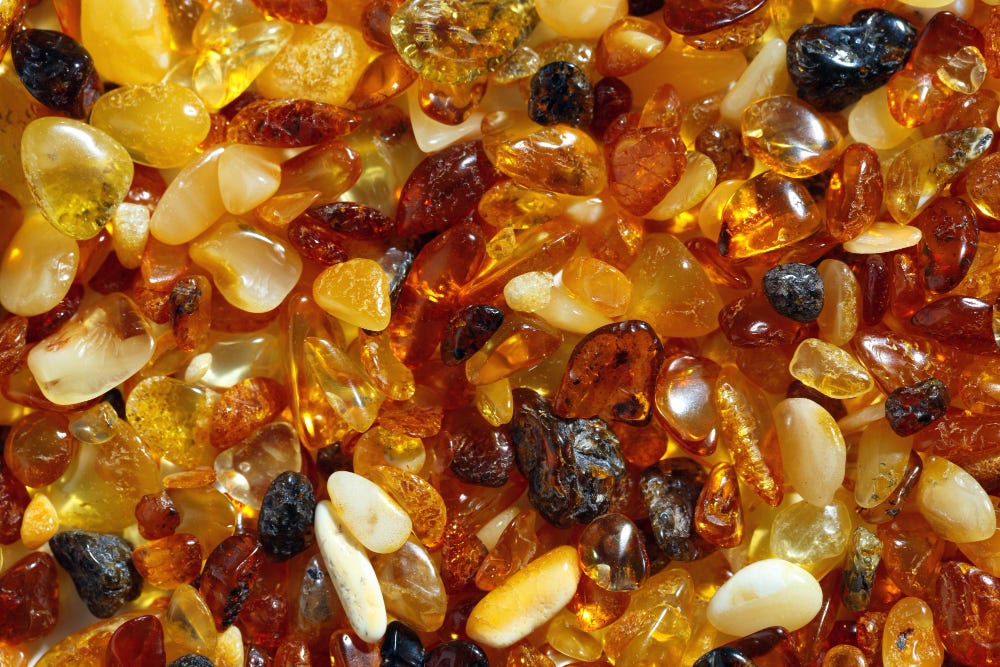
Amber (Polish bursztyn) is a fossilized tree resin that washes up on the shores of the Baltic Sea, and it has captured the imagination of Poles for centuries. This warm, honey-colored gem — often called “Baltic gold” or the “Sunstone” — is more than just a pretty rock. In Polish culture, amber is a symbol of light, life, and a deep connection to nature. People have long admired its golden glow, worn it as jewelry, and told stories about its mysterious origin. Many Polish legends explain its mysterious origin.

Because amber is found along the northern coasts of Poland, it is woven into the country’s folklore and identity. Folk tales describe goddesses, fishermen, and even storms creating amber or bringing it to the people. In Polish mythology, amber often stands for warmth, energy, and the power of the sun, but it can also represent sacrifice, tears, and divine love. These stories paint amber as a magical material that bridges the natural world and the spiritual realm.
Amber has also played a role in everyday life and tradition. For example, traditional Polish folk costumes and jewelry from regions like Kashubia and Kurpie often include strings of polished amber beads. These beads were worn by brides and passed down through families for generations. In this way, amber symbolizes love, family heritage, and the continuity of life. Poles treasure amber not just for its beauty, but for the meaning and history it carries.
From ancient times to the present, amber has been important to Polish people. This glowing gemstone is actually fossil resin from ancient forests. Over 40 million years ago, warm conifer forests grew in what is now northern Europe. When these trees were injured, they oozed sticky resin to seal their wounds. Over time, that resin was buried under sand and soil and slowly hardened into amber. Millions of years passed, and erosion and ice ages finally brought chunks of this golden gem to the shores of the Baltic Sea.
Even in prehistoric times, amber had special meaning. Archaeologists have discovered 6,000-year-old amber beads, pendants, and amulets in northern Poland. Some of these early amber artifacts are carved with solar symbols and animal shapes, linking amber to the sun and nature. These finds show that ancient people in the area already prized amber as a symbol of life and warmth. Polish lands have thus held amber in regard for thousands of years, long before recorded history, honoring its golden light even in the Stone Age.
In Europe, amber was so valuable that it was once traded as far as the Mediterranean. Merchants and traders formed the famous Amber Road, a trade route that linked the Baltic Sea through Central Europe to Rome and Greece. Bright strings of amber beads, carvings, and ornaments were transported from Poland to far-away lands. In return, Polish villagers and nobles received coins, wines, and exotic goods. This history shows how highly prized amber was.
In Poland’s cities, the amber trade grew into a rich craft. On the coast, especially in the city of Gdańsk, artisans began to carve amber into beautiful jewelry, rosaries, and artwork. Wealthy nobles and church leaders built up collections of amber objects. Some churches even used amber panels and altars to honor the sun-like stone. Through these traditions, amber became a symbol of faith, luxury, and national pride for Poles.
For example, the city of Gdańsk has a large Amber Museum with exhibits of ancient and modern amber art. The museum displays giant amber sculptures, historical amber jewelry, and even an amber sceptre that was once owned by a Polish king. By showcasing these treasures, the museum highlights why amber is considered Poland’s national gem. Visitors learn about the craft of amber art that remains an important part of local culture.
One famous example of amber art from Polish history is the Amber Room (Bursztynowa Komnata). Built in the 18th century for King Stanisław August Poniatowski, the Amber Room was an entire chamber decorated with carved amber panels and gold. Although this royal treasure was later lost during wars, the legend of the Amber Room spread far beyond Poland. It shows that amber was treated as precious as gold by Polish nobles and that its magical beauty was appreciated at the highest levels.
Even today, the tradition of amber craftsmanship continues in Poland. Along the coast, shops still sell amber jewelry and beads, just as they did centuries ago. The city of Gdańsk is home to a large amber museum and many amber galleries. Travelers to Poland often buy amber as a souvenir or gift. Amber remains known as Poland’s national gem, reminding people of the country’s history and the natural beauty of the Baltic region.
Legends of Amber’s Origin
One of the most beloved Polish legends tells of the undersea queen Jurata. In this story, Jurata is a beautiful goddess of the Baltic Sea who lived in a grand palace of amber deep under the water. She helped fishermen by calming the waters and guiding fish to them. One day she saw a brave young fisherman named Kastytis singing a song of thanks to the sea. Jurata, kind and lonely, fell in love with him at once and brought him to live in her amber palace. For a time they lived happily together. However, their love angered Perun (called Perkun in Polish), the mighty god of thunder. Perun was jealous that a mortal had won the affection of a goddess. In his fury he struck Jurata’s palace with a lightning bolt. The amber palace shattered into millions of pieces, and Jurata was lost in the stormy waters.
Some versions of the Jurata story add that on quiet summer nights, if you listen to the waves, you can still hear Jurata’s lament. Fishermen say a gentle amber glow under the water is the light of Jurata’s palace. Finding a piece of amber after a storm was once considered lucky, a gift from the grieving queen herself. Even today, some people tell stories that every amber pebble on the beach is a drop of Jurata’s eternal love for Kastytis.
From that moment on, it is said that those shattered pieces are what wash up on the Baltic beaches. Each golden shard is a reminder of Jurata’s sacrifice and Perun’s great anger. This legend connects amber to eternal love and the power of the gods, explaining why storms and waves often leave new amber on the shore.
The Flood and the Tears of the Kurpie
Another local legend comes from the forests of the Kurpie region in northeastern Poland. It tells of a terrible flood that covered the land after many days of rain. The villagers mourned the loss of their crops and homes, crying out to the sky for help. According to the tale, their tears fell into the floodwaters and, by a miracle or the touch of a higher power, turned into amber as they touched the earth. In this story, amber is the solidified sorrow of the people, transformed into a lasting gem. The legend says that the purity of the amber’s color reflects the purity of the hearts of those who shed these tears. Even as it remembers tragedy, amber carries a message of hope, showing that from great grief something beautiful and lasting can emerge.
Over time, Kurpie storytellers have taught children that the brightest amber came from the purest tears. In these tales, the darkest amber was said to be from the deepest sorrows, carrying the lessons of those lost in the flood. The community would gather amber pebbles from the riverside as a sign of remembrance for their ancestors. This helped families keep their history alive and honor those who perished, by turning grief into something beautiful.
Other Amber Legends
In Kashubia, another coastal region of Poland, some old stories say that mythical griffins or dragons carried lumps of amber in their claws. Another tale explains that bolts of lightning might turn wood sap into amber on impact. All these legends share a common theme: amber comes from a dramatic act of nature or the divine. These myths helped people understand this beautiful material. By telling these stories, amber became a symbol of love, loss, and the deep mysteries of the natural world.
Villagers also used amber to explain other natural events. For example, a sudden flash of light (lightning) near the coast was sometimes said to ignite hidden amber as it met seawater, showering sparks. Another tale described how the Milky Way was formed: as the tears of the ancient goddesses who turned amber fell into the sky, creating the band of light. In Kashubian folklore there is even a legend that amber lost its color in battle or that wearing amber can make the skin glow like a gentle sunrise. While these stories vary from place to place, together they show how closely people connected amber to the wonders of the sea and sky.
In some villages, people believed that amber could grant wishes or reveal the future. They might drop amber in water on New Year’s Eve, hoping it would float if the year would be good, or sink if trouble lay ahead. These old sayings and customs became part of the folkloric tapestry around amber, mixing magic and everyday life. Through all these examples, it is clear that amber stones were much more than pretty decorations; they were living parts of the legends people told.
Symbolic Meanings of Amber
Polish folklore often thought of amber as frozen sunshine. Its warm, golden color reminded people of the sun and summer light. Because of this, amber was seen as a symbol of life, warmth, and happiness. Many stories call amber a sunstone because it seemed to carry the sun’s energy. Wearing amber jewelry was believed to bring light and strength to the wearer, especially during long, cold winters. In this way, amber connected people to the power of nature and the life-giving sunlight.
Amber as a Protective Talisman
Amber was also prized as a powerful amulet. Villagers often carried pieces of amber or wore amber beads as a talisman to ward off danger. It was believed that amber could protect against evil spirits, accidents, or illness. For example, mothers might tie a small amber amulet around a baby’s neck or sew it into their clothing to keep the child safe. Fishermen placed amber in their boats or nets as a charm for a safe voyage during storms. In these customs, amber’s golden light was thought to shine away fear and protect families from harm.
Amber of Memory and Truth
Because amber can preserve things from nature (like insects) inside it, people believed it also preserved memory and truth. Amber became a symbol of honesty and clarity. In some tales, amber is said to capture the essence of living things, like a photograph capturing an image. Heirlooms of amber jewelry were treasured family keepsakes, passed from parents to children to remind each generation of their heritage. In songs and stories, amber often represents the memory of loved ones or great deeds. Its ability to glow for millions of years made it a reminder of how stories and memories can last forever.
Folk sayings also reflect amber’s symbolic power. For instance, it was believed in some areas that carrying amber could keep bad dreams away, acting like a little light in the dark. People also said that when amber fell from the shore into the sea, it was like the ocean wearing jewels of sunlight. In folk magic, amber might be tied around the neck to keep one safe during travel or set on an altar to bless a home. These traditions show that amber’s meaning went beyond beauty: it was tied to everyday life and simple acts of faith.
Amber of Love and Purity
Amber also stood for love, purity, and devotion in Polish tradition. Giving someone amber jewelry was like giving them a piece of the sun’s warmth. Young couples often exchanged amber beads as a sign of love and commitment. For example, before a wedding, a young man might present an amber necklace to his bride. Brides would wear strings of amber beads with their folk costumes on the wedding day. These amber necklaces symbolized fertility and a bright future together. Even today, old Polish folk songs mention amber in verses about love or about the beauty of the homeland, showing how deeply this golden stone is connected with the heart and soul of the people.
Main symbolic themes associated with amber in Polish tradition include:
- Sun and Light: Amber’s golden color symbolizes life-giving sunlight, warmth, and the cycle of seasons.
- Protection and Healing: Amber was worn or kept as a talisman against danger and illness. Folklore holds that amber’s energy shields the body and spirit from evil influences.
- Love and Fidelity: Giving amber jewelry was a sign of love and devotion. As a wedding gift, amber signified fertility and a bright future for the marriage.
- Memory and Continuity: Because amber preserves ancient life, it stands for memory and eternal life. It reminds people of their ancestors and of promises that last through time.
In folk poetry, amber is often described in vivid terms. It might be called “star of the shore” or “tear of the sun” in old verses. Legends even credit amber with wisdom: it was said that sleeping on an amber bead could bring pleasant dreams and good counsel. One proverb warned, „Who keeps amber close, life’s journey is bright,” showing how amber was seen as guiding travelers. Through these symbolic sayings, amber’s meaning as a source of light and insight in people’s lives was passed on.
Amber in Polish Customs and Beliefs
Amber beads were a common part of a girl’s trousseau in traditional Polish villages. Before marriage, it was customary for a bride to receive amber necklaces or bracelets as part of her dowry or wedding gifts. Wedding songs and customs even encouraged guests to contribute money to buy amber jewelry if needed. Wearing amber was not just decorative; it was considered a blessing for the newlyweds, promising health and happiness in their marriage. Passing amber jewelry from mother to daughter symbolized the continuation of family and love across generations.
Amulets and Home Protection
Many rural families hung amber in their homes for protection. Small crosses or amber amulets might be placed above doorways or cradles to ward off evil spirits and misfortune. It was believed that the warm light of amber could keep dangers away during dark times. During storms and strong winds (reminding people of Jurata’s fate), some kept amber nearby to calm the turmoil. Even today, fishermen might keep a piece of amber in their boat, a tradition that echoes old beliefs in amber’s power to protect people at sea and home safe.
Polish folk remedies for livestock even used amber: it was believed that hung amber in the barn could keep animals healthy and free of disease. Some country inns hung amber beads above doorways to bring luck to travelers. Even funeral customs sometimes included amber: an old belief held that placing an amber bead with the deceased could light their way in the afterlife. At the winter solstice, lighting an amber candle was thought to invite more light into the dark days. These diverse customs show that amber played a role in many moments of life and death in rural Poland.
Healing and Medicine
Amber was also used in folk medicine. Traditional healers mixed powdered amber into herbal remedies or oils to treat coughs, headaches, toothaches, and arthritis. Amber was thought to have a vital energy that could ease pain and reduce fever. An old remedy even advised placing amber under a baby’s pillow to help soothe teething pain and cough. These uses show that people saw amber as a warm, healing stone — a natural medicine from the ancient forest and sea.
Folk healers even brewed special amber teas. They would simmer small pieces of amber in water or honey to make a tonic for colds and coughs. Amber oil, made by infusing amber in vegetable oil, was applied to the skin for pain relief. These remedies were based on the belief that amber’s inner heat could pass to the person and restore health. This tradition of natural remedies is why amber still appears in modern holistic treatments, though more for its symbolic comfort than proven medicine.
Amber in Folk Arts and Songs
Amber inspired many forms of folk art and expression. Craftsmen carved intricate patterns into amber and combined it with wood or glass in decorative items. Folk artists painted amber flowers on wood or embroidered them on cloth patterns. Folk patterns in villages often used amber-colored beads to decorate costumes or home textiles. Musicians and poets wrote about amber’s golden light in songs and poems. Phrases like “amber tears” or “amber dreams” are found in folk lyrics, mixing the stone’s image with human emotions and nature. Polish folk art even incorporated amber motifs into everyday items. Amber’s colors inspired patterns on pottery and decorations in houses.
Through art and song, amber’s glow became a metaphor for the human spirit. Phrases like „amber hearth” or „amber dawn” appear in folk legends, celebrating its warm light. Even in children’s tales, amber sometimes appears as treasure or magic. In this way, everyday culture reflects amber’s status as a symbol of hope, beauty, and the rich folk heritage of Poland.
Today amber remains central to local culture. Every year, towns on the Baltic coast host amber fairs and festivals celebrating this heritage. In Gdańsk and Słupsk, artists display their amber creations, and craftsmen demonstrate how to carve and polish amber. These events draw tourists and Poles alike, all eager to buy amber jewelry and learn about old legends. In this way, modern communities honor the ancient legacy of amber.
Amber in Modern Poland
Today amber remains an important part of Polish culture and economy. The Baltic coast continues to produce raw amber, and craftsmen still make jewelry and artwork just as in the past. In tourism, amber souvenirs are popular with visitors to Poland. Shops along the seaside sell amber necklaces, bracelets, and figurines, carrying on a tradition of craftsmanship. Educational programs and museums teach younger generations about amber’s story. Schools and nature centers on the coast sometimes organize trips to collect amber on the beach, turning legend into a fun activity. Through all this, amber maintains its role as a symbol of Polish natural heritage and folklore. Its presence in everyday life — from a necklace worn by a bride to a classroom lesson about the sea — reminds people of the magic and history of this golden gemstone.
메타데이터
- post_id
- cee7b1cf65a1
- slug
- the-symbolism-of-amber-in-polish-folklore-and-mythology-cee7b1cf65a1
- url
- https://medium.com/@gentarus/the-symbolism-of-amber-in-polish-folklore-and-mythology-cee7b1cf65a1
- canonical_url
- https://medium.com/@gentarus/the-symbolism-of-amber-in-polish-folklore-and-mythology-cee7b1cf65a1
- author_url
- https://medium.com/@gentarus
- status
- ok
- fetched_at
- 2026-06-22 12:55:45