The Enigmatic “Woman with Stylus”: Portrait of a Lost Pompeian Scholar
NAPLES — In a quiet gallery of the National Archaeological Museum of Naples, visitors pause before a striking fresco long misnamed…
The Enigmatic “Woman with Stylus”: Portrait of a Lost Pompeian Scholar
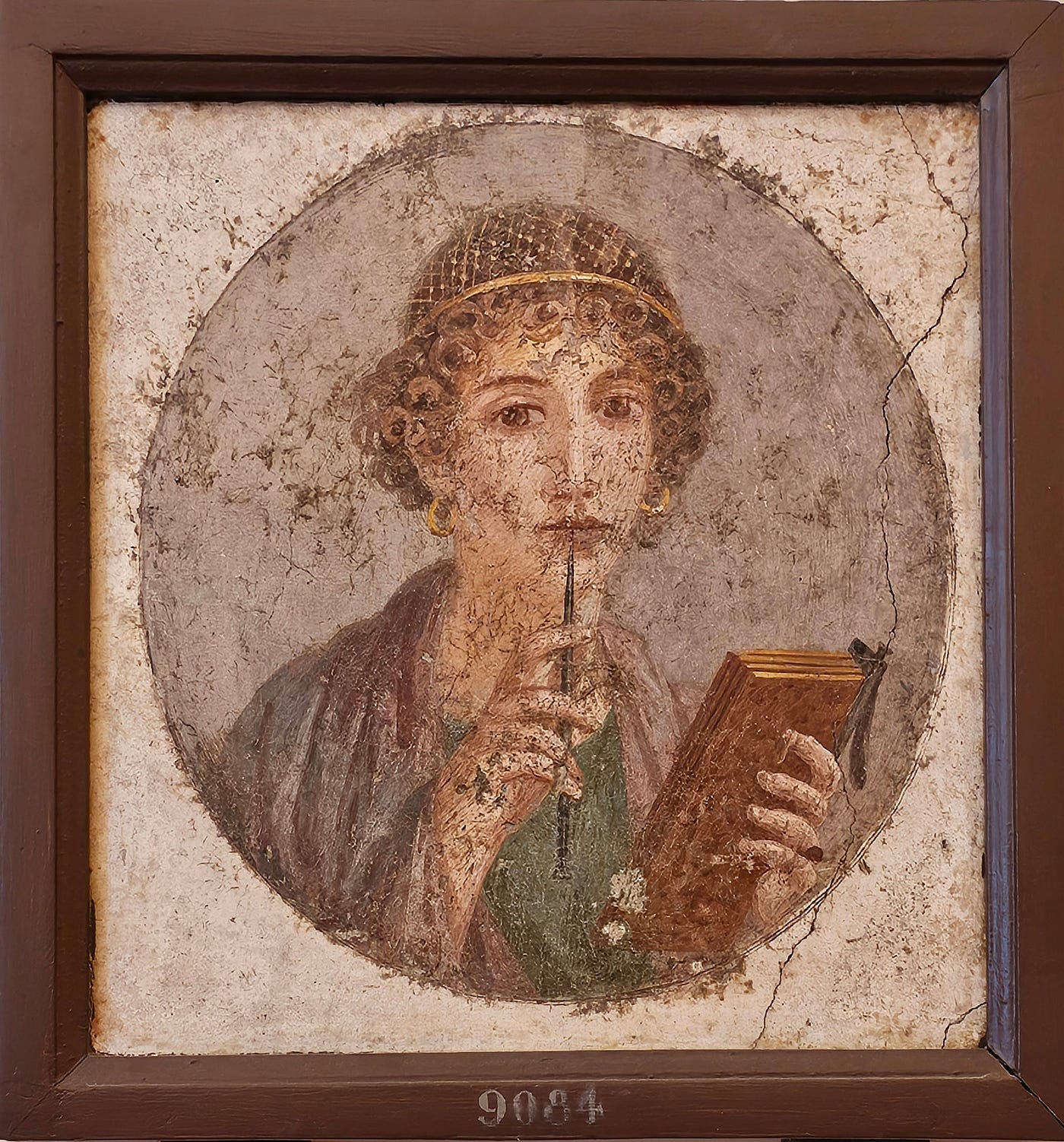
Woman with Stylus, 55–79 CE
NAPLES — In a quiet gallery of the National Archaeological Museum of Naples, visitors pause before a striking fresco long misnamed “Sappho.” Brushed in the ornate Fourth Style of Pompeii’s late republican era, the portrait captures a poised young woman — stylus poised to her chin, wax tablet in hand — yet her true name and story remain as elusive as the volcanic ash that preserved her image.
For centuries, scholars and tourists alike succumbed to the romantic notion that the fresco depicted Sappho of Lesbos, the legendary Greek poetess. In reality, the so-called Sappho is neither Greek nor from the island of Lesbos, nor connected to the seventh-century B.C. lyric poet. She is instead a well-to-do Roman woman of roughly the mid-first century C.E., celebrated for her literacy and refinement, but otherwise anonymous.
Discovered in 17th May 1760 beneath the ruins of a Pompeian villa on the Insula Occidentalis- Villa Cuomo, the fresco once adorned a decorative wall panel alongside a tondo of a laurel-crowned youth and a mythological scene of Andromeda and Perseus. Framed by architectural motifs and gold-threaded hair, the woman’s gold earrings and palla attest to her family’s wealth and cultural ambition.
Art historians believe such images — labeled docta puella, or “learned girl” — were commissioned by affluent Romans eager to showcase their daughters’ education. The confident, contemplative gaze suggests a writer on the verge of recording her thoughts, a rare celebration of female intellect in a society that largely relegated women to domestic spheres.

National Archaeological Museum of Naples, Italy
Standing before her portrait, I was struck by the woman’s quiet dignity. Her dark eyes, rendered with astonishing realism, seem to speak directly to us — inviting speculation about her aspirations, her daily life, even the private verses she might have composed. In that moment, the centuries between Pompeii and Naples collapsed, and I felt an inexplicable kinship with her poised yet intimate presence.
Yet beneath this personal connection lies a broader lament: countless educated Roman women left no such traces. While male scholars of antiquity enjoyed detailed biographies and enduring reputations, their female counterparts were too often consigned to obscurity. The misattribution to Sappho underscores our modern hunger to retrofit women into recognizable names, rather than celebrate them on their own terms.
Today, as debates continue over the preservation of Pompeii’s frescos, the “Woman with Stylus” reminds us of the countless lives still buried beneath ash and time. She embodies both the beauty of Pompeian art and the silence of history — an eloquent testament to female erudition, whose true voice we may never hear but whose gaze continues to captivate generations.
메타데이터
- post_id
- cef4eefedd67
- slug
- the-enigmatic-woman-with-stylus-portrait-of-a-lost-pompeian-scholar-cef4eefedd67
- url
- https://medium.com/@nooneishearing/the-enigmatic-woman-with-stylus-portrait-of-a-lost-pompeian-scholar-cef4eefedd67
- canonical_url
- https://medium.com/@nooneishearing/the-enigmatic-woman-with-stylus-portrait-of-a-lost-pompeian-scholar-cef4eefedd67
- author_url
- https://medium.com/@nooneishearing
- status
- ok
- fetched_at
- 2026-07-18 14:12:55