Event Analysis for Power Systems using Deep Learning
Event analysis in smart grids and power systems is crucial for several reasons. Firstly, event analysis helps in identifying the causes of…
Event Analysis for Power Systems using Deep Learning
Event analysis in smart grids and power systems is crucial for several reasons. Firstly, event analysis helps in identifying the causes of power outages by analyzing the events leading to the outage [1]. Additionally, early detection of events can help prevent potentially cascading events or large-scale outages by allowing for proper and timely operational responses. Furthermore, event analysis contributes to grid resilience, efficiency, security, and overall performance. It empowers utilities to respond to disruptions and enhance power quality, benefiting both consumers and the environment.
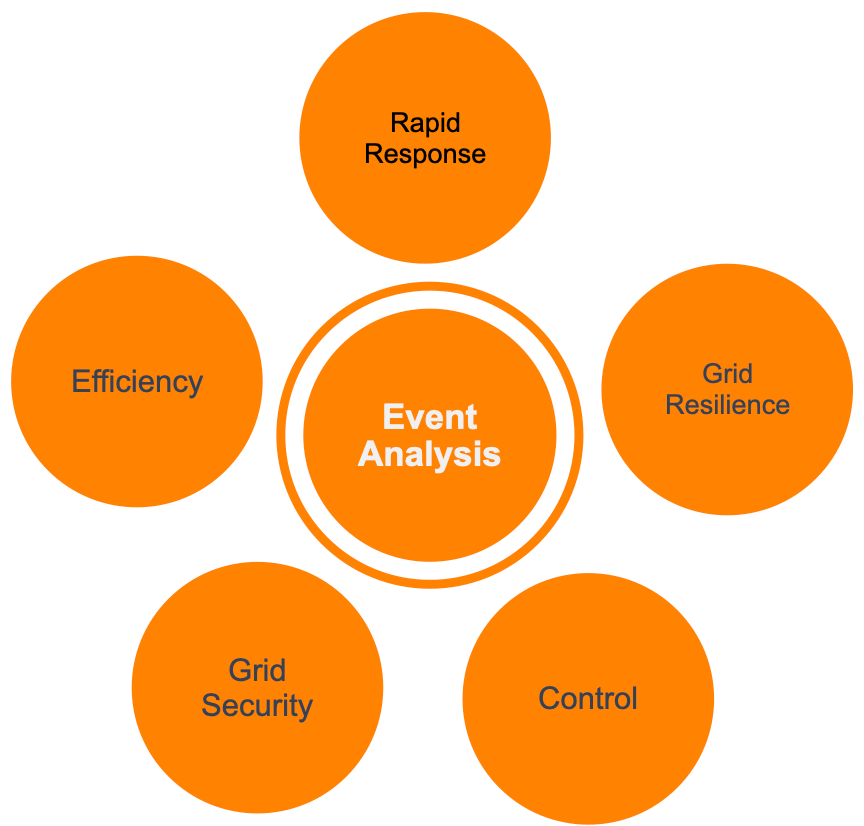
Fig. 1 Event detection in power systems is crucial for several reasons.
Machine learning has become increasingly popular for addressing event detection and recognition challenges in power systems, offering a data-driven approach to analyzing complex data. Many existing ML-based methods involve feature extraction from raw measurement data followed by classification for event detection or recognition. However, the task of extracting effective features requires deep domain knowledge and can be challenging. Deep learning techniques have emerged as a breakthrough in event analysis for power grids, offering superior feature extraction capabilities. Despite their effectiveness, current methods have not fully utilized the potential of deep learning for feature extraction. One significant drawback of existing methods is their reliance on fixed window sizes for event detection and recognition tasks. While these methods demonstrate decent performance, they struggle to determine the exact occurrence time of events. This limitation increases the risk of missing critical events or generating false alarms.
Moving forward, there is a need to explore advanced deep learning architectures that can dynamically adapt to varying window sizes and effectively capture temporal dependencies in the data. By leveraging the full potential of deep learning and addressing these limitations, the accuracy and reliability of event detection and recognition in power systems can be further enhanced. A recent work [2] published on SmartGridComm2023 proposed an end-to-end deep learning model. It takes measurements, such as frequency, voltage, and other measures that have been identified to be important to the power system and generates multi-tasking results for event detection, recognition, and temporal localization. It can figure out if an event is happening, what the type of the event is, what time the event occurs. Their objectives of the proposed method are multifold as shown in Fig. 2.
- Multi-tasking: The proposed approach tackles event detection, recognition, and temporal localization within a single deep network, enabling end-to-end training.
- Early detection: Thanks to its point-wise prediction capability, the proposed method can detect events without waiting for complete patterns to emerge, facilitating early detection.
- Accuracy and Robustness: Leveraging the learnable feature extraction capabilities of deep neural networks (DNNs), the proposed approach generates highly discriminative features compared to handcrafted feature extractors. As a result, it can accurately distinguish between different types of events, including oscillations, with greater robustness.
- Adaptivity: The proposed 1-D Fully Convolutional Network (FCN) model can process time series of arbitrary lengths, eliminating the need for predefined window sizes and ensuring efficient predictions.

Fig. 2 The framework of the proposed method
To achieve these goals, they proposed an FCN based method as shown in Fig. 3.

Fig. 3 Illustration of the network structure
Suppose there are M monitoring devices (e.g., FDR, PMU) installed, with each bus hosting one such device. The time-series signals collected from these M devices over a certain duration can be represented as a matrix X, where T is the number of timestamps recorded. Each column of matrix X represents a temporal point (a vector) from one of the M observation sites.
Existing methods typically label a sample using One Hot Encoding, where the element corresponding to the class of the event is assigned a value of 1, while all other elements are set to 0. However, this labeling approach poses a limitation as it only indicates whether an event is occurring and what type of event it is, without considering when the event occurs. To address this limitation and achieve multi-tasking in event detection, recognition, and temporal localization within a unified model, a temporal-aware labeling strategy is proposed, as shown in Fig. 4. For instance, if there are 4 classes of events of interest, an additional “class” representing normal states is intentionally introduced, resulting in a total of 5 classes. In the temporal-aware label matrix, only a single unit in the time series corresponding to the occurrence time of an abnormal event is annotated as one of the four abnormal states, while all other units, including those during state transitions, are labeled as normal states.
The neural network architecture is tailored for analyzing 1-D time series data with M channels. A 1-D convolution layer is employed as the fundamental building block of our Fully Convolutional Network (FCN) model. Drawing inspiration from the VGG architecture [3] and FCN models designed for image semantic segmentation [4], the network is constructed using small convolution filters, such as convolution layers with a kernel size of 1 × 3 and a stride of 1, as well as max-pooling layers with a window size of 2 and a stride of 2. For the up-sampling component in the decoder section, learnable transposed convolutions are utilized. Skip-connections are incorporated to enhance the temporal detection capabilities of the model across dense output. These connections merge features from corresponding layers in both the encoder and decoder. Skip connections, a common technique in dense prediction tasks, promote feature reusability and contribute to stabilizing model training and convergence. For more insight into the network architecture, please refer to Fig. 3.

Fig.4 The unified labelling verses existing separate labelling
To evaluate the performance of the proposed method, they conduct event analysis in a power system on all four typical types, namely, generator trip (GT), line trip (LT), load shedding (LS), and oscillation (OS). In addition, they add the normal status as the fifth label. Training a deep learning model typically demands a relatively large dataset to mitigate the risk of overfitting. However, in this study, the availability of training samples for the four event types may be limited. To address this challenge, data augmentation techniques are employed, which involve channel shuffling and temporal shifting.
Extensive experiments are conducted to assess the model’s performance from various perspectives, including:
- Performance evaluation for event detection, recognition, and temporal localization.
- Capacity assessment for early detection.
- Examination of the impact of the number of channels (or sensing devices) utilized.
- Analysis of the model’s sensitivity to noise.
- Evaluation of the model’s robustness in handling oscillation events.
- Computation analysis.
The paper provides a detailed description of the experimental setup and the performance metrics utilized. In summary, the proposed method has demonstrated state-of-the-art performance in event detection, recognition, and temporal localization. Notably, 50% of events can be detected within the first second, with detection accuracy improving to 97.6% for events lasting 2 seconds. While fewer channels present a challenge for event analysis, even with just 1 channel, the detection accuracy rate and false alarm rate experience only a slight degradation. Moreover, the proposed method maintains consistent accuracy levels even at low Signal-to-Noise Ratios (SNR), as low as 30 dB. Oscillation poses a significant challenge to event detection, yet the proposed method shows robustness, with oscillation only marginally impacting the detection accuracy rate. Inference time for a 30-second sample is remarkably short at 0.017 seconds on average, enabling real-time event detection in power systems.

Fig 5. Summary of the 1-D FCN for event analysis
Reference:
[1] MRO Electric, “Power Outage Statistics by State”, https://www.mroelectric.com/faq/power-outages-by-state/.
[2] Li, Chengcheng, et al. “Early Alarm: Robust Event Analysis for Power Systems using 1-D Fully Convolutional Network.” 2023 IEEE International Conference on Communications, Control, and Computing Technologies for Smart Grids (SmartGridComm). IEEE, 2023.
[3] Sengupta, Abhronil, et al. “Going deeper in spiking neural networks: VGG and residual architectures.” Frontiers in neuroscience 13 (2019): 95.
[4] Long, Jonathan, Evan Shelhamer, and Trevor Darrell. “Fully convolutional networks for semantic segmentation.” Proceedings of the IEEE conference on computer vision and pattern recognition. 2015.
메타데이터
- post_id
- cf24d68338a8
- slug
- event-analysis-for-power-systems-using-deep-learning-cf24d68338a8
- url
- https://medium.com/@cli42.utk/event-analysis-for-power-systems-using-deep-learning-cf24d68338a8
- canonical_url
- https://medium.com/@cli42.utk/event-analysis-for-power-systems-using-deep-learning-cf24d68338a8
- author_url
- https://medium.com/@cli42.utk
- status
- ok
- fetched_at
- 2026-07-20 16:22:49