Technology and Human Labor: A Story From Africa to Us
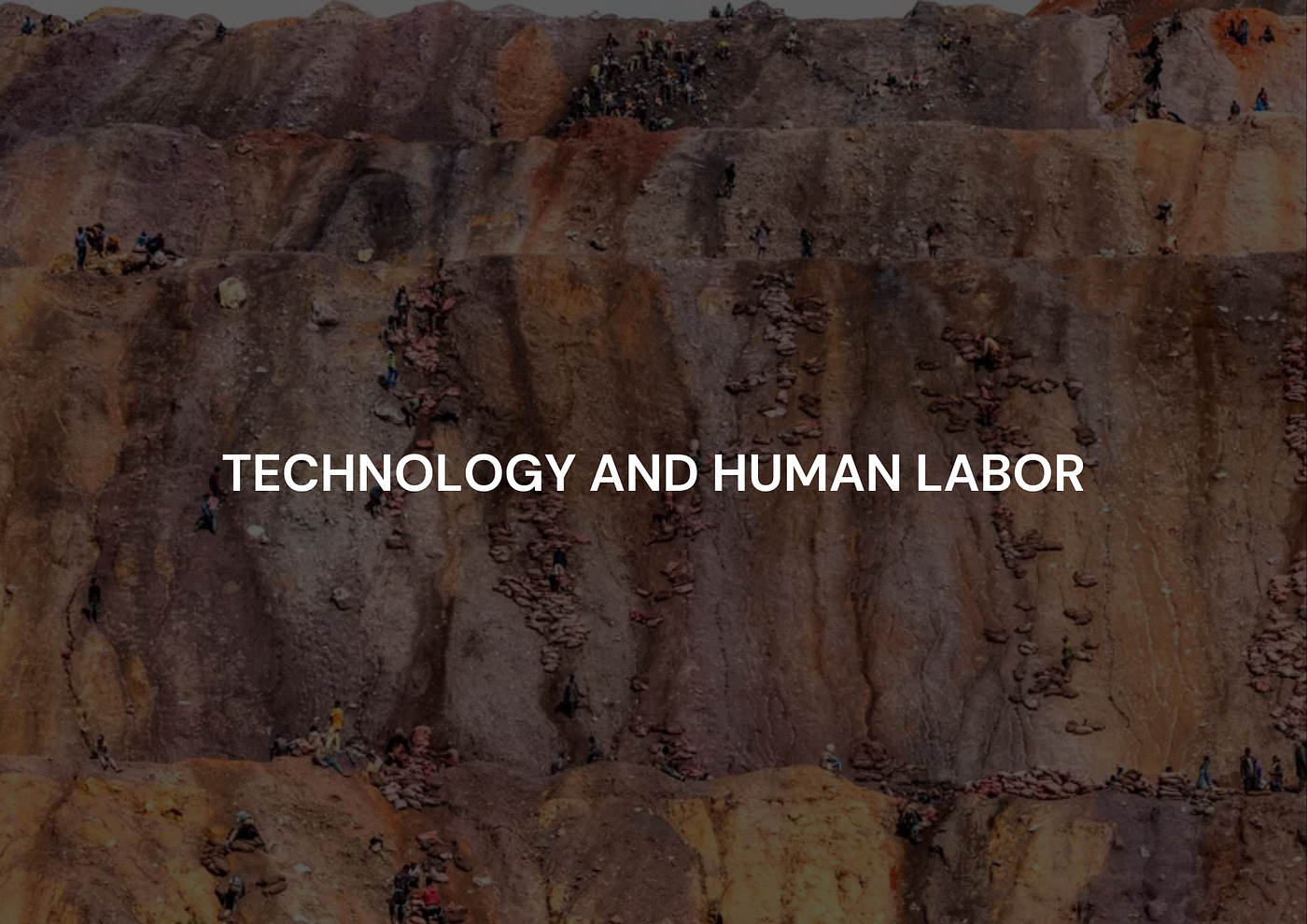
Thousands of children are forced to work in dangerous mines, losing their childhood to fear and hardship.
Technology and Human Labor: A Story From Africa to Us
When you wake up in the morning and pick up your smartphone, use your computer at work, drive your car, or even hand your child an electronic toy, they all conceal a secret. The precious minerals needed for the tiny chips, batteries, and electronic components inside these devices are mostly mined in Africa under extremely harsh and dangerous conditions.
This is not just a distant continent’s problem; it’s the responsibility of all of us. Behind every tap, every keystroke, every new phone purchase, lie the tears and suffering of thousands of people, including children. Technology companies have built their billions in profit on this suffering
Technology companies sustain this situation through our silence. They know that consumers prioritize convenience.
Young Miners and Heavy Loads
In Kolwezi, Democratic Republic of Congo, thousands of young miners wake each day at 5 a.m. Without breakfast, they shoulder heavy loads of cobalt and descend into the mines. Their hands are wounded, their bodies frail, and their eyes clouded with deep despair. In a few months, this cobalt will power the battery in your phone.
These young miners earn only $1.50 to $2.50 per day. That sum meets neither their family’s needs nor allows them to attend school. At the mine exit their hands bleed and their feet swell. At night they struggle with coughs caused by cobalt dust.
This isn’t just one miner’s story tens of thousands of children share the same fate. Instead of spending the sweetest years of their lives in school, on playgrounds, or with friends, they are forced to work in death-filled tunnels.
Around Kolwezi, the average age of cobalt workers is 11. The youngest are just six years old. Most have never attended school because their families cannot afford it. Mine owners favor young laborers since they pay them half the wage of adults.
Children are also prized for their small size they can squeeze into narrow, dangerous tunnels more easily than grown workers.
Since 2010, cobalt production has risen nearly fivefold, and child labor has climbed in parallel. As cobalt prices increase, more families feel compelled to send their children into the mines. Alternative livelihoods are virtually nonexistent.
Cobalt: The Bloody Gold of the Tech World

Approximately 70% of the world’s cobalt reserves are located in the Democratic Republic of the Congo. That means most smartphones, computers, and electric vehicles are produced using cobalt from this country. Chinese companies control up to 80% of this output, operating without regard for local people’s rights and in violation of international standards.
In 2023, the DRC’s total cobalt production reached 130,000 tons. Forecasts indicate that by 2030 global cobalt demand will triple, driven by the rapid surge in electric vehicle adoption. Meanwhile, cobalt prices have jumped by 200–300%, incentivizing mine owners to hire ever more and ever cheaper labor, including children.
The cobalt market is divided into three main segments: extraction in the DRC, processing by Chinese firms, and consumption by Western companies. The weakest link in this chain is the local population; their exploitation underpins the entire system.
Life and Death Inside the Mine
The mines around Kolwezi are among the world’s largest cobalt sources. The scene there is horrifying. Each morning at 5 a.m., nearly a thousand workers including hundreds of children cram into the shafts. These tunnels plunge 40–50 meters underground, with virtually no safety measures in place.
The air is poisoned by cobalt dust. Every breath draws toxic particles deep into their lungs. Workers dig with primitive shovels and entirely manual drills. No engineering plans or technological safeguards exist. They emerge again at sunset if they survive the day.
Mine collapses are commonplace. In 2023 alone, official records cite 47 collapses, killing 180 people.
About 90% of these mines lack any ventilation system. Fewer than 5% of workers wear protective gear, since mine owners refuse to fund safety measures.
The nearest hospital sits 50 kilometers away, making emergency care virtually unreachable for injured miners. Many die en route while waiting for help.
With no access to clean water, workers must drink cobalt-contaminated water. It’s both hazardous to health and life-threatening.
Health Consequences
Dr. Siddharth Kara writes in Cobalt Red that inhaling cobalt dust causes lung disease, while skin contact triggers severe allergic reactions. Cobalt dust inhalation leads to pneumonia, which, if untreated, can be fatal.
Most miners suffer from the following health issues:
- Lung diseases: progressive and difficult to treat, caused by cobalt dust. Dr. Benoit Nemery reports that lung disease among cobalt miners in the DRC is ten times higher than in the general population
- Skin conditions and burns: chronic problems resulting from cobalt contact.
- Anemia and weakness: heavy metal poisoning leading to blood disorders.
- Growth problems in children: linked to malnutrition and toxic exposure.
- Eye diseases: exposure to cobalt dust often leads to vision loss.
- Nervous system disorders: heavy metal poisoning can impair memory and behavior.
Cobalt miners’ average lifespan is just 45 years, compared to the national average of 62.
Families devote a portion of their income to health expenses, yet treating cobalt poisoning in the DRC is impossible. Patients must travel to South Africa for care a cost far beyond their means.
Lithium: The Hidden Cost of Electric Vehicles

Zimbabwe and the Lithium Frenzy
Zimbabwe holds the world’s fifth-largest lithium reserves. Over the past five years, lithium extraction in the country has increased tenfold driven by the global boom in electric vehicles. Yet a familiar tragedy unfolds: lithium companies are violating local people’s rights.
In the Marange region, 200 families were forcibly evicted for lithium mining operations. No compensation was provided. These families now live in tents. Children are unable to attend school, and elders are left without medical care
Lithium mines are operated through joint ventures between the Zimbabwean government and Chinese companies. The voices of local communities go unheard. Stripped of their land, they are forced into silence.
Water Crisis
Producing lithium requires enormous quantities of water roughly 2,000 tons of water per 1 ton of lithium. In water-scarce regions, this causes serious hardship. Companies divert local water sources for their operations, leaving communities parched.
As rivers and lakes begin to dry up, agriculture collapses, families face food insecurity, and many are forced to migrate to urban areas.
Even more alarming is contamination. Chemicals used in lithium mining seep into surface and underground water, rendering it undrinkable. Illnesses spread, but access to healthcare, clean water, and social support remains out of reach.
Environmental Damage
Lithium extraction inflicts significant harm on the environment. Vast forests are destroyed to make way for mines displacing wildlife and destroying habitats. The land and air become polluted, and ecological balance is thrown off.
Industrial waste from lithium production presents another major problem. These pollutants linger in nature for years, poisoning soil and groundwater. As a result, local ecosystems suffer many species dwindle or vanish entirely.
Global Control of Rare Earth Elements
China’s Dominance
China controls approximately 85–95% of the world’s rare earth elements, which are essential components in smartphones, computers, electric vehicles, and other advanced technologies. Chinese companies maintain a near-monopoly by overseeing the extraction, processing, and export stages of this supply chain.
In Africa, these companies systematically violate local laws. They obtain licenses through bribery, disregard environmental regulations, violate labor rights, and forcibly displace communities. Huayou Cobalt manages 30% of cobalt production in the Democratic Republic of Congo and faces numerous allegations of child labor. China Molybdenum and Zijin Mining operate similarly, regularly infringing on local residents’ rights.
China’s Geopolitical Strategy
China treats Africa’s resources as part of its broader geopolitical agenda. Its aim is not just commercial but also political influence. Large infrastructure projects are implemented across African nations not to serve local populations, but to advance China’s interests.
Chinese companies deliberately divide local communities: some groups receive concessions and financial aid, while others face pressure and coercion. This tactic fragments resistance and facilitates exploitation.
Mechanisms Through Which Tech Companies Sustain the Crisis
Technology giants employ complex strategies that directly perpetuate human suffering and environmental disasters embedded in their supply chains. These mechanisms are designed to distance them from responsibility and shield their practices from scrutiny.
Exploiting Legal Loopholes
Tech firms skillfully take advantage of gaps in international law. Even when they know the source of cobalt, they avoid direct mining operations. Instead, they procure raw materials through local or intermediary companies, effectively dodging legal accountability.
They deliberately structure supply chains to be opaque and convoluted. Cobalt is extracted in the Democratic Republic of Congo, processed by Chinese companies, turned into batteries in third countries, and finally integrated into consumer devices. This multi-stage journey makes it difficult to trace the mineral’s origin — allowing companies to evade responsibility.
Evading Public Pressure
To deflect public criticism, tech firms launch Corporate Social Responsibility (CSR) campaigns. These include donations to education, healthcare, and environmental initiatives aimed at softening public perception and portraying themselves as ethical actors.
They also invest heavily in media and marketing, promoting “green tech” and “sustainable innovation” slogans. This glossy branding helps conceal the darker realities of their supply chains.
Political Influence
Through lobbying and campaign donations, tech companies exert influence over government officials and policy-making. This allows them to block or weaken regulations that could hold them accountable.
They even sway international organizations, spending money to dilute critical language in global reports and avoid direct blame for human rights or environmental violations.
Courtroom Confrontation
In 2019, a landmark lawsuit was filed against Apple, Google, Dell, Microsoft, and Tesla one of the most significant cases in tech history. The companies were accused of knowingly using child labor, deliberately avoiding supply chain oversight, purchasing cobalt despite knowing its source, violating local rights, and remaining silent despite being aware of international violations.
Representatives of affected children participated in the trial, sharing their hardships, showing their injuries, and seeking justice.
Companies’ Response
- Apple and Google claimed they sourced materials ethically and imposed strict standards on suppliers.
- Tesla announced plans to transition to cobalt-free batteries.
- Microsoft and Dell emphasized their commitment to human rights and strict supplier policies.
However, their main defense was: “We’re just buyers, not directly responsible.” But is that logic sound? Should major corporations be exempt from overseeing their supply chains?
2024 Ruling
The U.S. Court of Appeals ruled in favor of the tech companies. It stated that direct responsibility couldn’t be proven, companies weren’t obligated to know the cobalt’s origin, and they weren’t in a “venture” with suppliers.
This decision was a major disappointment for thousands of affected children and families in Africa. It not only absolved tech giants of direct responsibility but also cast doubt on their ethical obligations and supply chain transparency. In effect, it granted them a form of legal immunity to overlook exploitation.
International Response
European Parliament
In 2022, members of the European Parliament issued strong written questions condemning child labor in cobalt mines in the Democratic Republic of the Congo (DRC). They emphasized that such practices are unacceptable and conflict with the EU’s zero-tolerance stance on child labor. However, despite these declarations, no binding measures or enforcement mechanisms followed.
U.S. Congress Investigation
In 2024, the U.S. Congress held a special hearing focused on Chinese companies’ involvement in child labor across African mining operations. Lawmakers expressed concern and moral outrage, but no concrete legislative actions were taken to curb the issue.
International Labour Organization (ILO) Efforts
The ILO launched the SCREAM program Supporting Children’s Rights through Education, the Arts and the Media to raise awareness and empower youth to speak out against child labor. The initiative promotes education, creative expression, and community engagement. While impactful at the local level, SCREAM remains limited in scale and hasn’t yet addressed the systemic exploitation in mining regions.
Solutions and Rays of Hope
Corporate Responsibility by Some Companies
In 2019, BMW, BASF, and Samsung created the “Responsible Cobalt Initiative.” The project aims to promote responsible and ethical cobalt extraction in the Democratic Republic of the Congo. By allocating ten million dollars in investment, they created alternative jobs for 50,000 people and built schools and medical centers. These steps are promising, but they are not enough considering the scale of the problem.
Technological Solutions
With blockchain technology, it has become possible to trace the origin of cobalt. Digital certificates display the entire journey of cobalt. This allows companies to stop purchasing from sources where child labor is used.
New Batteries
Companies are conducting research into new battery technologies to minimize cobalt usage:
- LFP batteries (Lithium Iron Phosphate): Used by Tesla and Panasonic, reduce cobalt need by up to 80%, affordable and safe
- Sodium-ion batteries: Do not use cobalt, but currently have low energy density
- Solid-state batteries: Offer high energy density and safety, but are not yet ready for mass production
- Hydrogen-based energy storage systems: Enable energy storage without using any cobalt
Panasonic plans to introduce fully cobalt-free batteries within 2–3 years.
What Can You Do?
Be a Responsible Consumer
- Use your old phone and other devices for as long as possible every new purchase means resource exploitation.
- When buying a new device, choose refurbished models they’re better for the environment and for your wallet.
- Raise your voice on social media to pressure companies into ethical production. Remember: every purchase is, in fact, a vote.
Apply Pressure
Join campaigns using the hashtag #BloodyCobalt. Share on Instagram and X. Educate your friends. A collective voice is stronger than a single one.
Other Measures
China’s Government Action
In 2024, the Chinese government allocated $5.5 billion to address the damage caused by illegal mining, restore the environment, and empower local communities. This initiative is part of the third revision of China’s Mineral Resources Law, which, for the first time, legally mandates ecological restoration of mining sites. However, the law does not directly regulate the overseas activities of Chinese companies it only provides recommendation-based standards.
European Union Initiative
The “Supply Chain Due Diligence” law, which will take effect in 2025, is important. All European companies will be required to audit their supply chains. If child labor is detected, heavy fines will be imposed. Transparency will be mandatory.
Revision of Court Decisions
Child rights advocates are objecting to court decisions and filing new lawsuits. International legal experts are working to increase the accountability of technology companies.
Empowering Local Communities
In the Democratic Republic of the Congo, local communities are organizing to defend their rights. Trade unions for miners are being established. International non-governmental organizations are providing legal support to local people.
Final Words
Thank you for reaching the end of this article. Perhaps at this moment, you’re looking at your phone and feeling something different perhaps your conscience feels heavy. These feelings are normal.
Every morning when you pick up your phone, touch your keyboard, or grip your car’s steering wheel, remember that behind these devices lies immense labor.
Change is only possible through our collective effort. Technology companies justify their silence with our indifference. But if we raise our voices, they will be forced to change. Because our wallets are their budgets. Our choices shape their future.
There is still hope for African children. They, too, deserve to go to school, play games, and dream. When they look to the future, they should feel joy not fear. All it takes is our choice.
Now you know. And those who know but remain silent are responsible through their silence.
Share this article with your friends. Post about it on social media. Talk about it in schools, universities, and workplaces. Because every person should know the true cost of technology.
Together, we can change the lives of African children. Together, we can compel technology companies to act. Together, we can build a more just world.
Truth can be uncomfortable. But only those who know the truth can change it.
Sources
- Wilson Center — “The DRC Mining Industry: Child Labor and Formalization” https://www.wilsoncenter.org/blog-post/drc-mining-industry-child-labor-and-formalization-small-scale-mining
- NPR — “Cobalt Red describes the horror show of mining in the DRC” https://www.npr.org/sections/goatsandsoda/2023/02/01/1152893248/red-cobalt-congo-drc-mining-siddharth-kara
- ABC News — “US court absolves top tech companies in Congo’s child labor case” https://abcnews.go.com/International/us-court-absolves-top-tech-companies-congos-child/story?id=107839639
- Congressional-Executive Commission on China — “From Cobalt to Cars: How China Exploits Child Labor” https://www.cecc.gov/events/hearings/from-cobalt-to-cars-how-china-exploits-child-and-forced-labor-in-the-congo
- European Parliament — “Cobalt mines — child labour in the Democratic Republic of the Congo” https://www.europarl.europa.eu/doceo/document/E-9-2022-002207_EN.html
- International Labour Organization — “Voices against child labour in cobalt mining” https://www.ilo.org/resource/news/tiny-mighty-voices-against-child-labour-cobalt-mining
- Amnesty International — “Forced evictions at cobalt and copper mines in the DRC” https://www.amnesty.org/en/latest/news/2023/09/drc-cobalt-and-copper-mining-for-batteries-leading-to-human-rights-abuses/
- Business & Human Rights Resource Centre — “DRC: House hearing investigates China’s exploitation” https://www.business-humanrights.org/en/latest-news/drc-house-hearing-investigates-accusations-that-china-is-exploiting-children-in-africa/
- Inside Climate News — “Lithium Mining Rights Abuses Flourishing Across Africa” https://insideclimatenews.org/news/15112023/lithium-mining-africa-human-rights-violations-corruption/
- Harvard International Review — “Not So Green Technology: Rare Earth Mining Legacy” https://hir.harvard.edu/not-so-green-technology-the-complicated-legacy-of-rare-earth-mining/
- ScienceDirect — “The race for critical minerals in Africa: Blessing or curse?” https://www.sciencedirect.com/science/article/pii/S0301420724004136
- Investor Advocates for Social Justice — “Shifting Gears: International Human Rights Violations” https://iasj.org/shifting-gears-part-ii-international-human-rights-violations/
- Africanews — “US tech giants absolved in cobalt child labour case” https://www.africanews.com/2024/03/06/us-tech-giants-absolved-in-cobalt-child-labour-case/
- Inside Climate News — “Mining Critical to Renewable Energy Tied to Human Rights Abuses” https://insideclimatenews.org/news/07062023/mining-clean-energy-human-rights/
메타데이터
- post_id
- cf2861a7ee4f
- slug
- technology-and-human-labor-a-story-from-africa-to-us-cf2861a7ee4f
- url
- https://medium.com/@hesenov.exe/technology-and-human-labor-a-story-from-africa-to-us-cf2861a7ee4f
- canonical_url
- https://medium.com/@hesenov.exe/technology-and-human-labor-a-story-from-africa-to-us-cf2861a7ee4f
- author_url
- https://medium.com/@hesenov.exe
- status
- ok
- fetched_at
- 2026-08-10 04:30:31