Erased in Plain Sight: Women’s Human Rights Under the Taliban Rules
Written by Fatima Fatmawati, Jevi Maerano, and Melinda Salsabila — Research and Analysis Team at FPCI Chapter Undip 2026
Erased in Plain Sight: Women’s Human Rights Under the Taliban Rules
Written by Fatima Fatmawati, Jevi Maerano, and Melinda Salsabila — Research and Analysis Team at FPCI Chapter Undip 2026
Since the Taliban regained control of Afghanistan, millions of women have been systematically stripped of their most basic freedoms not through hidden violence, but through policies enforced openly before the world’s eyes. From banning girls’ education to restricting women’s mobility and participation in public life, the Taliban’s actions have sparked global concern over the severe erosion of women’s human rights. This is not only a humanitarian crisis but also a fundamental challenge to international law, particularly concerning equality, freedom, and the protection of human rights under Taliban rule.
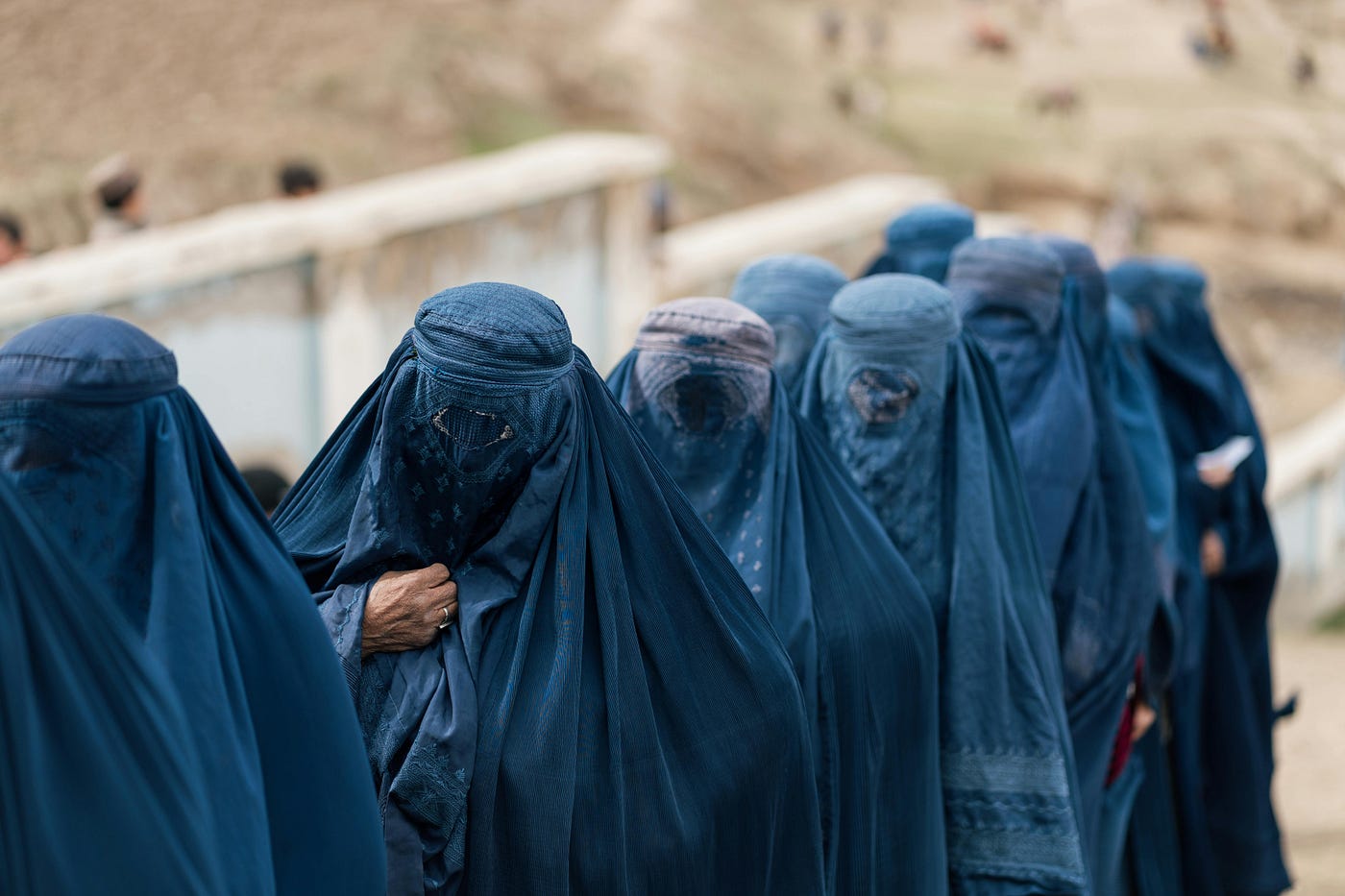
Women in Afghanistan
After the Taliban returned to power in 2021, various policies restricting women have been systematically enforced. Women are barred from continuing their education through secondary school and university, have lost access to employment in many sectors, face restrictions on their mobility without a male escort, and have seen their opportunities for participation in public policy significantly limited. Furthermore, many women activists who have spoken out in protest have faced intimidation, arrest, and even enforced disappearances.
This situation is crucial to discuss in relation to cultural relativism. When we observe the Human Rights violations against women in Afghanistan by the Taliban, we can see how cultural relativism is used to justify the Taliban government. Cultural relativism argues that values and rights cannot be measured by universal standards because every society has its own norms and traditions. In the Afghan context, restrictions on women are often defended because such policies align with local culture or religious interpretations. However, this argument weakens when considering the reality that many Afghan women themselves reject these policies and actively resist them despite significant risk.
Afghan women’s resistance serves as crucial evidence to challenge cultural relativism. In Kabul, Herat, and various other cities, women have taken to the streets demanding the right to education, employment, and freedom. They are aware that such actions carry high risks, yet they choose to speak out. Beyond direct demonstrations, many women are also resisting through underground schools, secret study groups, digital campaigns, and international solidarity networks.
One notable movement is the #DoNotTouchMyClothes campaign on social media, which represents their resistance against the Taliban’s new rules governing how they dress. This action demonstrates that values of freedom, equality, and human dignity are not foreign values enforced by outsiders, but are also fought for by the Afghan people themselves.
Afghanistan’s history also shows that the country’s cultural identity is not homogeneous. Before the Taliban came to power, many Afghan women served as doctors, teachers, journalists, lawyers, and even members of parliament. This means there are other social traditions that support women’s participation in public life. Therefore, equating the Taliban’s repressive policies with Afghan culture as a whole is a harmful oversimplification that ignores the diversity of social traditions, political perspectives, and religious interpretations that exist within Afghan society.
From this case, it can be understood that cultural relativism is often a problem when used to defend oppression. When we look at the situation of women in Afghanistan, the women who are also part of their own cultural identity actually reject the justification of cultural relativism. The Taliban and their supporters are the ones using cultural relativism to rationalize and protect their interests. Meanwhile, many other marginalized communities and women reject this stance and join movements opposing the Taliban’s rules. Beyond the debate between cultural relativism and universalism, what is most clearly evident is the actual conditions and the impact of the Taliban’s rule on women’s rights in Afghanistan, a reality further reflected in the wave of resistance, protests, and civil disobedience by Afghan women themselves.
According to Amnesty International, rates of child, early, and forced marriages in Afghanistan have continued to rise under Taliban rule. This increase is driven by several interrelated factors, many of which can be attributed to the actions and policies of the Taliban and its members since they took power. The most common factors include an economic and humanitarian crisis worsened by a lack of educational and career prospects for women and girls. Some Taliban members have also forced women and underage girls to marry them. A recent World Bank report (2024) on gender equality conditions for women in 190 countries ranks Afghanistan as the fourth-lowest-ranked country. This also places Afghanistan among the lowest-ranked countries within the group classified by the World Bank as countries in fragile and conflict-affected situations (FCS).
One of the factors contributing to this problem is limited access to education, particularly higher education, along with employment opportunities. It is crucial within the FCS context as a source of hope and a means to alleviate poverty and spread prosperity. However, limited access, low graduation rates, and barriers to advancing to secondary and higher education, along with low employment prospects, have become major obstacles to fulfilling the true economic potential of human resources, particularly within marginalized communities.
Women have made significant contributions to Afghanistan’s economic growth through their involvement in technical and private institutions, leadership in women-owned businesses and the public sector, as well as their role in educating future generations at all levels. Therefore, this demonstrates that the exclusion and discrimination against women within the system actually have a significantly detrimental impact on economic progress in Afghanistan.
This raises the question: is there any logical reason to limit women’s access to education and their ability to contribute to a country’s economic growth, when data shows that repressive policies toward women often lead to further economic decline?
The Taliban’s Policy and its Meaning for Women’s Lives
Since the Taliban retook Kabul on August 15, 2021, their first statement from spokesperson Zabiullah Mujahid stood on camera and declared that the Taliban were “committed to the rights of women within the framework of Shariah”, a promise that unraveled within weeks. What followed was not a transition of governance, but a structured, deliberate campaign to erase women from public life through policy. To understand the impact on Afghan women, we need to examine carefully how these policies were structured and regulated, and what justification the Taliban used to defend them.
Since returning to power, the Taliban have governed women’s lives through a relentless stream of edicts. By January 2023, 54 of the Taliban’s 80 issued edicts concerned restrictions on women’s rights. This is not policymaking, it is obsession. The sheer volume and specificity of these directives reveal a regime fundamentally obsessed with controlling women’s bodies and presence in public life. Each decree builds on the previous, creating what scholars and UN officials now widely describe as a system of gender apartheid, an institutionalized system of gender-based segregation and domination that goes beyond standard definitions of discrimination.
Policy Framework: Regulation of Women’s Lives
Restriction On Education
Nowhere is the Taliban’s intent clearer than in education. In September 2021, girls were banned from attending secondary school, followed in 2022 by exclusion from universities. The progression was not an accident, but deliberate. Today, Afghanistan stands as the only country in the world where secondary and higher education is strictly forbidden to girls and women, with nearly 2.2 million of them barred from attending school beyond the primary level.
What is particularly important to grasp here is how much was lost. Between 2001 and 2021, the enrollment rate for primary school-age girls had risen to over 80%, and the female literacy rate nearly doubled from 17% to nearly 30%, gains the Taliban have methodically worked to erase since returning to power. Denying education is not just a social restriction. It is the erasure of a generation’s future, and a strategic move to ensure that the next generation of Afghan women has fewer tools to resist. UNICEF assessed that excluding women from the workforce had cost Afghanistan at least $500 million over the past year, and that preventing girls’ education will cost the country’s economy billions. But beyond economics, there is something profoundly violent about telling a generation of girls that their minds are not worth developing. As of recent data, 78 per cent of young Afghan women are not in education, employment, or training, nearly four times the rate for young men
Restriction on Mobility
Along with a ban on education, there are equally restrictions on women’s physical movement. In many parts of the country, women must be accompanied by a male relative when they leave the house, even for short trips. Widows or women without close male relatives must risk their safety just to buy food or access health services.
Behind every decree is a real woman, a mother who cannot take her sick child to the hospital alone, a widow who cannot buy groceries without waiting for a brother or son to accompany her, a young woman who watches the world shrink smaller every year. The Taliban’s mobility restrictions are not policy inconveniences. They are a daily, lived sentence of confinement. When a government tells women that the best way to practice religion is to simply not go outside, it is not issuing a religious guideline, it is issuing a disappearance order. Stripped of the ability to move freely, women are severed not just from healthcare and income, but from the most basic sense of belonging to the world outside their front door.
Sharia as a Political Tool
The most important thing to understand about Taliban policy is that its religious justification is primarily political in nature. Taliban jurisprudence represents not the application of Islamic law but its patriarchal distortion, a reading of scripture mediated through androcentric cultural traditions rather than the Quran’s fundamental affirmation of human equality before God. Scholars trace the Taliban’s ideology to a hybrid of Deobandi-influenced revivalism and rigid Pashtun tribal codes (Pashtunwali), which ignores fourteen centuries of diverse Islamic legal thought.
By cloaking political control in religious language, the Taliban do two things simultaneously, they legitimize their authority domestically among populations with limited access to alternative Islamic scholarship, and they insulate their policies from external criticism by framing any pushback as an attack on Islam itself. They claim that removing women from public space and society demonstrates the “purity” of the regime under Sharia. This framing is strategic, not theological. The Taliban then relied on their extreme interpretation of Sharia to create their institutions, with their mullaha acting as judges, effectively dismantling hopes for citizens’ rights and liberties, especially for women and girls.
An International Law Perspective
Afghanistan remains legally bound by the Convention on the Elimination of All Forms of Discrimination Against Women (CEDAW), ratified in 2003. Under international law, treaty obligations belong to the state, not the government meaning the Taliban cannot simply walk away from Afghanistan’s commitments. CEDAW guarantees women’s equal rights to education (Article 10), employment (Article 11), political participation (Article 7), and equality before the law (Article 15). The Taliban violate every single one.
Beyond treaty law, the Taliban’s conduct has entered the territory of international criminal law. Under Article 7(1)(h) of the Rome Statute (the founding treaty of the ICC), gender persecution, the intentional and severe deprivation of fundamental rights based on gender is a crime against humanity. A landmark 2023 joint UN report concluded that the Taliban may be committing exactly this, describing their governance as operating “with the intention to subject women and girls to total domination.”
Legal scholars and UN experts have gone further, advocating for the codification of gender apartheid as a distinct international crime, a concept that targets not just individual acts of discrimination, but the entire institutionalized system of gender-based domination the Taliban have constructed.
Understanding why enforcement is so difficult requires a closer look at how each mechanism works and where each hits its limit. The International Criminal Court (ICC) operates on individual criminal accountability. The Prosecutor’s arrest warrant applications against Taliban leaders for gender persecution would be historic, the first formal charges of this kind in relation to Afghanistan. But the ICC can only prosecute individuals who appear before it. The Taliban leadership travels rarely, and to few jurisdictions willing to execute a warrant.
The International Court of Justice (ICJ) operates on state responsibility. The inter-state CEDAW initiative does not require Taliban cooperation to file, but any ruling would still need political enforcement. The ICJ has no army. Its power is normative: states that defy its rulings pay a diplomatic price, but only if the international community chooses to impose one.
The CEDAW Committee can review, report, and recommend but cannot sanction. Its June 2025 review produced strong language and clear demands. The Taliban’s response was silence. This is not a failure of the Committee; it is the outer boundary of what treaty monitoring bodies were designed to do. Each mechanism was built for a world of states that, however reluctantly, still engage with international institutions. The Taliban have opted out of that world entirely.
The Reality of Women’s Human Rights Enforcement
Here is where the gap becomes impossible to ignore. The ICC Prosecutor has applied for arrest warrants against senior Taliban leaders for gender persecution. The Taliban have rejected ICC jurisdiction entirely. In September 2024, Australia, Canada, Germany, and the Netherlands initiated inter-state proceedings to hold Afghanistan accountable under CEDAW before the International Court of Justice, a historic move, now supported by 25 additional states. The Taliban have ignored it. The UN CEDAW Committee conducted its first formal review of Afghanistan in June 2025, urging the restoration of women’s rights. The Taliban did not engage.
The pattern is consistent: legal mechanisms exist, but compliance is voluntary, and the Taliban have chosen non-compliance. This is not unique to Afghanistan, it is international law’s structural weakness. Unlike domestic legal systems, international law has no standing police force, no automatic enforcement mechanism, no prison waiting for non-compliant states. What it has is political pressure, diplomatic isolation, economic leverage, and the slow accumulation of legal precedent.
In Afghanistan’s case, even these tools have been applied inconsistently. Geopolitical interests, humanitarian dependency, and the absence of formal Taliban recognition have left the international community reluctant to impose the kind of sustained pressure that accountability would require. The gap between law and enforcement does not make international law meaningless. Legal frameworks name what is happening as a crime, building an evidentiary record, creating political costs, and setting precedent for future accountability. The CJEU’s October 2024 ruling recognizing that Afghan women qualify for refugee status solely on the basis of their gender and nationality is a direct product of this legal architecture.
More importantly, Afghan women themselves are using these frameworks. Through testimony before UN bodies, engagement with international courts, and global advocacy, they are not only surviving the Taliban’s system, they are actively reshaping the international legal order from within it. The law has not stopped the Taliban. But it is not silent, either. And in a world where impunity is often the default, the difference between silence and a named crime is more significant than it might appear.
REFERENCE

메타데이터
- post_id
- cf2ec7549d6c
- slug
- erased-in-plain-sight-womens-human-rights-under-the-taliban-rules-cf2ec7549d6c
- url
- https://medium.com/@diponegoro-fpci/erased-in-plain-sight-womens-human-rights-under-the-taliban-rules-cf2ec7549d6c
- canonical_url
- https://medium.com/@diponegoro-fpci/erased-in-plain-sight-womens-human-rights-under-the-taliban-rules-cf2ec7549d6c
- author_url
- https://medium.com/@diponegoro-fpci
- status
- ok
- fetched_at
- 2026-06-22 07:15:07