“Mississippi Goddam”
So Nina Simone sang, and it still is news
“Mississippi Goddam”
So Nina Simone sang, and it still is news
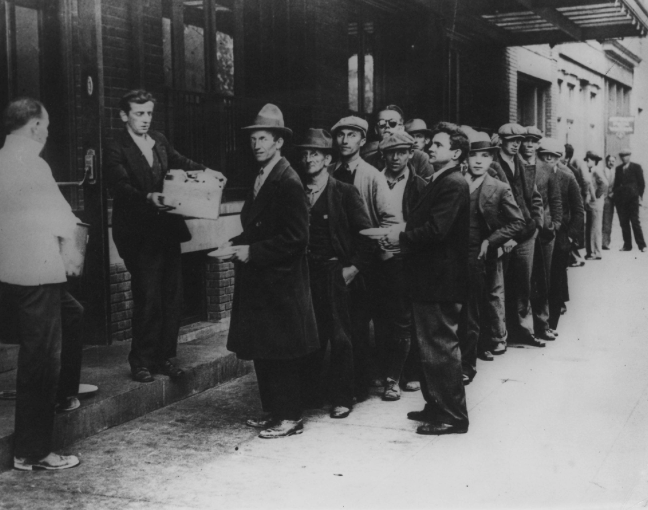
Photo by The New York Public Library on Unsplash
Hearing the word “Mississippi” in the news in recent weeks conjures several cultural references peculiar to the Deep South: the cruelest aspects of American chattel slavery; Fannie Lou Hamer and her heroic struggle against white suppression of Black voting rights; the place Ronald Reagan gave his states’ rights speech while campaigning for the U.S. presidency in 1980; and the Delta Blues, which, paradoxically, could transform pain and trauma into salvation.
When legendary singer, pianist, and civil rights activist Nina Simone — classically trained at Juilliard — sang about the state in “Mississippi Goddam,” a signature song years before she wrote “To Be Young, Gifted, and Black,” she was raging at the racial violence and terror Mississippi was infamous for. The song was released in 1964, reflecting on the racially motivated terror killings of Emmett Till and Medgar Evers in Mississippi and the 16th Street Baptist Church bombing in Birmingham, Ala., by white supremacists. The terror attack at the church killed four little Black girls: Carol Denise McNair, 11, Carole Robertson, 14, Cynthia Wesley, 14, and Addie Mae Collins, 14.
Alabama’s gotten me so upset Tennessee made me lose my rest And everybody knows about Mississippi, goddamn Alabama’s gotten me so upset Tennessee made me lose my rest And everybody knows about Mississippi, goddamn
Can’t you see it, can’t you feel it It’s all in the air I can’t stand the pressure much longer Somebody say a prayer
Simone’s words captured the moral weight that everyday Black people were laboring under. Two years before, in 1962, Fannie Lou Hamer tried to register to vote at the Indianola courthouse in Sunflower County, Miss. For this action, she was deprived by whites of her home and job, robbing her of her livelihood and undermining her dignity. A sharecropper who had been subjected to a “Mississippi appendectomy,” describing an illegal hysterectomy that was performed on her, Hamer continued her activism and would eventually speak to the nation from the platform of the 1964 Democratic National Convention about the brutality of Black life in Mississippi. Goddam.
Besides being Hamer’s home, Sunflower County is the site of the infamous Parchman Penitentiary, a chilling example of an old slaveholding plantation essentially being repurposed into a penal plantation. In her book, *Growing Up with the Country*, historian Kendra Taira Field writes, “Under the emerging ‘Mississippi plan,’ law enforcement came to mean controlling African-American labor and mobility, including convict labor and penal plantations.” Politics in the area mirrored the broader backlash to Reconstruction, and the late 1800s and early 1900s saw a rise in political violence. From Field’s book:
Mississippi Governor James Vardaman [1904–1908], in particular, represented a new era of reactionary politics, racial subordination, and prison development. He openly endorsed mob rule and defended lynching …. After his election, Vardaman stated that had he lost, “we would have had to kill more negroes in the next twelve months in Mississippi than we had to kill in the last twenty years.”
When he ran for U.S. Senate, repealing the Fourteenth and Fifteenth Amendments constituted his platform — he was elected in 1912. Vardaman supported left-wing economics and a “progressive” platform, enjoyed the support of poor white farmers, and was stridently anti-Black:
Regarding the 1890 Mississippi state constitution, Vardaman proclaimed:
There is no use to equivocate or lie about the matter…. Mississippi’s constitutional convention of 1890 was held for no other purpose than to eliminate the nigger from politics. Not the ‘ignorant and vicious’, as some of the apologists would have you believe, but the nigger…. Let the world know it just as it is…. In Mississippi we have in our constitution legislated against the racial peculiarities of the Negro…. When that device fails, we will resort to something else. (1)
The year 1890 is of special significance to me because in that same year, my great grandmother, Mary Jones Parrish, was born in Yazoo City, Mississippi. Like a great many other Black people who sought a greater degree of freedom, safety, and peace than was available in Mississippi, however, her family abandoned the Delta for a new life in Oklahoma. At the turn of the twentieth century, they were tired of waiting for things to get better; imagine Nina Simone’s impatience about the happenings in Mississippi when she was composing in 1964.
Lord have mercy on this land of mine We all gonna get it in due time I don’t belong here, I don’t belong there I’ve even stopped believing in prayer
Don’t tell me, I’ll tell you Me and my people just about due I’ve been there so I know They keep on saying “Go slow!”
But that’s just the trouble (Too slow) Washing the windows (Too slow) Picking the cotton (Too slow) You’re just plain rotten (Too slow) You’re too damn lazy (Too slow) The thinking’s crazy (Too slow) Where am I going, what am I doing I don’t know, I don’t know
You don’t have to live next to me Just give me my equality Everybody knows about Mississippi Everybody knows about Alabama Everybody knows about Mississippi, goddamn
While backlash against the song may have put a damper on her professional career, its release certainly heralded a new era of activism for Simone whose words still ring true today as we grapple with the deaths of Kohen Wiley and Nolan Wells in Mississippi.
One-year-old toddler Kohen Wiley was shot by law enforcement (LEO) as he rode in the car with his mother, whom a Walmart employee reported to police for allegedly stealing a box of diapers. With zero regard for the life of the Black family in the car, the LEO fired his gun, killing Kohen and injuring his mother. Black life did not matter to the offending officer. The Mississippi Bureau of Investigation is investigating.
The death of another young Black person, football star Nolan Wells, in Mississippi — under questionable circumstances and not even a month later — elicits an uncomfortably familiar feeling of dread and suspicion. On the Fourth of July, he went out on a boat with friends who are white and did not return home alive. We deserve grace as we consider whether we are going through it again. As with Nina, the grief and rage are real.
Have enough things changed, or are we facing more of the same? Are the people who would have supported Vardaman still with us through their ideological and actual descendants? Imagine our impatience in 2026. After all, everybody knows about Mississippi. Goddam.
Rest in peace Kohen and Nolan. — Anneliese M. Bruner
(1) McMillen, Neil R. (1989). “The Politics of the Disfranchised”. Dark Journey: Black Mississippians in the Age of Jim Crow. University of Illinois Press. pp. 41–44. ISBN 978–0252061561.
I am working on a manuscript about the story of reintroducing my intrepid Tulsa ancestor, Mary Jones Parrish, to the world when she was almost lost to history. You can buy me a coffee at: Ko-fi.com/anneliesebruner. Thanks!
메타데이터
- post_id
- cf4fc11e8a50
- slug
- mississippi-goddam-cf4fc11e8a50
- url
- https://aninjusticemag.com/mississippi-goddam-cf4fc11e8a50
- canonical_url
- https://aninjusticemag.com/mississippi-goddam-cf4fc11e8a50
- author_url
- https://medium.com/@anneliese-bruner
- status
- ok
- fetched_at
- 2026-07-15 17:25:02