Recap: PIPO AMA with Tomket Lovers Community
PIPO recently joined the Tomket Lovers Community for an AMA session discussing the future of RWA, global tokenization, and how tokenized…
Recap: PIPO AMA with Tomket Lovers Community
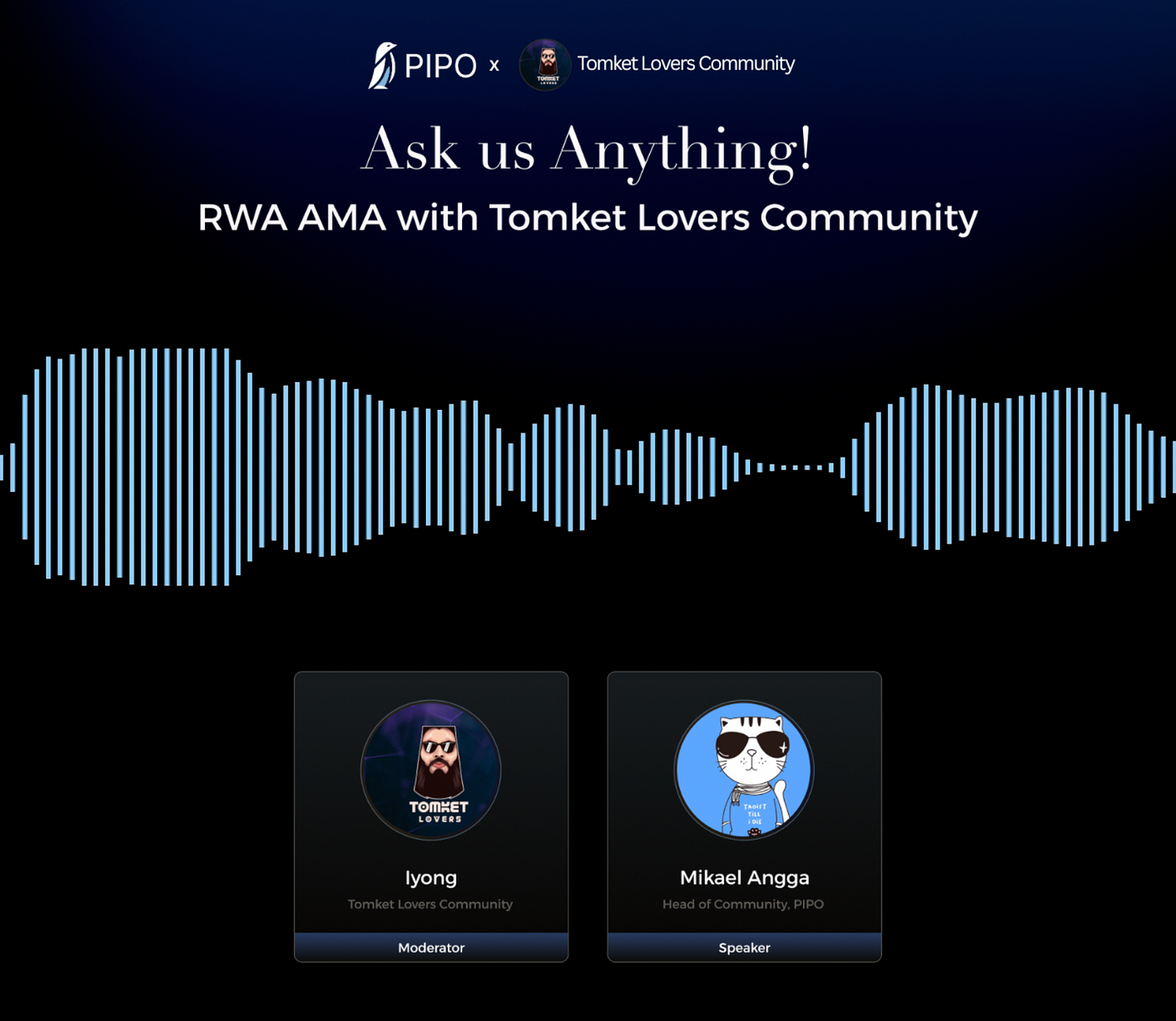
PIPO recently joined the Tomket Lovers Community for an AMA session discussing the future of RWA, global tokenization, and how tokenized pre-IPO access could become one of the next major categories in on-chain finance.
The session covered PIPO’s core model, the role of Share Subscription Warrants, why compliance matters in tokenized private markets, and how blockchain can help make private market access more transparent, liquid, and globally accessible.
What is PIPO?
PIPO is building a compliant platform for pre-IPO investment access through tokenized Share Subscription Warrants.
The main goal is to open private market opportunities to eligible non-U.S. global investors in a more transparent, structured, and liquid way.
Traditionally, pre-IPO opportunities are mostly accessible to institutions, venture capital firms, or high-net-worth investors. Retail and global investors often only gain access after a company has already gone public, when much of the early growth has already been captured by insiders and early backers.
PIPO aims to bridge this gap by connecting private market access with blockchain infrastructure, while maintaining a clear legal and compliance framework.
How PIPO Works
PIPO uses tokenized Share Subscription Warrants, also referred to as SW tokens.
A Share Subscription Warrant gives the holder the right to purchase shares in the future under specific terms, such as a fixed strike price. This means users are not directly holding private company shares on-chain. Instead, they hold a tokenized warrant that represents a legally structured right connected to future equity access.
In simple terms, the process works through several layers:
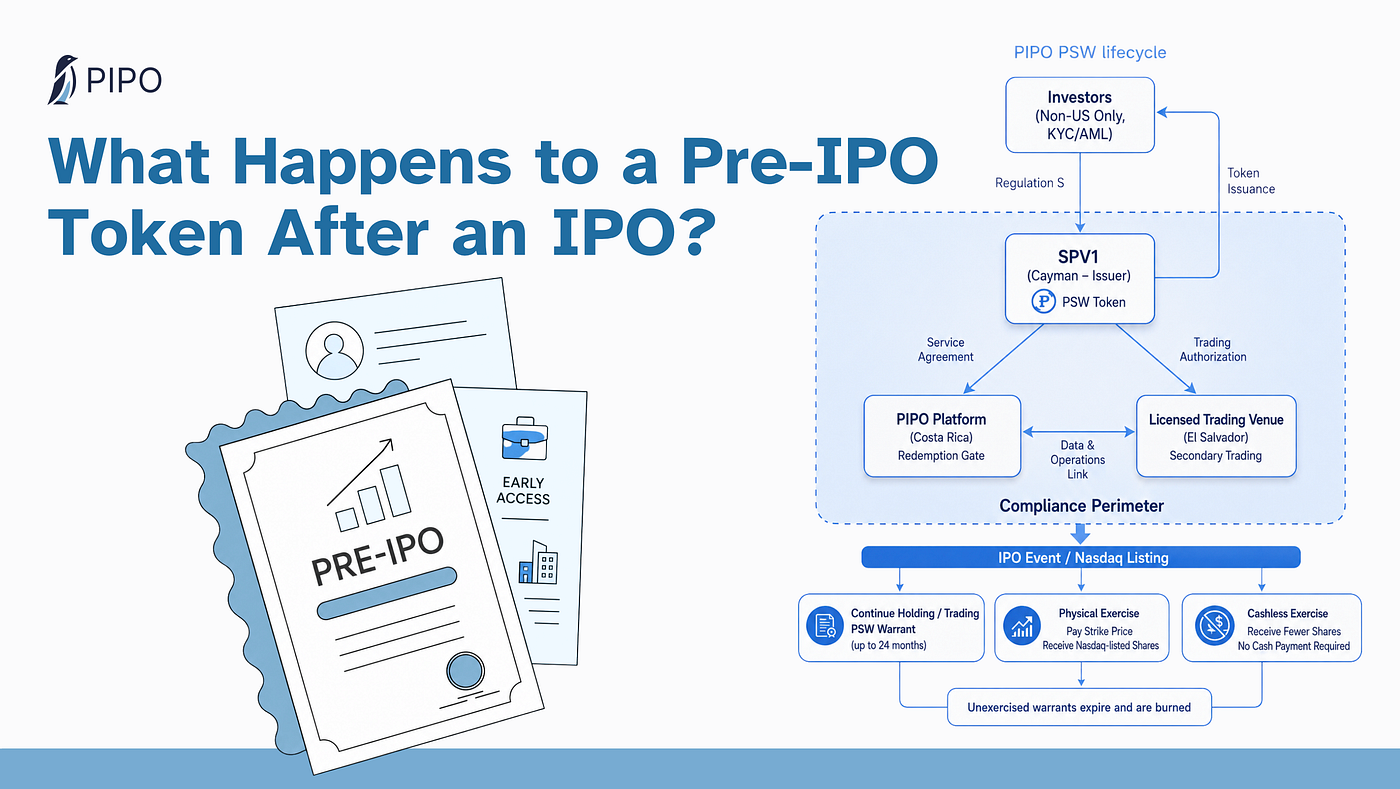
▫ A legal structure defines the rights behind the asset ▫ Users go through KYC and compliance checks ▫ Share Subscription Warrants are issued as tokens ▫ Eligible users may trade those tokens within the allowed framework ▫ When conditions are met, the warrant can be exercised through the available mechanism
This makes PIPO different from purely speculative token products. The focus is not just creating price exposure, but building a bridge between on-chain assets and real-world legal rights.
Why Tokenized Pre-IPO Markets Are Different from Other RWA Narratives
Most RWA narratives today focus on tokenized treasuries, private credit, real estate, or yield-bearing stablecoin products.
Tokenized pre-IPO markets are different because they are connected to the growth of private companies before they enter public markets.
When investors buy public equities, they usually enter after years of private growth have already taken place. Pre-IPO exposure offers a way to access that earlier stage, but it also comes with more complexity.
Because private markets involve transfer restrictions, securities law, eligibility requirements, and legal documentation, tokenized pre-IPO products need stronger compliance and clearer legal design than many other RWA categories.
For PIPO, this is why the focus is not only on tokenization, but also on asset backing, investor eligibility, legal enforceability, and execution.
Why PIPO Chose the Share Subscription Warrant Model
One of the key questions during the AMA was why PIPO chose Share Subscription Warrants instead of directly tokenizing private company shares.
The answer is mainly legal and structural.
Directly tokenizing private company shares can be extremely complex because private shares often come with transfer restrictions, shareholder approval requirements, and securities law considerations.
A Share Subscription Warrant provides a more practical structure. It represents the right to purchase shares in the future under defined terms, rather than directly moving private shares onto the blockchain.
This model allows PIPO to create a compliant pathway for pre-IPO exposure while still preserving a route toward real shares.
Building Trust in Tokenized Private Markets
PIPO emphasized that one of the hardest challenges in this sector is not only liquidity or product development, but trust.
Liquidity is important, but liquidity without trust can be dangerous.
For tokenized pre-IPO products, users need to clearly understand:
- What they are holding
- What rights are attached to the token
- How the asset is backed
- What happens after IPO
- How exercise or redemption works
This is why PIPO has focused heavily on legal structure, compliance processes, and market education.
The team believes that sustainable RWA adoption requires more than on-chain trading. It requires clear rights, real-world enforceability, and user confidence.
Real Share Backing and Legal Connection
PIPO explained that its tokenized warrant model is designed to connect on-chain tokens with real-world legal rights through a clear structure.
The tokenized warrant is not created without a legal foundation. It is connected to underlying rights managed through legal and compliance frameworks.
Key components include:
- Legal entities supporting the structure
- Legal documents defining warrant holder rights
- KYC and compliance requirements
- Exercise mechanisms when conditions are met
- Traditional legal and financial infrastructure involvement
This is an important distinction from synthetic exposure. PIPO’s goal is not to create a token that simply tracks a price. The goal is to create a real pathway between blockchain-based assets and equity-related rights in the real world.
The Future of RWA: A Hybrid Model
PIPO also shared its view that the future of RWA will likely be hybrid.
Blockchain infrastructure can offer transparency, settlement efficiency, liquidity, and global access. But real-world assets still require legal enforceability, compliance, investor protection, and clear documentation.
This means the future of RWA may not be fully traditional, but it also may not be fully permissionless.
Instead, the likely direction is a hybrid model where blockchain handles access, transparency, and liquidity, while legal and compliance systems ensure that the underlying rights can be enforced in the real world.
PIPO is being built around this belief.
Why SW Tokens May Remain Tradable After IPO
The AMA also discussed why PIPO’s SW tokens may continue to be traded for up to 24 months after IPO.
The goal is to give users more flexibility.
After a company goes public, not every investor may want to exercise immediately. Some may want to wait, manage their position, or trade depending on market conditions.
A longer window can help reduce pressure around a single event and provide more flexibility compared to traditional private market structures, where investors often face lock-ups, delays, or limited exit options.
What the Market Still Underestimates
According to PIPO, the market still underestimates the size of private markets and how restricted access remains today.
Many of the world’s most valuable companies are staying private for longer. By the time they go public, a large portion of the growth has often already been captured by early investors.
At the same time, there are many global investors who are interested in these opportunities but cannot access them through traditional channels.
This is where tokenized pre-IPO markets could become a major new RWA category.
It is not only about bringing existing assets on-chain. It is about creating a more open, transparent, and liquid access layer for private market investing.
Community Feedback and Education
PIPO also highlighted the importance of community feedback.
Because tokenized pre-IPO access is still a new category, education is just as important as product development.
Many users have asked for simpler explanations around how Share Subscription Warrants work, how real share backing is structured, what happens after IPO, and how the exercise process works.
This feedback has helped PIPO improve not only its platform direction, but also how it explains the opportunity to the wider market.
The product may be sophisticated, but the explanation needs to be simple and accessible.
Long-Term Vision
If PIPO succeeds in executing its vision, the team hopes it can make private market investing more accessible, transparent, and liquid for eligible global investors.
The traditional investment world still has a major access gap. Institutions and insiders often get early exposure, while most investors only enter after IPO.
PIPO wants to help narrow that gap by becoming a trusted bridge between private companies, global investors, and on-chain financial infrastructure.
In the long term, tokenized pre-IPO access could become one of the most important categories within RWA.
The goal is not just to create another tokenized product. The goal is to build a better access layer for the future of investing.
This article is for informational purposes only and does not constitute an offer to sell or a solicitation of an offer to buy any securities. Any securities or tokenized instruments referenced by PIPO are intended to be offered only under applicable securities laws and exemptions, including Regulation S where applicable, to eligible non-U.S. persons in offshore transactions.
All investments involve significant risk, including potential loss of the entire investment. IPO outcomes, liquidity, transferability, redemption, and exercise mechanics are subject to legal, regulatory, market, issuer, and operational conditions.
*PIPO is building compliant tokenized pre-IPO infrastructure designed to broaden access for eligible non-U.S. investors through structured security tokens, compliance controls, and a defined exercise pathway.*
More About the PIPO: Website | Twitter | Telegram Ann | Telegram chat| Linkedin | Blog
메타데이터
- post_id
- cf61378427eb
- slug
- recap-pipo-ama-with-tomket-lovers-community-cf61378427eb
- url
- https://blog.pipo.vc/recap-pipo-ama-with-tomket-lovers-community-cf61378427eb
- canonical_url
- https://blog.pipo.vc/recap-pipo-ama-with-tomket-lovers-community-cf61378427eb
- author_url
- https://medium.com/@yosafatanggagilang
- status
- ok
- fetched_at
- 2026-06-10 08:17:25