Google DeepMind’s GraphCast for Weather Forecasting
A gentle introduction into GraphCast
Google DeepMind’s GraphCast for Weather Forecasting
“Imagine a world where we can predict devastating hurricanes or heatwaves days in advance with pinpoint accuracy. This is no longer a futuristic dream but a reality, thanks to breakthroughs in AI models like Google DeepMind’s GraphCast.”
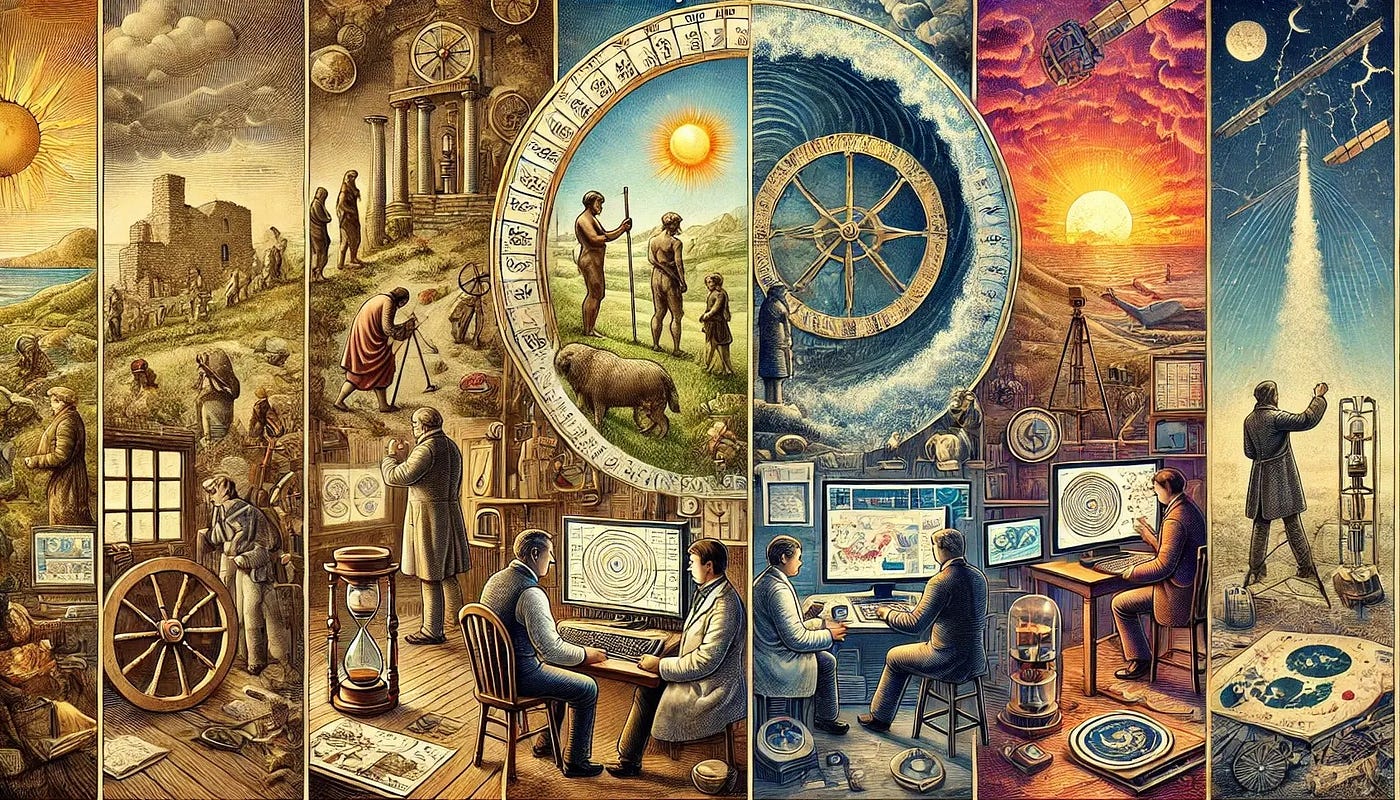
Source: Image by the author generated using DALL.E
Why Weather Forecasting Matters ?
Weather forecasts has become an integral part of our daily lives, guiding our decisions and shaping our activities. From deciding what to wear to planning outdoor events, weather forecasts profoundly influence our routines.
The changing conditions of the troposphere, the lowest layer of Earth’s atmosphere, determine the weather we experience daily. Factors such as air pressure, humidity, wind, and their complex interactions, combined with feedback loops between the atmosphere, oceans, and land, result in the chaotic behavior of weather.
This complexity is why weather is often synonymous with uncertainty. Weather Forecasting began thousands of years ago with ancient civilisations, such as the Babylonians and Egyptians, who observed natural phenomena to predict the weather. Over the centuries, our understanding and ability to predict the weather has grown exponentially, thanks to advancements in science and technology.
How Does Weather Forecasting Work?
The science behind modern day weather forecasting is anything but simple, allowing confident enough forecasts of ever-changing patterns of the chaotic Earth’s atmosphere. In his article we are going to gently understand how modern day weather forecasting systems work and AI is revolutionising the ability of these systems.

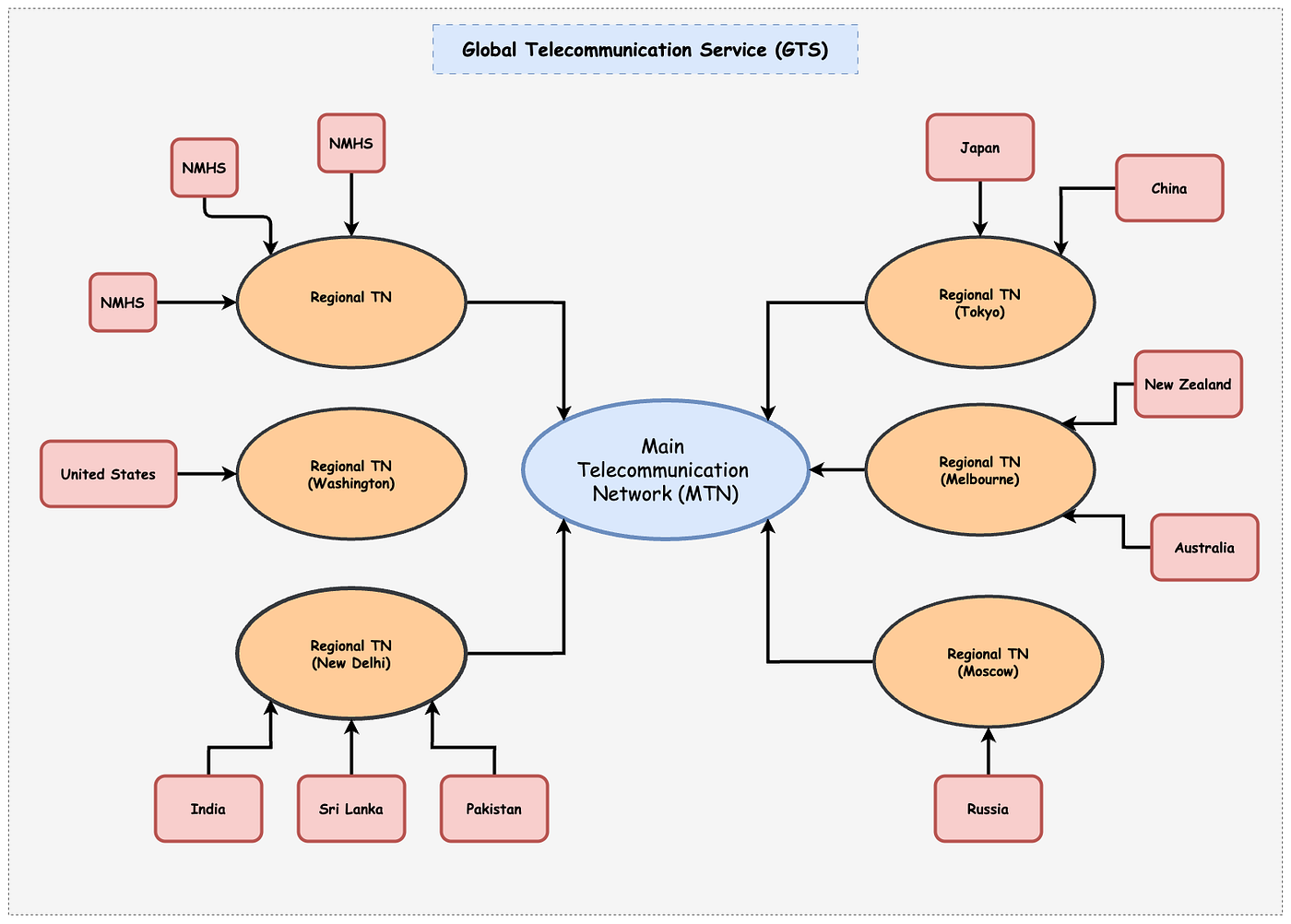
Figure 2: Simplified Weather Forecasting model chain and Global Telecommunication Network (WMO) (Source: Image by the author)
Step 1: Data Collection & Distribution
Almost every country in the world has its own National Meteorological and Hydrological Service (NMHS). These agencies collect atmospheric and surface data, such as pressure, temperature, and humidity, using Doppler Radar, weather balloons, and buoys [1].
Changes of pressure, temperature, etc. in one location in the atmosphere can affect weather globally. Therefore, to ensure accurate forecasts, meteorologists rely on the **Global Telecommunication System (GTS)[1], a core component of the World Meteorological Organization (WMO)**. The GTS enables rapid and reliable global sharing of meteorological data, allowing access to a unified dataset as depicted in Figure 2.
Step 2: Modelling the Weather
Imagine the Earth’s as a giant fluid where every little box in a 3D grid (Figure 4) has values for temperature, wind, pressure, humidity, precipitation and other key variables.
The collected data in Step1 is fed into Numerical Weather Prediction (NWP) models. These highly complex computer models use mathematical equations to simulate atmospheric physics, predicting weather patterns for short (days), medium (weeks), or long (months) periods.NWP models use fluid dynamics to simulate how these individual boxes or grid points influence each other over time to generate weather forecasts [2,3].
![Figure 4: The 3D Grid of Earth’s Atmosphere (Source: [3])](https://miro.medium.com/v2/resize:fit:972/1*fpvbQqg0XSB8SyiMGuGimg.png)
Figure 4: The 3D Grid of Earth’s Atmosphere (Source: [3])
Following is a comparison of some popular NWP models [5]
[embed]
Step 3: Warnings and Alerts
Once processed, the model outputs are disseminated using maps and other tools, making them accessible to stakeholders like decision-makers, news agencies, and the public (Figure 5).
![Figure 5: Example of Weather Forecast Model Outputs (Source: Image captured by author from [5])](https://miro.medium.com/v2/resize:fit:1400/1*ZT2sOqslLzcdZEpHXERipQ.png)
Figure 5: Example of Weather Forecast Model Outputs (Source: Image captured by author from [5])
Modern weather forecasting relies on global data collection, NWP models, and rapid dissemination. Now, Artificial Intelligence (AI) is revolutionizing the field, enabling more accurate, precise, and high-resolution forecasts at a fraction of the computational cost compared to NWP mentioned above. Prominent AI models include Google DeepMind’s GraphCast[6] and **GenCast**[7], with GraphCast setting new standards in accuracy and speed. Today we are going to look at how the GraphCast weather prediction model work.
Google DeepMind’s GraphCast — Accurate 10-day Weather Predictions in Under 1 Minute
GraphCast is a cutting-edge AI model that delivers the world’s most accurate 10-day global weather forecasts. At its core, GraphCast uses Graph Neural Networks (GNNs), specialized networks for processing graph-structured data. These networks iteratively aggregate and update node features based on their neighbors, making them ideal for modeling weather dynamics[8].
GraphCast Architecture
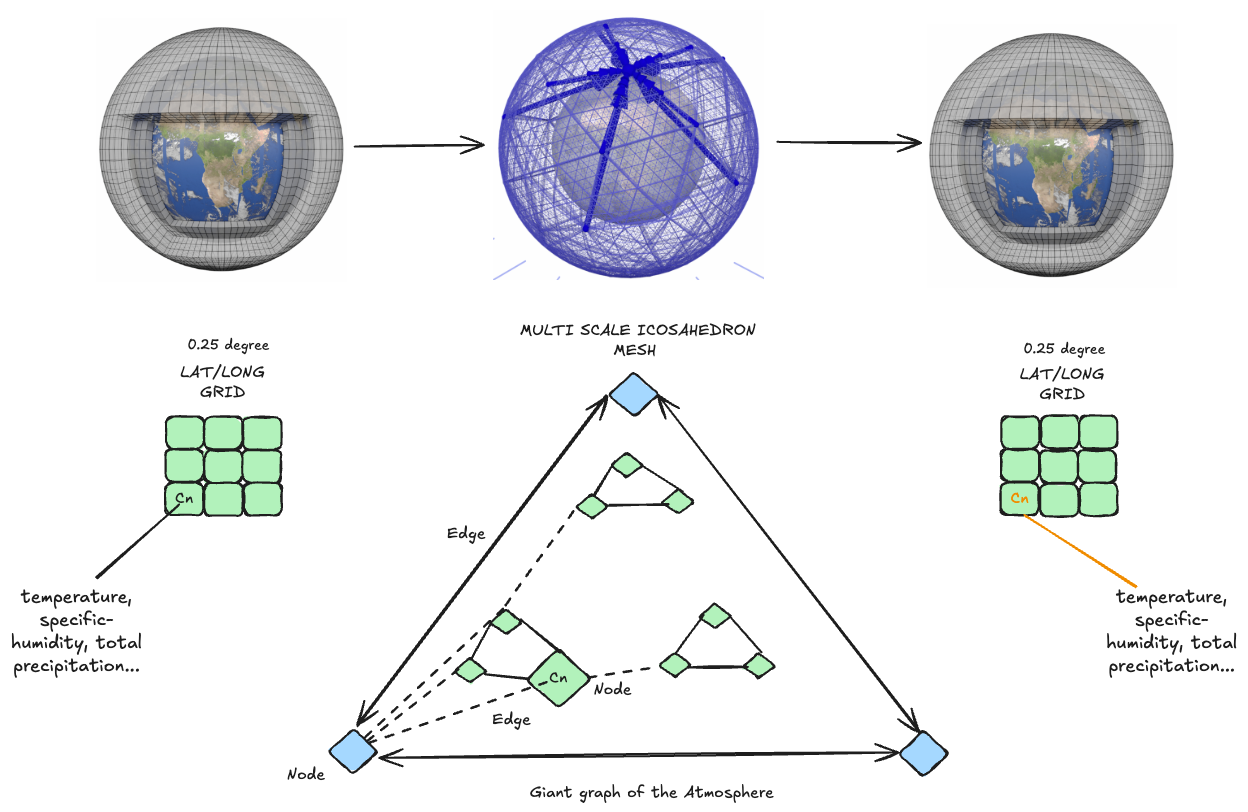
Figure 6: Graph Representation of the Atmosphere (Source: Image by the author)
GraphCast[9] architecture is based on a mesh representation of the Earth’s atmosphere formed by a large number of icosahedrons as depicted in Figure 6. It is a similar principle to modelling the interaction of individual grid boxes (nodes and edges here) of to the conventional weather modelling I described in the above section. This giant graph described in the Figure 6 is learned by a special machine learning architecture formed of three main components; Encoder, Processor, Decoder as depicted in Figure 7, Figure 8, and Figure 9.
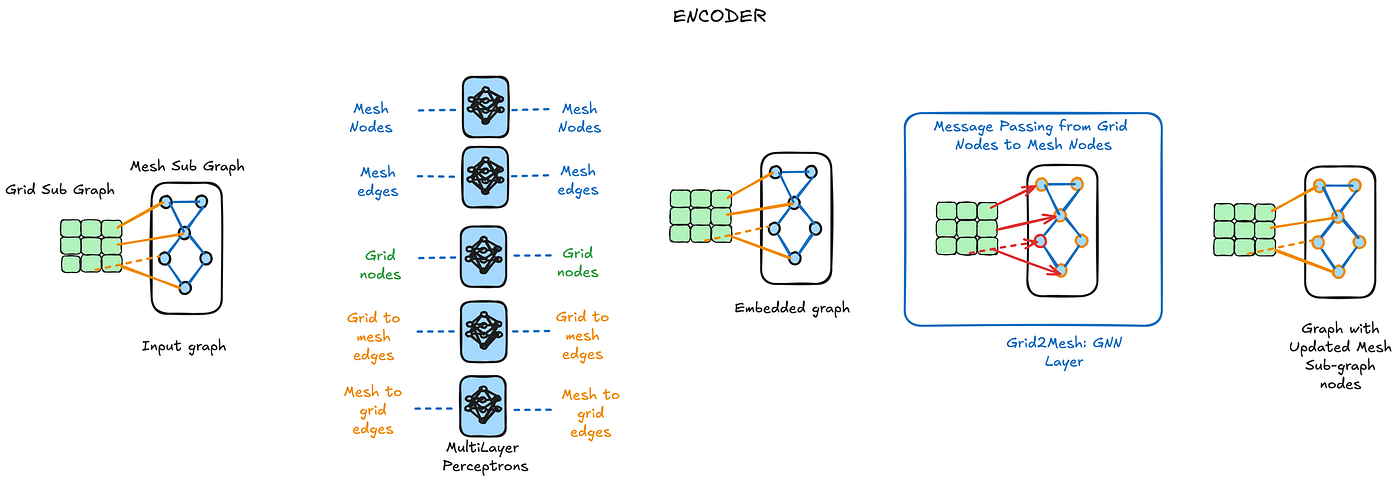
Figure 7: Overview diagram of the Encoder component of the GraphCast GNN architecture (Source: Image by the author)
The Encoder is the first step in GraphCast, transforming weather data into a graph structure. It connects grid points and mesh nodes using the Grid2Mesh bipartite subgraph, allowing weather features like temperature and wind to be shared effectively. This step organizes the input data into a format that captures both local and global weather patterns, preparing it for further processing[9].
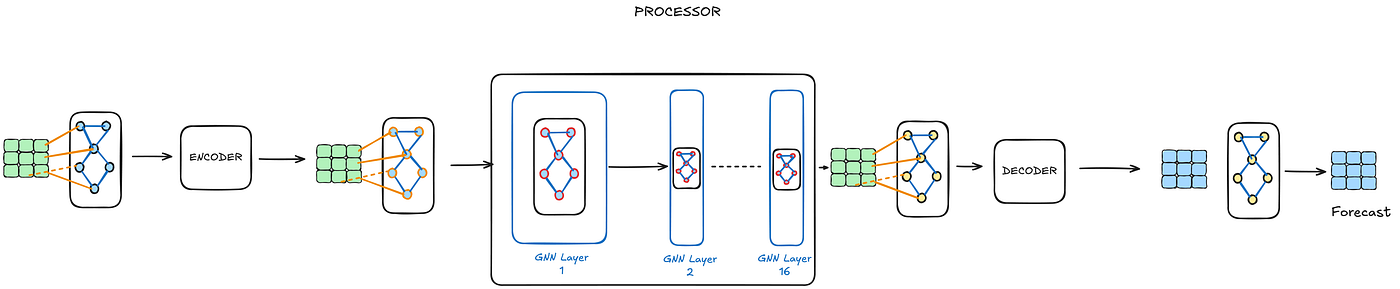
Figure 8: Overview diagram of the Processor component of the GraphCast GNN architecture (Source: Image by the author)
The Processor forms the core of GraphCast’s architecture, employing multiple layers of Graph Neural Networks (GNNs) to model complex interactions as depicted in Figure 8. Using 16 unshared GNN layers, it performs learned message passing across the multi-mesh graph, enabling both local and long-range information propagation. The interaction network updates edge features to reflect dynamic relationships between nodes, while node features are updated to capture aggregated interactions. This iterative process allows the model to reason about weather dynamics effectively, ensuring rich feature representations for the downstream decoder[9].
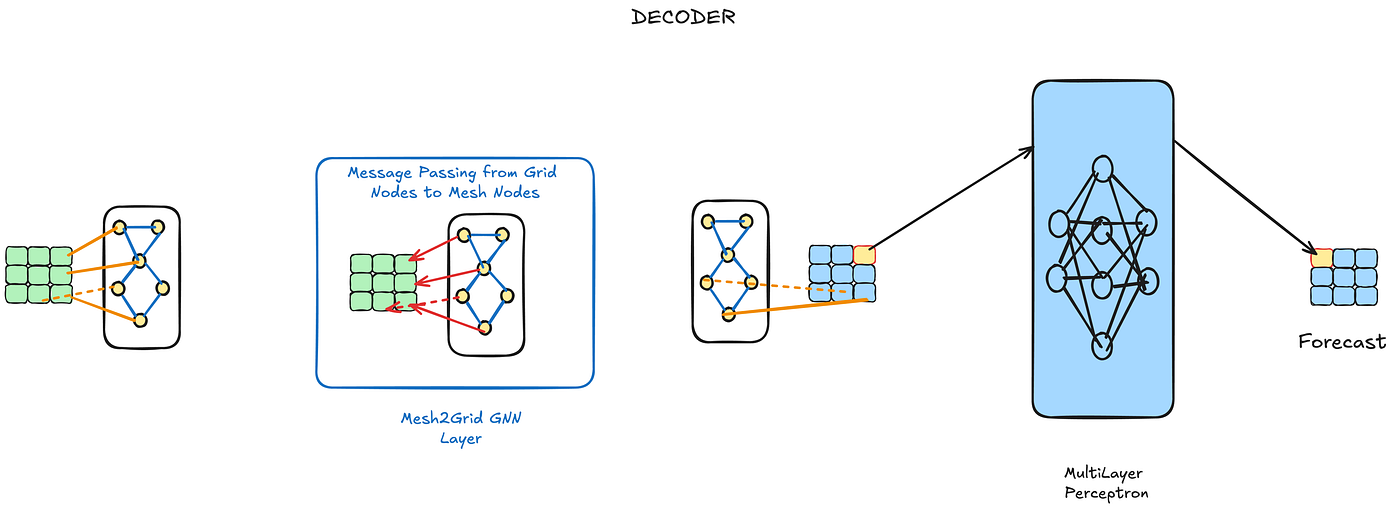
Figure 9: Overview of the Decoder component of the GraphCast GNN architecture (Source: Image by the author)
The Decoder translates the processed graph features back into a structured format for the final weather forecast as depicted in Figure 9. Node features from the mesh graph are decoded into specific weather variables such as temperature, wind speed, and precipitation. The Decoder ensures spatial and temporal coherence in its outputs, reconstructing forecasts at high resolution. By leveraging the rich, learned representations from the Processor, the Decoder generates accurate predictions that integrate both localized details and broader atmospheric patterns[9].
Model Training
GraphCast is trained using historical weather data from the European Center for Medium Range Weather Forecasting(ECMWF)’s ERA5 reanalysis archive[10], which spans from 1979 to 2017. The training data includes various weather variables at a 0.25° resolution and 37 vertical pressure levels. The model is trained to minimize the mean squared error (MSE) between its predictions and the corresponding ERA5 data over autoregressive steps. Training GraphCast takes approximately four weeks on 32 Google Cloud TPU v4 devices using batch parallelism[6].
Model Output and Performance
GraphCast is designed to predict a wide range of weather variables. It forecasts hundreds of weather variables over 10 days at a 0.25° resolution globally. A single weather state is represented by a 0.25° latitude/longitude grid (721 × 1440). Each grid point represents a set of surface and atmospheric variables. The model predicts 5 surface variables, and 6 atmospheric variables at 37 pressure levels, resulting in 227 variables per grid point [7].
GraphCast takes as input the two most recent states of Earth’s weather and predicts the next state six hours ahead. It produces an accurate 10-day forecast in under a minute on a single Google Cloud TPU v4 device. The model is autoregressive, meaning it can iteratively apply its own predictions as inputs to generate a sequence of weather states representing the weather at successive lead times [6].
When evaluated on 10-day forecasts at a horizontal resolution of 0.25° for latitude/longitude and at 13 vertical levels, GraphCast exhibits greater weather forecasting skill than the High-Resolution Forecast (HRES) model which is the current standard most accurate model for weather forecasting in the world. You are welcome to read more about its performance in the original paper [7].
Summary
Weather forecasting has come a long way from ancient observations to today’s advanced NWP models and AI-driven innovations. Google DeepMind’s GraphCast exemplifies how AI can revolutionize this field, providing faster, more accurate forecasts to prepare societies for weather-related challenges.
Stay tuned for future articles on AI applications.
Cheers!
References
[1] https://community.wmo.int/en/activity-areas/global-telecommunication-system-gts
[2] Bauer, P., Thorpe, A. & Brunet, G. The quiet revolution of numerical weather prediction. Nature 525, 47–55 (2015). https://doi.org/10.1038/nature14956
[3] R. Kotamarthi et al., Downscaling Techniques for High-Resolution Climate Projections: From Global Change to Local Impacts. Cambridge: Cambridge University Press, 2021.
[4] https://www.ecmwf.int/en/forecasts/documentation-and-support/changes-ecmwf-model
[5] https://meteologix.com/me/model-charts
[8] https://distill.pub/2021/gnn-intro/
[9] https://arxiv.org/abs/2212.12794
[10] https://rmets.onlinelibrary.wiley.com/doi/10.1002/qj.3803
메타데이터
- post_id
- cf69a70dbb67
- slug
- how-ai-is-revolutionizing-weather-forecasting-cf69a70dbb67
- url
- https://medium.com/@malintha1996/how-ai-is-revolutionizing-weather-forecasting-cf69a70dbb67
- canonical_url
- https://medium.com/@malintha1996/how-ai-is-revolutionizing-weather-forecasting-cf69a70dbb67
- author_url
- https://medium.com/@malintha1996
- status
- ok
- fetched_at
- 2026-06-21 15:33:18




