The Year Apple Was Founded, a Supercomputer Changed Science, and Nobody Called Any of It a…
A birthday note for everyone who loves someone who never stopped building things
The Year Apple Was Founded, a Supercomputer Changed Science, and Nobody Called Any of It a “Startup”
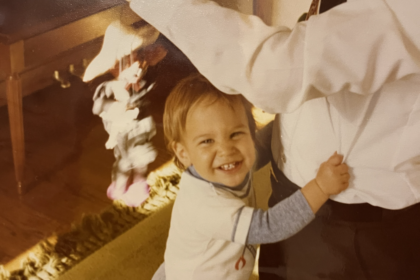
A birthday note for everyone who loves someone who never stopped building things
The year I was born, two college dropouts sold a Volkswagen bus and a programmable calculator to fund a company they built in a bedroom and later a garage. They didn’t have a pitch deck. They didn’t have a term sheet. They didn’t have a coworking space with exposed brick, a resident “entrepreneur in residence,” or a demo day. They had Wozniak’s engineering genius, Jobs’ commercial instinct, and a buyers’ order for 50 circuit boards from a Mountain View computer shop called the Byte Shop. Steve Jobs sold his Volkswagen Type 2 minibus for $1,500, Wozniak sold his HP-65 programmable calculator for $500, and on April 1, 1976, Apple Computer Company was founded. April Fools’ Day. You genuinely cannot make this up.
I came into the world seven weeks later, May 21st, 1976, which means I have spent exactly fifty years sharing a birth year with Apple Computer, the Cray-1 supercomputer, the first spacecraft to successfully land on Mars; founding of one of the most consequential innovation eras in human history. That is either cosmically meaningful or statistically irrelevant, and depending on my audience, I have argued both positions with equal conviction. But today is my birthday, and since I get to set the terms here, I want to explore what has passed.
What I want to reflect on here is not what I have accomplished in fifty years; that’s an intimate conversation. What I want to explore is what the world that produced me was actually doing with entrepreneurship in 1976, why almost none of it looked like what we call entrepreneurship today, and what the gap between then and now reveals about the things that matter most to me: family, teaching, making things easier for other people, creativity and the arts, kindness, and above everything, love. Those aren’t birthday card sentiments; they are the architecture of a life. They are the architecture of the best companies and the best people I’ve encountered across fifty years of watching humans try to build things from nothing. And they were already at work in 1976, even when no one had the language to describe them.
What “Startup” Meant in 1976 (Hint: Nothing)
If you walked into a room of business professionals in 1976 and used the word “startup,” they would have understood you to mean a company that had just begun operations; a new business, in the most ordinary sense.
The conceptual framing that we now take for granted, the distinction between a startup (a venture designed to change a market) and a small business (a company operating what’s known to exist and to sustain its owner’s livelihood), did not exist in any formal, widely accepted way. The vocabulary was “new venture.” The academic framing was “new venture creation.” The policy consideration was “small business.” These were not equivalent things, but in 1976, almost nobody was making the argument that they weren’t, and those few who were making the argument were writing academic papers that reached an audience of roughly forty-three people.
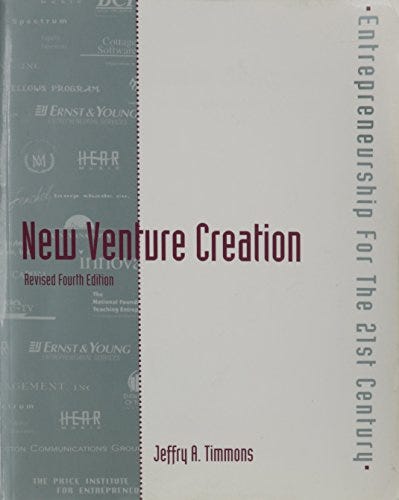
Jeffry Timmons, the professor at Northeastern University now widely regarded as one of the founding figures of entrepreneurship education in America, had only just launched what is believed to be the first undergraduate major in new ventures and entrepreneurship, in 1973, and come 1976 was leading Northeastern’s MBA program with that emphasis. His 1971 dissertation from Harvard Business School: “ Entrepreneurial and Leadership Development in an Inner City Ghetto and a Rural Depressed Area,” is the inspiration behind my second book in progress. His eventual textbook, *New Venture Creation*, would become the standard work in the field, but in 1976, formal entrepreneurship education was so nascent that its most serious practitioner had only recently convinced a university to treat it as legitimate. The idea that someone could go to school specifically to learn how to found a company, and receive a rigorous, structured education in doing so, was radical.
Most of what we would today call “startup education” was happening not in classrooms but in garages, in hobbyist clubs, and over bad coffee in living rooms.
The Homebrew Computer Club in the Bay Area is the perfect illustration. Wozniak recalled in his autobiography, iWoz, “I did this computer to show the people at Homebrew that it was possible to build a very affordable computer, a real computer you could program for the price of the Altair, with just a few chips.” That club, that informal gathering of people who were obsessed with a problem and showed up to compare notes on how to solve it, produced more foundational innovation than most formal institutions of the era. Functionally, Homebrew Computer Club was the first accelerator in Silicon Valley; it charged no tuition, issued no certificates, and accepted no applications. What it did was create a community of shared purpose; which, if you read anything I have written about how startup ecosystems actually form, is the mechanism that distinguishes the ecosystems that produce companies from the ecosystems that produce pitch competitions and press releases.
Peter Drucker, the economist and management theorist, was already writing in the 1970s that only two things create value in a business; marketing and innovation. He was right then and he is right now, and remarkably, the startup world spent most of the following five decades systematically ignoring both of those things (yes, “innovation” too, replacing it with anything “tech” being startup oriented) in favor of funding rounds, growth hacks, and the operational theater of hustle culture. Drucker did not use the word “startup” either, but his framework for what makes organizations create value maps almost perfectly onto what separates the 1976 founding of Apple Computer from the thousands of other new businesses registered that year that nobody remembers.
The Machines That Defined the Year I Was Born
The year 1976 produced some of the most consequential innovation in human history, and the contrast between two of those machines is definitively instructive about what entrepreneurship looks like at different ends of the ambition spectrum.
At one end, Seymour Cray, the engineer who is rightly called the father of supercomputing, delivered the Cray-1 to Los Alamos National Laboratory. The Cray-1 could perform 240 million calculations per second and was used for large-scale scientific applications, such as simulating complex physical phenomena, sold to government and university laboratories. It cost approximately $10 million per unit, required a full year to assemble and test, and was shaped like a C in order to reduce the length of internal wires and therefore the time signals needed to travel across them. The Cray-1 was the world’s fastest supercomputer from 1976 to 1982, measured 8.5 feet wide by 6.5 feet high, and contained 60 miles of wires. Seymour Cray had left Control Data Corporation in 1972 specifically because he wanted to build something faster than anything that had ever existed, with no bureaucratic ceiling on ambition. That is a recognizable founder archetype; the technical visionary who leaves a large organization not because he was pushed out but because the organization’s constraints were incompatible with his actual aspirations.
Just for fun because I can be a nerd, pre-Cray, computing delivered roughly 1,000,000 calculations per second. We often hear about how the computing power of a mere smartphone is a magnitude of order more than what was in the first space flights, what Seymour Cray accomplished was 240 TIMES faster. And this is what has happened in 50 years. A smart phone? 1,000,000,000,000 per second. Today’s supercomputer runs 1,000,000,000,000,000,000 calculations per second: 1 trillion times larger thanks to Cray’s kickstart.
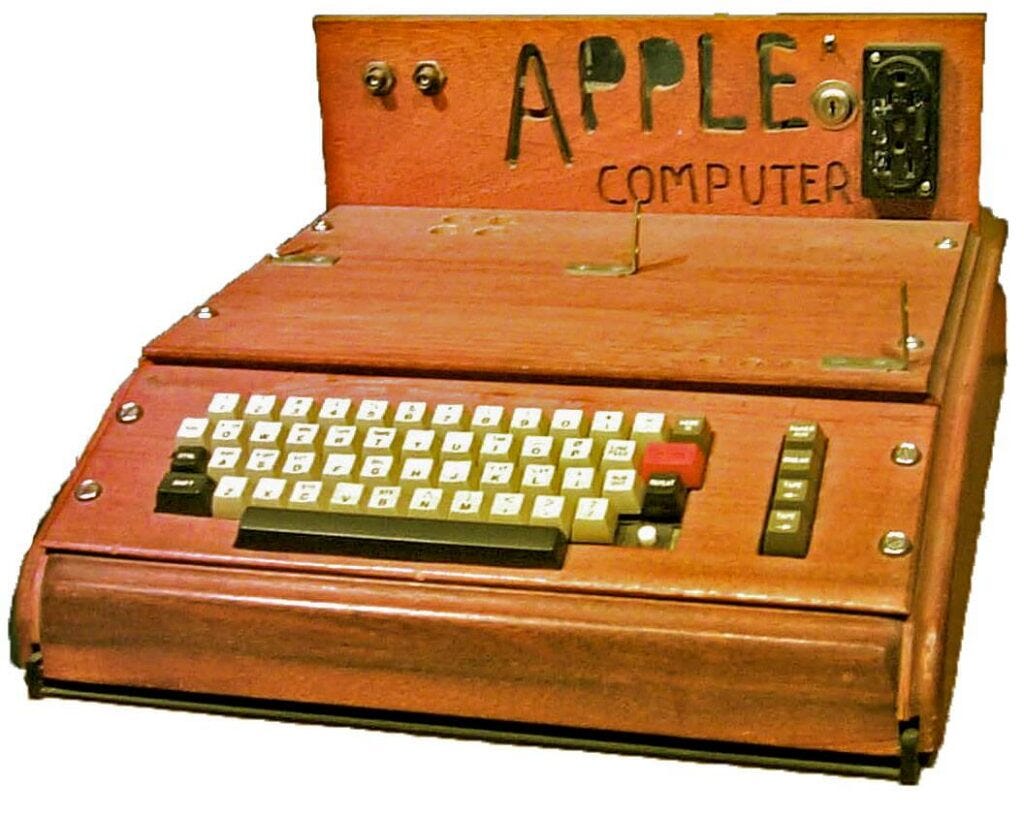
At the other end, Jobs and Wozniak were assembling circuit boards on a coffee table. The Apple I sold for $666.66, a price Wozniak chose because he liked repeating digits. The Apple II revolutionized the computer industry with the introduction of the first-ever color graphics, and sales jumped from $7.8 million in 1978 to $117 million in 1980, the year Apple went public. Apple went from a coffee table production operation to a $117 million revenue company in four years. Not because the founders were the smartest engineers in a room, but because Jobs understood that the computer was not a product for engineers, it was a product for people. And making things easier for other people, not just building impressive technology, has always been the actual differentiator in entrepreneurship.
While humans were building the world’s fastest computer and also the world’s most important personal computer, a team was putting us on Mars. In July 1976, Viking 1 successfully touched down on the Martian surface and transmitted the first photographs from the surface of another planet.
The scale of ambition that defined 1976 is almost disorienting to sit with. Two guys funding a computer company from the sale of personal property. One engineer building a machine that ran at 240 million calculations per second. A space agency landing a spacecraft on a planet 100 million miles away. Entrepreneurs, innovators, and teams.
None of those people were asking permission. None of them were waiting for an ecosystem to form around them, an accelerator to help, a mentor network to be available, a VC inspiring a unicorn, or a government program to validate their direction. They were obsessed with a problem, they found the resources available to them, created what was necessary, and they started.
The Capital Problem That Almost Strangled All of It
In fact, venture capital really wasn’t even an option. Arguably the most important context for understanding why the entrepreneurship ecosystems don’t require capital ( it follows). Venture capital in 1976 was, in the most charitable terms, a cottage industry. By the mid-1970s, the venture capital industry was still fairly small, with no more than 30 firms of any real substance. And the reason there were so few was not a lack of ambition on the part of investors; it was a regulatory constraint that had effectively frozen the largest source of institutional capital, pension funds, out of the asset class entirely.
The Employee Retirement Income Security Act of 1974 (ERISA) had been passed to protect individual pension plans, and its implementation included a “prudent man” standard that made pension fund managers personally liable for breaching their fiduciary duty if the venture funds they invested in acted improperly. The practical result was immediate: in the year after ERISA was passed, pension fund investments into venture capital fell to zero, and was negligible over the next few years. The very capital that would have funded the wave of innovation that 1976 was producing was sitting on the sidelines because a well-intentioned regulatory framework created risk rather than mitigating it.
This is the policy story that nobody tells when they celebrate Apple’s founding, and it should matter enormously to every economic development professional, every state legislator, and every city official with innovation or entrepreneurship in their scope.
The environment in which Apple was born was not favorable to startups. The capital markets were structurally hostile to early-stage risk, education about how barely existed, the professional vocabulary for what a “startup” was had not been developed, and yet Apple happened anyway, because the founders were so thoroughly committed to solving a problem, they could not not solve that the inhospitable environment was, at most, an inconvenience. The 1979 amendment relaxed the prudent man rule and the Revenue Act of 1978 reduced capital gains taxes, unlocking the institutional capital that accelerated innovation. But in 1976, Apple had to go find a single angel investor, Mike Markkula, a retired Intel marketing manager and electrical engineer, to get the funding it needed to survive.
Notice that? The ideal angel investor was someone who embodied Peter Drucker’s observation of what creates value; something found in the co-founder dynamic of Wozniak and Jobs.
If you want to understand why I have spent fifteen years arguing that entrepreneurship infrastructure is the fundamental variable that determines whether startups thrive or fail in a given region, this is part of the origin story. The founders of Apple were extraordinary while the environment they worked in was not. And the gap between what they created despite that environment and what they might have created with appropriate infrastructure is a reasonable proxy for how much human potential we are still wasting in the hundreds of cities and regions around the world that have the talent but lack the systems we’ve since learned make a difference. I wrote an entire book about this; *Startup Ecosystems* is available if you’d like a longer argument.
What My Parents Gave to Me, and What I Found in the Wreckage of Ambition

My parents gave me the most important gift anyone can give to a person who will spend their life trying to build things and help other people build things: they modeled the belief that making things easier for other people is worth doing for its own sake.
Not because it is financially strategic and not because it scales but because it is the right use of a life. My father pumped gas and washed windows, I once shared in a different context, and that was his honest work, and he did it with integrity. My mother drove me to school and one day told me she had always wanted to be a race car driver (which is the kind of casual disclosure that lodges permanently in a child’s understanding of the people they love). What I learned from them was that the gap between what people dream and what people get to do is real, and that it is worth spending a life trying to close it.
That conviction shows up in almost everything I have written and done professionally. The argument that startups draw talent and opportunity to cities is not, at its core, an economic argument; it is an argument that people deserve to be able to accomplish more with their ambition; that startup presence is inspiring of that possibility. The argument that entrepreneurship education should be as rigorous and accessible as medical or legal education is not about credentialism; it is about the obscene waste of human potential that occurs when a person with the DNA of a founder never encounters the experience, infrastructure, the vocabulary, or capable community that would let that DNA express itself. The argument that ecosystem builders must distinguish between serving founders and exploiting them is an argument I very intentionally make with harsh criticism; it is a basic moral position about what it means to be in a position of trust relative to someone who is taking a serious risk.
That is what I got from my parents, from fifty years of watching what entrepreneurship does to people when it works and when it fails, and from a year of birth that put me in the same cohort as Apple Computer, Viking 1, and the Cray-1 supercomputer.
What I’ve Learned Matters

The creativity and the arts are severely underserved these days. Wozniak built computers he wanted to use while Jobs made them beautiful enough that other people wanted to use them too; that combination is art applied to technology, and the failure to understand that STEAM rather than STEM is the correct framing for what produces lasting innovation has cost the economy an incalculable amount. Education matters because the reason 1976 produced so much foundational technology is that a generation of engineers, many educated at public universities, were applying deep technical knowledge to problems they cared about. Kindness matters evident in the Homebrew Computer Club, the informal community that incubated the personal computing revolution, because people shared what they knew without hoarding or monetizing it. Public policy matters because it can remove barriers or get in our way.
And love matters because you cannot spend fifty years trying to make things easier for other people without at some level loving what people are capable of, even when they are being, as they often are, frustratingly resistant to the help.
There is a particular kind of person who shows up in a life and changes the axis on which everything else turns. Not loudly and not with declarations; they show up consistently, they push back when pushing back is the honest response, and they build something internally coherent and deeply real that becomes a reference point for what integrity actually looks like in practice. Every founder who has ever produced something meaningful has had at least one person like that somewhere in their orbit; a parent who modeled conviction, a partner who didn’t blink when the odds looked terrible, a child who reminded them why the work mattered in the first place. The entrepreneurship literature does not talk about these people enough; it is too busy celebrating the founders. But the people who stay, who hold the architecture together while someone else is trying to change the world, are doing something at least as hard and arguably more important. Family, in every form that word takes across a life, is the infrastructure that no ecosystem framework has yet figured out how to replicate or replace.
What Fifty Years Actually Teaches You
At fifty, the things I am most certain of have almost nothing to do with startups. They have to do with what it means to be loved by people who chose to stay when they didn’t have to.
With what it costs a parent to watch a child go off and try something difficult, and what it means that they let you anyway. With what a child teaches you, every single day, about the gap between who you intended to be and who you are actually showing up as, and about the necessity of closing that gap because someone is watching and learning from every decision you make. With what it means to have people in your life who will tell you the truth even when you are not asking for it; especially when you are not asking for it.
Teaching is the thing I keep coming back to. Not formal teaching, not curriculum and certification, but the daily practice of making something clearer for someone else than it was before you encountered them.
That is what the best entrepreneurs do; they find a problem that confused or frustrated or harmed people and they remove the confusion. That is what the best parents do and it is what the best friends do. The Homebrew Computer Club worked because people shared knowledge they could have hoarded. Apple worked because two people decided the computer should be approachable to everyone, not just to engineers who already knew what they were doing. Every piece of work I am proudest of in fifty years, the writing, the advising, the ecosystem building, the raising of children, is fundamentally an act of trying to make something clearer or easier for someone who needed it to be.
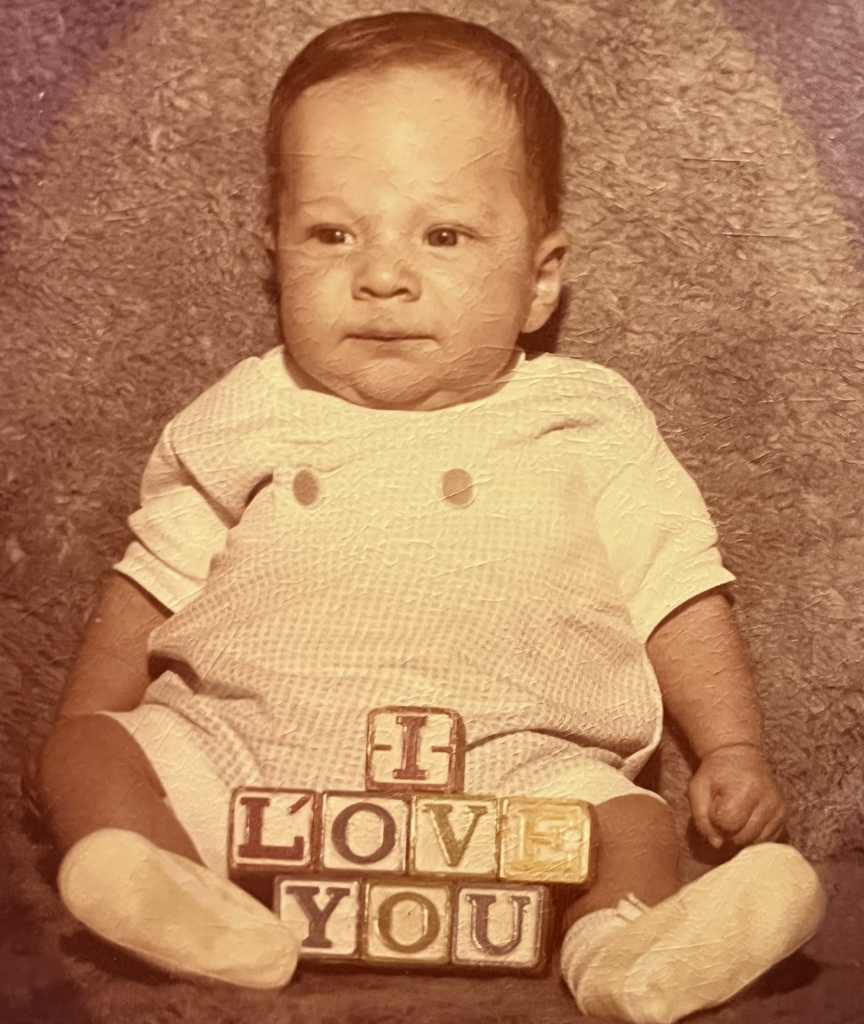
To my parents, who gave me the belief that this is worth doing; I hope it reflects something of what you put into me. To my children, who are the most persuasive argument I have ever encountered that the future is genuinely worth building; you have taught me more than you know and more than I have adequately said. To every family member who has watched someone they love spend unreasonable amounts of energy on something most people don’t understand; thank you for not asking them to stop. To the people I have loved across fifty years in every configuration that love takes; thank you for the patience, the honesty, and the refusal to let me be less than I could be.
We have our turn around the sun together, every one of us; the founders and the families who back them, the teachers and the students who eventually surpass them, the builders and the people who wait while the building gets done; that is the whole of it. Fifty years in, I would not trade the turn for anything.
Originally published at https://seobrien.com on May 21, 2026.
메타데이터
- post_id
- cf87b12b401b
- slug
- the-year-apple-was-founded-a-supercomputer-changed-science-and-nobody-called-any-of-it-a-cf87b12b401b
- url
- https://medium.com/@seobrien/the-year-apple-was-founded-a-supercomputer-changed-science-and-nobody-called-any-of-it-a-cf87b12b401b
- canonical_url
- https://medium.com/@seobrien/the-year-apple-was-founded-a-supercomputer-changed-science-and-nobody-called-any-of-it-a-cf87b12b401b
- author_url
- https://medium.com/@seobrien
- status
- ok
- fetched_at
- 2026-06-09 15:37:30