Cloud Application Lifecycle Management: The Application Development Life Cycle Beyond Applications
In today’s digital-first world, businesses are no longer focused solely on building applications — they are focused on delivering…
Cloud Application Lifecycle Management: The Application Development Life Cycle Beyond Applications

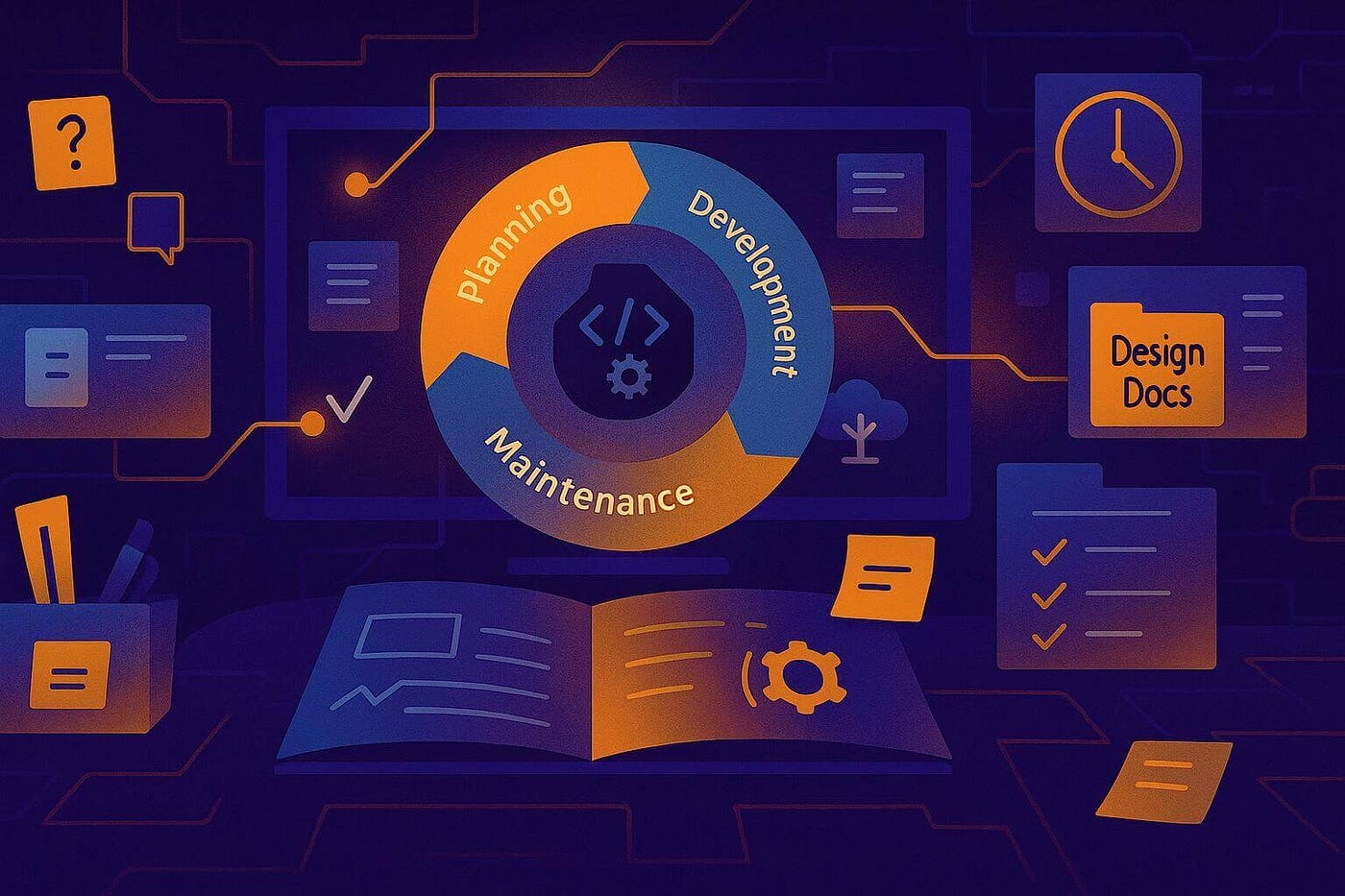
In today’s digital-first world, businesses are no longer focused solely on building applications — they are focused on delivering continuous value through cloud-native technologies. This shift has transformed the traditional Application Development Life Cycle (ADLC) into a broader and more dynamic process known as Cloud Application Lifecycle Management (CALM). Unlike conventional development models, cloud lifecycle management extends beyond application development to include deployment, monitoring, security, optimization, and continuous innovation.
What is Cloud Application Lifecycle Management?
***Cloud Application Lifecycle Management (CALM)*** is the end-to-end process of planning, developing, testing, deploying, monitoring, maintaining, and retiring cloud-based applications. It combines software development practices with cloud infrastructure, automation, and DevOps principles to ensure applications remain secure, scalable, and high-performing throughout their lifecycle.
Rather than treating development as a one-time project, CALM embraces continuous improvement, allowing organizations to adapt quickly to changing customer demands and technological advancements.
The Evolution Beyond Traditional ADLC
The traditional Application Development Life Cycle consists of several stages: planning, design, development, testing, deployment, maintenance, and retirement. While these stages remain relevant, cloud computing has expanded the lifecycle significantly.
Modern cloud environments require teams to manage infrastructure as code, automate deployments, monitor application health in real time, optimize cloud costs, ensure compliance, and integrate artificial intelligence for predictive maintenance. As a result, lifecycle management now extends far beyond writing and deploying code.
Key Stages of Cloud Application Lifecycle Management
1. Planning and Requirements
Every successful cloud application begins with identifying business objectives and user requirements. Organizations determine cloud architecture, technology stack, compliance requirements, and scalability goals before development begins.
2. Cloud-Native Development
Developers build applications using cloud-native technologies such as microservices, containers, APIs, and serverless computing. These architectures improve flexibility, scalability, and resilience while enabling faster feature delivery.
3. Continuous Integration and Continuous Delivery (CI/CD)
Automation plays a critical role in cloud lifecycle management. CI/CD pipelines automatically build, test, and deploy applications whenever new code is committed. This reduces manual effort, minimizes errors, and accelerates software releases.
4. Testing and Quality Assurance
Automated testing ensures applications perform reliably across multiple environments. Functional testing, performance testing, security testing, and integration testing help identify issues before deployment, improving software quality.
5. Deployment and Release Management
Cloud platforms allow applications to be deployed with minimal downtime using strategies such as blue-green deployments and canary releases. Infrastructure automation enables consistent deployments across development, testing, and production environments.
6. Monitoring and Performance Optimization
Once deployed, cloud applications require continuous monitoring. Performance metrics, logs, and alerts help teams detect issues early, optimize resource utilization, and improve user experience. Real-time analytics enable proactive maintenance rather than reactive troubleshooting.
7. Security and Compliance
Security is integrated throughout the cloud lifecycle instead of being treated as a final step. Identity management, encryption, vulnerability scanning, compliance monitoring, and automated security updates protect applications from evolving cyber threats.
8. Maintenance and Continuous Improvement
Cloud applications evolve continuously through updates, feature enhancements, bug fixes, and performance improvements. Feedback from users and analytics drives ongoing innovation while ensuring applications remain competitive.
Benefits of Cloud Application Lifecycle Management
Organizations adopting cloud lifecycle management gain several advantages:
- Faster software delivery through automation
- Improved scalability and flexibility
- Enhanced collaboration between development and operations teams
- Better security and compliance management
- Reduced operational costs through optimized cloud resources
- Higher application availability and reliability
- Continuous innovation driven by real-time insights
These benefits enable businesses to respond quickly to market changes while maintaining high-quality digital services.
Best Practices for Effective CALM
To maximize the value of cloud application lifecycle management, organizations should:
- Adopt DevOps and Agile methodologies.
- Automate testing and deployment processes.
- Implement Infrastructure as Code (IaC).
- Continuously monitor application performance.
- Integrate security into every development stage (DevSecOps).
- Optimize cloud resource usage to control costs.
- Collect user feedback for continuous improvement.
Following these practices creates a resilient and efficient cloud development ecosystem.
Conclusion
Cloud Application Lifecycle Management represents the next evolution of software development. It goes beyond the traditional ***Application Development Life Cycle*** by integrating cloud technologies, automation, security, monitoring, and continuous optimization into a unified process. As organizations increasingly rely on cloud-native applications, effective lifecycle management becomes essential for delivering reliable, secure, and scalable digital experiences.
Businesses that embrace CALM are better positioned to innovate rapidly, reduce operational complexity, and meet evolving customer expectations. In an era where software is constantly evolving, managing the complete cloud application lifecycle is no longer optional — it is a strategic necessity for long-term success.
메타데이터
- post_id
- cfa39a2d01bf
- slug
- cloud-application-lifecycle-management-the-application-development-life-cycle-beyond-applications-cfa39a2d01bf
- url
- https://medium.com/@beyondapplications1/cloud-application-lifecycle-management-the-application-development-life-cycle-beyond-applications-cfa39a2d01bf
- canonical_url
- https://medium.com/@beyondapplications1/cloud-application-lifecycle-management-the-application-development-life-cycle-beyond-applications-cfa39a2d01bf
- author_url
- https://medium.com/@beyondapplications1
- status
- ok
- fetched_at
- 2026-07-31 07:22:37