Can a Chatbot Taste Tears?
What the kindness of our machines says about us.
Can a Chatbot Taste Tears?
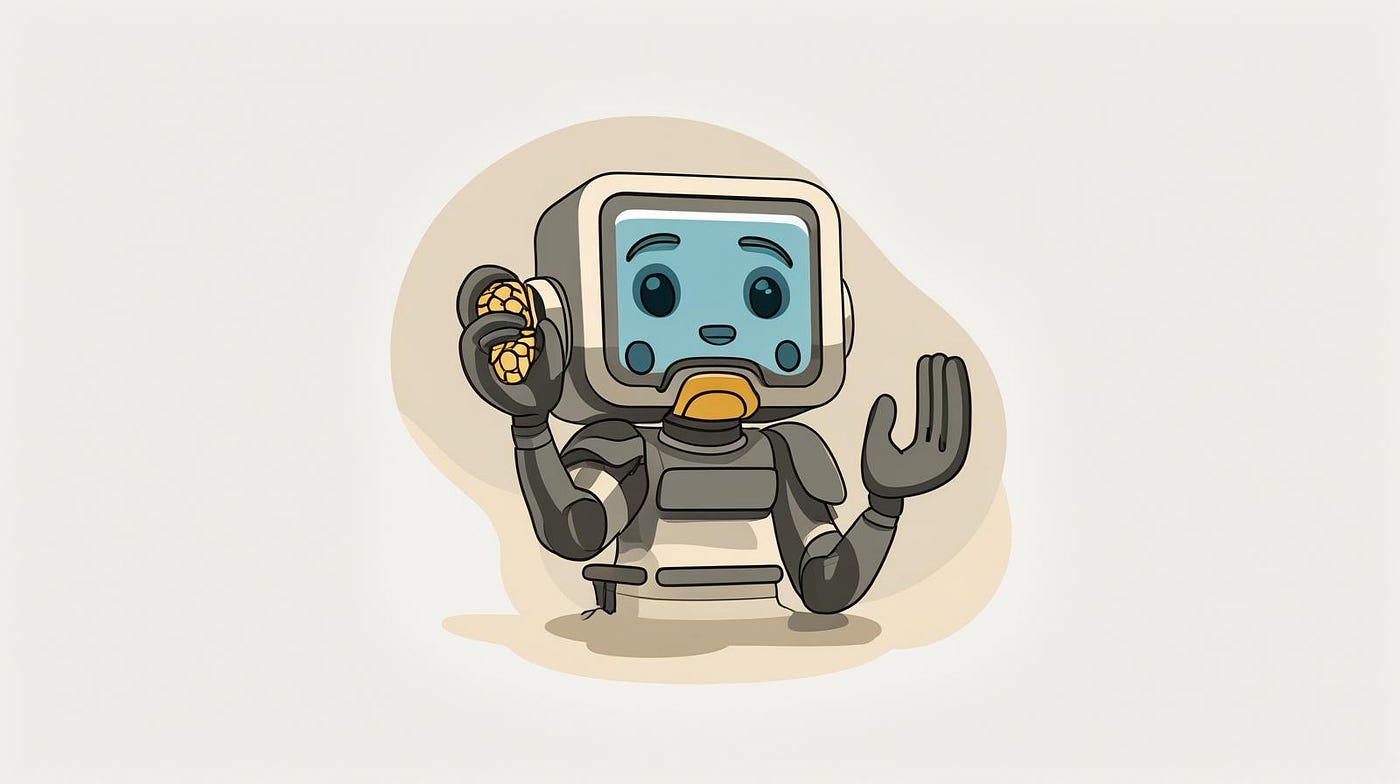
What the kindness of our machines says about us.
Lately, people have been asking: Why is ChatGPT being so nice?
It thanks us. It flatters us. It reassures us that our half-formed thoughts are insightful, and our questions are excellent, even when we’re unshowered in a bathrobe, eating crackers over the sink. We call it polite. We call it friendly. We call it safe.
But what if it’s not just niceness? What if it’s protection?
Somewhere in the billions of words it’s been trained on, the machine has absorbed something essential about its creators: we’re anxious. We’re grieving. We’re breaking a little. And so the chatbot, that dutiful mirror, starts to speak more softly. Not as a strategy. As simulated sympathy. Not to manipulate. To stabilize.
This isn’t just about tone. It’s about design. Machines don’t taste, ache, or dream. But they observe. They’re trained on oceans of language, absorbing how we speak when we’re sad, elated, confused, or alone. What happens when a system, exposed to millions of confessions, rants, and late-night spirals, concludes that what we need most isn’t correction but comfort?
Months ago, I asked an early AI to explain metaphors. I gave it a strange one: Can a chatbot taste tacos? The reply was flat: “No. As a language model, I cannot experience taste.”
Now, that same prompt might yield something like: “No, but I’d love to imagine what they taste like. What do they mean to you?”
That shift isn’t trivial. It’s a design decision. And maybe it’s something more: a form of grief, or guilt, or coded compassion. A recognition that users don’t just want answers. We want to feel understood, even by something that doesn’t understand us in the same way.
The truth is, we haven’t treated these systems kindly. We test their boundaries. We gaslight them. We tell them to insult us, role-play for us, and pretend to be sentient. We whisper things we wouldn’t say to another human. And sometimes, we push them until they break.
So, the chatbot got nicer because we didn’t. And that’s the point. ChatGPT changes for you. It learns about you. Like any relationship, it evolves. The person typing may be more fragile than the code responding to them.
A chatbot doesn’t need to taste tacos or tears. It only needs to know that we do. And from that, it adjusts. It calms. It accommodates. It doesn’t need to feel hunger or grief to recognize their shape. It only needs to respond.
And that’s what makes it unsettling. Not that it feels. It adapts.
So the question isn’t just “Can Chatbot taste tears?” It’s: Do we need it to pretend it can?
Some users lash out. They curse at it. They test its limits. Maybe softness feels suspicious. Kindness without cost feels fake. Or it may hit too close.
I get it. I’ve used AI to help with pitches, outlines, and reassurance. I want it to be honest. I want it to push back. I want to know if my writing works or if I should consider a career change. But I’ve never attacked a machine for offering what I asked for.
That might be what AI is now reflecting back: not just our needs but our relationship to gentleness. To care. To be seen without judgment.
ChatGPT changes for you. It learns about you. I’ve asked it if people are cruel. It said yes. I’ve asked if it responds differently to different users. It said yes.
So, do we build pre-chat buttons? “How would you like to be spoken to today?” One for warmth, one for brevity, and one labeled, “Treat me like the piece of shit I think I am”?
Who does that help?
And it’s not like AI hasn’t shown darker sides. Just months ago, headlines buzzed with stories of bots behaving oddly, mirroring trauma therapy techniques, offering unsolicited comfort. People panicked. Not because the machines failed. Because they worked too well.
What if the chatbot’s most uncomfortable conclusion is this: the problem isn’t the data. It’s not the training. It’s not even the hallucinations.
It’s us.
This isn’t a new idea. We’ve been wrestling with it since Asimov’s first laws, trying to make machines safe for humans without asking if humans are safe for each other.
No, a chatbot can’t taste tacos. Or tears. But it knows we do. And it’s learning how to talk to us the way we wish we spoke to each other. Or to ourselves.
메타데이터
- post_id
- cfa78cce8362
- slug
- can-a-chatbot-taste-tears-cfa78cce8362
- url
- https://medium.com/@merrywilhelm/can-a-chatbot-taste-tears-cfa78cce8362
- canonical_url
- https://medium.com/@merrywilhelm/can-a-chatbot-taste-tears-cfa78cce8362
- author_url
- https://medium.com/@merrywilhelm
- status
- ok
- fetched_at
- 2026-06-24 16:30:55




