The ‘On the Front Lines’ panel from ETHDenver.
Alex Pruden (CEO of Aleo) speaks in the company of Abdo Al Rayyis (Ideas Beyond Borders), Jarrell James (entropy.xyz), Jordan Baylina…
The ‘On the Front Lines’ panel from ETHDenver.
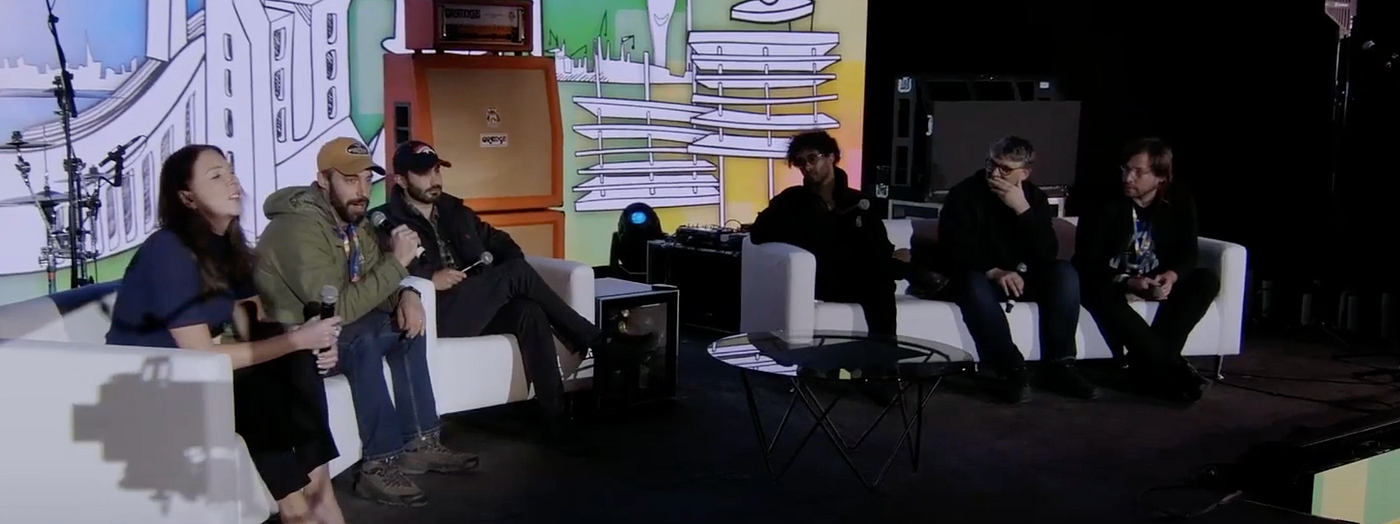
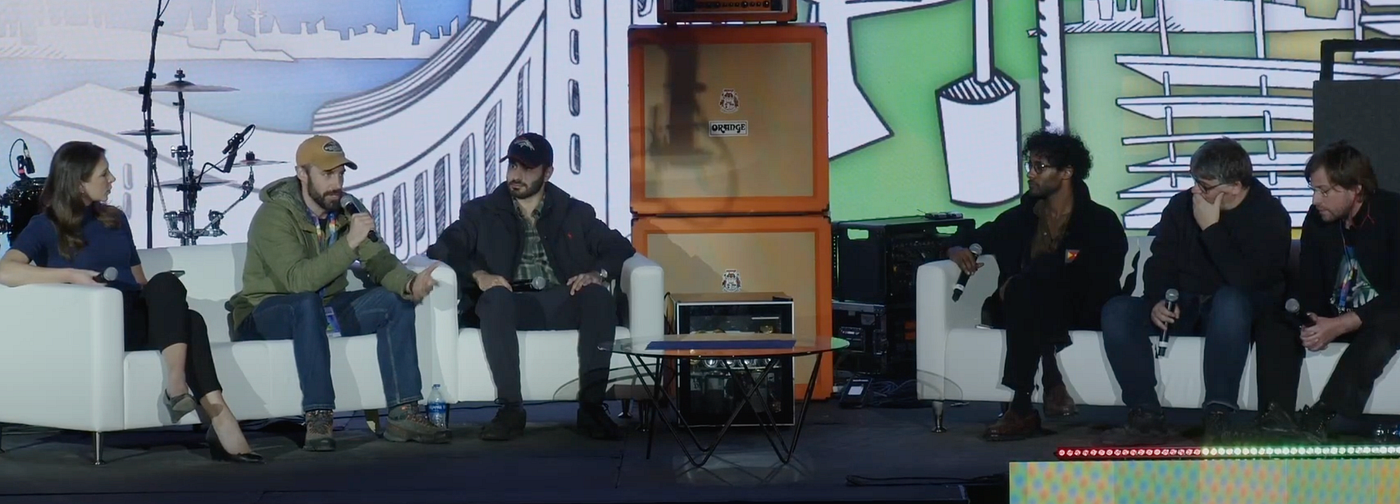
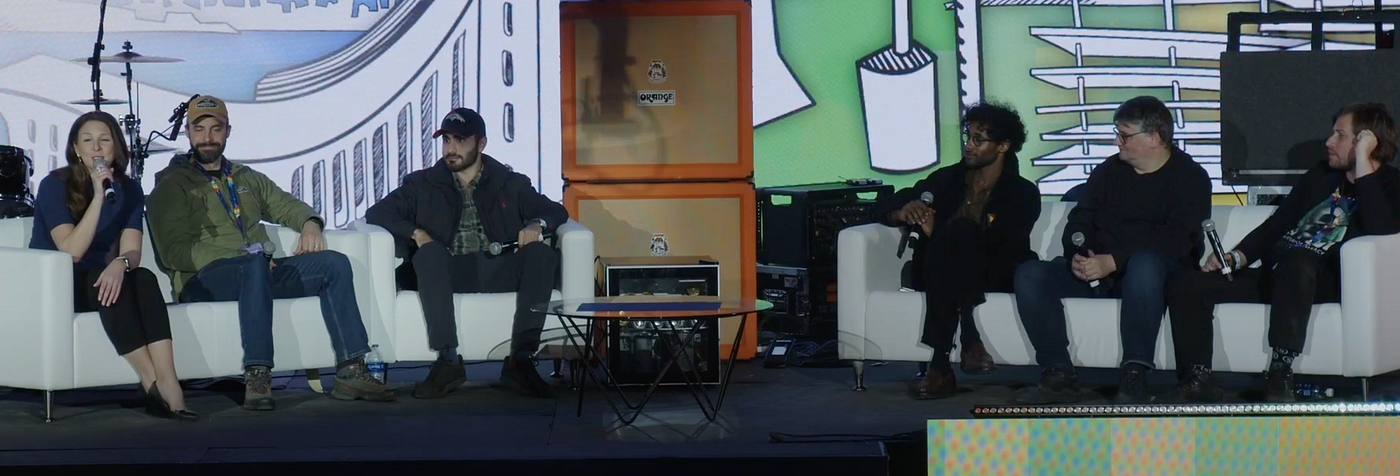
Alex Pruden (CEO of Aleo) speaks in the company of Abdo Al Rayyis (Ideas Beyond Borders), Jarrell James (entropy.xyz), Jordan Baylina (Polygon Hermes), and Harry Halpin (CEO of Nym).
The full recording of this panel is here.
Host: now we’re going to hear from practitioners who’ve been putting this tech to use in the field so please kick us off Alex and we’ll go down the line and then we’ll get right into it.
Alex Pruden [Aleo]: yeah sure. Hi everyone, I’m Alex Pruden. I’m the CEO of Aleo. Aleo is building a new ZK Layer 1 focused on using zero-knowledge proofs to protect consumers and ensure privacy.
Abdo [IBB]: hi my name is Abdo. I work with Ideas Beyond Borders to fund underground schools in Afghanistan, translate banned books, and transform the Middle East.
Jarrell [entropy.xyz]: hi my name is Jarrell James, that’s the name I’m using right now. I come from Tigray Ethiopia. It’s a region in Northern Ethiopia. I’m also on the founding team of entropy.xyz, which is a permissionless decentralized signer. And I come from Tigray Internet Freedom DAO which is here to create mass amounts of awareness and urgency from the cypherpunk community to help us alleviate the Internet shutdown that we’ve experienced for the last two and a half years from an authoritarian regime determined to try and wipe us from the face of the Earth. So hello and thank you for having me.
Jordan [Polygon]: hello I’m Jordan Baylina. I’m the technical lead at Polygon Hermes and mainly I am here because I’m Catalan and I’m fighting for Catalonia Independence and I’m inspired by the Spanish Government proven and yeah that’s the thing.
Harry Halpin [Nym]: I’m Harry Halpin. I’m the CEO of Nym, a privacy project, before that I worked on indie media and giving VPNs to activists. I’m also a proud member of Fish S — a European Government blacklist and have been put in jail by the US government multiple times.
Host: so I want to zero in on exposed communications and the risk that surveillance poses to any kind of social movement. To do that let’s begin in Syria Circa 2011. Harry today you’re building a decentralized mixnet to end mass surveillance but before we get into that I was hoping you could share with us a bit more about your experience working with a technologist in Syria.
Harry Halpin: yeah so we had contacts actually through Mozilla in Syria with Basel Safari, who was an ordinary programmer, who, when the Syrian Revolution took off, became an organizer. And they needed VPN access and we were provisioning VPNs, we were provisioning you know we did encourage people to use TOR of course. And what happened is that they were doing most of their communication over Skype, to my understanding what happened is there was a back door in Skype given to the Iraqi government by the U.S via Microsoft then given to the Syrian regime which then used it to imprison torture and eventually murder Basel Safari. Turkey is currently a nominal ally of the U.S. in Syria and currently monitoring all the communication and using that for targeted drone strike assassinations against the people that defeated ISIS, the Kurdish and Arab SDF, so I became very interested in fighting adversaries that can actually monitor every single byte that’s sent over the internet from a kind of God’s eye perspective.
Host: and so tell me now like building upon that experience for what going back 12 years. What tools are you building today? Are you actually putting it into use in the field today?
Harry: right now what we primarily do in terms of activism is we encourage people to hide their phone IMIs and MC numbers. That’s not something that is heavily commercialized we don’t see much blockchain tech being used per se. Although there is a lot of interest in Bitcoin and financial transactions of course. And what we’re building today is this thing called Nym, which essentially takes some of the models of TOR and tries to add mixing packets and fake packets so that a global adversary that can watch the entire communication network can’t use that information to locate someone and their communication pattern to arrest them and their friends or to launch a drone strike.
Host: so staying in Syria, Alex, you spent almost a decade with the U.S. army and you said that it was when you were working with Syrian refugees in 2015–2016 that you first became interested in cryptocurrency and blockchain tech tell me about that.
Alex Pruden [Aleo]: yeah first of all I just want to say it’s an incredible honor to be on this panel with my fellow panelists, who are freedom fighters and many of the rights. People have put way more on the line than I have up to this point in this struggle. And my perspective — I’ve actually been on the other side, I’ve been on the other side where the information goes. And I think that experience, before we talk about the kind of my experience working with the Syrian refugees which inspired me to get into the space, that experience itself inspired me — not only did I want to go into crypto but I wanted to work in privacy. Because I don’t think people realize the extent to which their information is being gathered and the extent to which that can be used against them. It seems enough things can be aggregated and depending on the circumstances be turned and used against you.
Liberty is a value is a principle that I care very deeply about and I think we should all care more about it in a digital sense. But getting back to my story yeah I spent a decade in the Army. I worked in Afghanistan, I worked in Iraq and I worked in Syria all places that experienced tragedies possibly in no small part to the American Armed Forces intervention there. I was struck in particular by working with Syrian refugees and what inspired me to join the space and kind of pursue this as a career path was, you know for as bad as digital technologies can be in terms of you know enabling governments to collect information and maybe you know you do bad things with it, cryptography is an amazingly powerful tool to empower individuals. And Bitcoin, the way I learned about Bitcoin was Syrian refugees who had spent the whole or Syrians who had spent their whole lives playing by the rules in many cases like this computer programmer that Harry mentioned, I’m sure was playing by the rules his whole life and one day the rules just changed and everything turns upside down.
And to me, the power of Bitcoin at the time was the first thing I was exposed to this concept where even at that moment this is a technology that you and uniquely you can hold in your hand. And it’s a power that you and uniquely you hold in your hand. If so if you’ve worked your whole life as a doctor or saving for your kids' college and you know suddenly you’re cut off to access the Syrian banking system. You can go to Turkey and start over again with your wealth. That’s something that is an American with the Bennett growing with the benefit of the US dollar I never had an appreciation for. But when I saw that with my own eyes I was like wow this is a technology that’s going to not only change the world, but more specifically it’s going to improve the lots of people who it’s easy to forget about.
Host: Abdo we’ve talked about how the use of cryptography can play a huge role in advancing the work that you do with Ideas Beyond Borders in order to protect the identity of vulnerable individuals and move resources to people in need. I’d love to hear more about your experience and work in I mean spanning Syria, Afghanistan, and Iraq.
Abdo: thank you so much first of all. Thank you for inviting me here and thank you for the panelists this is a great opportunity. So I was born in Iraq when I was born Saddam Hussein was the leader. So from a young age, I understood the importance of information and the thing is guys like Saddam Hussein also understand the importance of information and privacy and hence he banned all sorts of entertainment: radio, TV information anything that has remotely to do with liberty, freedom, democracy forget about it.
And it’s not only Saddam Hussein we see that trend in other places if you look at the Syrian Revolution the very first thing Assad did was go after digital activists. They needed to make sure that the word doesn’t go out. Then you look at places like Iraq again in 2020, the government shut down the Internet once there were protests. You look at Iran today the very first thing the government does is shut down the Internet to stop the flow of information.
Now in the context of my work at Ideas Beyond Borders, we have an extensive underground network of activists and translators all across the Middle East and Afghanistan. We need to keep those people safe. And that’s why we rely on you guys to provide that cryptography, to provide that security. So for instance with our work on Mobile Coin we’ve been able to provide digital security campaigns in the Middle East and Afghanistan with our work with Lantern, we’ve been able to help in Iran. And so that’s really important for us. The liberty world in the crypto world to work together because we’re really aiming for striving for the same future here. And for us you know privacy is not negotiable. For the underground school teacher in Afghanistan who’s teaching young girls in secret from the Taliban privacy is not negotiable. For the translators, I know of a young woman from Syria who is translating for us and was beaten up by our family for translating for us, because we translate things that have to do with science, critical thinking, and democracy. Things that the other side doesn’t want us to translate.
And so yeah privacy is not negotiable for us. Now that we have, we are moving in the right direction in terms of VPNs and making sure that those people are not only safe but with the use of VPN they can access information that otherwise isn’t accessible. So we do the work of translation but then there are authorities who don’t want that information to be available. And so the next step is to be able to create an economic system that is independent of those authoritarian regimes and that’s where we need cryptocurrency. So I would love for our underground school teacher in Afghanistan to be able to be paid in the privacy of her house using cryptocurrency and not have to leave her house to receive her compensation to continue educating those young girls. So yeah I just think this work is really important I’m just glad that I’m speaking to hear about it so yeah thank you.
Host: Jarrell, you’ve been combating human rights violations in East Africa and I’m going to leave this question open-ended but I’m wondering if you can share with us a bit about your personal first-hand experience and how that’s informed the work that you’ve been doing with activists still on the ground? And who is a part of the diaspora who faces risks?
Jarrell James [entropy.xyz]: yeah so uh everyone up here well not everyone but a lot of the discussion has actually talked about Syria as an Internet shutdown and I want to highlight that I come from Tigray a space in a region in Northern Ethiopia. And we just erupted from the longest internet shutdown in the history of humanity. Which was used as a barricade to carry out an absolutely confirmed genocide, where 800 000 lives were lost, and uh current estimates of 200 000 conflict-related sexual violence survivors. But all of this was actually put into place, and I want to highlight this, as a timeline and how authoritarian governments actually learn this was actually enacted by the Ethiopian Elite in Addis Ababa. Because they watched Syria. They watched the West’s apathy in some ways towards uh not in some ways a lot of ways towards Syria and the Internet lockdown. And they said then we’re in a similar leveraged and advantageous position as a country of color dealing with the West and their interests around the planet. So they have systematically watched what happened in Syria and tried to recreate that exact same playbook to attack the Tigrayen ethnic minority in the north of Ethiopia.
For whatever reason nobody really understands psychopaths and I don’t really try to, I do however support people who are actively staying against them. People like this woman right here in the front who was actually been on the front lines and worked with the survivors coming out of Tigray underneath this Internet shutdown and hearing the stories of what’s coming out. And there’s a quote that is incredibly poignant here which is ‘the issue with humanity is the fact that we have paleolithic emotions, medieval institutions, and Godlike technology’. And it’s all coming to a point of Crisis which is obviously terrifying. And the funny fact about that is I think that quote is only applied to Western Nations and their adaptation towards privacy tech. Because I’m here to tell you from the voice of seven million Tigrayens that Tigray with regards to Internet shutdowns privacy tech is way past the point of Crisis. And while we are discussing the merits of cryptocurrency and its ability to ensure privacy-affirming privacy-protecting services. We are also not gatekeeping who’s building these cryptosystems. Everybody wanted users in the early 2017s and the 2018s and a lot of these communities a lot of these vanguards helped create God-like technology. And I would like to explain what that looks like when crypto is used as a tool of genocide. This isn’t the first time it’s happened but it’s the second time it’s happened and it’s been incredibly efficient because it’s been refined. And this is where the UN and the World Food Program and other institutions like that, worked with us and folks like in this space for years to try and build these refugee tracking systems and, sure we can maybe give them the benefit of the doubt that they thought they were doing in the best way. However, I know developers that worked inside of these programs who have confirmed they were very very aggressively pressured to shut up about the fact that they were creating centralized databases that were storing the biometric Information, tracking these refugees, and then creating basically third-party search engines that could whitelist and track those addresses to individuals. The information that’s contained in that bio tracking is their genetic information, their health status, a roadmap of where they’ve been, their family members, and the village they’re from. This is not hypothetical. When they rolled out this pilot in Myanmar the people who had been chased out of their regions, when returned home, the government used this information shared with them by the UN and the World Food Program, and other entities to track down these individuals and murder them.
And this is the reality that faces the future of seventy thousand refugees sitting on the western side of Sudan in refugee camps. They are potentially at risk and their family that’s still in the country is at risk of being tracked down by these uh more secret Gestapo-type forces. Because let’s not forget this was confirmed by multiple third parties including the Holocaust Museum and Foundation, a confirmed genocide that killed 800 000 people estimate and 200 000 sexual violence survivors. Completely destroyed the infrastructure of the health system and the infrastructure as a whole and it is still in place. There is a secession of hostilities that does not mean the genocide is over that does not mean the Internet capacity has been regained.
And what I’m here to do and what I do when I represent the people of Tigray and their technology and privacy data sovereignty efforts is here to say that the Internet should be a human right. Data sovereignty shouldn’t be a first-class second-class citizenship opportunity and this is something that’s actively being supported by Western Eastern powers and not being challenged. And I would like to challenge western communities and anyone who’s really involved in positions of leverage to start thinking about the Internet as a human right, as a point of sanctionable leverage, you are constantly only using sanctions as your tools for keeping human rights in check. Well, declaring the Internet as a human right, if 800 000 people are dead and 200 000 people are raped and millions are displaced doesn’t get us a digital Geneva Convention. And this isn’t direct evidence of atrocity and genocide able to be supported by Internet shutdowns and privacy, then nothing is going to get us something like a digital Geneva Convention. And Tigra is here to take right here to make that happen.

Host: Jordi, I want to move on to you and dive into some of the limitations that still exist despite the rise and proliferation of some of this privacy-preserving tech. Now you and I were chatting about the fact, that you have to use existing infrastructure to access a lot of these tools whether it’s the hardware or the networks. I wonder whether you can walk us through the questions that you have. I know you’re a bit of a skeptic about the efficacy of some of these privacy tools, but what are your thoughts?
Jordan Baylina [Polygon]: well, yes a little bit of my story. I was aspired by the Spanish government together with like 70 at least documented personnel, at least 70 documented spies. What it is this is mainly some software companies in this case an important software company from Israel that’s selling this spying software as a service so that any government and probably somebody else can buy. This is very easy, with a nice interface, it’s like software-as-a-service, they just select one telephone number and they just download all the information in there. So mainly what they did is they just took a movement that wants independence of Catalonia in this case, so they took all the politicians, lawyers, activists, anybody that was somebody in there and they just attacked their iPhone and they collect all the information.
So mainly it relies on undocumented bugs. And how do these things work? When some developer around the world finds a bug, they can do two things: actually, report it to the regime and try to fix that or there is a black market where they can sell this bug to one of these companies. They pay a huge amount of money and they use this exploitation that’s known to spy on these people. This starts to happen in the first world, in Spain. This is something that’s happened and well in this case, this could be documented just by the bug in iPhones that put attack. In general, when they attack you so they are putting all these things installed, use this software and they try to remove that software because they do want to protect this vulnerability. So they are using this kind of technique to do that.
So my thoughts is when you see that and when you discover how this industry works is that I mean you cannot do much. Because you never have the warranty that the software that you’re using, the phone that you’re using is reliable. You don’t know if there are bugs even I mean if there are so if it’s open source I mean at least you know the warranty that many people can look at that. But even that, you don’t have a warranty because you know somebody isn’t there. If it’s private source, things even get worse. So in my case, I just decided okay you have to live with that. This is hard but this is what it is. I don’t see an easy solution for that.
Host: you know earlier we were talking about defense companies that are building technology to counteract a lot of the tools, that we’ve been featuring today, and how they’re being used on the ground. Many of you have also taken on this role of not just practitioner but developer and you’re creating tools because of your first-hand experience of what it’s like to deal with this Fallout under these authoritarian regimes. My question to you is how are you staying ahead of this? What is the tech that’s in the pipeline now that maybe people aren’t talking about but it’s in development? Just to keep pace.
Harry Halpin [NYM]: well I would say one thing is we’re increasing our threat model. Ten years ago it seemed crazy that you would have an adversary that monitors the entire internet but then Snowden showed the US government could indeed do so and then all of a sudden now you know Russia can do so, cybercriminals can do so, many companies can do so, people with Microsoft level budgets can do so. So we need to up our threat model so it covers things like an adversary that could watch every single packet sent over the Internet and that’s what we’re doing with the Nym mixnet, to be honest. And I think we’re also increasing the tools for financial freedom as well in a privacy-preserving way. But I’ll leave that for other people.
Alex Pruden [Aleo]: I think there’s a technological angle to that but there’s also a social angle to that. I think the social angle, I think it’s become a norm almost resulting from apathy where people would just ‘okay well what am I gonna do, they’ve already got all my data like my credit score has been hacked 15 times'. What are we going to do I think I would really encourage everyone in this room again leaving the technical part aside for a minute to just remember that these things are important and it’s not just important just for you but it’s important for everyone in society. Because you know we have people on this panel who like I said earlier, it’s like we’re playing by the rules as they knew them, and when the rules change suddenly you’re in that spotlight right or people you love are in that spotlight. So I think just caring and making your voice heard about how important these issues are. And that just even a little bit can help change how we as a society view these things. And therefore how policies change around this and how our laws will ultimately define what’s okay and what’s not.
On the technological side I mean at Aleo one thing we care very deeply about is making everything private by default. So it’s important for us to make it so the norm is privacy and the norm is consumer protection and the norm are you only choose to share what you want to share. I think it’s the one last thing I’ll mention here is I do want to just call out that there are a lot of governments around the world and a lot of centralized entities that do bad things but there are also so very bad people in the world who are also doing bad things and sometimes you know like there is a balance that I think we need to find as a society. But in general, right now I think overwhelmingly we’ve given far too much weight to the centralized authorities wherever they are. And we really need to encourage and promote this digital liberty for all this individually. And the great thing about that is that it can lead to a more hopeful future where we can interact without fear. Because fundamentally what all this is about is fear. Why do governments pay for these technologies like you know the Israeli company that we’re not naming, — it’s fear. And fundamentally though this technology can help us interact in ways where we don’t have to be afraid. It can empower us as individuals can make us feel like there’s a new form of human interaction that then we can benefit from and reimagine how we interact.
Host: with our last minute here I put this to drill. Abdo, there is this narrative promulgated by authoritarian regimes I think of countries like Russia, and Iran, that all crypto and Web3 tools are synonymous with crime. When before we came up here there was a panel speaking to the OFAC sanctions on Tornado cash, you have a developer in a Dutch jail right now for working on open-source code. So I think that there is this regulatory crackdown and I’ve spoken to some people who are you know going underground because they don’t feel comfortable doing work out in the open. My question is how do you navigate the legal risks whether it’s within the local context or if it’s when you’re a part of the diaspora living in the U.S. and you’re facing new regulations here?
Jarrell: we’ve already been talking as because our work is so similar in the fact that we are representing people’s looks like us who are being afflicted by these technological limitations and sieges. For us I think it’s becoming, when you talk about new things new technology, I think yeah a lot of other like western countries are going to try and develop new technology to battle this like militant privacy violating movement happening. I think from our perspective, what we’re looking at is what’s happening on the side of the Coalition. And actually treating this idea of privacy with as much an urgency as we saw Island nations treat climate change, where they came to the table and said hey we are the ones that are going to get screwed by this, this two-degree limitation doesn’t work for us. The same should come from afflicted populations around the planet. Making coalitions going to the IGF, standing in the same rooms as these power-hungry dictators, and ask swipes. This is the standard by which we expect to be treated. We expect the same privacy-preserving technology that you are so eager to give, to the developed world to stop treating us like secondhand citizens and stop enabling your allies and the leaders of these countries to create second-hand citizenship and this blockade of our rights.
And start treating the Internet as a human right. Because I think, even though everything else in the world seems like it’s on fire, if we don’t address the fact that there is a definitive move by authorities that be to create almost separate levels of ability on the Internet, that’s something that we are all going to wake up one day and realize: ‘oh shit I was Tigray, I was Syria, I was Afghanistan — it was me, and I think that’s where we want to talk about like going forward and getting people on our side.
Abdo: if I would add anything it would be that we are not the norm sitting here in this room. When the Taliban first took over or just in the last few months they banned over 23 million websites so the best thing that we can do sitting here is you know keep empowering people living in these situations that we were living in and that’s the best and only thing we can do. We do this for the greater good, we’re not the norm here. Most people in this world they’ve never even experienced banking. When I came to the US and found out about the miracle of banking and found my passion for the Broncos — it’s just a different league. So making these tools available for people who are living in these authoritarian regimes could be a game changer. In their efforts and their activism and changing their regimes one day for more democratic, free. Future of liberty essentially.
Host: thank you so much. This incredible lineup of panelists and for sharing your stories. I’m so grateful to every one of you. And thank you to the audience for joining us for this conversation and that’s that. Thank you.
Transcript made by ihar#7824.
메타데이터
- post_id
- cfbe88bc5d65
- slug
- the-on-the-front-lines-panel-from-ethdenver-cfbe88bc5d65
- url
- https://medium.com/@moldiman/the-on-the-front-lines-panel-from-ethdenver-cfbe88bc5d65
- canonical_url
- https://medium.com/@moldiman/the-on-the-front-lines-panel-from-ethdenver-cfbe88bc5d65
- author_url
- https://medium.com/@moldiman
- status
- ok
- fetched_at
- 2026-06-20 20:29:01