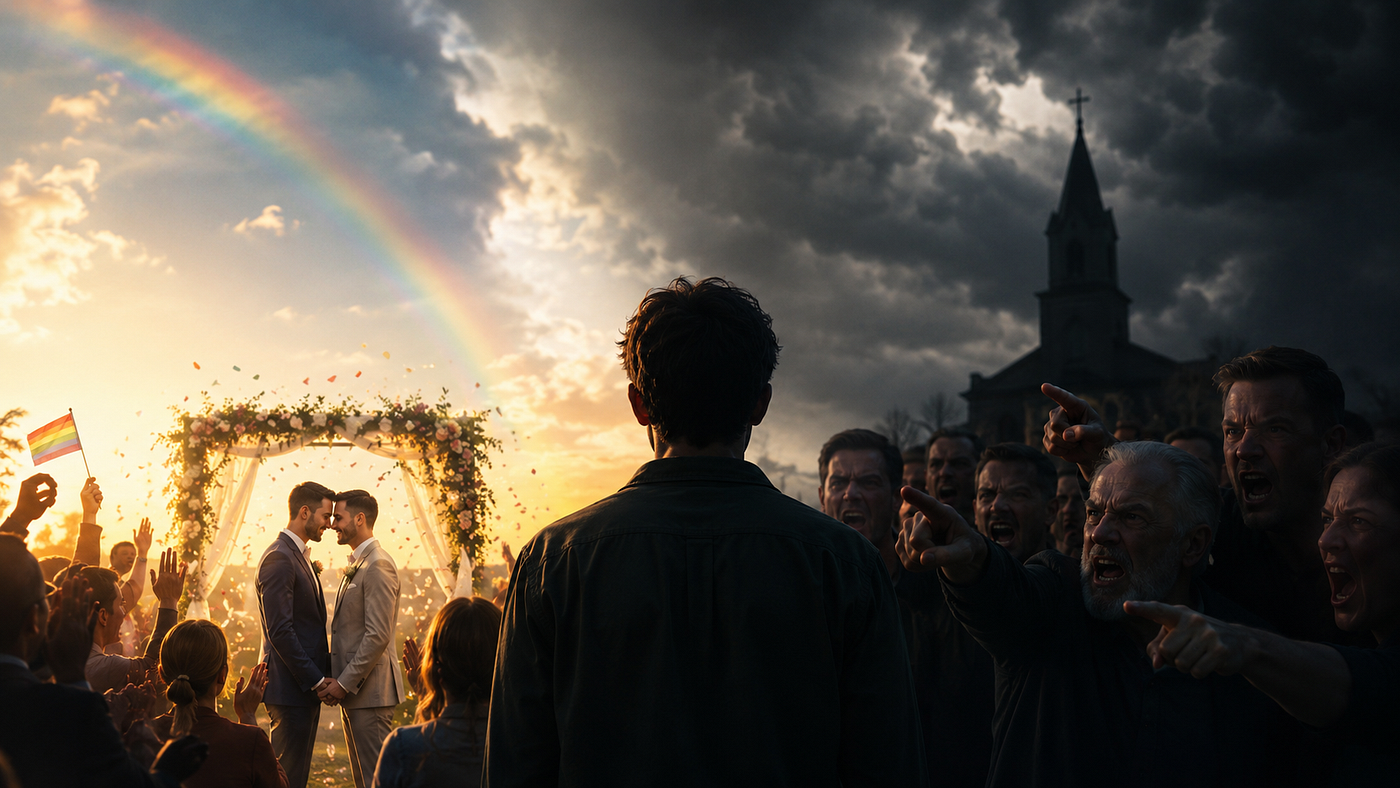
The Loudest Religious Voices Aren’t the Truest
How Spectacle Became Mistaken For Spiritual Authority
The Loudest Religious Voices Aren’t the Truest
How Spectacle Became Mistaken For Spiritual Authority
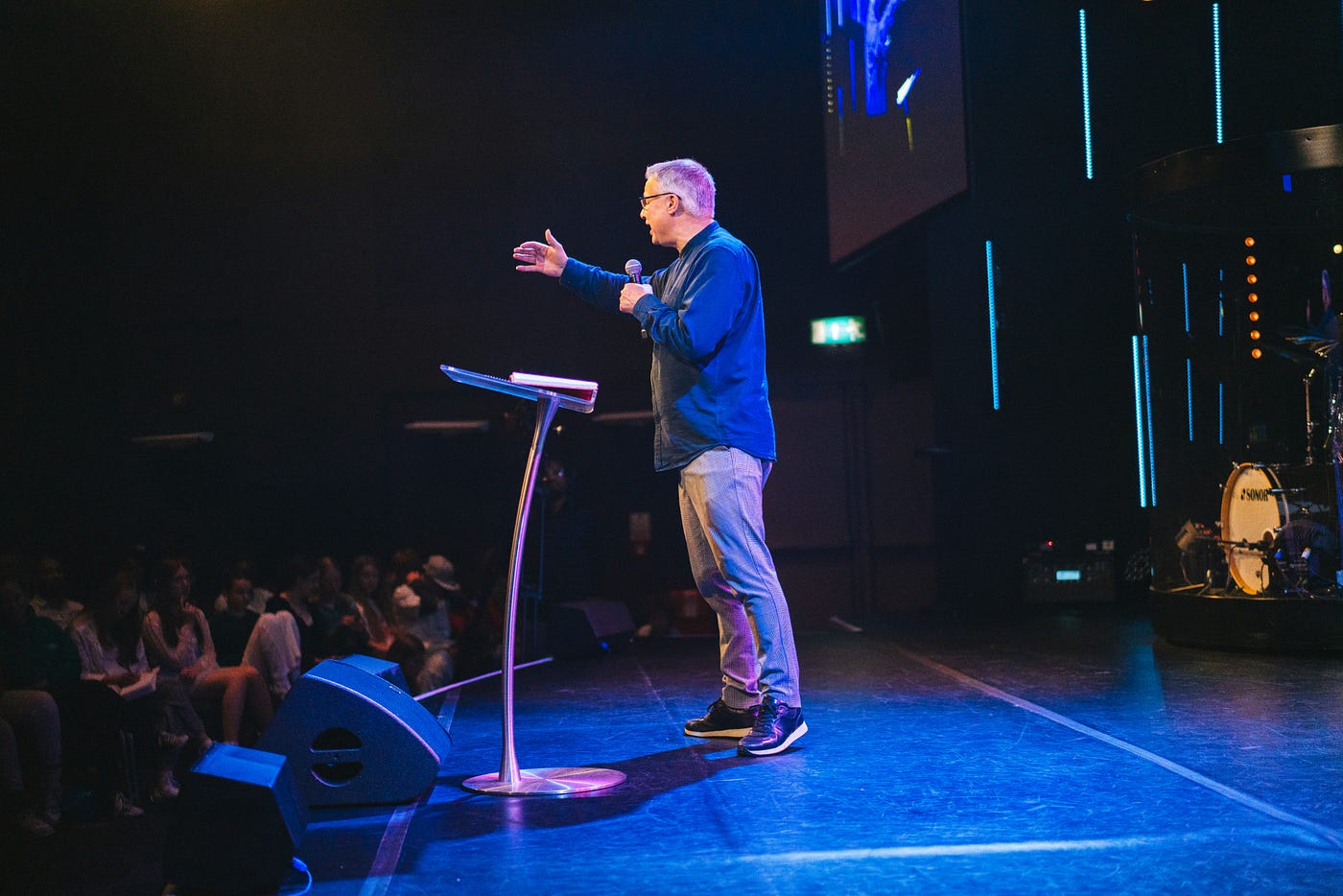
Photo by Phil Hearing on Unsplash
As I continue along my own “find my spirit” journey, I’ve realized something that has become harder to ignore every time I open YouTube or scroll through social media.
The people speaking the loudest about God are rarely the ones I trust the most.
That isn’t a criticism of passion. Some of the most compassionate people I’ve ever met cared deeply about their faith and weren’t afraid to talk about it. The difference was that they never seemed interested in becoming the center of the story. Their confidence came from what they believed, not from convincing everyone else to admire them.
Today, religion often feels like another competition for attention. The biggest platforms, the brightest lights, the most polished videos, and the strongest personalities rise to the top because that’s how modern media works. Visibility is rewarded. Certainty is rewarded. Drama is rewarded. Quiet consistency rarely goes viral.
Watch a popular televangelist or a celebrity pastor for a few minutes, and you’ll see the formula. The stage is impressive. The lighting creates emotion before a word is spoken. Music swells at exactly the right moment. Every camera angle has been rehearsed. Thousands of people respond on cue. It feels powerful.
Powerful doesn’t necessarily mean true.
The uncomfortable reality is that we’ve started confusing volume with authority, visibility with credibility, and confidence with wisdom. A preacher with millions of followers looks trustworthy simply because millions of other people have already decided to listen. The platform itself becomes evidence of legitimacy, even when the message deserves closer examination.
Religious truth shouldn’t require theatrical production to survive. If something is genuinely worth believing, it ought to remain convincing after the lights are turned off, the microphones are unplugged, and the applause fades away.
Spectacle is easier than character
Character develops slowly. Spectacle can be built in an afternoon.
Give almost anyone a polished stage, dramatic lighting, emotional background music, a practiced speaking voice, and a professional production team, and they’ll appear more convincing than they probably deserve. Presentation has always influenced perception, yet modern technology has magnified that reality. A carefully produced sermon can feel spiritually profound before the audience has even evaluated what was actually said.
Character works differently.
Character reveals itself through ordinary moments that aren’t designed for public consumption. It appears in how someone treats people who cannot advance their career. It shows up in apologies that don’t come with public relations strategies. It becomes visible through years of consistency rather than one memorable performance.
That difference matters because public trust in religious institutions has steadily declined across much of the world. Researchers studying confidence in institutions have found that clergy no longer enjoy the unquestioned moral authority they once held. Highly publicized abuse scandals, financial misconduct, and institutional cover-ups have understandably made many people skeptical of equating religious position with personal integrity.
The tragedy extends beyond the individual scandals themselves.
Every leader who protects an institution instead of protecting vulnerable people makes it harder for genuinely sincere religious leaders to be believed. Every celebrity preacher exposed for dishonesty reinforces the suspicion that faith itself may simply be another performance.
Ironically, the louder religion insists on projecting certainty, the more insecure it can appear. Confidence that constantly demands attention reveals its own fragility. Truth usually has much less to prove.
Why people still fall for it
That raises an uncomfortable question.
If performance religion disappoints so many people, why does it keep attracting enormous audiences?
The answer probably says as much about human nature as it does about religion.
Life is complicated. People lose jobs, relationships fall apart, diagnoses arrive unexpectedly, and entire societies experience periods of uncertainty. During those moments, certainty becomes deeply attractive. A confident voice offering simple answers can feel like solid ground when everything else feels unstable.
Spectacle amplifies that feeling.
A charismatic speaker standing before thousands of enthusiastic followers creates an emotional experience that extends beyond the message itself. The crowd communicates certainty. The music reinforces emotion. The shared experience creates belonging. Even thoughtful people can mistake those feelings for evidence that the speaker must be right.
Imagine someone sitting alone after receiving devastating news from a doctor or struggling through the end of a marriage. They aren’t looking for an academic discussion about theology. They’re looking for hope. The loudest voice in the room often promises immediate answers, complete certainty, and instant community.
That combination can feel irresistible, even if the answers themselves are disappointingly shallow.
Religion has always offered something valuable during difficult times. At its best, it gives people hope, community, purpose, and a way to endure suffering without surrendering to despair. Those needs are genuine, which makes them especially easy to exploit. A loud messenger can feel comforting even when the message lacks depth because certainty is often more emotionally satisfying than humility.
That doesn’t make people foolish. It makes them human.
When religion becomes performance
Once religion begins competing for attention, it starts borrowing the tools of entertainment.
Churches become brands. Pastors become influencers. Prophecy becomes content. Sermons become performances carefully crafted to generate applause, shares, and clips that spread across social media. Success gradually becomes measured by attendance, engagement, and reach rather than by whether lives are actually becoming more compassionate, honest, or humble.
The shift happens almost invisibly.
A preacher discovers that dramatic stories keep people engaged longer than quiet reflection. Emotional music creates stronger responses than silence. Certainty attracts more followers than admitting uncertainty. Before long, every decision begins passing through the same question.
Will this grow the audience?
That question changes everything.
Once maintaining an image becomes part of the job, protecting that image becomes a temptation. Mistakes become public relations problems instead of opportunities for repentance. Critics become enemies instead of people who may have legitimate concerns. Scandals become something to manage rather than something to confess honestly.
None of this is unique to religion. Politics, business, entertainment, and social media all reward performance over substance in similar ways. Religion simply carries a heavier burden because it claims to speak about truth, morality, and the character of God. When image becomes more important than integrity, the contradiction becomes difficult to ignore.
Many of the warning signs look surprisingly ordinary. Leaders carefully manage every public appearance while revealing almost nothing of themselves. Ministries spend enormous amounts of money creating emotional experiences that resemble concerts more than worship. Every criticism is framed as persecution. Every success becomes evidence of divine approval. Self-promotion quietly replaces service.
Over time, something essential begins to disappear.
The language remains spiritual. The branding becomes more sophisticated. The audience may even continue growing. Yet underneath all the activity, genuine moral clarity starts giving way to image management. There is plenty of noise, but very little honesty.
Crowds can be gathered through performance.
Trust usually cannot.
What sincerity looks like
The most credible spiritual people I’ve known were rarely the most impressive speakers.
One volunteered quietly for years at a homeless shelter without ever mentioning it unless someone asked. Another admitted from the pulpit that he had handled a difficult situation poorly and needed to apologize. I remember a teacher who answered difficult theological questions by saying, “I don’t know,” far more often than many experts ever would. That simple admission increased my respect for him because it demonstrated confidence without arrogance.
Sincerity is surprisingly ordinary.
It listens more than it talks. It serves without needing recognition. It admits mistakes instead of defending them. It changes when evidence or experience reveals blind spots. It behaves the same way when nobody is watching as it does when the room is full.
Those qualities don’t attract millions of followers overnight. They don’t produce viral videos or dramatic headlines. They’re difficult to market precisely because they aren’t designed to attract attention.
Perhaps that’s the point.
If religion hopes to recover trust, it may need fewer personalities competing for influence and more people quietly demonstrating integrity. The credibility crisis facing many religious institutions won’t be solved by better branding or more polished production. It will be addressed one honest conversation, one act of service, and one consistent life at a time.
The loudest voices will probably continue filling stadiums, dominating algorithms, and attracting enormous audiences. History suggests they always will.
The truest voices usually don’t need to shout.
If you’ve made it this far, you’re probably my kind of reader. You should follow.

메타데이터
- post_id
- cfcc92e61655
- slug
- the-loudest-religious-voices-arent-the-truest-cfcc92e61655
- url
- https://medium.com/backyard-theology/the-loudest-religious-voices-arent-the-truest-cfcc92e61655
- canonical_url
- https://medium.com/backyard-theology/the-loudest-religious-voices-arent-the-truest-cfcc92e61655
- author_url
- https://medium.com/@bwrosta73
- status
- ok
- fetched_at
- 2026-07-11 21:25:18