Can Mobile Proxy IPs Really Act Like Real Mobile Users, Stable and Hard to Block?
When doing social media marketing, many users encounter platform risk control, which can lead to accounts being massively restricted or…
Can Mobile Proxy IPs Really Act Like Real Mobile Users, Stable and Hard to Block?
When doing social media marketing, many users encounter platform risk control, which can lead to accounts being massively restricted or banned. With the rise of proxy IPs, more and more users are paying attention to mobile proxy IPs.
A common question is:
Do mobile proxy IPs really behave like real mobile users and make accounts less likely to get banned?
Below, we’ll break down everything you need to know about mobile proxy IPs and help clear up this common confusion.
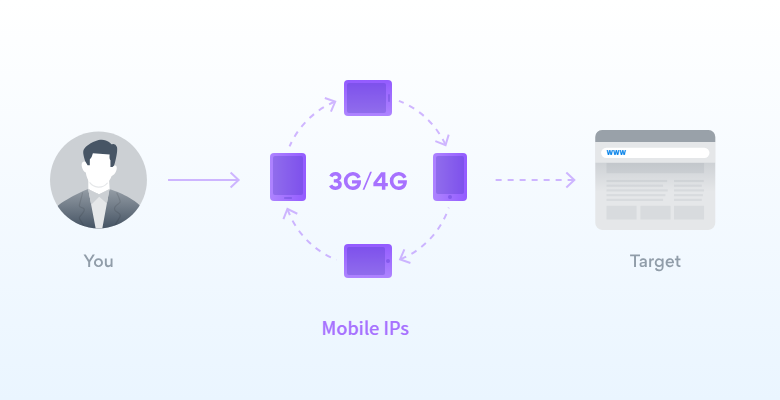
- What is a Mobile Proxy IP? How Does It Relate to a “Real Mobile IP”?
A mobile proxy IP essentially comes from 4G/5G mobile operator networks. These IPs share the same network exit points used by ordinary mobile users, such as:
Mobile data connections
Dynamically assigned IPs by cellular base stations
Shared exit segments among multiple users
This means, from a platform’s perspective, the network characteristics of a mobile proxy IP are highly similar to those of a real mobile user, which is exactly why it is highly valued.
-
Why Are Mobile Proxy IPs Less Likely to Be Blocked?
-
IPs Rotate Dynamically, Not Permanently Fixed
Real mobile users rarely use the same IP for long periods. Mobile networks automatically change IPs in cases like:
Network fluctuations
Switching between cellular towers
Disconnects and reconnections
This non-human IP rotation aligns perfectly with what platforms expect from “normal users.”
- IP Profiles Look “Normal”
Platforms don’t just check what you do — they also check whether you behave like a normal user.
Mobile IPs generally have these characteristics:
Come from large telecom operators, not data centers
Network latency and request patterns resemble real users
IPs rotate naturally rather than staying fixed
- Are Mobile Proxy IPs Always “Safe and Stable”?
The short answer is: not necessarily.
- Overly Frequent IP Switching Can Look Suspicious
A real user’s IP changes occasionally, not every minute.
If a proxy service forces IPs to rotate too frequently, platforms may flag this as abnormal behavior.
- IP Is Only Part of the Environment
Platform risk control considers more than just IP. Other factors include:
Browser fingerprint
Device information
Behavior patterns
Login history
Even a “clean” mobile IP can’t compensate if these other signals appear suspicious.
- How to Determine if a Mobile Proxy IP “Feels Like a Real User”?
You can evaluate it from three dimensions:
Source from a Real Operator
Is it clearly marked as 4G/5G mobile network?
Clean Usage
Does it support low concurrency and independent usage?
Compatibility with a Stable Access Environment
Does it match the browser environment and user behavior patterns?
Conclusion
Mobile proxy IPs are closer to real mobile users than data center IPs, but they are not inherently “safe”.
Compared to data center IPs, mobile proxy IPs are indeed less likely to be flagged by platform risk control, but this depends on:
The quality of the IP itself
Proper usage
A compatible access environment
Used correctly, mobile proxy IPs can provide a more authentic, stable, and low-risk way to access social media platforms.
Source of this article:https://www.ipdeep.com/
메타데이터
- post_id
- cfdd0f5a7c0b
- slug
- can-mobile-proxy-ips-really-act-like-real-mobile-users-stable-and-hard-to-block-cfdd0f5a7c0b
- url
- https://medium.com/@vbb79182/can-mobile-proxy-ips-really-act-like-real-mobile-users-stable-and-hard-to-block-cfdd0f5a7c0b
- canonical_url
- https://medium.com/@vbb79182/can-mobile-proxy-ips-really-act-like-real-mobile-users-stable-and-hard-to-block-cfdd0f5a7c0b
- author_url
- https://medium.com/@vbb79182
- status
- ok
- fetched_at
- 2026-07-13 11:44:12