Creative Designs Vs AI Designs
Design is the intentional process of creating a plan or a convention for the construction of an object, system, or human interaction. It is…
Creative Designs Vs AI Designs
Design is the intentional process of creating a plan or a convention for the construction of an object, system, or human interaction. It is often described as the bridge between an idea and a solution. While many people think of design as just “making things look pretty,” it is actually a rigorous discipline involving problem-solving, psychology, and engineering.
The design world is currently standing at a crossroads. For decades, “design” was synonymous with human intuition, empathy, and manual craftsmanship. However, the rapid ascent of Generative AI has introduced a new player into the studio. The debate is no longer just about which software to use, but rather about the fundamental nature of creativity itself: Human vs. Algorithm.
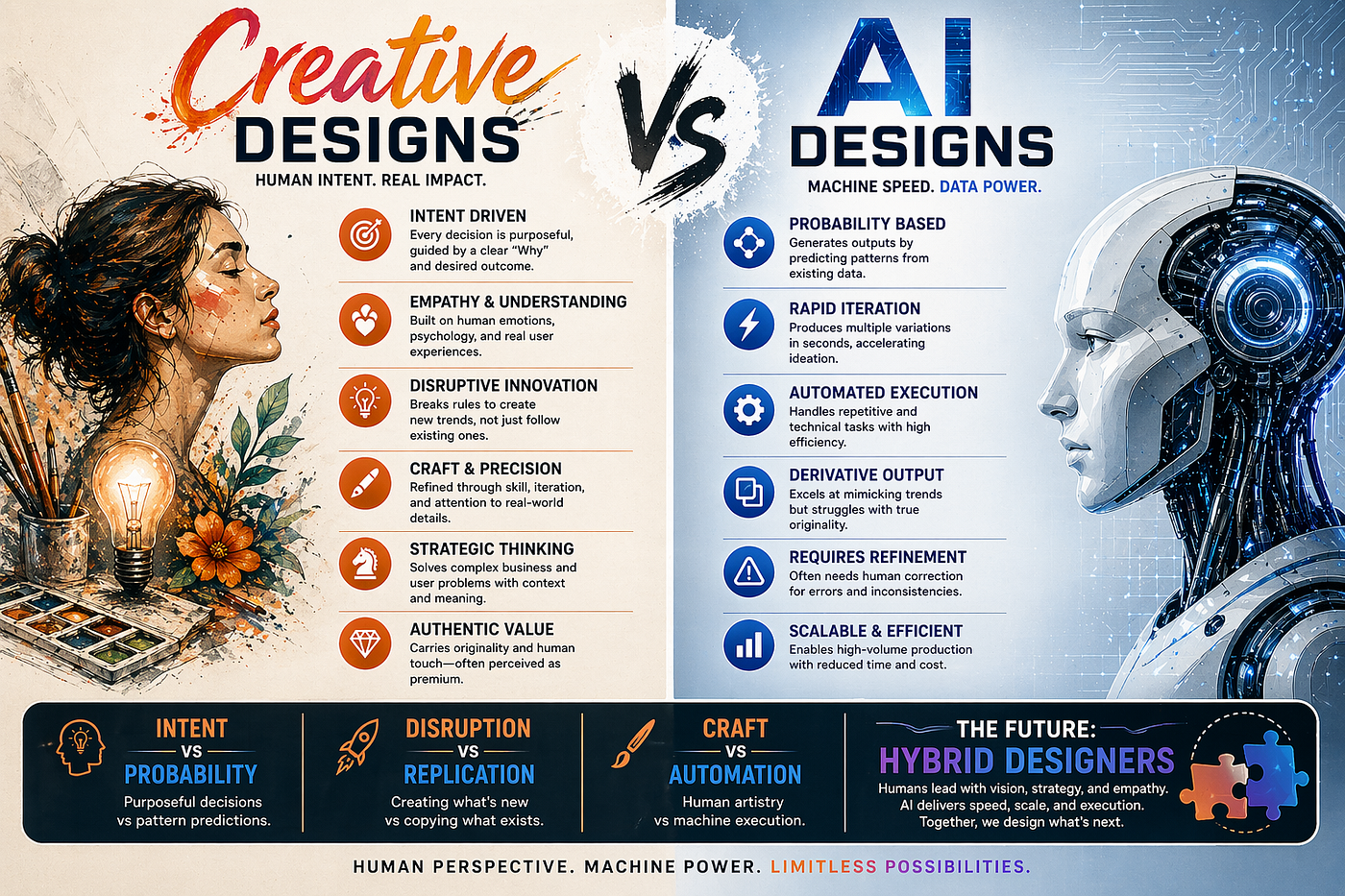
The Core Philosophy: Intent vs. Probability
At the heart of Creative Design is intentionality. Every curve, colour choice, and typographic decision made by a human designer is rooted in a “Why.” Humans design with a specific emotional goal or a complex business problem in mind. We use empathy to understand how a user feels when they interact with a brand.
In contrast, AI Design operates on probability. An AI doesn’t “know” what a brand feels like; it predicts which pixels should come next based on billions of data points it has seen before. It is a process of sophisticated mimicry rather than conscious creation. While the human starts with a blank canvas and a dream, the AI starts with a prompt and a library of existing human history.
Efficiency: The Speed of Thought
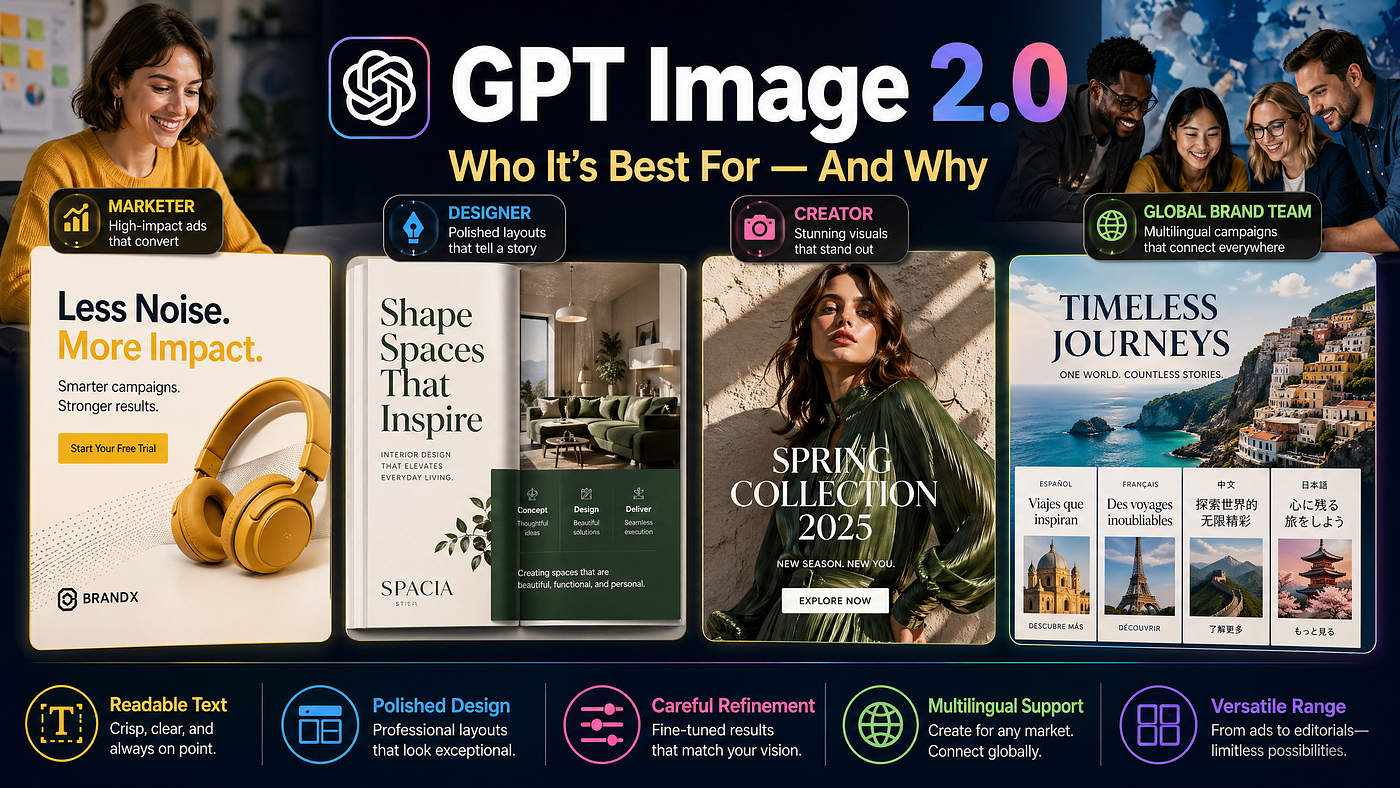
Where AI undeniably wins is in the realm of Efficiency and Scalability.
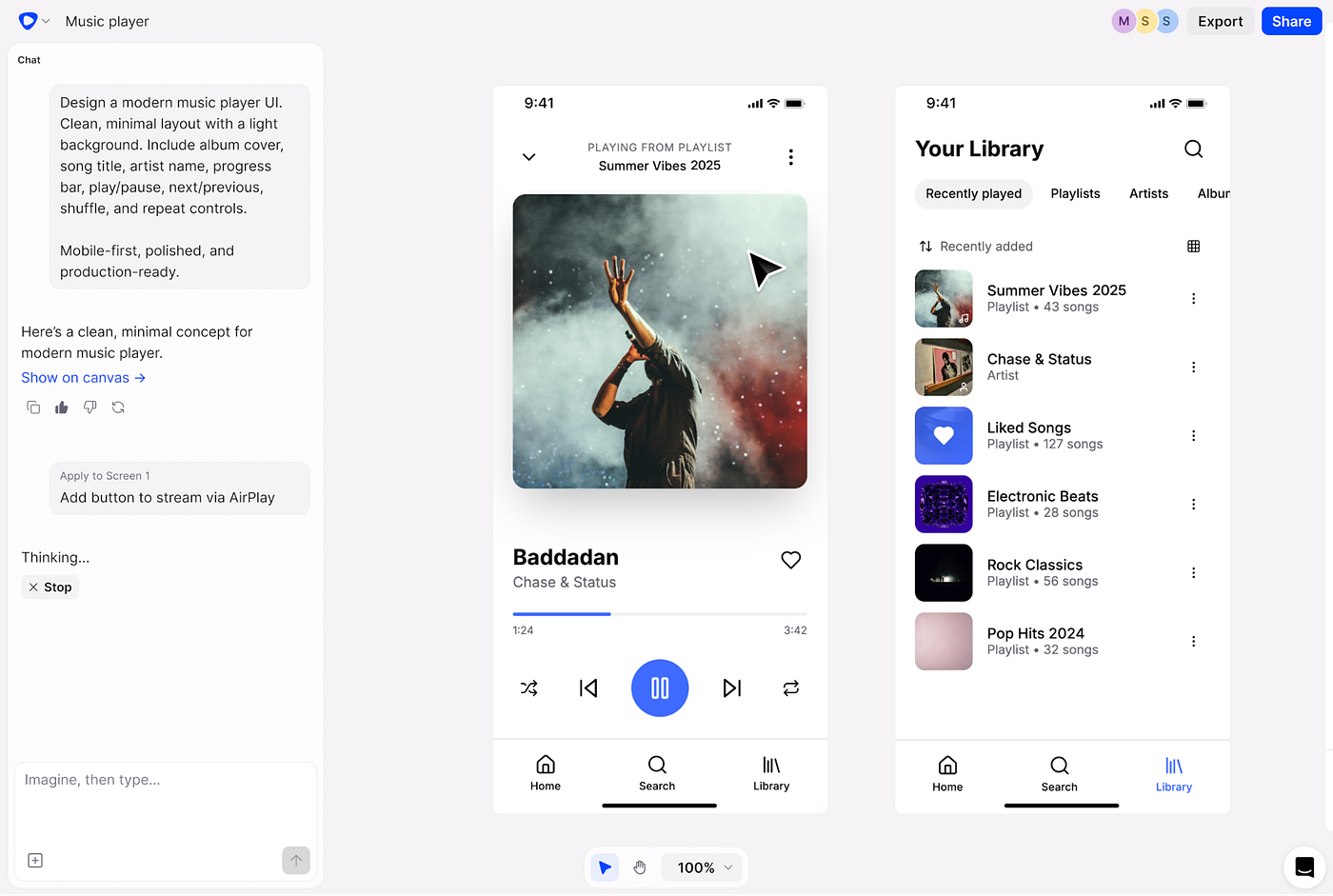
- Rapid Iteration: A human designer might take two days to provide three distinct logo concepts. An AI can generate fifty variations in thirty seconds.
- Technical Labour: Tasks that used to be tedious — such as removing backgrounds, upscaling low-resolution images, or creating complex textures — are now instantaneous.
However, this speed comes with a “refinement tax.” While AI is fast, it often lacks the precision required for final production. A human designer is still needed to fix “hallucinations” — those strange, illogical glitches where AI fails to understand the physics of the real world.
The Innovation Gap: Derivative vs. Disruptive
AI is fundamentally a retrospective tool. Because it is trained on existing data, it is excellent at replicating current trends but struggles to invent entirely new ones. It can give you a “perfect” version of what already exists.
Human Creativity is disruptive. Humans have the unique ability to break the rules intentionally. History’s greatest design movements, from the chaotic energy of Punk posters to the sleekness of Modernism, came from humans reacting against the status quo. AI cannot react against the world; it can only summarise it.
The Ethics of the Prompt
The rise of AI brings a complex layer of Legal and Ethical challenges.
- Copyright: Since AI is trained on the work of millions of human artists, the question of ownership remains murky. Who owns the output — the person who wrote the prompt, the company that built the AI, or the collective artists who unknowingly provided the training data?
- Value of Craft: As the market becomes flooded with “instant” designs, the value of manual digital craftsmanship may shift. Much like hand-stitched leather or organic food, “Human-Made Design” may become a premium label for brands seeking authentic connection.
The Collaborative Future
The most successful designers of the future won’t be those who fight AI, nor those who rely on it entirely. Instead, they will be Hybrid Designers.
We are moving into an era where AI handles the “heavy lifting” of execution, while the human acts as the Creative Director. The human provides the strategy, the empathy, and the final “spark” of genius, while the AI provides the speed and scale to bring those visions to life. In this new landscape, the most valuable tool isn’t just a stylus or a prompt — it’s the human perspective that guides them both.
메타데이터
- post_id
- cfdf052000e8
- slug
- creative-designs-vs-ai-designs-cfdf052000e8
- url
- https://medium.com/@sandip.kr/creative-designs-vs-ai-designs-cfdf052000e8
- canonical_url
- https://medium.com/@sandip.kr/creative-designs-vs-ai-designs-cfdf052000e8
- author_url
- https://medium.com/@sandip.kr
- status
- ok
- fetched_at
- 2026-06-09 15:37:30