Beyond the Fin: The Ocean Horror Movies You Should Watch This Shark Week
Why Shark Week is the perfect time to look beyond sharks
Beyond the Fin: The Ocean Horror Movies You Should Watch This Shark Week
Why Shark Week is the perfect time to look beyond sharks

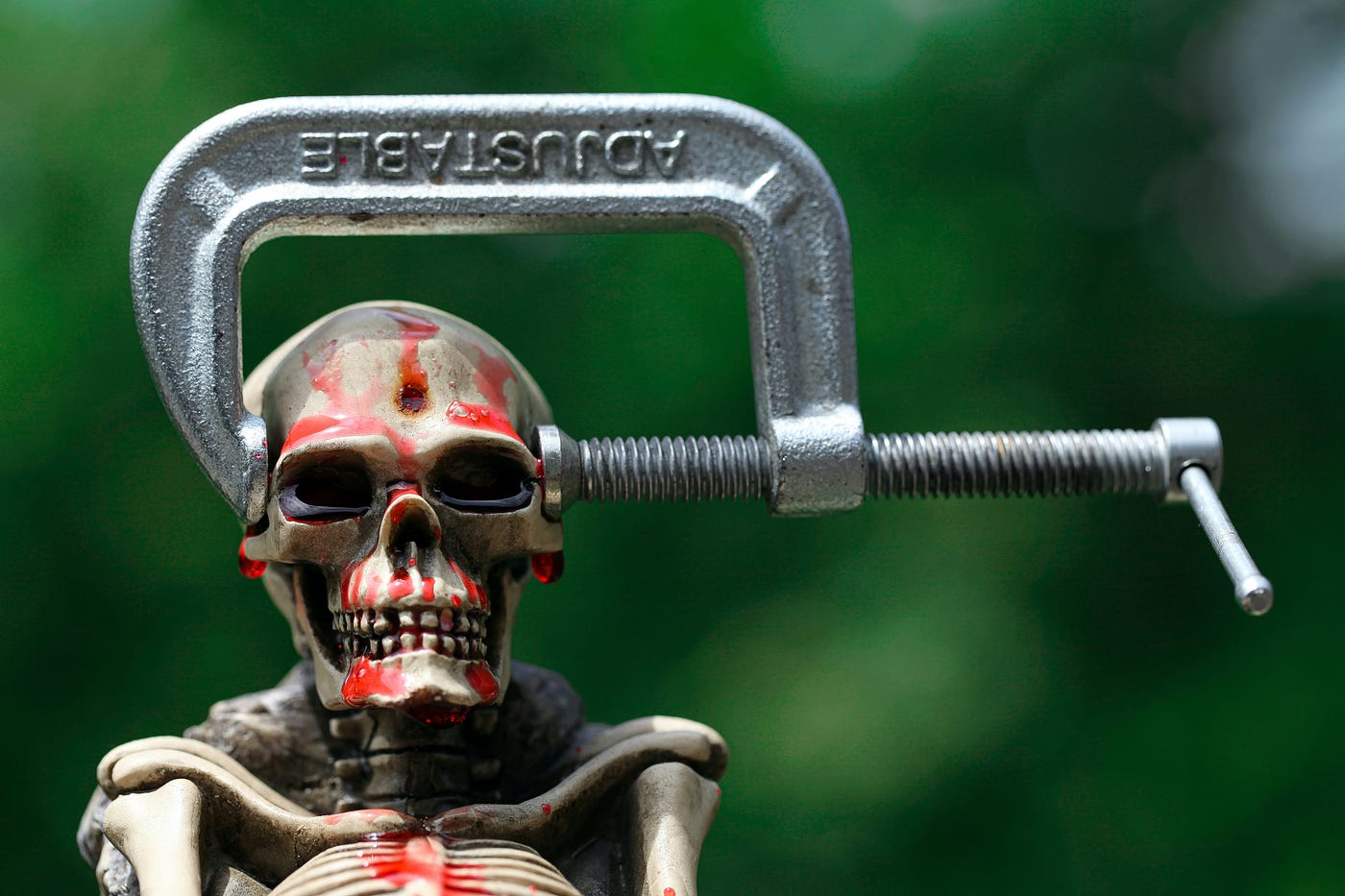
Photo by Leigh Miles on Unsplash
Every July, Shark Week dominates network Television for an entire week. Fans tune in to see their TV screens filled with fins slicing through the water, dramatic music swells, and up-close shots of the ocean’s most feared creature.
Since its debut in 1988, Shark Week has evolved into one of television’s longest-running summer traditions. At its best, it encourages viewers to appreciate sharks as misunderstood predators essential to healthy marine ecosystems, rather than the bloodthirsty monsters Hollywood often depicts. Indeed, horror movies have spent decades teaching a slightly different lesson… the sea has never needed sharks to be terrifying.
Long before giant CGI predators became summer blockbusters, filmmakers understood that the ocean itself is one of Earth’s last true frontiers. We have mapped the surface of Mars more thoroughly than parts of our own oceans. Miles beneath the waves exist crushing pressures, perpetual darkness, strange life forms, and thousands of shipwrecks serving as underwater graveyards. Remove the sharks, and very little about the ocean becomes less frightening.
The best ocean horror films recognize this. Although sharks may occasionally appear, they are rarely the point. Instead, these stories tap into something much older than a fear of being bitten; humanity’s fear of venturing into a place that has never truly belonged to us.

Film Still from YouTube, Ghost Ship (2002)
If there’s one scene that instantly proves ocean horror doesn’t need sharks, it’s the opening of Ghost Ship.
A glamorous ocean liner drifts through the night while passengers dance beneath strings of lights. Moments later, a snapped steel cable slices across the ballroom, instantly turning a celebration into one of horror cinema’s most unforgettable opening sequences. And even though this sequence lasts only a few minutes, it establishes something larger than supernatural scares. Ships are isolated worlds, carrying their own histories, tragedies, and secrets across endless water. Once the survivors board the abandoned vessel, they discover that the ocean has preserved every terrible event that unfolded aboard.
Unlike haunted houses rooted to one location, haunted ships drift endlessly, disconnected from civilization. The sea becomes an accomplice, swallowing evidence and allowing ghost stories to float indefinitely beyond the horizon.

Film Still from YouTube, The Deep House (2021)
One of the most inventive entries in modern ocean horror is The Deep House. Instead of setting its haunted house on a lonely hill or deep in the woods, the filmmakers sink it beneath the surface of an isolated French lake.
The premise follows a pair of urban explorers and documentary filmmakers who specialize in diving through submerged ruins. After hearing rumors about a perfectly preserved house resting at the bottom of the lake, they descend with cameras rolling, expecting to capture breathtaking footage for their channel. What they find instead is a home frozen in time, complete with furniture, family photographs, religious iconography, and a disturbing, buried history that refuses to let them resurface.
At first glance, the setting almost feels peaceful. Sunlight filters through the murky water, dust-like particles drift through each room, and the silence is strangely beautiful. That beauty quickly turns suffocating. Unlike a traditional haunted house, every decision carries life-or-death consequences because these characters can’t simply sprint out the front door when something goes wrong. Every movement burns precious oxygen. Every wrong turn risks stirring silt that destroys visibility. Every panic attack accelerates the countdown on their air supply.
The ghosts may drive the story, but the water amplifies every scare. Walls become obstacles, staircases become underwater mazes, and escape routes suddenly require perfect planning instead of instinct. Even before the supernatural elements emerge, the setting creates an overwhelming sense of claustrophobia. It’s one of the few horror films that combines two of humanity’s oldest fears — the haunted house and drowning — into a single nightmare.

Film Still from YouTube, The Bay (2012)
One of the smartest modern examples of ecological horror is The Bay.
Presented as recovered news footage, police recordings, cellphone videos, and emergency broadcasts, the film reconstructs a Fourth of July celebration that spirals into catastrophe after a parasitic isopod mutates because of environmental pollution. The creatures invade human bodies from the inside, producing some genuinely unsettling body horror.
What makes the film effective are the unavoidable parasites along with the true villains responsible for environmental neglect. The outbreak stems from years of pollution and ecosystem imbalance rather than an ancient curse or mythical creature. The horror grows from the uncomfortable realization that humanity created the conditions for its own disaster.
It’s a fitting reminder during Shark Week that while sharks often receive the blame for making the ocean dangerous, humans have done far more damage to the sea than sharks ever have.
Film Still from Underwater (2020), 20th Century Fox
Despite centuries of exploration, scientists have mapped only a fraction of the world’s oceans in detail. The deepest regions remain largely unexplored, making them empty canvases for horror filmmakers, and Underwater embraces this uncertainty.
Set inside a deep-sea drilling facility after a devastating earthquake, the film follows engineer Norah Price (Kristen Stewart) and a handful of survivors as they attempt to reach safety across the ocean floor. Every step is constrained by crushing water pressure, failing equipment, and the knowledge that rescue may never arrive.
The film wisely resists showing its creatures too early. Instead, the overwhelming darkness does much of the work. The audience spends much of the runtime wondering, “What could possibly survive in an environment so hostile to human life?” When the truth finally emerges, the creatures feel less like invaders and more like ancient residents disturbed by unwelcome guests.
The horror comes from realizing humanity is hopelessly outmatched in a place where we were never meant to exist.

Film Still from YouTube, Triangle (2009)
Ocean horror frequently overlaps with psychological horror because isolation has a way of distorting reality. One film that illustrates this is Triangle.
The story begins simply enough. Jess joins several friends for a day of sailing before an unexpected storm overturns their yacht. They climb aboard an apparently abandoned ocean liner, hoping to find help. Instead, reality begins folding in on itself.
Without spoiling the film’s central mystery, Triangle transforms open water into a liminal space where time, memory, and identity become unreliable. The endless horizon removes every point of reference. There is nowhere to run, nowhere to orient yourself, and no certainty that escape is even possible.

Film Still from YouTube, The Last Voyage of the Demeter (2023)
And sometimes the danger isn’t beneath the waves… sometimes it buys passage.
The Last Voyage of the Demeter expands one of Dracula’s shortest chapters into a full Gothic survival story. Based on “The Captain’s Log,” the film follows the merchant ship Demeter as it transports mysterious cargo from Transylvania to London. One by one, crew members disappear during the voyage until they realize they are trapped aboard with a very hungry, blood-sucking vampire. The premise works because ships eliminate every traditional escape route.
Only miles of open water and a predator that grows stronger each night. The film blends classic vampire mythology with maritime horror, proving that confinement can be just as terrifying as whatever waits beneath the surface.

Film Still from YouTube, Blood Vessel (2019)
If vampires sailing on the ocean rocks your boat, isolation becomes even more oppressive in Blood Vessel.
Set during the final days of World War II, the story follows Allied survivors drifting helplessly on a lifeboat before discovering an apparently abandoned Nazi ship. Their relief quickly fades as they realize the vessel harbors something far more dangerous than enemy soldiers and what they have planned for the war.
Film Still from The Abyss (1989), 20th Century Fox
Then there is The Abyss.
Although James Cameron’s film leans more toward science fiction than traditional horror, its greatest strength lies in the same fear driving many of these movies: humanity confronting something it cannot comprehend. After an American submarine sank in the Caribbean, a civilian drilling crew joins a military recovery mission and encounters an intelligence unlike anything they expected.
Likewise, Sea Fever (2019) traps a marine biology student aboard an Irish fishing trawler after the vessel encounters an unknown bioluminescent organism. Rather than relying on jump scares, the film builds dread through scientific uncertainty. No one aboard fully understands what they are facing, how it spreads, or whether quarantine will save them.
Both films understand a simple truth: The scariest thing in the ocean isn’t always the creature, but the realization that we know almost nothing about the environment surrounding us.
Shark Week has helped millions of viewers appreciate animals that have long been misunderstood, and that may be its greatest accomplishment. The annual event reminds us that sharks deserve respect, not irrational fear, while encouraging conservation of species that play an essential role in healthy oceans.
“Ocean Horror” tells a complementary story, and reminds us that the sea itself remains one of the last truly wild places on Earth. Its darkness conceals history, tragedy, strange life, impossible depths, and mysteries that may never be fully understood. Sharks are only one thread woven into that larger tapestry.
That may be why these films linger long after the credits roll and why, rather than leaving us afraid of sharks, they leave us wondering what else is still waiting beneath the waves.
메타데이터
- post_id
- d01ed9d71b5a
- slug
- beyond-the-fin-the-ocean-horror-movies-you-should-watch-this-shark-week-d01ed9d71b5a
- url
- https://fanfare.pub/beyond-the-fin-the-ocean-horror-movies-you-should-watch-this-shark-week-d01ed9d71b5a
- canonical_url
- https://fanfare.pub/beyond-the-fin-the-ocean-horror-movies-you-should-watch-this-shark-week-d01ed9d71b5a
- author_url
- https://medium.com/@scaremesam
- status
- ok
- fetched_at
- 2026-07-13 06:23:13