EIGHT THOUSAND YEARS OF PEARLS
The Remarkable Journey of the World’s Most Enduring Natural Gem
EIGHT THOUSAND YEARS OF PEARLS
The Remarkable Journey of the World’s Most Enduring Natural Gem

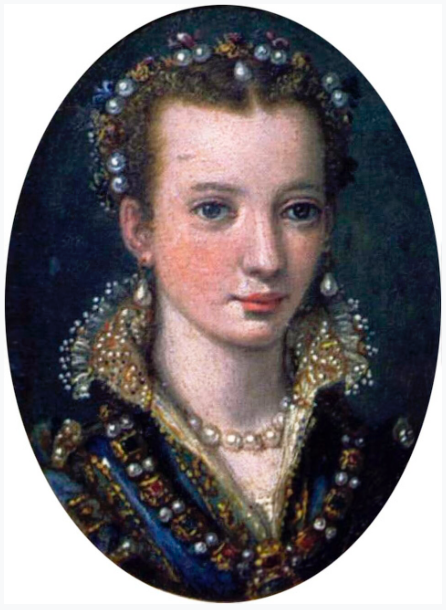
Jacopo Zucchi
Eight thousand years ago, someone picked up a pearl.
We do not know their name. We do not know the language they spoke or the stories they told. We know only that they lived on a small island in the Persian Gulf and that the pearl they possessed survived.
Today, archaeologists call it the Abu Dhabi Pearl. Discovered on Marawah Island in the United Arab Emirates and dated to approximately 5800–5600 BCE, it is the oldest known natural pearl ever found.
Its significance extends beyond gemology.
That tiny sphere of nacre was already valued by human beings thousands of years before the rise of the great cities of Mesopotamia, before the first pharaohs ruled along the Nile, and before many of the monuments that define ancient civilization had been imagined. The world’s oldest pearl reminds us that humanity’s fascination with natural pearls reaches not merely into history, but into prehistory.
The story of pearls begins there — in shallow coastal waters where people first learned that something extraordinary occasionally emerged from the hidden life of an oyster.

Abu Dhabi Pearl
The Sea Roads of Dilmun
As maritime trade expanded across the ancient Near East, pearls became part of a network of exchange that linked distant cultures through the waters of the Persian Gulf.
At the center of that world stood Bahrain.
Known in antiquity as Dilmun, Bahrain occupied a strategic position between Mesopotamia, Arabia, and the Indus Valley. For more than four thousand years, merchants, sailors, and traders crossed these waters carrying textiles, timber, copper, spices, and luxury goods between some of the earliest civilizations on Earth.
Among the most prized products of the Gulf were natural pearls.
Generations of divers descended from wooden boats using little more than stone weights, nose clips, and remarkable breath control. Their knowledge was passed through families and communities whose lives revolved around the rhythms of the sea.
The pearl beds surrounding Bahrain became so important that pearling remained the foundation of the island’s economy well into the twentieth century. Long before the modern era, Gulf pearls had already earned a reputation for exceptional luster and beauty, reaching markets from the Middle East to South Asia and beyond.
For millennia, Bahrain served as one of the world’s great crossroads of pearl commerce.

India’s Sacred Pearls
While Bahrain’s pearl heritage was rooted in trade, India developed an equally profound relationship with pearls through religion, literature, kingship, and commerce.
Some of the earliest references appear in the Atharva Veda, one of India’s ancient sacred texts. There, pearls and pearl shells were associated with protection, prosperity, longevity, and divine favor. They were not merely decorative objects. They possessed symbolic and spiritual significance.
Along India’s southern coast, the Gulf of Mannar became one of the most productive pearl fisheries in history.
Near the ancient Pandya port of Korkai, generations of divers harvested oysters from waters that supplied regional kingdoms and international markets alike. By the early centuries of the Common Era, these fisheries were already famous throughout the Indian Ocean world.
Indian rulers incorporated pearls into courtly display, ceremonial dress, and systems of prestige. Sanskrit literature preserved terminology for pearl varieties, pearl fisheries, pearl necklaces, and pearl classification, revealing a sophisticated understanding of natural pearls that developed over centuries.
What makes India’s relationship with pearls particularly remarkable is its breadth. Pearls appear simultaneously in sacred texts, royal courts, maritime commerce, and artistic traditions. Few cultures integrated them so completely into everyday and ceremonial life.

The Pearl and the Dragon
In China, pearls acquired a different meaning.
They became symbols.
For centuries, Chinese artists depicted dragons pursuing luminous pearls through clouds and across the heavens. The image appears on ceramics, robes, paintings, and imperial objects. To later generations, the pearl represented wisdom, prosperity, spiritual power, or cosmic energy.
Whether interpreted literally or symbolically, the association reveals the elevated status pearls held within Chinese culture.
By the Qing Dynasty, pearls had become important elements of imperial court dress. Elaborate court necklaces known as chaozhu were worn by members of the imperial family and high-ranking officials during formal ceremonies. Carefully arranged strings of pearls formed part of a visual language that communicated authority, hierarchy, and proximity to the emperor.
Unlike many regions that relied primarily on marine pearls, China also developed a long association with freshwater pearls. This expanded the cultural reach of pearls beyond coastal fisheries and helped ensure their presence within Chinese society for centuries.
In China, pearls occupied a space between adornment and symbolism. They were valued not only for their appearance, but for what they represented.

Rome and the Unique One
By the first century CE, natural pearls had become fixtures of elite life across much of the known world.
Roman writers reserved a special word for extraordinary specimens: unio.
The term referred to a pearl so exceptional that it stood apart from all others. It was, quite literally, “the unique one.”
The Roman scholar Pliny the Elder described pearls as among the most esteemed luxury possessions of his era. They appeared in aristocratic households, public ceremonies, diplomatic gifts, and displays of status. Exceptional specimens attracted attention not merely because of their beauty, but because of their rarity.
The famous story of Cleopatra dissolving a pearl during a banquet survives from this world of conspicuous display and symbolism. Whether every detail is accurate is less important than the fact that contemporaries found the story believable. The audience already understood that an exceptional pearl represented immense value concentrated into a single object.

A Global Trade Before the Modern World
By the late fifteenth century, natural pearls were already part of one of humanity’s oldest continuous luxury trades.
Pearls moved through the markets of Hormuz, Cairo, Venice, Calicut, Canton, and countless ports in between. Divers harvested them from the Persian Gulf, the Gulf of Mannar, the Red Sea, and other fisheries scattered across the Indian Ocean world.
Merchants carried them across deserts, through mountain passes, and aboard ships that crossed entire oceans.
Religions incorporated them into symbolism and ritual. Rulers displayed them as expressions of legitimacy and power. Artists transformed them into motifs that survived for centuries. Scholars recorded them in texts. Traders built fortunes around them.
Few natural objects traveled so widely through so many cultures for so long.
Then, at the close of the fifteenth century, European explorers encountered another great pearl-producing region in the warm waters of the southern Caribbean.
The discovery would connect the ancient pearl world of the East with the emerging Atlantic world of the West and open a new chapter in the global history of natural pearls.

Jacopo Zucchi
That story belongs to a later newsletter.
But it began with a pearl found eight thousand years ago beside the waters of the Persian Gulf — and with humanity’s enduring fascination for one of nature’s most remarkable creations.
Watch the full documentary episode: The World History of Pearls https://youtu.be/FzW3GUzypG4
Listen on Spotify: https://open.spotify.com/episode/0qCt8rCq66YRjPzY4on7gI
Explore the research archive: https://www.thecolumbuspearls.com
NaturalPearls #PearlHistory #WorldHistory #Gemology #AncientHistory #Archaeology #MaritimeHistory #IndianOceanTrade #PearlDiving #LuxuryHistory
메타데이터
- post_id
- d04618c4e2d5
- slug
- eight-thousand-years-of-pearls-d04618c4e2d5
- url
- https://medium.com/@petervonperle/eight-thousand-years-of-pearls-d04618c4e2d5
- canonical_url
- https://medium.com/@petervonperle/eight-thousand-years-of-pearls-d04618c4e2d5
- author_url
- https://medium.com/@petervonperle
- status
- ok
- fetched_at
- 2026-06-10 21:21:38