Why SEO in 2025 Is All About User Intent (Not Just Keywords)
There was a time when SEO felt like a game of hide and seek. Toss in the right keywords, cross your fingers, and hope Google finds you…
Why SEO in 2025 Is All About User Intent (Not Just Keywords)
There was a time when SEO felt like a game of hide and seek. Toss in the right keywords, cross your fingers, and hope Google finds you. Fast forward to 2025, and things look very different. Today, SEO is no longer just about keywords. It’s about you, more specifically. What do you want when you type something into that search bar?
So, what changed? Why is user intent now the king of the SEO hill? Let’s break it down.
Search Engines Grow Smarter
Search engines don’t just read words anymore. They understand the meaning. When someone types “best running shoes,” they might want to buy, compare, or read reviews. Google now tries to figure that out before showing results. It’s not just matching the words anymore — it’s matching the why behind them.
That shift has shaken up how websites rank. If a site talks about “best running shoes” but doesn’t actually answer what the reader wants, it drops. If another site dives into user-friendly comparisons, benefits, and purchase options, it climbs.
Keywords Still Matter — But They’re Not Enough
Let’s be clear: keywords still play a role. They help search engines get the general idea. But in 2025, stuffing a page with keywords just doesn’t cut it. Google and other engines now ask: “Is this content helpful? Does it match what the user actually meant?”
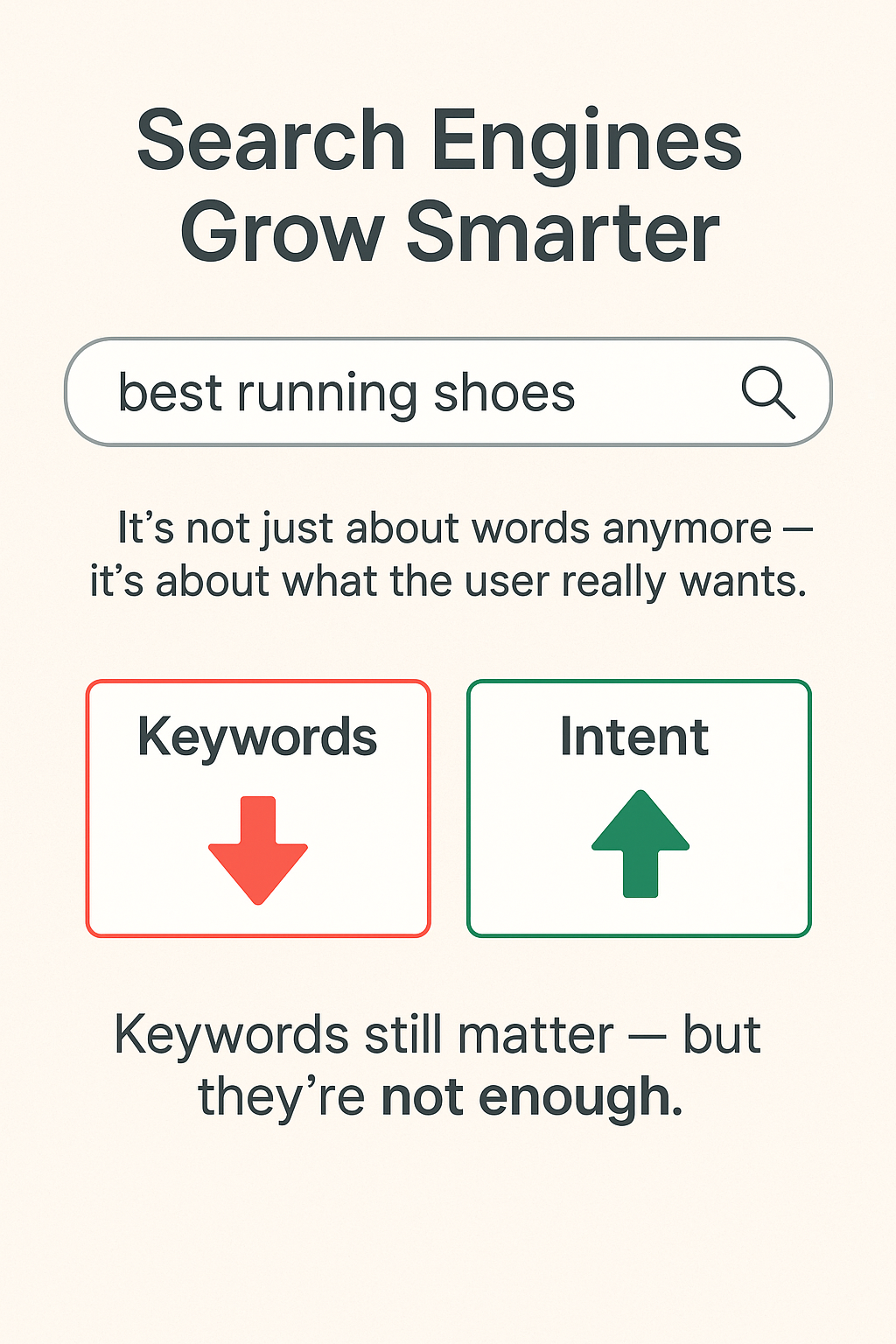
This is where **SEO & Search Trends** show a huge turn. Rankings favor the pages that meet intent, not just the ones that match words. So, a keyword gives the search engine a clue. But intent tells the full story.
Different Types of Intent (And Why They Matter)
To really get user intent, it helps to know there are a few types:
Informational: The user wants to learn. Think “how to bake sourdough.” Navigational: The user wants a specific site. Like typing “Nike official site.” Transactional: The user is ready to buy. Search terms like “buy noise-canceling headphones.”

If your content doesn’t match the type of intent, it won’t rank, no matter how many keywords it has. Say someone wants to buy a phone, but your article just gives a history of smartphones. That’s a mismatch. The visitor leaves. Google notices. Your rankings slide.
Content That Speaks to People (Not Robots)
A huge trend in **SEO & Search Trends** is this: people-first content wins. In the past, SEO content often sounded robotic. Sentences felt stiff. Phrases were awkwardly repeated. It wasn’t enjoyable to read. But now, search engines reward content that keeps people on the page. That means natural flow, helpful tips, and easy-to-read sections.
When content feels human, visitors stay longer. They click more. They trust what they’re reading. And guess what? Google loves that. In 2025, real engagement beats keyword cramming every single time.
How Intent Shapes the Customer Journey
Let’s take an example. Imagine someone typing in “best productivity apps for students.”
That person isn’t ready to buy yet. They’re looking. Comparing and hoping for suggestions. If your content jumps straight into pricing or links to buy, you miss the mark. You didn’t meet their intent.
Now imagine a blog that lists the top apps, explains features, shares student reviews, and offers free trial info. That page matches the user’s journey. So, it ranks higher. It guides the user step-by-step. And when they’re ready to purchase, they’ll remember where they got the helpful info.
Voice Search Changes the Game
In 2025, voice search will continue to rise. People ask Alexa, Siri, or Google questions as they talk to a friend. They don’t say, “cheap flights Asia.” They say, “What’s the cheapest way to fly to Asia this summer?”
This natural language is full of intent. Search engines analyze tone, phrasing, and urgency. That’s why your content needs to sound like a real conversation. If it reads like someone talking out loud, it performs better.
That’s another push away from keywords alone. Voice search demands an answer to the full question, not just the core terms.
Google’s Core Updates Reflect the Shift
Look at recent updates in SEO & Search Trends, and the message is clear: Google wants sites that answer people’s questions fully and directly.
Each update focuses more on quality, relevance, and trust. The more your content aligns with what the user needs at that moment, the better your chances of ranking. That’s why so many marketers now focus on understanding the searcher’s mindset before writing a single word.
Data Helps — but Intent Leads
Yes, data tools still matter. Analytics show which pages get traffic. Heatmaps show where users click. Keyword tools highlight volume. But even with all this data, what makes a difference is your ability to think like your audience.
Ask: “What does someone really want when they search this?” Then answer that — clearly and completely.
That small shift changes everything. Instead of writing to check boxes, you write to help. And that helps build trust, brings traffic, and wins over both readers and search engines.
Real Engagement, Not Just Clicks
In 2025, SEO success isn’t about getting clicks. It’s about keeping attention. Did the user stay? Did they scroll? Did they click on something else? Those are signals that matter more than ever.
A catchy headline is great, but what follows has to be delivered. Search engines now measure the time users spend on your page. A fast bounce hurts. A scroll and click tells Google you’re doing something right.
So, how do you keep people engaged? You answer their questions. You guide them step-by-step. You add value without fluff.
The Rise of Intent-Driven Strategies
Smart marketers are shifting fast. They no longer build pages just for keywords. They build them for people.
They start with a question or problem. Then, they dig into what the audience really needs. From there, they build content that answers those needs — clearly, honestly, and in plain language.
These strategies line up perfectly with current SEO & Search Trends. In 2025, it’s the brands that get personal and stay useful that lead the way.
What You Can Do Right Now
Ready to keep up with **SEO in 2025**? Here’s a simple checklist to focus on user intent:
Know your audience — What are they struggling with? What do they really want? Map the intent — Is the search informational, navigational, or transactional? Write naturally — Sound like a human. Avoid jargon. Keep it clear and simple. Cover the topic fully — Don’t leave questions unanswered. Use real headlines — Ask questions your audience would ask. Then answer them. Watch behavior — Track time on the page and bounce rate. Tweak the content to improve.
Final Thoughts
SEO in 2025 looks very different from what it was even a few years ago. But at its core, it’s actually more human than ever. It’s not about tricking the algorithm. It’s about helping the person behind the search.
If your content connects, informs, and respects user intent, you’ll win. And not just in rankings but in trust, loyalty, and real results.
So, the next time you sit down to create a page or write a blog, think less about keywords and more about the person reading it. That’s the heart of modern SEO. That’s where the future leads.
And yes — it’s already here.
메타데이터
- post_id
- d05253313081
- slug
- why-seo-in-2025-is-all-about-user-intent-not-just-keywords-d05253313081
- url
- https://medium.com/@Geek_tech/why-seo-in-2025-is-all-about-user-intent-not-just-keywords-d05253313081
- canonical_url
- https://medium.com/@Geek_tech/why-seo-in-2025-is-all-about-user-intent-not-just-keywords-d05253313081
- author_url
- https://medium.com/@Geek_tech
- status
- ok
- fetched_at
- 2026-07-19 14:09:49