The Invisible Threat: Particles
In laboratories and high-tech facilities, environmental stability often determines success or failure. Whether in semiconductor wafer…
The Invisible Threat: Particles
In laboratories and high-tech facilities, environmental stability often determines success or failure. Whether in semiconductor wafer fabrication, biopharmaceutical research, or precision machinery testing, the presence of microscopic airborne particles can trigger a chain of issues. These nearly invisible particles are small enough to escape detection, yet powerful enough to affect product quality, equipment lifespan, and the accuracy of experimental results.
The True Face of Particles: The Unseen Source of Contamination
Why Particle Monitoring Is Critical to Laboratory and Equipment Stability
Particles are solid or liquid substances suspended in air or fluids, ranging from a few nanometers to hundreds of micrometers in size. In laboratories, they may originate from human movement, clothing fibers, paper dust, or air leakage from outside. Within equipment, they often come from metal wear, lubricant vapor, coolant evaporation, or mechanical vibration. Although invisible to the naked eye, once their concentration accumulates beyond a certain level, they can significantly impact both equipment and processes.
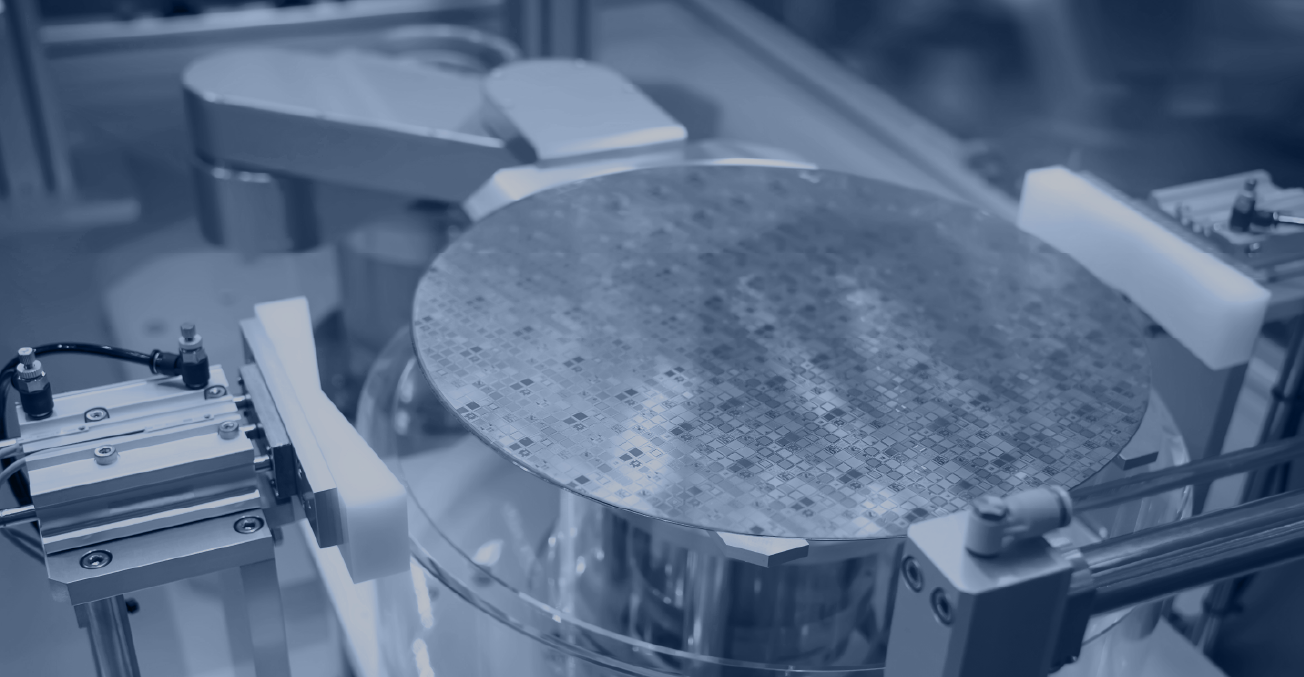
In cleanroom environments, particle concentration control is considered one of the most crucial environmental factors. A single 0.5 μm particle can cause a short circuit on a semiconductor wafer; a speck of dust can defocus a microscope lens or disrupt the optical path of an analyzer. Though seemingly insignificant, particle contamination is often the origin of quality issues in precision industries.

Why Particle Monitoring Matters
In any environment requiring stable conditions, monitoring is the first line of defense for maintaining order.
The importance of particle monitoring lies in three main aspects:
- Real-time Reflection of Environmental Conditions — Particle concentration fluctuates with personnel movement, equipment operation, and air conditioning cycles. Periodic testing can miss short-term contamination spikes. Continuous monitoring provides ongoing data, allowing for immediate detection of anomalies.
- Protection for Processes and Equipment — When concentration levels rise, systems can alert operators to take corrective actions — such as replacing filters, halting operations, or inspecting seals — before damage occurs.
- Quality and Compliance Assurance — In industries like pharmaceuticals, electronics, and healthcare, standards such as ISO 14644 and GMP require particle data logging. Without continuous monitoring, results and products cannot be traced to verified environmental conditions, undermining credibility.
The Particle Storm Within Laboratories
Particle contamination in laboratories often has indirect but devastating effects.
For example, in chemical or pharmaceutical experiments, airborne particles can enter samples, altering reaction ratios and reducing reproducibility. In biological research, they may carry bacteria or proteins, causing cross-contamination. Even in physical or material analysis, particle deposition can distort measurements.
A scanning electron microscope with dust on its lens loses clarity; a spectrometer with a dusty filter suffers light attenuation and data drift.
Excessive particles can also degrade cleanroom classifications, forcing shutdowns for re-cleaning and re-certification — an especially costly process for labs that must maintain strict cleanliness over long periods.

The “Dust Effect” Inside Machines
In semiconductor manufacturing equipment, particles settling on wafers cause defects and yield loss. In laser cutting or optical measurement devices, they interfere with light transmission and shift focal points. In automated systems, particles infiltrating bearings or rails increase friction, accelerate wear, and may even lead to mechanical seizure.
An even greater danger lies in electrostatic discharge (ESD). Many particles carry electrical charges. When accumulated near sensitive circuits, they can trigger ESD events that damage sensors or chips. These incidents occur suddenly and are difficult to trace without continuous particle monitoring and recording.

The Chain Reaction of Excessive Particle Concentration
High particle density signifies not only dirtiness, but also potential reliability, safety, and cost risks:
- Reduced Heat Dissipation Efficiency — Particles adhering to heat sinks or cooling channels form insulating layers, causing temperature rise and overheating.
- Increased Mechanical Wear — When particles enter bearings or slides, they disrupt lubrication, raise friction, and accelerate deterioration.
- Optical and Sensor Errors — Dust on mirrors or lenses alters reflection and transmission, skewing detection results.
- Pollution Spread — Without proper airflow design, particles circulate through systems, contaminating adjacent zones.
- Health and Safety Risks — In environments with chemicals or bio-materials, airborne particles can carry toxic or explosive substances, posing inhalation and combustion hazards.
Thus, excessive particle concentration is not merely a cleanliness issue — it represents a systemic reliability threat.
How to Properly Monitor Particle Concentration

The first step in particle monitoring is selecting the right detection method.
Good-Tech employs semiconductor laser-based particle sensors, offering high precision and real-time detection of specific particle sizes.
Placement of monitoring points is equally critical. In laboratories, sensors are installed at air inlets, exhaust vents, and work zones to ensure air purity. Within equipment, sensors are placed in ducts, before and after filters, and inside chambers to compare differential concentrations and pinpoint contamination sources.
Next comes threshold configuration. According to ISO 14644 or equipment manufacturer standards, warning and danger levels can be set. When concentrations exceed warning levels, operators are alerted; when danger levels are reached, systems can automatically trigger shutdowns or exhaust operations to prevent equipment damage.
The Real Benefits of Particle Monitoring
Once a monitoring system is implemented, the most visible outcome is improved stability. Environmental changes are now quantified rather than estimated. When particle concentration starts to rise, corrective action can be taken early — before product defects or equipment failure occur.
Since particle-induced wear and clogging are chronic damages, prevention is far more economical than repair. Monitoring helps break the costly cycle of damage and maintenance.
Moreover, compliance and quality verification improve through continuous data logging, offering traceable proof of long-term environmental control. Maintenance can also become condition-based, guided by real data rather than fixed schedules.
From Experience to System: Institutionalizing Particle Monitoring
Implementing a particle monitoring mechanism is not just about installing sensors — it’s about establishing a systematic discipline.
From design, operation, to maintenance, every stage must align:
- Design Phase: Consider airflow patterns, pressure differentials, and filter efficiency to prevent accumulation.
- Operational Phase: Enforce gowning, dust control procedures, and personnel flow management.
- Maintenance Phase: Regularly clean filters, ducts, and equipment interiors, and calibrate sensors.
Once systematized, particle monitoring becomes part of daily management rather than a reactive task. Such institutional control ensures long-term environmental stability and minimizes hidden risks.
Controlling Particles Is Controlling Stability
Particle pollution is an invisible yet powerful force. It makes no sound and often causes no immediate failure, but over time, it erodes performance, skews results, and jeopardizes safety. Monitoring particles is not just about meeting standards — it’s about understanding environments, preventing problems, and protecting trust.
In both advanced laboratories and production lines, particle monitoring should never be treated as an auxiliary process — it is an integral part of operational quality. Only when every particle is seen, recorded, and controlled can we truly say:
“This environment is stable, reliable, and safe.”
메타데이터
- post_id
- d053f79f0ea0
- slug
- the-invisible-threat-particles-d053f79f0ea0
- url
- https://medium.com/@service_36837/the-invisible-threat-particles-d053f79f0ea0
- canonical_url
- https://medium.com/@service_36837/the-invisible-threat-particles-d053f79f0ea0
- author_url
- https://medium.com/@service_36837
- status
- ok
- fetched_at
- 2026-07-28 05:13:04