Quantum Computers in 2026: Real Machines, Cloud Access, and the Race to the Future
For decades, quantum computers belonged to the world of science fiction. They were described as machines capable of solving impossible…
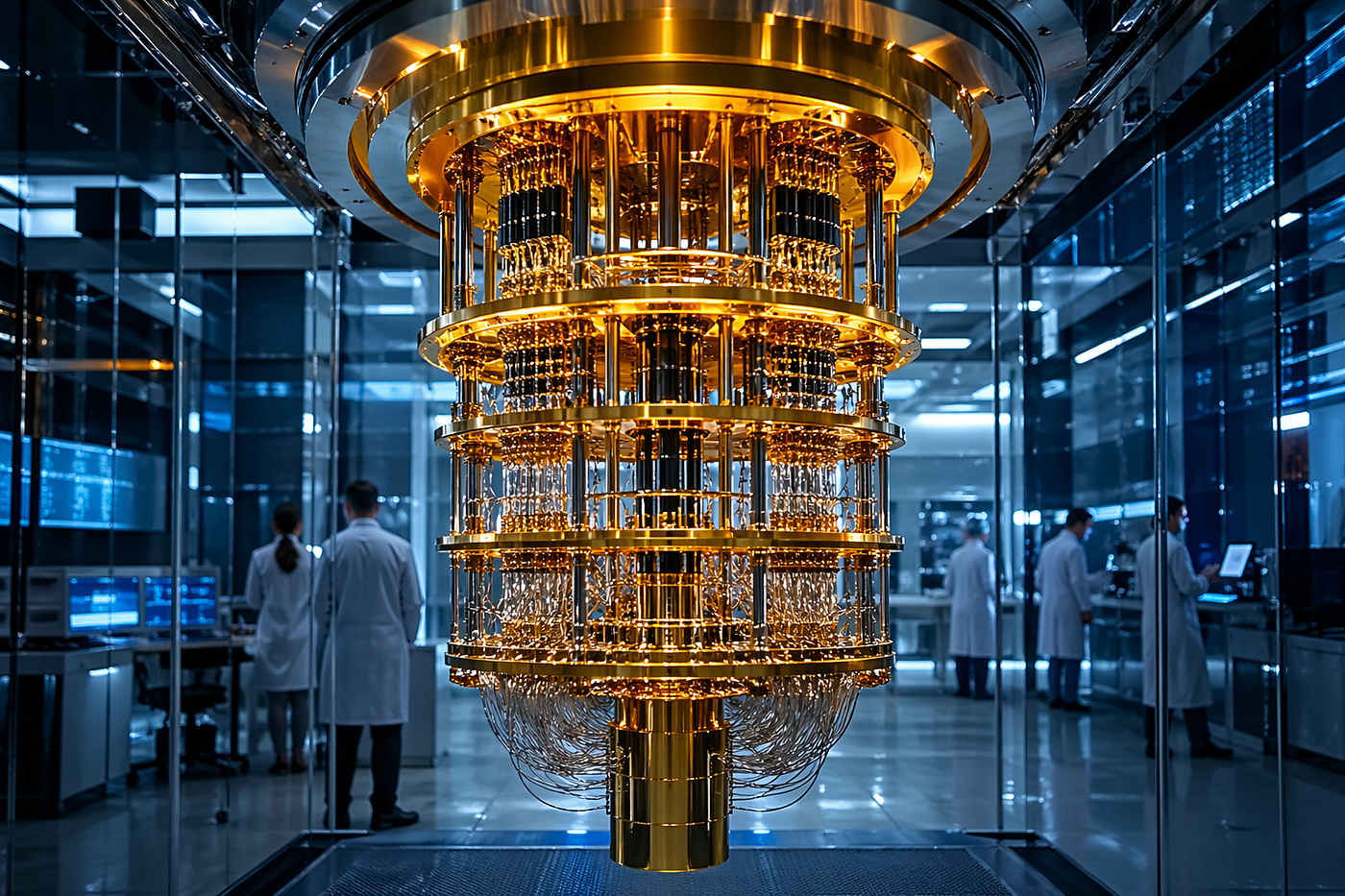
Advanced quantum computer inside a research laboratory
Quantum Computers in 2026: Real Machines, Cloud Access, and the Race to the Future
For decades, quantum computers belonged to the world of science fiction. They were described as machines capable of solving impossible problems, revolutionizing medicine, and changing cybersecurity forever.
In 2026, quantum computing is no longer a distant dream. It exists in laboratories, cloud platforms, and commercial experiments. While we are still early in the journey, the pace of progress is accelerating — and the race to dominate this technology has already begun.
What Exactly Is a Quantum Computer?
Traditional computers use bits, which represent either 0 or 1.

Modern infographic showing classical bit vs quantum qubit
Quantum computers use qubits, which behave very differently. Thanks to principles from quantum physics, qubits can exist in multiple states at once through something called superposition.
Think of it like this:
- A normal bit is a light switch: ON or OFF
- A qubit is more like a spinning coin: heads, tails, and states in between while spinning
Quantum systems also use entanglement, where qubits become connected in ways classical computers cannot replicate.
This allows certain calculations to be approached in entirely new ways.
Why Is Everyone Talking About Quantum Computing in 2026?
Because quantum technology has moved from theory into real engineering.
Some of the world’s biggest companies are investing heavily:
- IBM building increasingly powerful quantum processors
- Google researching error correction and quantum advantage
- Microsoft developing new quantum architectures
- Amazon offering cloud access through Braket
- IonQ and Rigetti pushing commercial systems

Global quantum computing race
Governments are also investing billions into national quantum programs.
This is no longer a niche research topic. It is becoming a strategic technology.
Can You Use a Quantum Computer Today?

Yes — but not in the way most people imagine.
You cannot buy a quantum laptop or install one in your office. These systems require specialized environments, often operating at temperatures colder than outer space.
However, you can access quantum machines through the cloud.
Popular platforms include:
- IBM Quantum Experience
- Amazon Braket
- Microsoft Azure Quantum
Developers, students, and researchers can run experiments remotely using real quantum hardware or simulators.
That means the quantum era has already started — just through the internet first.
What Can Quantum Computers Actually Do?
This is where expectations need realism.
Quantum computers are not better at everything. They are useful for specific classes of problems.
Potential high-impact areas include:
1. Drug Discovery
Simulating molecules is extremely difficult for classical machines. Quantum systems may help design new medicines faster.
2. Material Science
Better batteries, superconductors, and industrial materials could emerge from quantum simulation.
3. Logistics Optimization
Delivery routes, airline scheduling, and supply chains involve enormous combinations. Quantum methods may improve efficiency.
4. Finance
Risk modeling, portfolio optimization, and market simulations are active research areas.
5. Artificial Intelligence
Hybrid AI + Quantum systems are being explored for advanced optimization and pattern analysis.
What Quantum Computers Still Cannot Do
Despite the hype, today’s machines are limited.
They cannot:
- Replace your personal computer
- Run games better than gaming PCs
- Instantly hack every password
- Solve all problems magically
- Operate without errors at scale
- Replace cloud data centers anytime soon
Most current devices are still in the early experimental stage.
This era is often called NISQ (Noisy Intermediate-Scale Quantum), meaning useful progress with imperfect hardware.
The Biggest Challenge: Errors
Quantum states are fragile.
Tiny vibrations, heat, noise, or interference can disturb calculations. This is why error correction is one of the most important engineering problems in the field.
Whoever solves scalable, reliable quantum error correction first may lead the industry.
That is why so much attention is focused not just on qubit count — but on quality.
Who Is Winning the Quantum Race?
There is no single winner yet.
Different companies lead in different areas:
- IBM — ecosystem and hardware roadmap
- Google — research breakthroughs
- Microsoft — software stack and architecture bets
- IonQ — trapped-ion systems
- D-Wave — annealing-based systems
This race may resemble the early internet era: many players now, dominant platforms later.
What Happens Next?

Future world powered by quantum computing
In the Next 5 Years
Expect:
- Better hardware stability
- More cloud access
- Stronger developer tools
- Real enterprise pilot projects
In the Next 10 Years
Possible outcomes:
- Quantum advantage in specialized business tasks
- Breakthroughs in chemistry and materials
- Stronger cybersecurity transition needs
Long Term
Quantum computing could become a critical layer of global infrastructure — used quietly behind the scenes.
Should Developers Care Right Now?
Yes.
Even if mass adoption takes time, early understanding creates advantage.
Areas worth learning:
- Quantum algorithms
- Optimization methods
- Python quantum SDKs
- Hybrid AI systems
- Post-quantum cybersecurity
Just as cloud computing once looked niche, quantum may follow a similar path.
Final Thoughts
Quantum computing is no longer about whether it is real.
It is real now — just early, expensive, and specialized.
The next decade will determine whether it becomes one of humanity’s most transformative tools or remains a niche technology for advanced science.
Either way, the world is already preparing for it.
The future of computing may not be smaller chips. It may be entirely different physics.
메타데이터
- post_id
- d079e93cd89b
- slug
- quantum-computers-in-2026-real-machines-cloud-access-and-the-race-to-the-future-d079e93cd89b
- url
- https://medium.com/@anandkumar.maltech/quantum-computers-in-2026-real-machines-cloud-access-and-the-race-to-the-future-d079e93cd89b
- canonical_url
- https://medium.com/@anandkumar.maltech/quantum-computers-in-2026-real-machines-cloud-access-and-the-race-to-the-future-d079e93cd89b
- author_url
- https://medium.com/@anandkumar.maltech
- status
- ok
- fetched_at
- 2026-07-23 18:10:52




