The nonsense of categorical thinking
Misandry, war, abuse, discrimination, and evolution
The nonsense of categorical thinking
Misandry, war, abuse, discrimination, and evolution
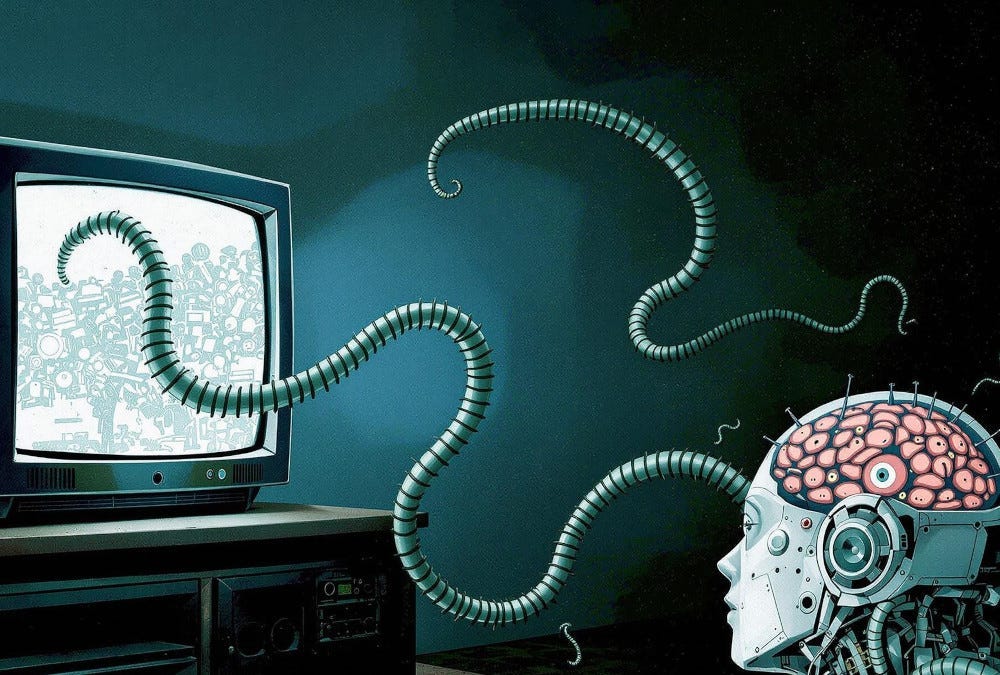
We all do it, all the time, and mostly unconsciously. Whatever we do, wherever we are, it happens. Thinking in categories. That object is food. That food is a fruit. That fruit is an apple. Apples are things I like. I’m hungry. That apple is for me. I will eat the apple. Normally, we don’t experience these processes, they bypass our awareness. In all likelihood, we just look at the apple, pick it up, and begin eating. Sometimes, we might not even realize we’re doing it because autopilot has taken over. We read a newspaper. We text a friend. We watch TV. The apple disappears.
If we did process our categorical thinking consciously, it would make life quite difficult because it takes effort, time, and energy. Indeed, much of childhood is based on learning categories, assimilating which things go into the various groups, which groups go together, which are subsets of larger groups, and acting accordingly. Putting the round things into the round holes, and the square ones into the square holes. Unfortunately, this isn’t an intelligent process, it’s an evolutionary one. We do what is practical and efficient. If it works, it goes, it doesn’t matter whether it’s right. So, as we age and discover that the tomato is a fruit, we still call it a vegetable. It makes sense because we treat it like one. It’s what works, so that’s what sticks.

What’s tomato? Whose side is it on? Who cares?
When it comes to metabolizing the social sphere, our categorical thinking can be quite damaging. Sexism, racism, ableism, lookism, nationalism, sexual discrimination, and so on. It’s our way of putting people, and associated phenomena, into categories. Then, we adopt an attitude in accordance with what we believe to be the right way to behave around ‘that sort’ of person. The problem with this, is that we’re frequently wrong. Not only about the individual we have judged, but also in how we’ve formed the category. However, this weakness in our cognition is protected by emotion, often aggressively. The longer our wayward thinking has worked for us, the harder it gets to change it. This is especially so when we have a strong sense of identity that is linked to various categories. If ‘that sort’ isn’t ‘that sort’, then maybe we aren’t who we thought we were? A scary place to go for many people, some simply don’t have the courage, or self-awareness, to do it.
It gets worse when it comes to the various misinformed attempts to combat discrimination, too. Both males and females are victims of domestic abuse, rape, child abuse, and sexism. Yet, when the issues are addressed, categories, and statistics, are sliced and diced, charted, and tallied. The larger the statistic, the greater the debate. Except, every time we do that, we create another form of minority discrimination against those we’re silent about, and we fortify and normalize the very process of categorical thinking. Statistics can be helpful in planning services and allocating resources, but in the wider discourse, and in education, they are a means of hiding from the real problem.
The foundation of categorical thinking is evolutionary competition; the desire to access resources. Social connections and ingroup identity are a valuable asset. They can provide a feeling of belonging and safety, lead to opportunities, and grant privileges. This is why some get pushed aside, others judged unworthy, and ‘that sort’ dehumanized and abused. To accept this reality, and to want to tackle it, means to seek the erosion of categorical thinking, dissolving the identities and power structures associated with it. It means abandoning identity, releasing the desire for power, and rethinking what it means to be human. That’s a lot to ask, especially if you’re bombarded with reinforcing input from media, friends, family, and partners.

Evolution is how nature drives categorical thinking to create inter-group competition. It’s not moral. It’s not rational. It’s not intelligent. And it’s going nowhere.
The endemic nature of the problem is exposed, not only by the intractable problems of well-known types of discrimination, but by the continued acceptance of those deemed normal and unproblematic. Women and children are still highlighted when war casualties are reported; they’re framed as more morally valuable than men. I do it myself, it seems to make perfect sense, but it’s not rational, it’s emotional, and a form of misandry. Why is dropping a bomb on a woman or child worse than doing it to a man? That judgement is saying the category of men is worth less than the other categories of people. Yet, if they’re civilians, none of them have likely chosen to be involved in conflict, none will have chosen where, or who, they were born to. And all are likely to have family or friends who will be utterly devastated by their loss. In fact, in many parts of the world, sexism is still the norm, so the man will be the main bread-winner. Losing him will have far worse consequences for those left behind.
Every time we fill in a questionnaire that asks repetitive categorical questions, we reinforce the identity associated with those categories. Nationality. Race. Sex. Gender. Sexual orientation. Age. Education. And so on. Every time a categorical group is mentioned on the news, highlighting the plight of one over another, it reinforces a perception about value, and disregards those not mentioned. However relevant it might seem, the framing of the discourse strengthens the normalization of categorical thinking in a social context. So long as that happens, the problems associated with it will never be tackled effectively. Hostility to the outgroup, and favouritism for the ingroup, will shift form, flowing into categories deemed acceptable to distinguish. Should society, or groups within it, adopt different values, returning to more openly racist, violent, and hostile habits, those energies will flow right back where they came from.
It would be impossible to stop ourselves from perceiving, and using, categories. Although a few do achieve this, in part, through prolonged meditative practice and profound self-awareness. However, much more can be done to elucidate the fundamental biological, social, and psychological forces that underlie our slicing and dicing of the world. But it means taking a long hard look at the animal that we are, and the way we have structured society, and the economy, to pander to the law of the jungle. It requires vigilance to spot those around us who constantly invoke categorical thinking, and to reject adopting it. We can do this with compassion and understanding; acknowledging the competitive animal in each person, and the influence of hormones, fear, low intellect, and Pavlovian conditioning, that drives their behaviour. Importantly, we can find a different way to connect with them, and make them feel valued and safe. Not by abusing others, reducing groups to outcasts, and implicitly claiming supremacy by group affiliation, but by valuing each person for their own unique capacity and presence. And if that doesn’t work, we can walk away, and refuse to fuel the habits of a destructive, collective unconscious.

The destructive, collective unconscious.
Originally published at https://petejorgensen.substack.com.
메타데이터
- post_id
- d07ea2f64c24
- slug
- the-nonsense-of-categorical-thinking-d07ea2f64c24
- url
- https://medium.com/@peterjorgensenuk/the-nonsense-of-categorical-thinking-d07ea2f64c24
- canonical_url
- https://medium.com/@peterjorgensenuk/the-nonsense-of-categorical-thinking-d07ea2f64c24
- author_url
- https://medium.com/@peterjorgensenuk
- status
- ok
- fetched_at
- 2026-06-21 12:17:11