A Conversation with the Voices of Tintin
Mark Jane and Matthew Biddulph discuss bringing Thompson and Tintin to life in the English adaptation of Cigars of the Pharaoh.
A Conversation with the Voices of Tintin
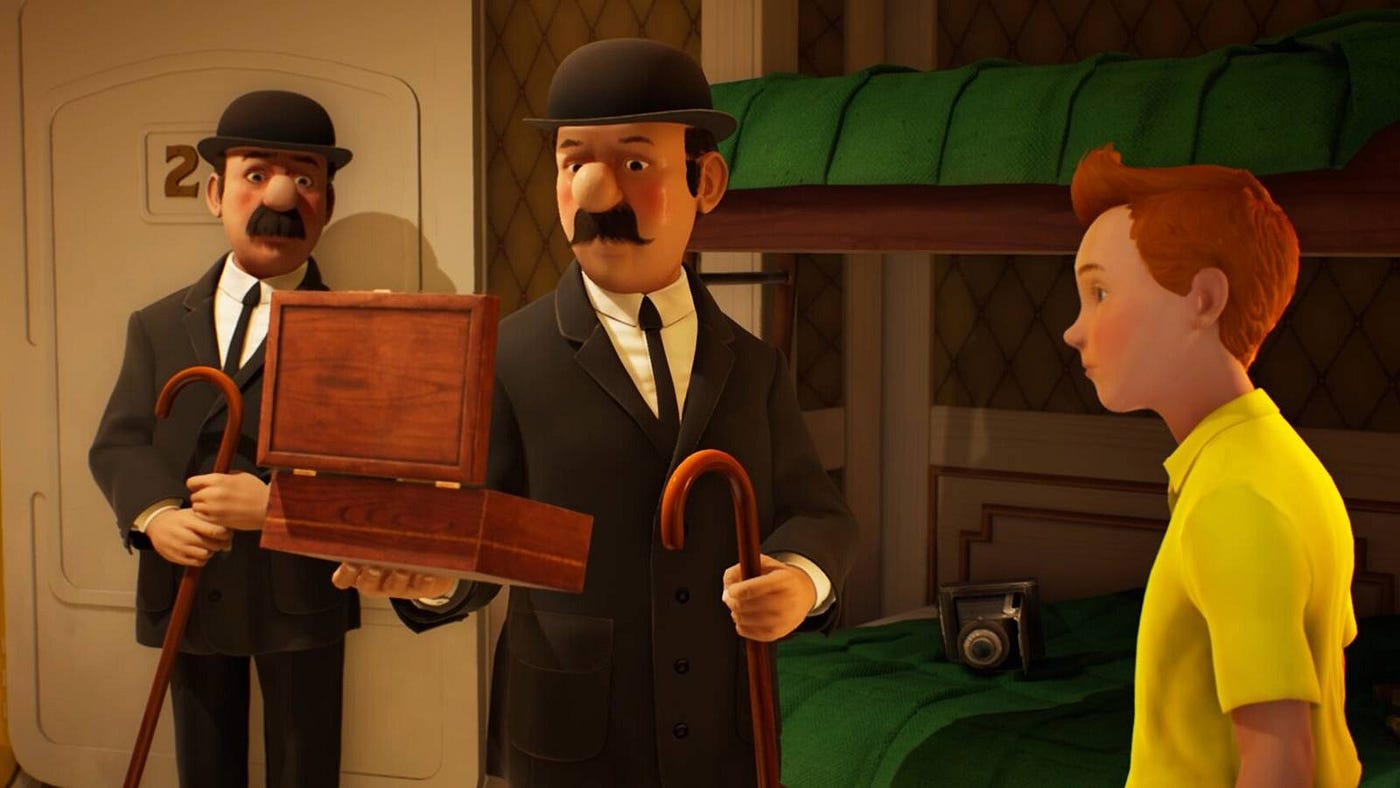
An in-game scene from Tintin: Cigars of the Pharaoh, featuring Tintin alongside Thompson and Thomson during one of the adventure’s shipboard sequences.
Fun fact: I was once told I’m Tintin’s second-favorite journalist — right behind Tintin himself. Well, technically, one of the actors who played him said it. And yes, I may have requested the line. But it was spoken in the universe, and that counts for something.

Official key art for Tintin: Cigars of the Pharaoh, reimagining the classic adventure for modern audiences.
In 2023, Tintin: Cigars of the Pharaoh was released. To say it was met with mixed to low reviews at launch would be an understatement. Tintin fans awaited the game with bated breath, only to be met with a title that wasn’t quite ready for release. Technical glitches and performance issues overshadowed its ambition.
Fortunately, the developers worked to patch and improve the experience. Later ports — particularly on the Nintendo Switch and PlayStation 5 — performed better and were received more positively. Still, the early reception impacted momentum, including plans for a teased sequel based on The Blue Lotus.
However, from the very beginning, one aspect of the game was consistently praised: the voice cast. Across early reviews and continuing into later retrospectives, the English performances were highlighted as a standout strength.
I had the honor of speaking with Mark Jane, who portrayed Thompson, and Matthew Biddulph, who voiced Tintin himself.
Mark Jane: Bringing Thompson to Life

Mark Jane, who voices Thompson in Tintin: Cigars of the Pharaoh, pictured next to his animated counterpart from the game.
I first sat down with Mark Jane, who shared that when he initially arrived to audition, he wasn’t sure which character he would be reading for. During his session with casting director Doug, he was asked to try Thompson — and Doug immediately responded positively to his interpretation.
The turnaround was quick. Mark noted he didn’t have much time to deeply study previous portrayals of Thompson. Instead, he leaned on instinct, his theater background, and his improvisational training to craft something uniquely his own.
Mark explained that this role differed from many of his other voice acting jobs. In addition to being told who the character was, he was shown visual references of what the characters were experiencing in certain scenes. That visual context helped shape his performance and comedic timing.
He was encouraged to lean into a refined, old-fashioned English accent — the kind often associated with formality and upper-class polish. Mark pointed out that characters with that tone are frequently cast as villains, as the accent can come across as pompous or arrogant. This time, however, he got to use that vocal style in service of a heroic and comedic character, which he found refreshing.
He also discussed the concept of the “mid-Atlantic” accent often used in voice acting — a hybrid tone sitting somewhere between American and British English. For Tintin, however, he was able to use his theater training and improvisation skills to have fun with the character and lean into the established rhythm of Thompson and Thomson’s perfectly synchronized dynamic.
Mark shared that he was surprised and delighted to learn a new Tintin game was being created. While recognizing Tintin’s strong French-speaking roots, he appreciated that the game would receive a full English voice cast for a worldwide release.
He acknowledged that Tintin has faced criticism in more recent years, particularly surrounding some of the earlier stories and conversations about Hergé’s past. However, he emphasized that Tintin remains an important character when handled thoughtfully. He also complimented The Adventures of Tintin for helping keep the character relevant for modern audiences.
Mark closed our conversation by praising Doug’s direction, noting that the environment made recording easy and enjoyable. He stated clearly that he would absolutely return to the role if given the opportunity.
Matthew Biddulph: Becoming Tintin

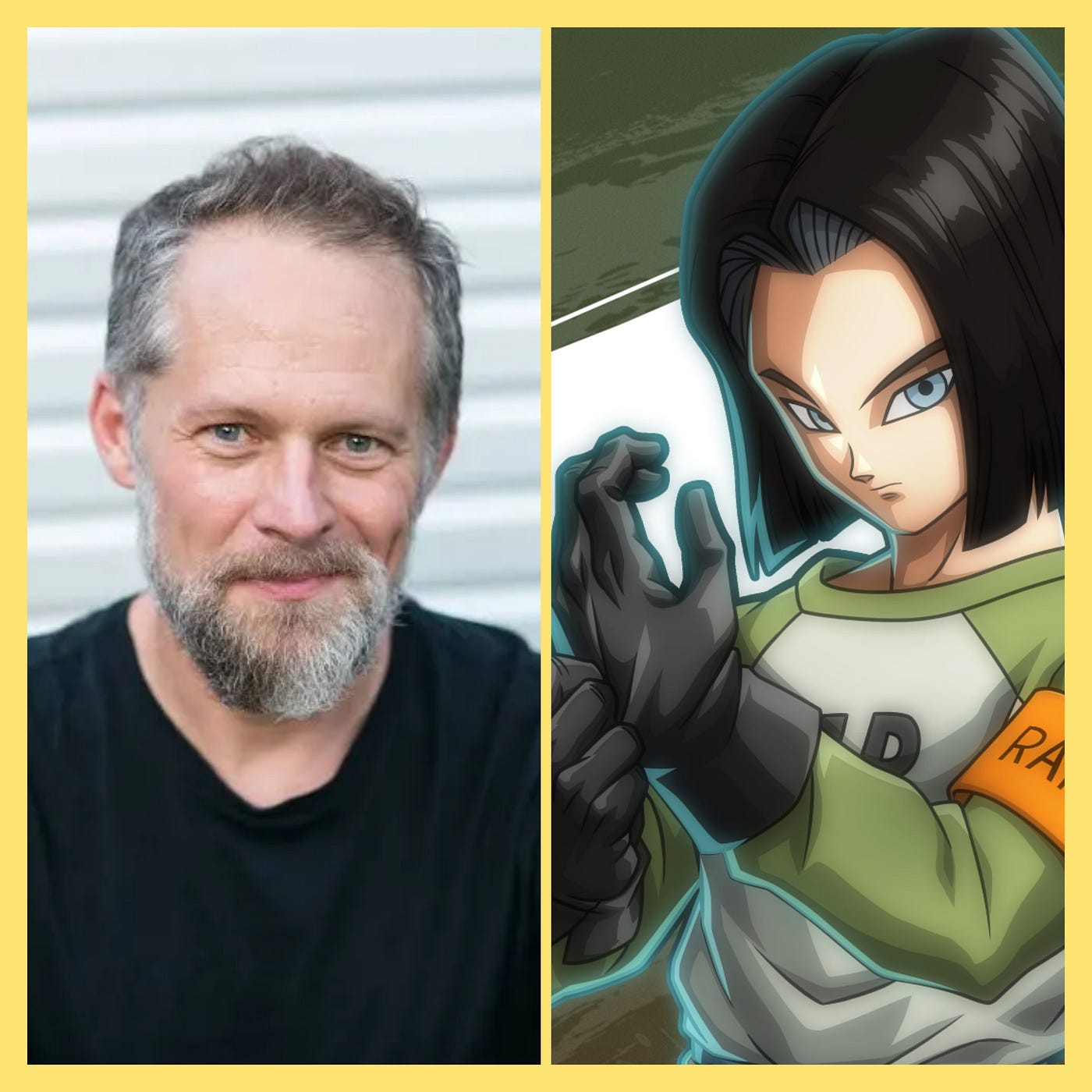
Matthew Biddulph, the English voice of Tintin in Tintin: Cigars of the Pharaoh, alongside his in-game character model.
A few weeks later, I had the opportunity to sit down with Matthew Biddulph, who voiced Tintin in the game. With an extensive background in theater and numerous video game performances, he brought significant experience to the role.
During the casting process, the developers were looking for a voice that stayed close to Jamie Bell’s portrayal in The Adventures of Tintin. While he was still auditioning, they even referenced a tone reminiscent of Daniel Radcliffe during Goblet of Fire — youthful and distinctly British. Once he was officially offered the role, the team refined what would become the game’s version of Tintin: still within that Daniel Radcliffe ballpark, but with more oomph and a stronger sense of self-assuredness. Ultimately, he shaped a balanced interpretation that felt entirely his own.
He spent approximately four weeks recording dialogue — one of the longest English-language performances of Tintin to date. Every hint line, puzzle interaction, game-over variation, and narrative scene required his voice. Nearly every spoken moment in the adventure featured his performance. Biddulph also shared something particularly fascinating about the production process. The game was initially structured around French performances. When the English version was produced, facial motion capture had already been completed by a separate team. Rather than having animation built directly from his own performance, he often had to match existing lip movements created by other performers.
Complicating matters further, the motion capture actors were not native English speakers. Enunciation and emotional emphasis did not always align naturally with English delivery. As a result, much of his work required careful timing and adjustment — almost like dubbing an animated series — balancing performance, clarity, and technical precision while staying true to Tintin. Considering those limitations, it makes the final English performances even more impressive. The fact that the voice cast remained one of the most consistently praised elements of the game speaks directly to the skill and adaptability of the actors involved.
Biddulph also kept a personal copy of Cigars of the Pharaoh nearby during recording. Because the game stayed faithful to the book, it served as a helpful emotional reference point.
When I shared that for my nine-year-old son — whose introduction to Tintin came through this game — Biddulph’s voice is Tintin’s voice, he received the compliment with humility. Though he described it as surreal, he acknowledged that for a new generation, this performance may define the character.
I also told him that despite the game’s mixed technical reviews at launch, the voice cast was praised consistently. He admitted he avoids reading reviews. While actors develop resilience, they are still human. Only later, when fans began reaching out directly, did he realize how positively his performance had been received.
He confirmed he genuinely enjoyed playing the game himself, finishing it in two to three days. Ironically, he laughed about getting stuck on puzzles despite having recorded all the hint lines, particularly during an early ship escape sequence.
He also joked about playing Baldur's Gate 3 and forgetting he voiced a character until hearing his own voice on screen.
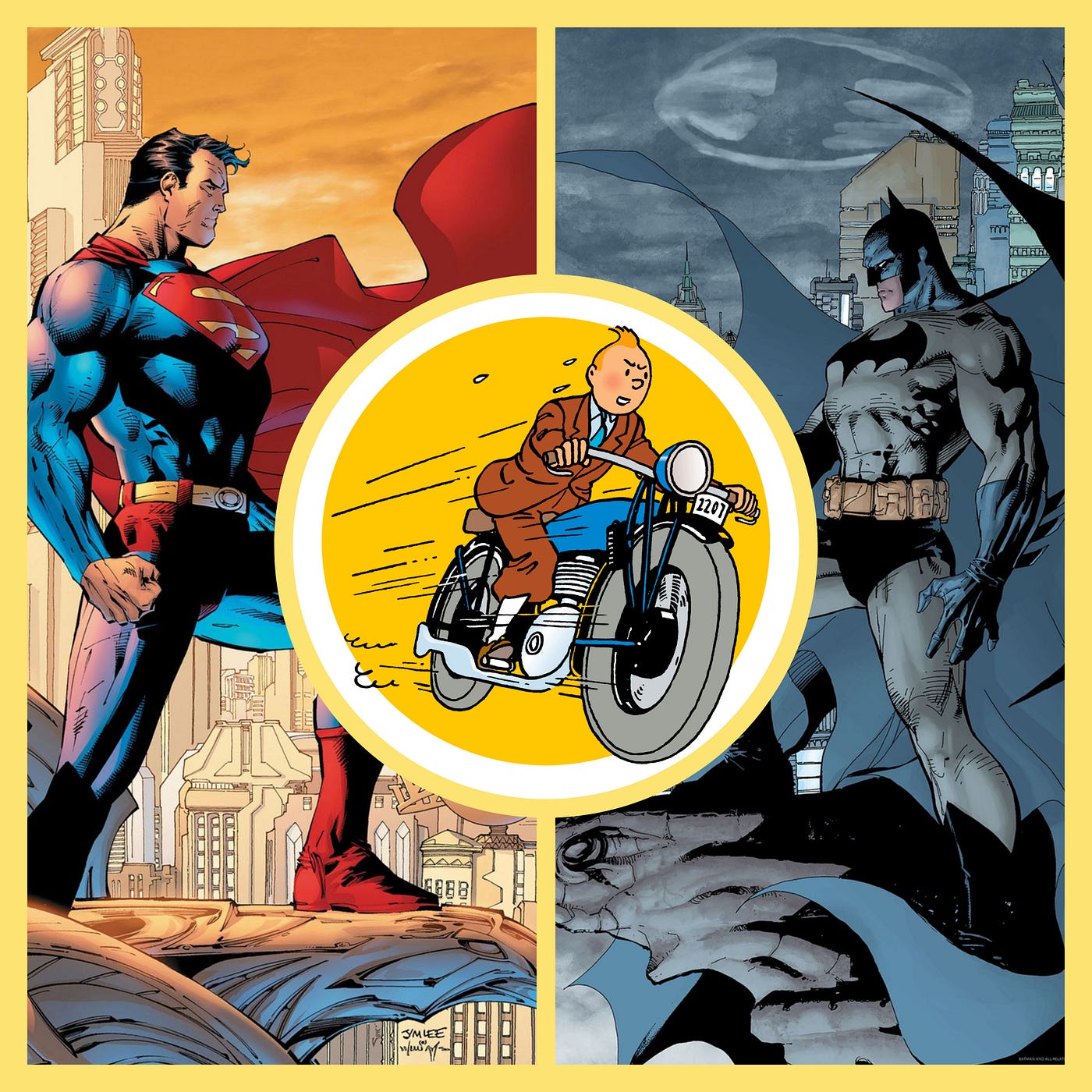
I debated whether to include this final moment, but anyone who has followed my independent journalism journey knows that one of my biggest inspirations has always been Tintin himself.
So, in a rare personal indulgence, I asked Matthew Biddulph if he would humor me by saying — in his Tintin voice — that I was his favorite journalist, second only to Tintin himself.
He laughed. He agreed. And he delivered the line with conviction and charm — officially placing me just behind Tintin in the rankings.
For a middle-aged journalist who grew up reading those adventures, it was a full-circle moment.
Later, I joked with my wife that now that Tintin himself had put me among his favorite journalists, perhaps it was time to retire.
She quickly reminded me that I still have far too many stories left to tell. And she’s right. The next adventure is always waiting.
Author’s Note I would like to personally thank Mark Jane and Matthew Biddulph for their time and generosity. This has been a labor of love — a story I’ve been trying to tell for years.
In addition to my conversations with Mark and Matthew, I had limited communication with other members of the voice cast and the casting director. Due to time constraints — and the fact that this article had been sitting in draft form — it was time to release it. If I’m able to schedule additional interviews, I will gladly revisit this in a follow-up.
Disclaimer These interviews were conducted via Zoom due to geographic and scheduling constraints. Mark Jane and Matthew Biddulph were interviewed separately based on availability. Both were professional and accommodating. All information shared was provided directly by the actors. Minor paraphrasing may have been used for clarity and flow. Images from Tintin: Cigars of the Pharaoh are included under fair use for commentary and journalistic purposes. Headshots of Mark Jane and Matthew Biddulph are used with permission for identification within this article.
메타데이터
- post_id
- d08eeb3838fc
- slug
- a-conversation-with-the-voices-of-tintin-d08eeb3838fc
- url
- https://medium.com/@jessenazario/a-conversation-with-the-voices-of-tintin-d08eeb3838fc
- canonical_url
- https://medium.com/@jessenazario/a-conversation-with-the-voices-of-tintin-d08eeb3838fc
- author_url
- https://medium.com/@jessenazario
- status
- ok
- fetched_at
- 2026-07-14 22:48:41