Key Questions for the U.S. & Iran
Did President Trump Create His Own World in Iran?
Key Questions for the U.S. & Iran
Photo by D koi on Unsplash
Did President Trump Create His Own World in Iran?
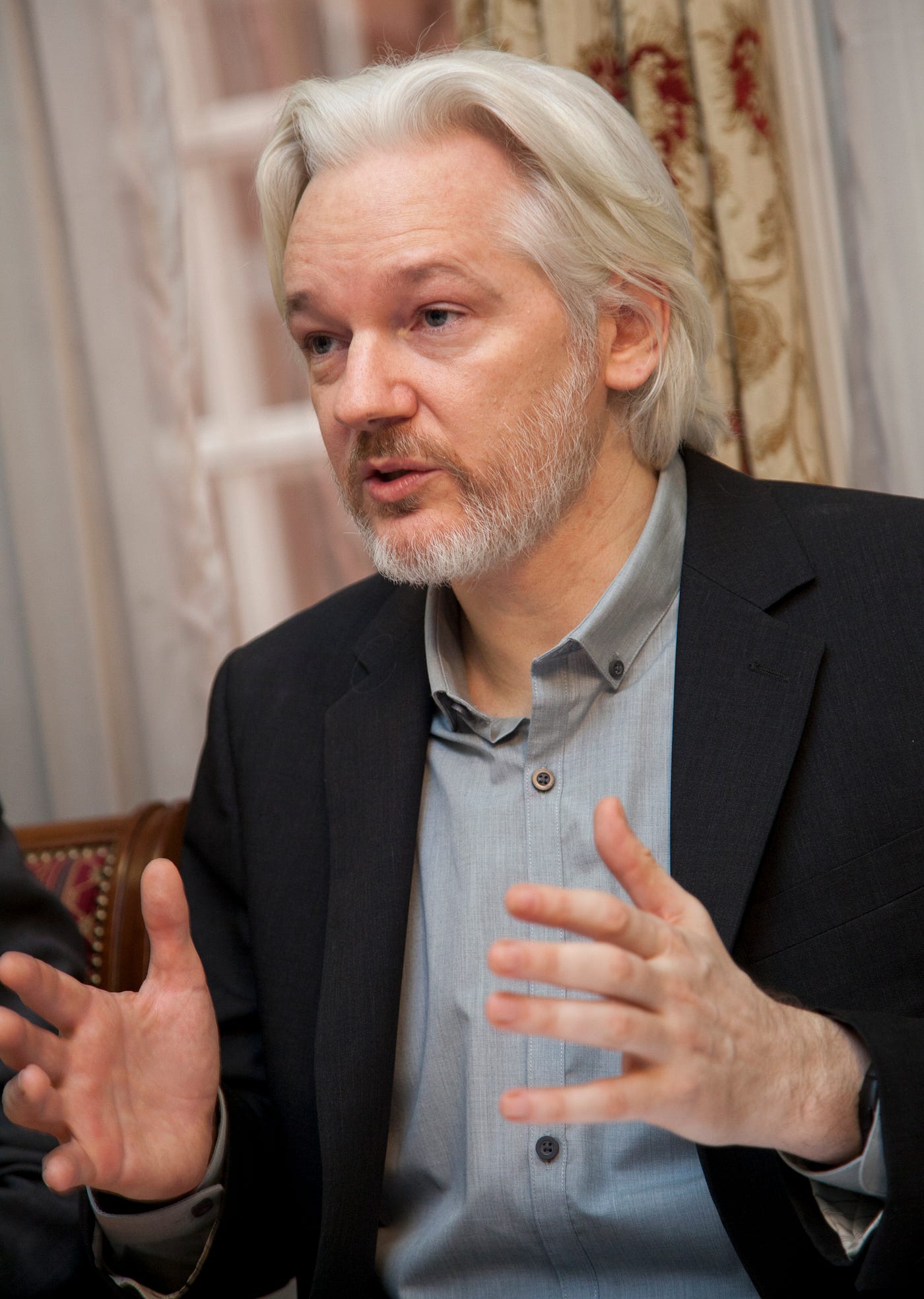
In my mind, the go-to guy on the U.S.-Israel-Iran War is James Dorsey.
I’ve been following him ever since I joined Medium in 2022. I originally discovered his own publication about Middle East and North African football on Medium. I have been paying very close attention to his comments and analyses during the ongoing Strait of Hormuz disruptions this year.
This particular CNBC interview with Dorsey is in many ways a follow up to U.S. President Trump’s exclusive CNBC interview which **aired on Thursday, July 2**.
Here’s what Dorsey said to begin **his interview with CNBC**:
“I think we’re used to President Trump creating his own world. Underlying what he said in the CNBC interview…is the notion that Iran is militarily defeated and it’s on its knees and willing to compromise and do whatever takes to end the war. I think if we look at the facts on the ground, that’s not quite correct.”
On the points about U.S. agriculture exports to Iran, this really got my attention because Iran’s market hasn’t previously been known as one that trades in agriculture with the U.S. In fact, this is very foretelling about U.S. agriculture, because the U.S. has struggled to get market access with China in recent years. China has already heavily **switched over to both Brazil and Argentina for soybeans**, for example.
Here’s what Dorsey said about the Iranian funds being used for U.S. agriculture imports:
“I don’t see how Iran could agree to a release of some funds of Iran that then the use of which is dictated by the United States, and then can only be used for purchases in the United States; that in Iran’s perception would be a violation of its sovereignty.”
I totally agree with Dorsey. The U.S. agriculture exports to Iran would be more expensive than all of the other imports options, notably Brazil, Argentina, Russia, Ukraine, Romania, Bulgaria and Australia.
There seems to be this misperception of the Trump Administration that the U.S. is holds a stick to other countries when it comes to U.S. agriculture exports. China has already given a big middle finger to the U.S. government and agribusiness sector in this regard. To think that the Iranian government will simply use the funds to purchase expensive agricultural commodities, all in a favor to a country that it was just at war with, is utterly preposterous.
War or Peace in the Middle East?
Sequences of war and peace is the pattern that runs through the Middle East. The region is rarely at peace, yet it rarely tips into the all-out regional war that observers have predicted for decades. It exists always somewhere in the middle: a state of managed instability, where conflict is contained below the threshold of catastrophe but never actually resolved. The interesting question is not why the region is unstable. It is why that instability is so stable, and who keeps it that way.
It is easy to read the region’s recurring crises as a series of policy failures: ceasefires that collapse, agreements that fray, diplomacy that falls short. But the documentary record suggests something closer to an equilibrium. Each time the region erupts, it moves toward neither peace nor all-out war, but settles back into the same condition: conflict that stays low in intensity yet never ends.
**Resolution 1701** is the clearest illustration. Adopted unanimously on 11 August 2006, it called for a cessation of hostilities, the withdrawal of Israeli forces from southern Lebanon, and the pullback of Hezbollah north of the Litani River. On paper, it was a comprehensive settlement. In practice, none of its core provisions was ever fully carried out. The parties involved disregard the international rules at stake, and that erosion of compliance has fed broader distrust of international institutions.
The UN Secretary-General has issued report after report on its “implementation,” in an unbroken sequence to 2026, each documenting the same restrictions on peacekeepers and the same gaps in the arms embargo. The Secretary-General himself has cautioned that “calm should not be mistaken for progress on the remaining objectives of resolution 1701.” That a 2006 framework could be reactivated for a 2024 ceasefire, only to break down within months, is a sign that the conflict there is wanted not for ending, but for managing.
If the Middle East cannot resolve its conflicts, part of the reason is that it has never been able to speak with one voice. Without a single dominant power capable of imposing order, alignment is not driven by who is strongest. If it were, much of the Arab world would have organized against Israel, the region’s most militarily capable state.
Instead, states align against whoever they perceive as most threatening, a calculation shaped less by capability than by proximity, intent, and ambition. This is why parts of the Sunni Arab world have quietly converged with Israel over a shared wariness of Iran, while others have not. Alliances built on perception are fluid, never settling into the stable order that might actually resolve a dispute.
The institutions that might counteract this fragmentation are too weak by design. The Arab League, the Organization of Islamic Cooperation, and the Gulf Cooperation Council issue declarations but possess no enforcement authority. No state will surrender real authority to a regional body that a rival might capture. The GCC’s own fracture during the 2017–2021 blockade of Qatar showed how readily they splinter under the rivalries they were meant to contain.
Within this configuration, one approach is used over and over: the proxy war and the asymmetric strike. Where no actor can win an open war outright, and where direct confrontation invites costs none can absorb, working through proxies allows a state to project power while preserving deniability. Iran’s network, from Hezbollah and the Houthis to militias in Iraq, is the most developed example, but the logic is general. Proxies are not merely instruments; they are actors with their own local agendas. The strategy keeps being used because it works for the parties involved.
If instability persists despite decades of diplomacy, it is worth asking who the arrangement actually serves. External powers are often lumped together as uniformly self-interested, yet their interests differ not just in scale, but in kind. The United States remains tied to the region through a structural security architecture that is Israel, the Gulf states, energy flows, and a forward military presence.
Meanwhile, the European Union (EU) and broader continent is driven by proximity and spillover: migration, terrorism, and energy shocks. Not all of them gain from disorder. Those who benefit most from instability being “managed” rather than resolved are the actors whose influence depends on the region continuing to need management.
In closing, **the rising prices of food, fertilizers and energy** provide the foundation for another series of global instability, from which the COVID-19 Pandemic had already sowed the seeds of chaos in various countries from the African continent to North America and beyond.
The same is true within the Middle East region. For some governments, a manageable external threat is politically useful: it justifies emergency powers, defense spending, and the deferral of domestic reform. For armed movements like Hezbollah, an unresolved conflict is the source of their legitimacy and their reason to stay armed. None of these actors necessarily wants war.
The conditions of war and peace keep giving influence and relevance to the parties involved. If the conflict were to disappear, it would affect not only the security landscape but the economic one: oil producers, weapons manufacturers, and the flow of money through the security sector. The Middle East’s conflicts are not waiting to be cured. At best, they can be made easier to live with, and that may be the most managed instability ever offered.
I publish a newsletter covering current affairs topics and global commodities markets in [**The Long Game Brief**] every week.
Subscribe to the newsletter to learn more about long game scenarios, as they evolve in real time and disrupt future trends, around the world.
메타데이터
- post_id
- d0d7be2287f2
- slug
- key-questions-for-the-u-s-iran-d0d7be2287f2
- url
- https://medium.com/areas-producers/key-questions-for-the-u-s-iran-d0d7be2287f2
- canonical_url
- https://medium.com/areas-producers/key-questions-for-the-u-s-iran-d0d7be2287f2
- author_url
- https://medium.com/@Monroe4PEACE
- status
- ok
- fetched_at
- 2026-07-09 00:50:33