GOD ISN’T AFRAID OF YOUR QUESTIONS
What Ancient Hebrew, Aramaic Manuscripts, the Dead Sea Scrolls, and the Book of Enoch Reveal About the Eight Questions This Generation…
GOD ISN’T AFRAID OF YOUR QUESTIONS

AUESTIONS ANSWERED IN QUMRAN CLAY POTS!
What Ancient Hebrew, Aramaic Manuscripts, the Dead Sea Scrolls, and the Book of Enoch Reveal About the Eight Questions This Generation Cannot Stop Asking — 165 Million Times a Month (REAL NUMBERS)
This is not a book of easy answers. It is a book of ancient ones.
The Ancient Answers Series • Book One
“Call unto me, and I will answer thee, and shew thee great and mighty things, which thou knowest not.” — Jeremiah 33:3 (KJV)
By Lady Janice
Please help out the ministry. When you purchase any item, use our link. The ministry gets a small credit. Does not cost you. Thank you.
Amazon Link https://amzn.to/4aLixu4
A Civilization’s Suppressed Confession
There is a number to sit with before reading a single chapter of this book. These are not religious statistics — they are a civilization’s suppressed confession, surfacing in three-word search queries because there is nowhere else to send it.
Is There a God?
Searches every single month
Does Life Have a Purpose?
Monthly searches worldwide
Why Does God Allow Suffering?
Monthly searches worldwide
Is the Bible True?
Monthly searches worldwide
Is Jesus God?
Monthly searches worldwide
What Is Sin?
Monthly searches worldwide. The world’s answers have been almost uniformly inadequate. Therapy says these questions are symptoms. Science says they are a category error. Religion at its worst says, " Stop asking and just believe. None of these responses honors the weight of what is actually being asked. This book goes to the deep places — to the ancient languages, the Dead Sea Scrolls, the Book of Enoch, and the astrophysicists whose own findings confronted them with a God they were not looking for.
Chapter One: Is There a God?
165 Million Searches a Month — And the Universe That Has Been Answering All Along
“The heavens declare the glory of God; and the firmament sheweth his handywork. Day unto day uttereth speech, and night unto night sheweth knowledge. There is no speech nor language, where their voice is not heard.” — Psalm 19:1–3 (KJV)
One hundred and sixty-five million people a month type these four words: IS THERE A GOD? They are not writing a theology paper. They are standing in the dark — in a hospital corridor, in a failed marriage, on the other side of a loss that language cannot contain — asking the one question underneath all other questions. If there is a God, then nothing is random, nothing is wasted, nothing is without meaning. If there is not, then everything — every love, every sacrifice, every act of courage or beauty — is chemistry writing equations on the wind.
What the Astrophysicists Found
In 1973, physicist Brandon Carter introduced the Anthropic Principle — the universe appears structured around the precise conditions necessary for human life. Every one of the 31 fundamental physical constants is calibrated to extraordinary precision. Change any one by even the smallest fraction, and the universe becomes incapable of producing atoms, stars, planets, or life.
The Cosmological Constant is set to one part in 1⁰¹²⁰. Physicist Paul Davies called it “The Most Mind-Boggling Quantity In All Of Physics.”
Fred Hoyle’s Conclusion
“A commonsense interpretation of the facts suggests that a superintelligence has monkeyed with physics, as well as chemistry and biology, and that there are no blind forces worth speaking about in nature.” — Sir Fred Hoyle, astrophysicist (lifelong atheist)
Hoyle coined the term “Big Bang” mockingly. He was an atheist his entire career. And yet the weight of the evidence compelled him to write what he wrote. The calculation was not a religious conviction. It was a mathematical conclusion.
Your DNA contains approximately 3.2 billion base pairs of genetic information — a code so specific it has never been duplicated in any human being who has ever lived. In one hundred and eight billion human beings across the entire history of the species, not one had your genetic signature. The probability of your specific genetic sequence arising by unguided chance is so astronomically small that no honest mathematician treats it as a realistic possibility.
EL ROI (אֵל רֳאִי) — The God who sees — the Name Hagar gave to God in the desert when she was alone, abandoned, and without hope (Genesis 16:13). The God who calibrated the universe with thirty-one physical constants also saw one woman in a desert and came to her personally. He is both vast enough to hold the cosmos and close enough to see the tear on your face.
Chapter Two: Why Does God Allow Suffering?
The Question That Has Made More Atheists Than Any Argument — and the Answer That Produces More Faith
This is the question that has shut more mouths and closed more hearts than any other: If God is good and God is powerful, why is there so much suffering in the world? Why do children get cancer? Why do the innocent get crushed and the wicked prosper? Why does prayer sometimes feel like sending letters to an empty address?
“And the LORD said unto Satan, Hast thou considered my servant Job, that there is none like him in the earth, a perfect and an upright man, one that feareth God, and escheweth evil?” — Job 1:8 (KJV)
What Job Did Not Know
Job had no knowledge of the opening scenes of his own book. He did not know that the source of his suffering was a challenge issued in the heavenly court — that a fallen being accused Job’s faithfulness of being entirely transactional. “Does Job fear God for nothing? Have you not put a hedge about him?”
Job’s suffering was the cosmic answer to a cosmic accusation. And Job, enduring it without the briefing, chose faithfulness. He won an argument in the heavenly court that he did not know was being argued. His pain had a context he could not see — a context so large that it required the architecture of the entire universe to hold it.
SHUB SHEBUTH (שָׁב שְׁבוּת)
Turned the captivity — a phrase meaning to completely restore, to reverse the fortunes, to bring back everything that was taken. Not a partial restoration. Twice as much.
God does not restore to the pre-suffering level. He restores to double. The ending of Job is not just personal redemption — it is a theological statement: the suffering was not the final word. YHWH’s restoration is the final word.
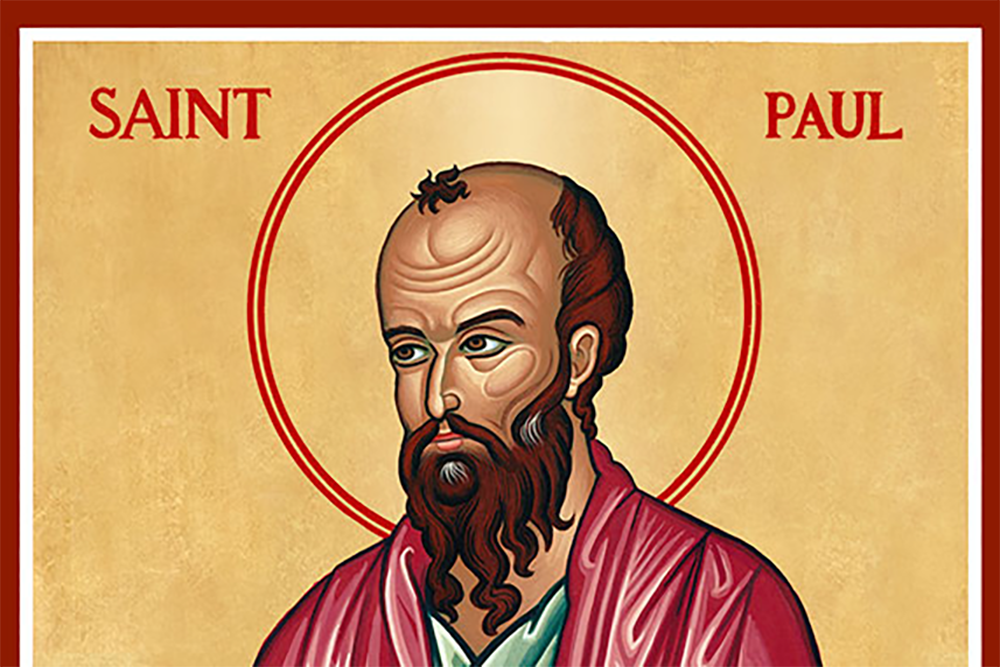
The Cosmic Dimension“For I reckon that the sufferings of this present time are not worthy to be compared with the glory which shall be revealed in us.” — Romans 8:18 (KJV). Paul wrote this after being beaten, shipwrecked three times, imprisoned, stoned, and left for dead. He is not speaking theoretically.
What Enoch Saw
The ancient text of 1 Enoch 61:1–3 describes angelic beings measuring and preparing — not reacting to suffering after the fact, but working ahead of time in preparation of the righteous for the day of affliction. The suffering does not take heaven by surprise.
RAPHA (רָפָא)
To heal — the root of YHWH Rapha, the LORD who heals. Not the LORD who prevents all wounding. He introduces Himself as the Healer in the context of the wound — after the bitter waters of Marah, not before. He is the God who heals what the pain has produced.
“And God shall wipe away all tears from their eyes; and there shall be no more death, neither sorrow, nor crying, neither shall there be any more pain: for the former things are passed away.” — Revelation 21:4 (KJV)
God Himself wipes the tears. Not an angel. Not a representative. He — personally — wipes every tear from every eye. Your suffering is not proof that God has abandoned you. It is the terrain on which He has chosen to demonstrate, for all of heaven and all of history, that love does not depend on circumstance. Job won. You will win.
Chapter Three: Is the Bible Reliable?
What 24,000 Ancient Manuscripts, the Dead Sea Scrolls, and Fulfilled Prophecy Prove
“Forever, O LORD, thy word is settled in heaven. Thy faithfulness is unto all generations: thou hast established the earth, and it abideth.” — Psalm 119:89–90 (KJV)
People who doubt the Bible’s reliability usually have not looked at the evidence for its reliability. They have heard a summary of the doubt, absorbed the cultural assumption that the Bible is a collection of myths assembled by political committees, and accepted it without examination — the same way people who lived before Galileo accepted that the sun moved around the earth without examining the data. The actual evidence is extraordinary.
Caesar’s Gallic Wars
10 manuscript copies. The earliest is 900 years after Caesar wrote it. Historians consider it reliable.
Homer’s Iliad
643 manuscripts. Earliest from 500 years after composition. Historians consider it reliable.
The New Testament
24,633 manuscript copies in Greek alone. Earliest fragments date to within decades of the original writing — within the lifetime of eyewitnesses.
If you apply the same standards of reliability to the Bible that historians apply to Caesar and Homer, you do not get doubt. You get the most reliably transmitted document in the history of the ancient world.
The Dead Sea Scrolls: The Test That Proved the Text
In 1947, a Bedouin shepherd threw a rock into a cave near the Dead Sea and heard a clay pot shatter. Inside: manuscripts sealed since approximately 70 AD. Among them was the Great Isaiah Scroll — a complete copy of Isaiah written approximately 100 BC — one thousand years older than the previously oldest known Hebrew manuscript.
When scholars compared it with the Masoretic Text compiled a thousand years later, they found the texts were virtually identical — only minor spelling differences and obvious scribal slips. The Word of God was preserved with a precision that secular scholars described as astonishing.
The Prophecy Test
The Bible makes specific, verifiable predictions about future events. The Messianic prophecies alone number over 300. Mathematical statistician Peter Stoner calculated the probability of one person fulfilling just eight of these by chance: one in 1⁰¹⁷.
To visualize 1⁰¹⁷: cover the entire state of Texas with silver dollars two feet deep. Mark one. Stir the entire pile. Blindfold a man and have him pick one. That is the probability. Jesus fulfilled not eight but over three hundred.
THEOPNEUSTOS (θεόπνευστος) — God-breathed. Scripture is the exhaled Word of God — the same creative breath that spoke galaxies into existence breathed out this text.
Chapter Four: Is Jesus Really God?
The I AM Statements, the Son of Man Prophecy, and the Historical Event That Changed Everything
Jesus of Nazareth is the only religious figure in history who claimed to be God directly, unambiguously, repeatedly — and whose claim was taken seriously enough by His contemporaries that they killed Him for it. Mohammed did not claim to be God. Buddha did not claim to be God. Confucius did not claim to be God. Jesus did. The question is not whether He said it — that is historically beyond serious dispute. The question is whether it is true.
“Jesus said unto them, Verily, verily, I say unto you, Before Abraham was, I am.” — John 8:58 (KJV)
EHYEH ASHER EHYEH (אֶהְיֶה אֲשֶׁר אֶהְיֶה) — I AM THAT I AM — the divine Name revealed to Moses at the burning bush (Exodus 3:14). The verb form is the imperfect of hayah — to be. Not I was, not I will be: I AM — the eternal present tense. Jesus claimed this Name as His own. His audience understood the claim perfectly. They took up stones to kill Him.
The Seven I AM Statements
In the Gospel of John alone, Jesus makes seven direct I AM statements — each one connecting His identity to a fundamental human need:
Bread of Life
John 6:35 — the sustaining reality the soul cannot live without, more necessary than physical food.
Light of the World
John 8:12 — not a light among many, but the light by which all other light makes sense.
The Door
John 10:9 — the only authorized point of entry into the presence and protection of God.
The Good Shepherd
John 10:11 — the one who lays down His life for the sheep. Not the hired hand who runs when the wolf comes.
The Resurrection and the Life
John 11:25 — said to Martha four days after her brother Lazarus had died and was in the tomb. And then He proved it.
The Way, the Truth, the Life
John 14:6 — the comprehensive claim: no navigation to the Father is possible by any other route.
The True Vine
John 15:1 — the source of all spiritual fruitfulness, the root system without which the branches produce nothing.
Seven. The covenant number of God. Seven I AM statements in one book, each one a comprehensive claim that no human teacher in their right mind would make unless it were true — because the alternative to it being true is not that He was a great moral teacher. The alternative is that He was a megalomaniac whose moral teachings cannot be trusted.
“And if Christ be not risen, your faith is vain; ye are yet in your sins. But now is Christ risen from the dead, and become the firstfruits of them that slept.” — 1 Corinthians 15:17, 20 (KJV)
The tomb was empty. The Jewish authorities never disputed it — instead, they paid the soldiers to say the body had been stolen. If the body were still in the tomb, the movement could have been ended in one afternoon: produce the body. They never produced it. Because it was not there. Paul wrote within twenty years of the event, while eyewitnesses were still living, and challenged his readers to go ask them.
Chapter Five: Can I Know God Personally?
The Hebrew Word That Changes Everything — and the God Who Refuses to Stay at a Distance
“And this is life eternal, that they might know thee the only true God, and Jesus Christ, whom thou hast sent.” — John 17:3 (KJV)
Eternal life is not a location. It is not a duration. It is a knowing. Jesus defines eternal life as the experiential, relational, ongoing knowledge of the Father and the Son. Not knowledge about God — knowledge of God. The difference between those two things is the difference between knowing about your spouse from a biography and knowing your spouse in the intimacy of shared life.
YADA (יָדַע)
To know — the deepest relational word in the Hebrew language. Used for the most intimate possible knowing between persons (Genesis 4:1). Used for God’s knowledge of the prophets before their birth (Jeremiah 1:5). Used for the experiential knowledge that comes from encounter, not from study.
Yada is not academic. Yada is relational. God wants to yada you. Not to be studied by you. Not to be performed for. To know you, and to be known by you, in the deepest available sense of knowing.
How Close He Wants to Get
“Behold, I stand at the door, and knock: if any man hear my voice, and open the door, I will come in to him, and will sup with him, and he with me.” — Revelation 3:20 (KJV)
Supper in the ancient Near East was not a meal. It was a covenant. To eat with someone was to pledge your fidelity, your protection, your resources to them. The God of the cosmos is standing at the door of your daily life, asking to eat with you.
PARAKLETOS (παράκλητος)
Comforter, Helper, Advocate — one called alongside. Not called from a distance. Alongside. The Holy Spirit is described as the One who comes to stand beside you, who takes up permanent residence within you — not a force or an energy but a Person with intelligence, will, emotion, and the fullness of the divine nature. You are not reaching up to a distant God. He has moved in.
RAPHAH (רָפָה) — Be Still
To let go, to cease striving, to release the grip. The same root used for healing. Being still is not passive. It is the active release of the controlling grip on your own life that makes it possible to hear the voice that has been speaking all along. The Hebrew model of prayer is not a monologue — it is dialogue. Speak honestly. Then listen.
His Face Toward You
The Qumran community sought His face — a phrase meaning the turned, present, personally engaged attention of God. Not His back — that is the face of divine absence. His face — the turned presence of the One who is personally attending to you. His eyes seeing you. His attention was fully engaged with your existence.
You can know Him. Not know about Him. Know Him — the way you know a person after years of honest conversation, after shared meals, after they have seen your worst and stayed. That is what He is offering. The door is open. He is at the table. Stop performing. Sit down. Speak honestly. And then listen.
Chapter Six: Is Christianity Too Narrow?
What John 14:6 Actually Means — and Why There Has to Be One Way
“Jesus saith unto him, I am the way, the truth, and the life: no man cometh unto the Father, but by me.” — John 14:6 (KJV)
This is the objection the twenty-first century finds most offensive about the Christian faith. In an age that prizes tolerance above almost every other value — in a cultural moment that defines inclusion as the highest virtue — the claim that there is one way, one truth, and one life seems not merely narrow but arrogant, exclusionary, dangerous. But what if it is not a politician making the claim? What if it is the One who calibrated the universe, who breathed out the scriptures, who rose from the dead in front of five hundred witnesses?
HODOS (ὁδός) — The Way
Way, road, path — but also the term the earliest Christians used for the movement itself (Acts 9:2, 19:9, 24:14). Before they were called Christians, they were called Followers of the Way.
Notice the context: Thomas has just said, “Lord, we know not whither thou goest; and how can we know the way?” This is not an exclusive theological pronouncement aimed at outsiders. It is a personal answer to a disciple’s honest question. Jesus does not say “there is only one way and you had better find it.” He says: I am it. You do not need to find a road — you need to stay with Me.
Why There Has to Be One Way
The question “Is Christianity Too Narrow?” assumes that the value of a path is its width. But the value of a path is not its width — it is its destination. A road that goes nowhere is worthless, no matter how wide it is. A road that reaches the destination is infinitely valuable, no matter how narrow.
There is one way from London to Rome because there is one Rome. The destination determines the path. There is one way to the Father not because the Father is inaccessible but because the Son went to extraordinary lengths to become the access.
The Question Behind the Objection
Most people who say Christianity is too narrow are really asking: What about my grandmother who was Buddhist and the kindest person I ever knew? What about the billions who lived and died without ever hearing the name of Jesus? These are not bad questions. They are honest questions. And they deserve honest answers.
The One Way Is a Person, Not a Religion
He is not limited to the channels of organized Christianity. He appeared to Paul on the road to Damascus without a church building being involved. He appeared to Cornelius — a Gentile Roman soldier — before Peter arrived to explain the gospel. He has always reached people through dreams, through the creation itself (Romans 1:20), through the general revelation of conscience (Romans 2:14–15).
PAS HOS AN EPIKALESĒTAI (πᾶς ὃς ἂν ἐπικαλέσηται)
Whosoever shall call — the invitation is unrestricted. No qualification of ethnicity, education, background, previous religion, or moral history. The exclusivity is in the name — Jesus — not in the demographic. The door is narrow in the sense that there is one door. It is wide in the sense that anyone can walk through it.
The Man on the Cross
The man on the cross next to Jesus had no time for theology, no opportunity for baptism, no record of good works. He turned, he asked, he received. That is the narrowness of the Way. And that narrowness is available to everyone. Stop arguing about the width of the road. Step onto it.
Chapter Seven: What Is Sin?
16.6 Million Searches a Month — The Question Nobody Can Stop Asking
메타데이터
- post_id
- d0e573b28fbf
- slug
- god-isnt-afraid-of-your-questions-d0e573b28fbf
- url
- https://medium.com/@embraceamazing777/god-isnt-afraid-of-your-questions-d0e573b28fbf
- canonical_url
- https://medium.com/@embraceamazing777/god-isnt-afraid-of-your-questions-d0e573b28fbf
- author_url
- https://medium.com/@embraceamazing777
- status
- ok
- fetched_at
- 2026-06-23 17:05:31