Life Ex-Votos for the Culture Flowing from a Spontaneous People
Ex-votos are objects or inscriptions offered to a divinity, in many cultures, as a way of giving thanks and fulfilling a promise for a…
Life Ex-Votos for the Culture Flowing from a Spontaneous People
Photo by Alan on Unsplash
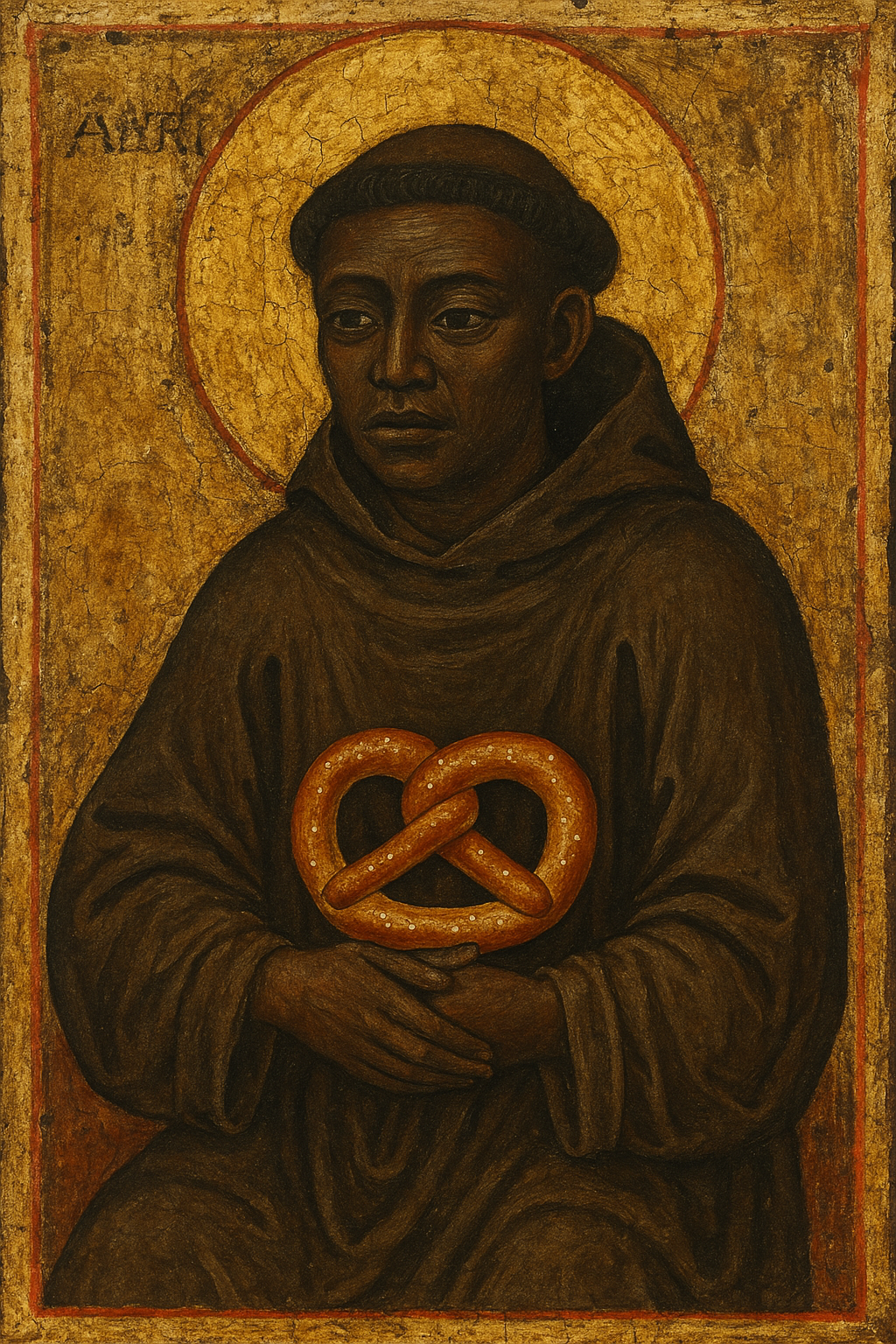
Ex-votos are objects or inscriptions offered to a divinity, in many cultures, as a way of giving thanks and fulfilling a promise for a favor received. The term comes from the Latin ex-voto suscepto — “in virtue of a promise made.”
A souvenir rests on a shelf, endlessly repeated, wrapped in cellophane and sold to tourists who believe they are buying memory. Yet the gaze that falls upon it finds no life, only the death of a moment already captured and domesticated. Craft becomes a simulacrum, stripped of the sweat of the hands that once shaped it, reduced to a copy of a copy.
Here lies the morality of the fragile: the choice of the easy object, the one that soothes instead of wounds, that decorates instead of transforms. The weak cling to what confirms their own smallness, what demands no risk, no displacement. They hold on to the souvenir as if it were a talisman, when it is only a painted stone, a polished piece of wood, deceiving desire.
Meanwhile, the sun runs down the skin, burning certainties. Sweat stings the eyes and seeps into the mouth, reminding the body it is living flesh, not a display case. Coconut water, fresh and fleeting, quenches thirst yet never tastes the same twice. Nature does not manufacture souvenirs. It offers presence and disappearance, intensity and loss.
True craft is this: the moment that cannot be stored, the heat that scorches, the thirst that returns, the clarity that blinds. The rest is mere merchandise, where the gaze dies of boredom.
Primitive Images Preserved in My Memory
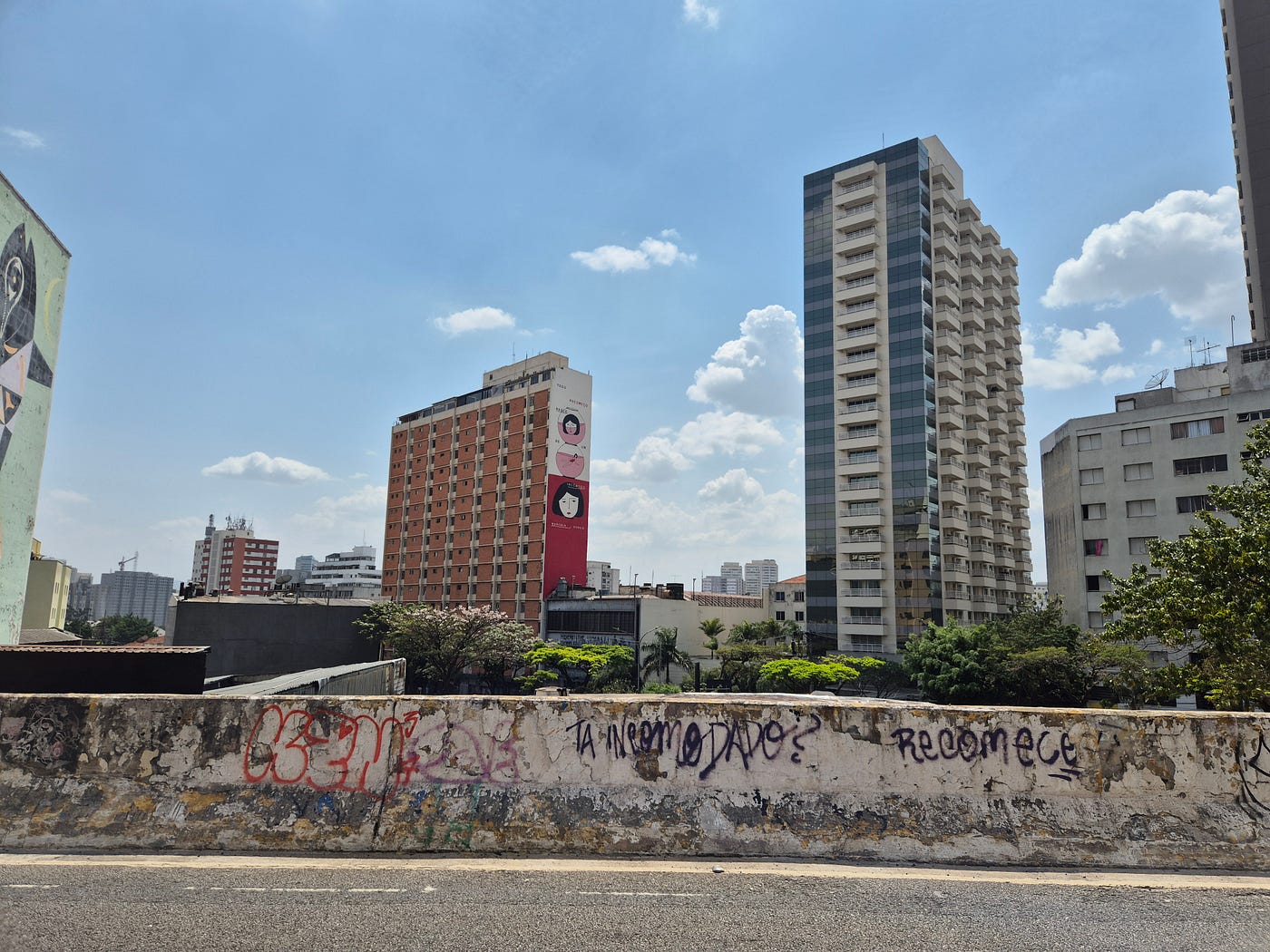
My primitivism surfaces in images of murals painted across decaying buildings in downtown São Paulo, raised like contemporary ex-votos to decorate the Elevado Costa e Silva, the Minhocão (an elevated highway). They merge graphic simplicity with symbolic power, elevating urban walls to the dignity of public altars.
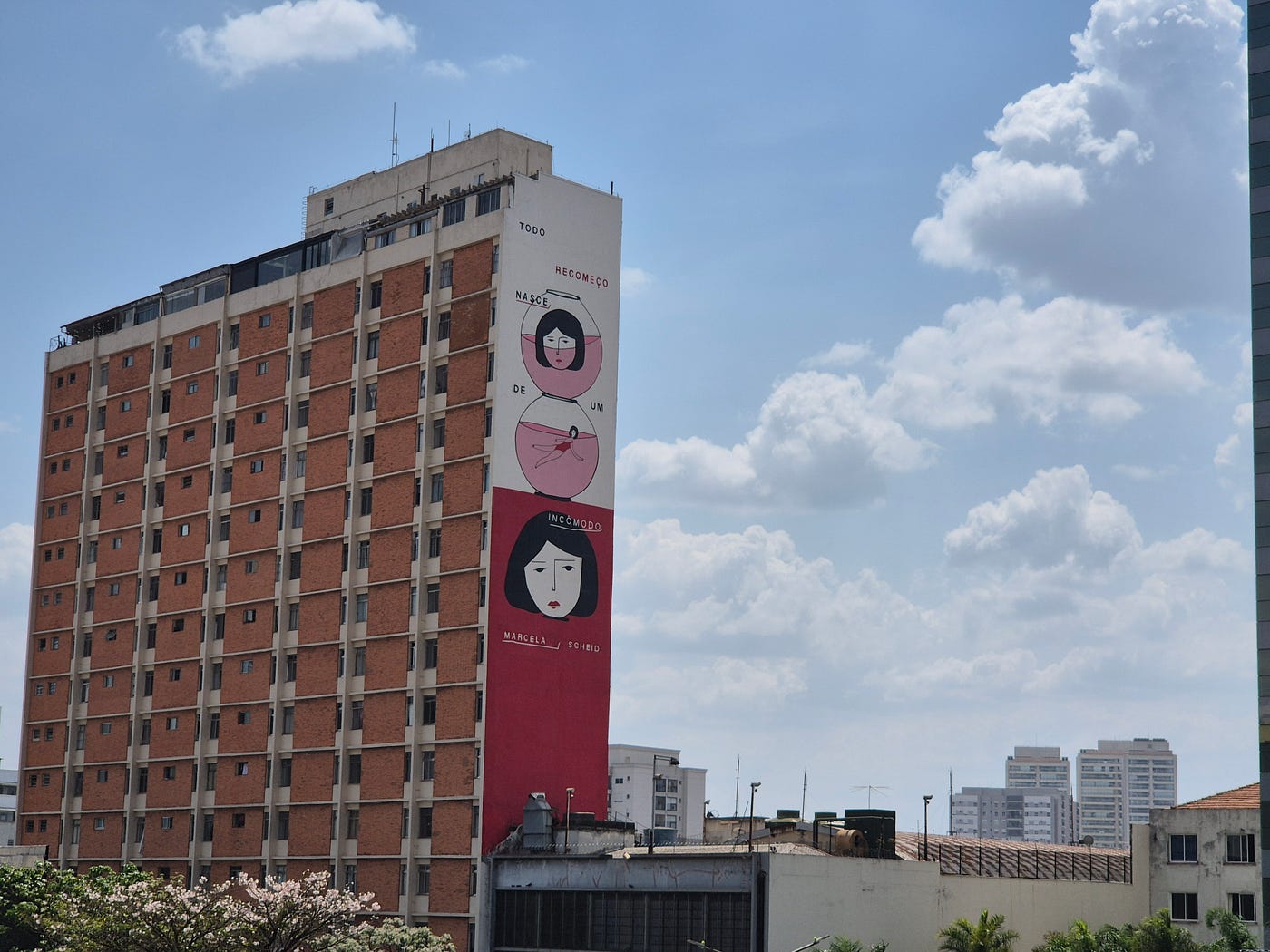
In the first mural, the phrase “Every new beginning is born from discomfort” unfolds across three panels: a closed face, a restless fish, and an unhidden stare. Discomfort becomes the raw material for renewal.
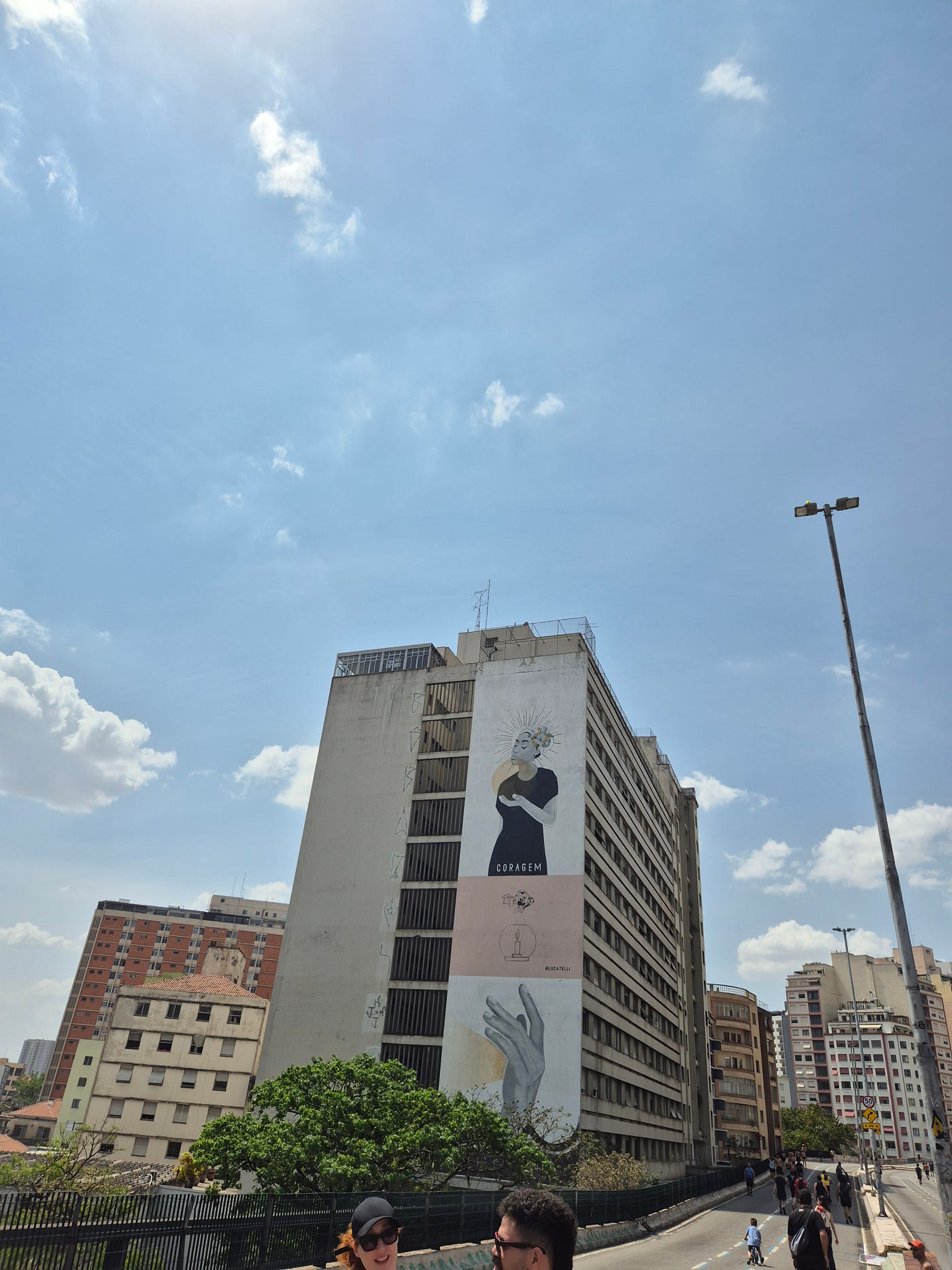
In the second, another painting celebrates courage. A female figure, eyes shut, carries a halo of luminous thorns above her head. Below, open hands extend in a nearly liturgical gesture. The city itself is summoned to witness this rite of resistance.
These buildings, scarred by age, smog, and history, turn into architectural ex-votos. They are not silent temples but monuments shouted into the sky, rising among clouds and concrete. They resist haste, erasure, and oblivion.
At the feet of Ogum Xoroquê, lord of iron and the open road, these paintings stand as visual offerings. The orixá who clears the path and defends in battle is invoked here in the language of street art, at the heart of urban traffic.
It is an act both euphoric and victorious, asking no permission to exist. Discomfort becomes strength, courage becomes liturgy, and the building itself becomes a banner. A painted prayer, a battle won by color and word.
The Final Hour of the Roosters
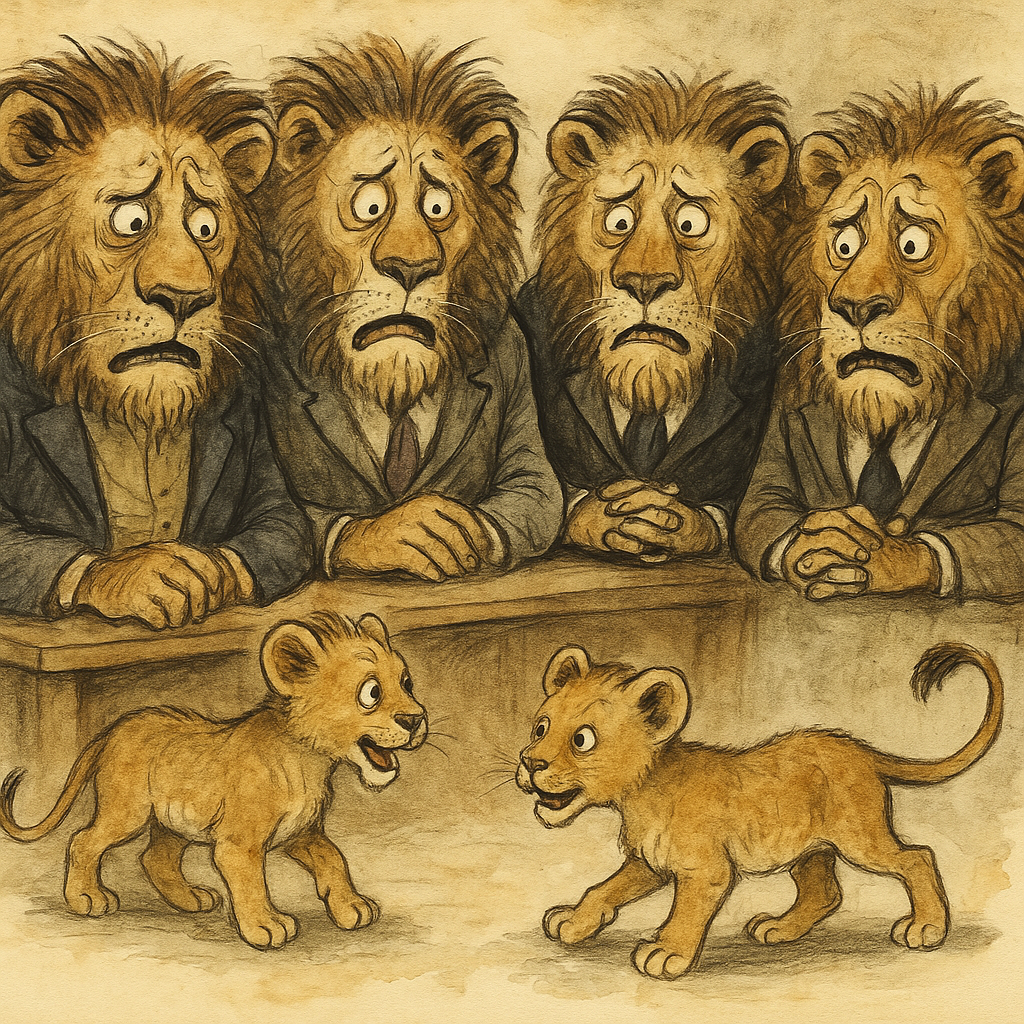
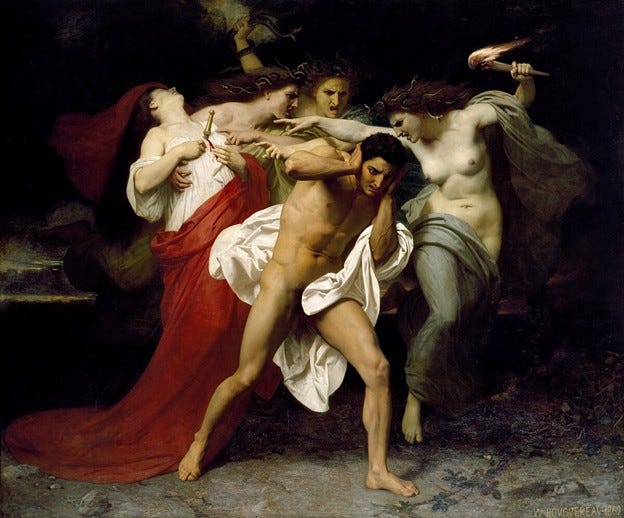
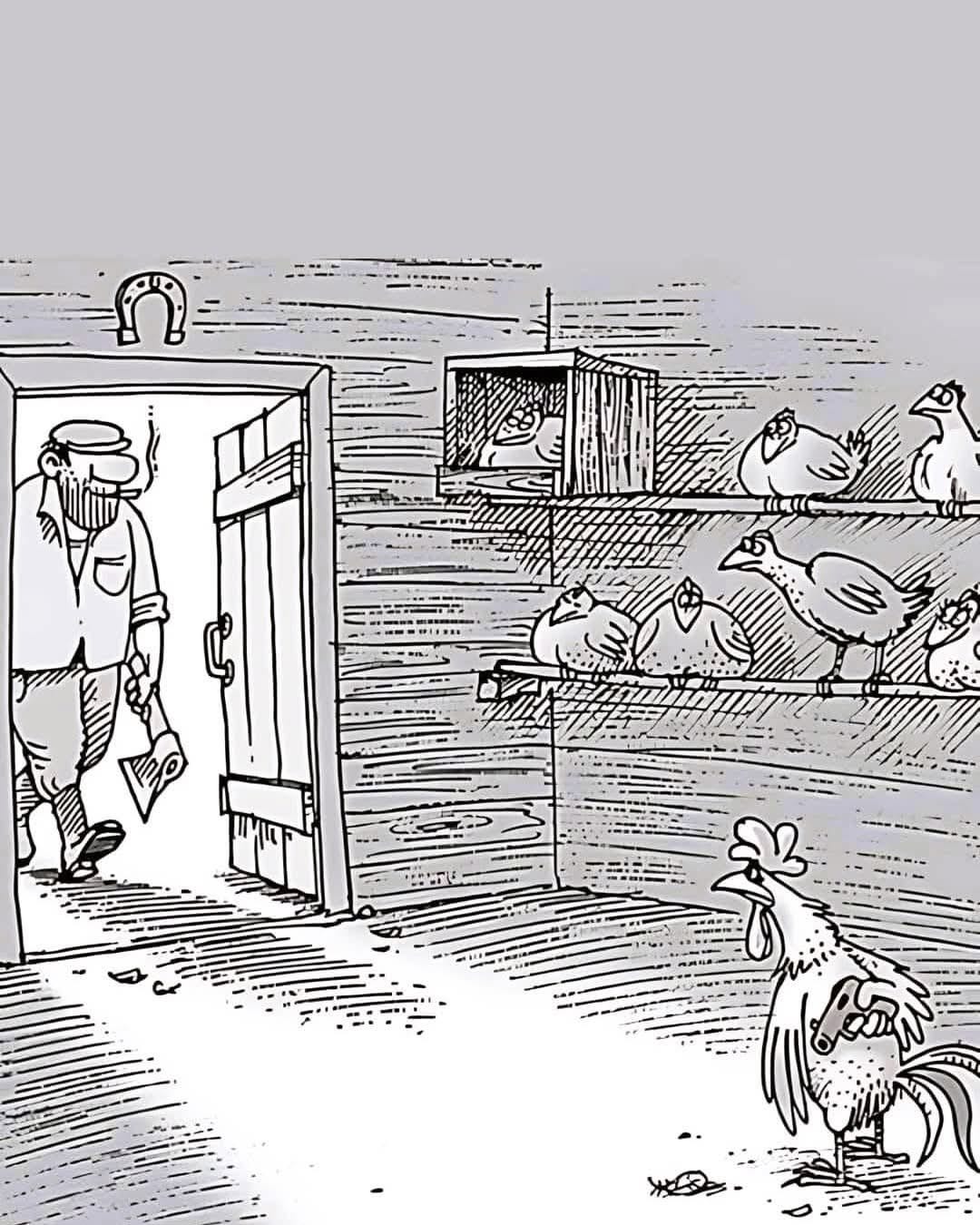
The scene drips with sarcasm in simple strokes: on one side the man steps into the coop, a hatchet hidden behind his back, symbol of the fate already written. On the other, the proud rooster holds a weapon of his own. A mirror of defiance, resistance, or perhaps naive hope for a better life.
“I will not give up, let’s see what happens” could be his thought. A small cry, yet full of dignity. He knows he stands no chance against the world that comes after the farmer.
The rough hatchet now faces a cold 7.65 pistol. The irony cuts deeper: the imbalance is no longer between man and beast, but between tradition and surprise.
The man enters with the weight of ancestral custom, convinced the ending is secure. But he does not expect the modernization of his adversary. The armed rooster is the reversal of docility, a symbol of insubordination. No longer resistance, but outright insurgency.
The image shifts from comic to cruel fable. The instrument of slaughter becomes a threat of reciprocity. The coop, once a metaphor for safe enclosure, is now the stage of an improbable duel. What was certain — the blade against the neck — suddenly unravels. And the question lingers: when the weak seize the very weapon of violence from the strong, who can still believe they know how the story ends?
Every new beginning is born from discomfort.
메타데이터
- post_id
- d0ef24eccd0f
- slug
- life-ex-votos-for-the-culture-flowing-from-a-spontaneous-people-d0ef24eccd0f
- url
- https://medium.com/@luizeduardogasparelo/life-ex-votos-for-the-culture-flowing-from-a-spontaneous-people-d0ef24eccd0f
- canonical_url
- https://medium.com/@luizeduardogasparelo/life-ex-votos-for-the-culture-flowing-from-a-spontaneous-people-d0ef24eccd0f
- author_url
- https://medium.com/@luizeduardogasparelo
- status
- ok
- fetched_at
- 2026-07-22 21:22:50