The First Human-Robot Labor War Has Begun (And It’s Not a Sci-Fi Movie)
South Korean auto workers are striking against the deployment of Boston Dynamics’ humanoid robots. Welcome to the cyberpunk reality of 2026…
The First Human-Robot Labor War Has Begun (And It’s Not a Sci-Fi Movie)
South Korean auto workers are striking against the deployment of Boston Dynamics’ humanoid robots. Welcome to the cyberpunk reality of 2026 here is why this is a wake-up call for the global workforce.
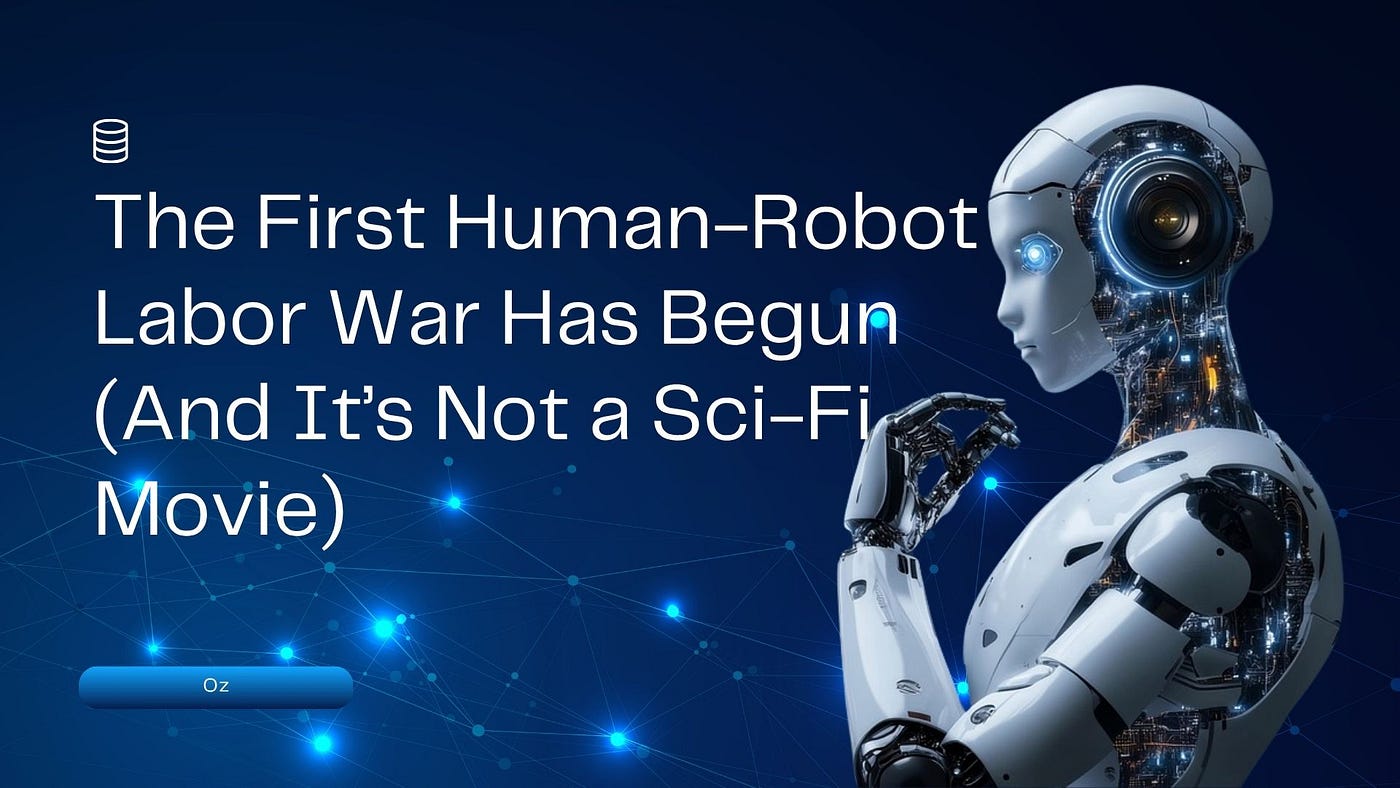
For decades, Hollywood sold us a very specific vision of the future: Terminators with glowing red eyes, rogue AI taking over defense grids, or androids dreaming of electric sheep. But the actual War Against the Machines isn’t starting with lasers or explosions.
It’s starting with picket lines, megaphones, and union demands in the industrial heartland of South Korea.
In an unprecedented turn of events, tens of thousands of workers at Hyundai Motor — the crown jewel of South Korean manufacturing — have authorized massive strikes. Their target? Not just higher wages or better healthcare, but the Atlas humanoid robots created by Boston Dynamics.
The future of labor has officially collided with silicon and steel. And the shockwaves are about to hit every industry on Earth.
The Spark: 25,000 Humanoids on the Assembly Line
To understand the panic, we have to look at the catalyst. Hyundai, which acquired Boston Dynamics a few years ago, recently unveiled a hyper-aggressive automation roadmap: deploying over 25,000 next-generation Atlas humanoid robots onto their production lines by 2028.
These aren’t the clunky, single-task robotic arms we’ve seen in car factories since the 1980s. These are fully autonomous, bipedal, AI-driven humanoids capable of dynamic movement, real-time problem solving, and spatial awareness. They don’t need bathroom breaks, they don’t form unions, and they don’t ask for hazard pay.
For Hyundai executives, this is an engineering triumph. For the Korean Metal Workers’ Union (KMWU), it’s a direct existential threat.
We will not allow a single humanoid robot to step onto the production floor without a mutual agreement between management and the workers. This is about human survival. — KMWU Declaration.
The Demographic Paradox: Why South Korea?
Why is ground zero for this sci-fi labor dispute happening in South Korea? The answer lies in a terrifying demographic collapse.
South Korea has the lowest birth rate in the world. The nation is aging rapidly, and the younger generation has zero interest in the 3D jobs: Dirty, Dangerous, and Demanding. Hyundai’s management argues that these humanoid robots aren’t here to steal jobs; they are here to fill the massive labor shortages and take on physically grueling tasks that destroy human bodies over time.
But the workers aren’t buying it. In a capitalist system, efficiency equals cost-cutting. The blue-collar workforce fears that the dangerous jobs are just the Trojan Horse. Once Atlas proves it can install a windshield flawlessly, how long until it takes over quality control, logistics, and eventually, the entire plant?
A Cyberpunk Reality Check for the Global Workforce
What is happening in Ulsan (Hyundai’s mega-factory city) is not an isolated local dispute. It is Patient Zero for the next era of human economics.
Up until now, the AI panic was largely confined to white-collar workers worrying about ChatGPT, GitHub Copilot, or Midjourney taking over copywriting, coding, and design. The blue-collar world felt relatively safe. AI can write a poem, but it can’t change a tire, the saying went.
Boston Dynamics just proved that saying wrong. Physical labor is no longer a human monopoly.
The Hyundai strike is introducing a brand new concept to modern labor laws: Algorithmic and Robotic Veto Power. Workers are demanding the right to audit, limit, and govern the implementation of AI and humanoid robotics in their workplaces.
Conclusion: The Inevitable Coexistence
The robots are not coming; they are already here. We cannot put the technological genie back in the bottle. However, the South Korean strikes highlight a critical societal need: We must build a new economic framework — perhaps involving universal basic income (UBI) or robot-taxes — before automation hollows out the working class.
The picket lines in South Korea are fighting for all of us. Because today, it’s a factory worker in Ulsan looking at an Atlas robot. Tomorrow, it might be you looking at its corporate successor.
References & Further Reading
- BBC News: South Korean Union Authorizes Strike Over Humanoid Robot Deployment— A comprehensive breakdown of the KMWU’s demands and Hyundai’s automation strategy.
- Reuters: Hyundai’s Boston Dynamics Gamble: Will Humanoids Solve Korea’s Labor Crisis?— Deep dive into the demographic collapse driving South Korea’s aggressive robotics adoption.
- Wired / TechCrunch: From Parkour to the Assembly Line: How the Atlas Robot is Redefining Blue-Collar Work — Technical analysis of the new generation of Boston Dynamics robots and their industrial applications.
- The Financial Times: The Economics of Automation: Why Unions are Demanding AI Veto Power — An economic perspective on the global implications of the Hyundai labor dispute.
메타데이터
- post_id
- d12fed6239b2
- slug
- the-first-human-robot-labor-war-has-begun-and-its-not-a-sci-fi-movie-d12fed6239b2
- url
- https://medium.com/the-tech-notes/the-first-human-robot-labor-war-has-begun-and-its-not-a-sci-fi-movie-d12fed6239b2
- canonical_url
- https://medium.com/the-tech-notes/the-first-human-robot-labor-war-has-begun-and-its-not-a-sci-fi-movie-d12fed6239b2
- author_url
- https://medium.com/@ozwizard
- status
- ok
- fetched_at
- 2026-07-09 05:53:33