DevOps for Beginners: Step-by-Step Guide to Get Started
In today’s technology-driven world, businesses are constantly searching for faster ways to build, test, deploy, and manage software…
DevOps for Beginners: Step-by-Step Guide to Get Started
In today’s technology-driven world, businesses are constantly searching for faster ways to build, test, deploy, and manage software applications. Traditional software development often involved separate teams for development and operations, which led to communication gaps, slower releases, and delays in problem resolution. As customer expectations increased and the demand for rapid software delivery became stronger, organizations needed a better way to streamline collaboration and improve efficiency. This is where DevOps course emerged as a transformative approach. DevOps is not just a tool or a single technology; it is a culture, mindset, and practice that encourages collaboration between software development teams and IT operations teams. The goal of DevOps is to shorten the software development lifecycle while delivering high-quality applications consistently. By integrating development and operations processes, companies can automate workflows, reduce errors, improve deployment speed, and achieve greater stability.
DevOps for beginners may initially appear complex because it combines multiple technologies, methodologies, and workflows. However, learning DevOps step by step makes the process easier to understand. Once you understand the fundamentals, DevOps becomes an exciting field that opens the door to numerous career opportunities in IT, cloud computing, software engineering, and system administration. This guide explains DevOps in detail for beginners and provides a clear roadmap to get started. Whether you are a student, IT professional, software developer, or someone interested in technology, this article will help you understand DevOps concepts from the ground up.
Understanding the Meaning of DevOps
The term DevOps is formed by combining two words: Development and Operations. Development refers to the process of creating software applications, while operations focus on managing infrastructure, deployment, monitoring, and system maintenance. Traditionally, these teams worked separately, often resulting in delays, conflicts, and inefficiencies. In the traditional model, developers would write code and hand it over to operations teams for deployment. Operations teams were responsible for ensuring the application worked in production environments. Because the two teams had different goals, collaboration was limited. Developers wanted to release new features quickly, while operations teams focused on stability and reducing downtime.
DevOps bridges this gap by encouraging collaboration and shared responsibility. In a DevOps environment, developers and operations teams work together throughout the software lifecycle. This collaboration improves communication, increases efficiency, and reduces deployment risks. DevOps emphasizes automation, continuous improvement, and rapid feedback. Instead of waiting for long development cycles, teams can deliver updates frequently and respond to customer feedback quickly. This makes DevOps highly valuable for organizations that want to stay competitive in a fast-changing digital landscape.
Why DevOps is Important in Modern IT
DevOps has become a critical part of modern software development because businesses require faster delivery, reliable performance, and improved customer experiences. In competitive industries, organizations must release updates quickly without compromising quality. One of the main reasons DevOps course in India is important is that it helps organizations release software faster. Traditional deployment methods could take weeks or months, while DevOps practices enable continuous integration and deployment. This means companies can launch updates regularly, fix issues faster, and improve customer satisfaction.
DevOps training also improves collaboration between teams. Instead of working in isolated departments, developers, testers, and operations engineers work together. This shared responsibility creates transparency, reduces misunderstandings, and promotes teamwork. Another important advantage of DevOps is automation. Repetitive tasks such as testing, deployment, configuration, and monitoring can be automated. Automation reduces human error, saves time, and improves reliability. Scalability is another benefit. DevOps allows organizations to manage infrastructure efficiently using cloud computing and Infrastructure as Code. Businesses can quickly scale applications based on demand without manual intervention. Security is also integrated into DevOps through DevSecOps practices. Security checks can be automated during development, ensuring vulnerabilities are detected early. Overall, DevOps provides organizations with agility, reliability, and efficiency, making it essential for modern software delivery.
The Core Principles of DevOps
To understand DevOps better, beginners should learn its core principles. These principles form the foundation of DevOps culture and practices. One key principle is collaboration. DevOps promotes teamwork between developers, operations teams, quality assurance engineers, and security professionals. Communication becomes smoother when everyone shares responsibility. Automation is another important principle. DevOps focuses on reducing manual work by automating repetitive processes. Automated testing, deployment, and infrastructure management help improve efficiency. Continuous Integration and Continuous Deployment are essential concepts in DevOps training.
Continuous Integration allows developers to merge code changes frequently into a shared repository. Continuous Deployment automates the release process so that updates reach production quickly. Monitoring and feedback are equally important. DevOps teams continuously monitor application performance and gather feedback from users. This allows organizations to identify issues early and improve products faster. Another principle is iterative improvement. DevOps encourages teams to release smaller updates frequently rather than waiting for large releases. This reduces risk and allows faster adaptation to market needs. By understanding these principles, beginners can build a strong foundation for learning DevOps tools and workflows.
The DevOps Lifecycle Explained
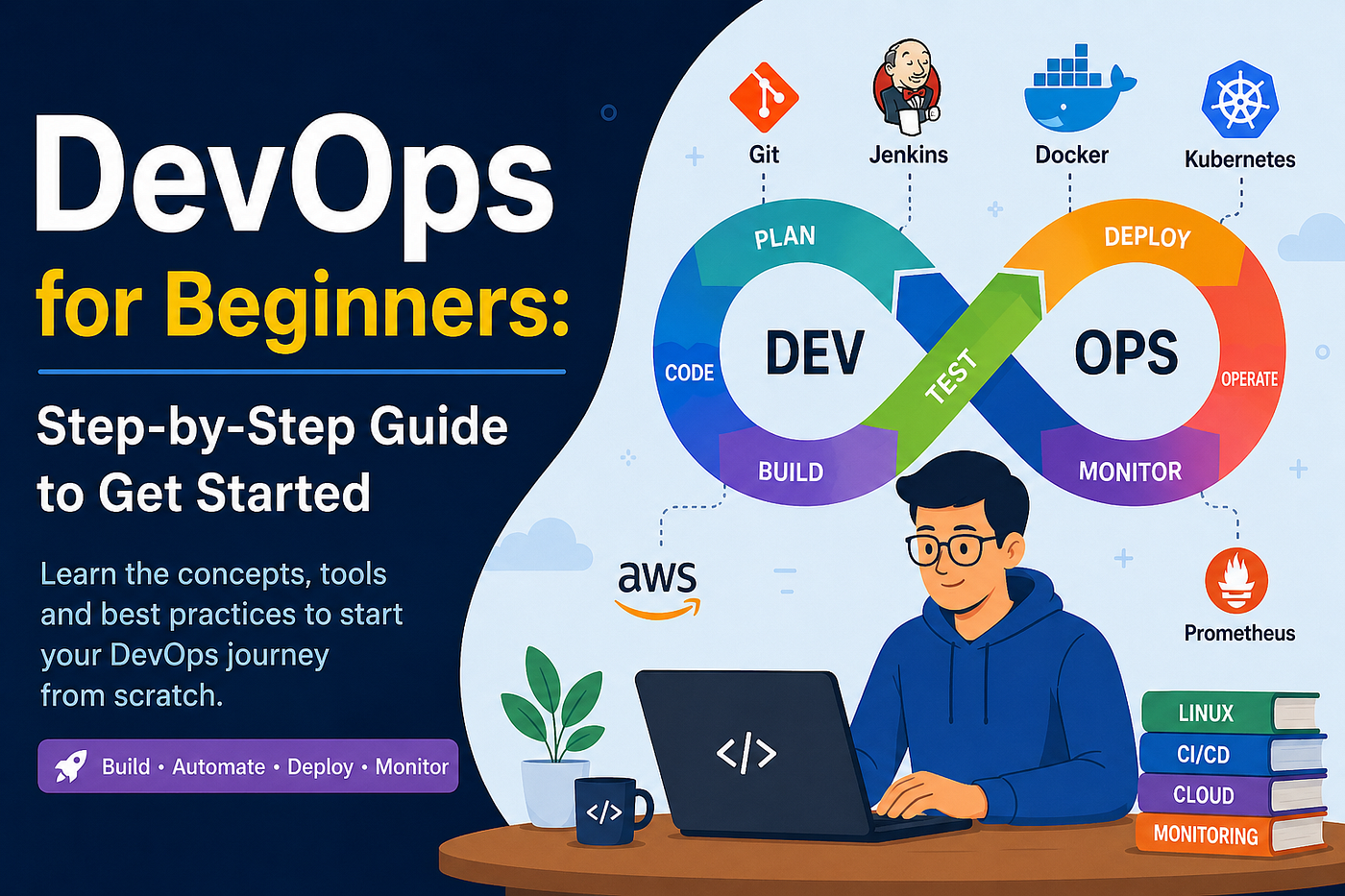
The DevOps lifecycle is a sequence of stages that guide software development from planning to monitoring. Each stage contributes to faster and more reliable software delivery. The lifecycle begins with planning. During this stage, teams identify project requirements, define goals, and create development roadmaps. Planning ensures that everyone understands the project objectives. The next stage is development. Developers write code and implement application features. Modern version control systems allow teams to collaborate effectively while tracking code changes. After development comes continuous integration. Developers merge code changes into a shared repository where automated builds and tests are executed. Continuous integration ensures that code remains stable.
Testing is a critical phase in the DevOps career path. Automated testing verifies that the application functions correctly and meets quality standards. Testing includes unit testing, integration testing, and performance testing. Deployment is the stage where applications are released to production environments. DevOps automates deployments, reducing downtime and improving consistency. Monitoring comes after deployment. Teams track application performance, server health, and user behavior. Monitoring tools provide insights into issues and performance bottlenecks. Feedback closes the loop. User feedback and monitoring data help teams improve future releases. This continuous cycle ensures ongoing improvement. Understanding the DevOps lifecycle helps beginners see how software moves from idea to production in a streamlined workflow.
Essential Skills Required to Learn DevOps
DevOps career path is a multidisciplinary field, which means beginners should learn a combination of technical and practical skills. Developing these skills step by step makes learning easier. One of the most important skills is understanding operating systems, especially Linux. Many DevOps tools and servers run on Linux environments. Learning Linux commands, file systems, permissions, and shell scripting is highly beneficial. Networking knowledge is also valuable. DevOps engineers work with servers, cloud platforms, and applications that communicate across networks. Understanding concepts such as IP addresses, DNS, firewalls, and protocols helps build a strong foundation.
Programming and scripting are important in DevOps training. Beginners do not need to become advanced programmers, but learning scripting languages like Bash or Python can help automate tasks. Version control systems are another essential skill. Git is widely used for managing source code changes and collaboration among developers. Cloud computing knowledge is increasingly important because many organizations deploy applications on cloud platforms. Familiarity with cloud services helps beginners understand modern infrastructure. Containerization and orchestration are also key skills. Technologies like Docker and Kubernetes help package and manage applications efficiently. Understanding CI/CD pipelines, monitoring tools, and infrastructure automation will further strengthen DevOps knowledge. By focusing on these skills gradually, beginners can confidently enter the DevOps field.
Conclusion
DevOps course has become an essential part of modern software development because it helps organizations improve collaboration, automate workflows, and deliver applications faster with greater reliability. For beginners, understanding DevOps may seem challenging at first due to the variety of tools, practices, and technologies involved. However, by learning step by step and focusing on foundational concepts such as Linux, version control, scripting, CI/CD, containerization, cloud computing, and monitoring, the journey becomes much easier and more structured.
DevOps is not only about tools but also about adopting a mindset of continuous improvement and teamwork. It encourages developers and operations teams to work together toward a common goal of building stable, scalable, and high-performing applications. As businesses continue to move toward automation and cloud-based infrastructure, the demand for skilled DevOps course for working professionals continues to grow rapidly across industries.
For anyone starting their DevOps journey, consistency and practical learning are the keys to success. Building projects, experimenting with tools, and gaining hands-on experience will help strengthen understanding and confidence. With patience, curiosity, and regular practice, beginners can gradually master DevOps concepts and create strong career opportunities in the ever-evolving IT industry.
메타데이터
- post_id
- d137e75e8ba5
- slug
- devops-for-beginners-step-by-step-guide-to-get-started-d137e75e8ba5
- url
- https://medium.com/@grrassolutions650/devops-for-beginners-step-by-step-guide-to-get-started-d137e75e8ba5
- canonical_url
- https://medium.com/@grrassolutions650/devops-for-beginners-step-by-step-guide-to-get-started-d137e75e8ba5
- author_url
- https://medium.com/@grrassolutions650
- status
- ok
- fetched_at
- 2026-07-16 18:50:24




