NRED Is Trying to Connect Two Worlds the Mining Industry Usually Keeps Separate
In most mining companies, geologists and field teams work in almost two separate information worlds. Geologists focus on historical…
NRED Is Trying to Connect Two Worlds the Mining Industry Usually Keeps Separate
In most mining companies, geologists and field teams work in almost two separate information worlds. Geologists focus on historical reports, sample results, maps, geophysics, and the coordinates of mineral occurrences. Operations teams work with equipment, routes, cameras, drones, and what is happening on the site right now. Both sides collect valuable information, but that information does not always return to a single system.
That, in my view, is what NRED is trying to change.
But the number 4.1 million alone does not explain why a mining company needs a platform like this. The real value appears when historical information can be connected to a specific location. Every sample has coordinates. Every historical occurrence is located somewhere. A geophysical signal forms a defined zone. A report written several decades ago describes work completed on a real piece of ground rather than simply sitting in a digital archive.
When these layers are placed on top of one another, a geologist gets more than another table. They get a map of relationships.
A result of 1,125 ppm does not mean a discovery on its own. The same is true of an isolated magnetic signal or a historical occurrence. But when several independent indicators converge in the same area, that zone naturally moves higher on the priority list.
Then a completely different stage begins. The field team goes to the property, collects new samples, conducts geophysical surveys, examines surface changes, and gradually narrows the area down to potential drill locations.
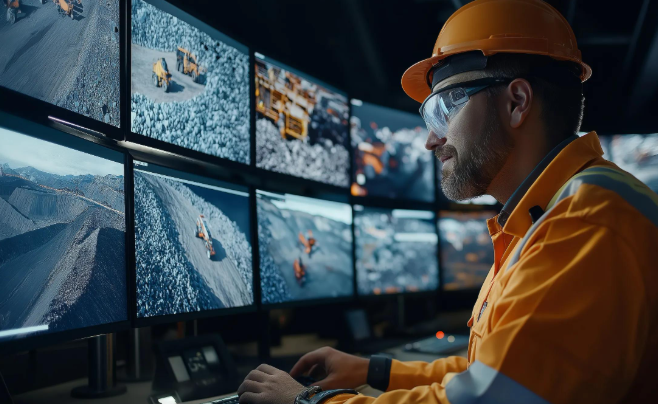
This is also where a gap often appears between the digital model and the real work. Sample results enter the geological system. Video from cameras and drones is stored separately. Information about equipment movement, work progress, safety, and site conditions may remain inside completely different tools. In the end, each team sees only its own part of the picture.
EyeX could help reduce that gap.
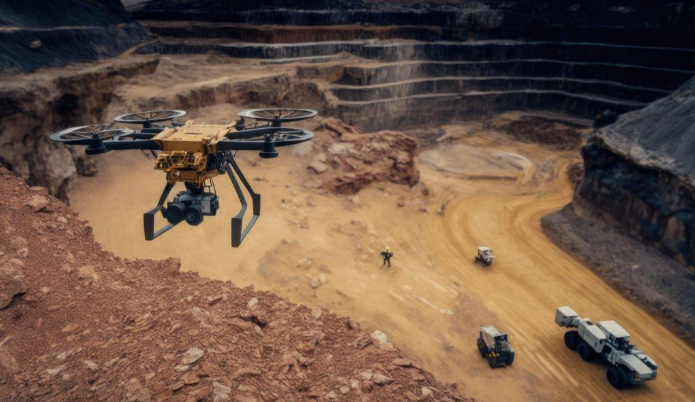
On July 11, NRED announced a 30-day mutual due diligence period for EyeX technology. The platform is designed to analyze streams from cameras, drones, and other visual sources without requiring constant manual monitoring. The company identified potential applications including equipment movement, exploration and production progress, personnel location, fuel leaks, unauthorized access, vandalism, and theft.
For me, the most interesting part is not that NRED may add another monitoring system. It is that MetalCore and EyeX potentially work with two parts of the same process.
MetalCore helps answer the question: where should the company work? EyeX could help show what happens after the team arrives on site.
Imagine a simple scenario. MetalCore identifies a promising zone because a geochemical anomaly, a historical occurrence, and a magnetic signal overlap. The field team begins work. Cameras and drones record equipment movement, site conditions, and the progress of the program.
New samples and geophysical results return to the geological model. Visual information adds context: where the team worked, how the site changed, whether there were access problems, and whether the planned work was completed. The next decision is no longer based only on an old report or one new result. The team sees a more complete picture.
In practice, this is the platform logic: data helps select the area, field work tests the original idea, and new information returns to the system to improve the next step.
In mining, these processes are still often divided among different programs, files, and teams. As a result, some context is lost, and decisions may be made more slowly than necessary.
NRED is trying to make sure that the digital map and the physical site no longer exist separately.
MetalCore is already building an information foundation with more than 4.1 million records. Wilmac shows how those records can be used to identify specific targets. EyeX could add visual monitoring of what happens during field operations.
That is how I imagine the mining company of the future. It does not keep geology in one program, video in another, and equipment data somewhere else. It tries to view the entire process as one system: from an old report and a point on a map to a drone, a field team, and the next decision.
The value may not come only from MetalCore or EyeX on their own. The most interesting part begins when geological data and the real site start working together.
메타데이터
- post_id
- d13d0956ed54
- slug
- nred-is-trying-to-connect-two-worlds-the-mining-industry-usually-keeps-separate-d13d0956ed54
- url
- https://medium.com/@everette.mckellips/nred-is-trying-to-connect-two-worlds-the-mining-industry-usually-keeps-separate-d13d0956ed54
- canonical_url
- https://medium.com/@everette.mckellips/nred-is-trying-to-connect-two-worlds-the-mining-industry-usually-keeps-separate-d13d0956ed54
- author_url
- https://medium.com/@everette.mckellips
- status
- ok
- fetched_at
- 2026-07-21 09:12:41





