The Death and Possible Rebirth of the Mid-Size Venue
By Omar Afra
The Death and Possible Rebirth of the Mid-Size Venue
By Omar Afra

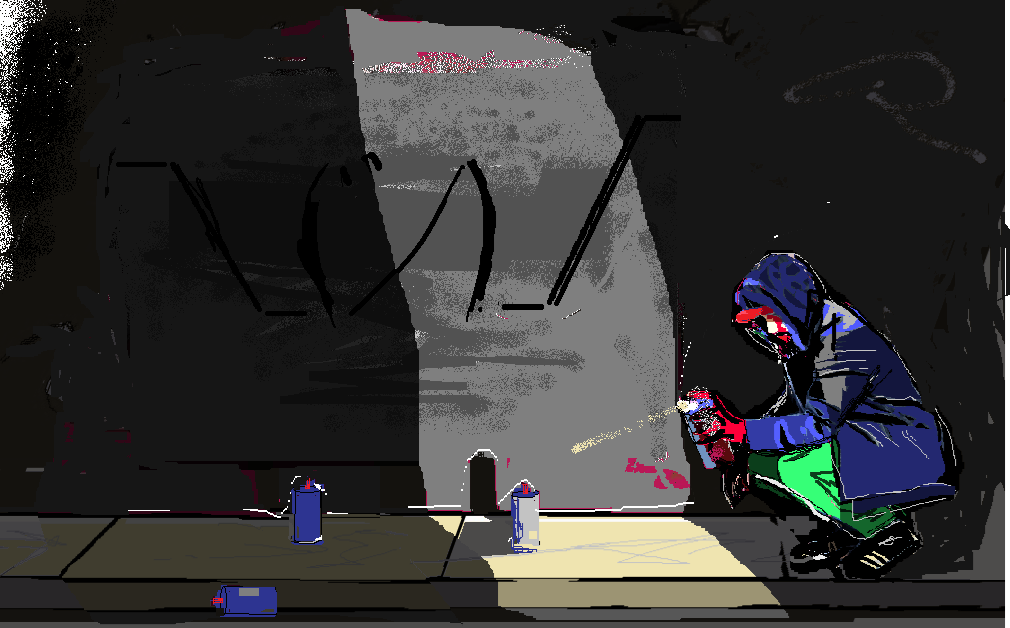
The reason amphitheaters matter so much is simple. They are not just another venue category. They are the Strait of Hormuz of the touring business: a strategic choke point in the American touring business, especially for artists who have outgrown clubs but are not yet, or not consistently, full-arena acts. The mid-size venue is not dying because people stopped caring about live music. It is dying because the economics have been reorganized around scale, leverage, and control, and the middle of the market is where those pressures hit hardest. If you have spent enough years in this business, the pattern is not mysterious. The 900-to-6,000-cap room adorned with local band stickers and shitty tags, the struggling independent amphitheater, the civic shed that used to have some local texture, the room where ascendant acts graduated from club to real draw without being swallowed by an algorithmic touring machine — those places are getting their nuts squeezed in a vice from every direction at once. Live Nation’s control over amphitheaters and ticketing has narrowed the options artists and promoters can take. Insurance, rent, staffing, security, and licensing costs keep rising. Fans still show up, but they are more price-sensitive than the industry’s PR leviathan wants to admit. The result is a market where the top end still throws off glossy headlines, the underground survives on scene loyalty and absurd labor discipline, and the middle gets chewed up. That is the real story beneath all the glib corporate happy talk and, at this point, a lot of the official industry optimism is just bullshit. There is a mountain of subtext behind the self-congratulatory statements made by Live Nation CEO Michael Rapino.
The timing on this is not some fucking abstraction. As of April 2026, the Live Nation antitrust case is in its final stretch even after the Justice Department took a mid-trial settlement and left more than 30 states and Washington, D.C. to keep going. Reuters reported that the DOJ deal would require Live Nation to give up ownership and or control tied to 13 amphitheaters and bar retaliation against venues that do not use Ticketmaster, while Live Nation framed the same arrangement more carefully as divesting 13 exclusive booking agreements while continuing to own and operate its amphitheaters. That distinction matters because it tells you exactly where the real leverage sits. If the company can preserve the venue asset while surrendering only part of the exclusivity architecture around it, it is not hard to see why so many states thought the settlement was too soft. AP reported that 32 states plus D.C. are still litigating, arguing that Live Nation and Ticketmaster still use threats, retaliation, and contractual muscle to control promotion and ticketing across the industry. This is not old news dredged up, y’all. This is live litigation over the core machinery that determines who gets access to rooms, which promoters can compete, what fans pay, and whether the middle of the market still exists as an actual market rather than a feeder system for one giant corporation.
The reason amphitheaters matter so much is simple. They are not just another venue category. They are the Strait of Hormuz of the touring business: a strategic choke point in the American touring business, especially for artists who have outgrown clubs but are not yet, or not consistently, full-arena acts. In the DOJ’s amended complaint, the government alleged that Live Nation controls more than 60% of large amphitheaters in the United States, owns, operates, or exclusively books at least 40 of the top 50 amphitheaters and 60 of the top 100, and uses that control to restrict artists’ access unless those artists also use Live Nation promotion/Ticketmaster ticketing. The complaint further alleges that artists seeking amphitheater tours are often forced to choose between working with Live Nation or giving up the tour they want. In February 2026, Judge Arun Subramanian let the large-amphitheater claims proceed to trial, alongside claims involving venue-facing primary ticketing, specifically noting that Live Nation’s growth had turned it into an “entertainment powerhouse” producing 54,000 events per year globally and tied to 394 venues worldwide as of late 2024. That is not a neutral footprint; they got the whole fucking game in a chokehold.
The ticketing side of this is just as important, because venue control without ticketing control is incomplete. The DOJ complaint alleges that Ticketmaster’s exclusive contracts cover more than 60% of ticket sales to major concert venues and more than 75% of concert ticket sales to major concert venues. It also alleges that Ticketmaster accounted for at least 70% of total face value sold at large arenas and amphitheaters in 2022 and at least 80% of the total face value associated with all concert tickets sold at major concert venues. Judge Subramanian’s February opinion captured the practical effect in plain terms: the government plausibly alleged that Live Nation had “locked up a huge portion of the supply of venues,” making it extraordinarily difficult for rivals to scale, and he noted that over 13 years AXS and SeatGeek together had won contracts at only a handful of major concert venues. In other words, the market does not look closed because smaller firms lack hustle. It looks closed because the doors are closed.
That is why the death of the mid-size venue cannot be reduced to a lazy complaint about “high prices.” High prices are part of it, but the deeper issue is structural dependency. Mid-size venues depend heavily on a reliable flow of promotable acts. Promoters depend on routes that make geographic and financial sense. Artists depend on a ladder of rooms where they can build demand without getting kneecapped on terms. Ticketing firms depend on enough open volume to improve their products and compete. When one company controls enough amphitheaters and enough of the primary ticketing layer, it does not need to win every fight in public. It just has to make the cost of going around it feel prohibitive often enough that everybody starts internalizing the limits. The DOJ complaint described this as the Live Nation “flywheel”: revenue from fans and sponsorship is used to lock up artists, that content is used to sign venues into long exclusive ticketing deals, and the cycle repeats. Once that flywheel is established, the independent room in the middle is not competing with another venue down the street. It is competing with a capitalized system that can monetize the fan three or four ways before the house lights even go down.
Meanwhile Live Nation’s own numbers make clear why it keeps expanding at precisely the scale where the middle gets hollowed out. In February 2026 the company reported $25.2 billion in 2025 revenue, $1.3 billion in operating income, 159 million fans across 55,000 shows globally, 65 million fans at operated venues, and plans for Venue Nation to host more than 70 million fans in 2026. It also said its 2025 large-venue expansion added six million fans on a run-rate basis, and that large venues opening in 2026 would add another five to seven million fans. It highlighted two new U.S. amphitheaters in the 2026 pipeline, expected venue projects with 20%+ internal rates of return, and capital expenditures of $1.1 to $1.2 billion for 2026, with as much as $850 million directed toward venue expansion and enhancement. This is not a company behaving like a passive marketplace. It is behaving like a company that understands physical venue control is still the hard asset beneath the app gloss. When a corporation that size keeps building and acquiring in the 3,000-plus-capacity range, anybody pretending not to see the implications for independent midsize operators is either unserious or on payroll.
Live Nation’s defenders always respond with the same line: demand is strong, artists choose their partners, fans are still buying tickets, and the company is merely efficient. Demand is indeed strong at the macro level. Reuters reported that at trial New York alleged Ticketmaster keeps an average of $7.58 from each ticket sold at major concert venues, while Live Nation said its take is closer to 5%. But even strong demand does not prove a healthy market. Sometimes it proves the opposite. A distorted market can still produce eye-popping grosses at the top while shrinking the viable middle. Pollstar’s 2025 year-end and deep-data reporting showed that stadium averages kept climbing, while smaller venues experienced softer ticket sales and lower average attendance. One Pollstar report found venues with capacities of 750 or lower sold an average of 278 tickets per show in Q3 2025, down from 288 the year before and 299 in 2023. Another showed 2025 average ticket prices at reported shows running 13.8% above 2024. The top of the market can absorb that. The middle often cannot. The lesson is not that fans hate live music. It is that the available consumer budget is increasingly being vacuumed upward by premium-ized blockbuster touring and fee-rich ticketing structures, leaving the mid-size room to fight over what remains.
The independent side’s own data is brutal. NIVA’s 2025 State of Live report found that 64% of independent stages were not profitable in 2024. Of that group, 42% were unprofitable but managing with limited challenges, and 22% were unprofitable and struggling to maintain their business with significant challenges. The same report found that the independent live sector still generated $153.1 billion in total economic output, contributed $86.2 billion to U.S. GDP, supported roughly 908,000 jobs, paid $51.7 billion in wages and benefits, served 183.7 million fans, produced more than 153,000 events, and drove $10.62 billion in off-site tourism spending. That is the point so many civic leaders still fail to grasp. These venues are not fragile little art jars asking for a pity subsidy. They are major local economic engines being run on margins thin enough to cut yourself on. When 64% of a sector with that footprint is unprofitable, the market is not cleansing itself efficiently. The market is malfunctioning.
Now add cost pressure. NIVA’s report explicitly identifies rising costs from artist fees to insurance to rent as a direct threat to already razor-thin margins. Reporting in 2025 on venue insurance cited Risk Strategies data showing live music venue rates rising between 7.5% and 10% nationwide in 2024 versus 2023, with similar increases forecast for 2025. That increase lands differently on a multinational promoter than it does on an independent 2,200-cap room that has to deal with one bad weather season, one liability issue, one ugly renewal, and a lender who no longer believes in romantic narratives about culture. Risk Strategies’ 2025 entertainment outlook also made the scale point plain: large, highly desirable accounts can use their size to press pricing and terms in ways small and medium operators cannot. That is what concentration looks like in practice. It is not always one giant dramatic act of exclusion. Sometimes it is simply the routine compounding advantage of size across insurance, credit, sponsorship, vendor terms, legal overhead, and weather resilience until the independent operator in the middle spends half the year solving problems the giant barely feels.
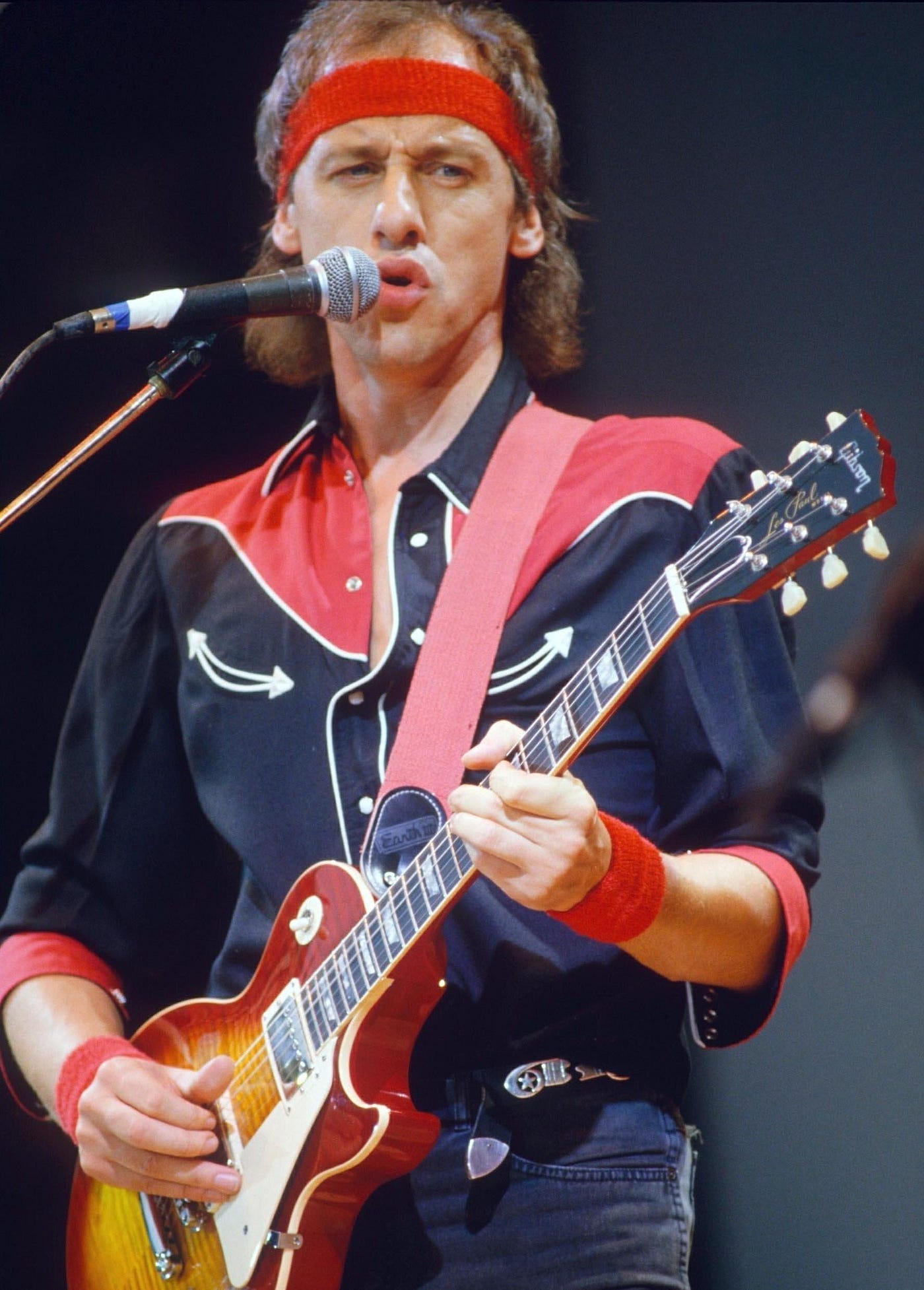
Licensing is another silent tax on the middle. A mid-size room that wants to stay legal on public performance does not get to buy one tidy music permission and call it a day. Texas’ own music-office guidance tells venues to start with ASCAP, BMI, SESAC, and for some catalogs GMR, while warning that buying music or using a streaming service is not the same thing as licensing public performance. BMI says its fees start at a little more than a dollar per day and rise based on occupancy, frequency, and the type of music use. That may sound modest in isolation, but nobody in this business drowns in one line item. They drown in a steady trickle of drippy-drops: PROs, insurance, labor, security, rent, HVAC failures, permits, alcohol compliance, municipal nonsense, merchant fees, platform fees, advertising costs, artist guarantees, and the increasingly expensive expectation that every room also function like a content studio and damn hospitality brand. The middle is where all those costs become existential because the revenue ceiling is real and the room cannot just slap a platinum package on the problem. This effects not only ascendant artists but also legacy acts that don’t sell arenas anymore but must subsist off of capacities from four to 10 thousand. Shirley Manson effectively drove that point home recently with a masterful on stage rant.
Then there is the fan side, where the industry still lies to itself. Luminate reported in June 2025 that ticket prices remained the number one barrier to festival attendance across the U.S., UK, Germany, France, and Italy. It separately found that Gen Z is spending more on live music tickets than older groups in the U.S., which is usually cited as proof of durable demand. Fine. But that is exactly why the current model is so dangerous. If your most enthusiastic younger audience is also the group carrying disproportionate spending pressure, you are not looking at an endlessly expandable consumer base. You are looking at a generation willing to stretch, until it cannot. Live Nation likes to note that 75% of its U.S. tickets are available for under $100, and it repeatedly rolls out discount campaigns like the $30 summer ticket. Those promotions are useful, but they also function as an accidental confession. You do not keep advertising controlled affordability unless you know the underlying price architecture has drifted too far for comfort. More piles of elegant hot feces arrives every time the company tries to present these tactical discounts as proof of systemic fairness. They are not evidence of Live Nation trying to make things more accessible but rather proof that fan resistance is real and the rent is too damn high.
The cultural effect of all this is easy to miss if you only read earnings calls. Mid-size venues are not just structures with bars in them. They are developmental infrastructure for both an art form and an industry. They are where local scenes turn into regional circuits, where touring acts test whether they can move up a rung, where promoters learn routing and pacing, where local crews gain reps, where weird bills can still make enough sense to happen, where an audience encounters an artist before the artist is flattened into festival branding. Once those rooms are gone or permanently weakened, the whole industry becomes more brittle. More of the calendar gets handed to safe routing, legacy acts, sponsored packages, nostalgia plays, and algorithmically legible fandom. The independent room loses bargaining power. The promoter loses flexibility and the artist loses optionality. Most importantly, the kids discover new shit. This is why the death of the middle is not some niche concern for venue nerds. It is a structural threat to how live music renews itself. The NIVA report’s data about artist showcases, local tax impact, and off-site spending only quantifies what operators already know in their bones: these rooms do far more than sell alcohol and scan QR codes.

So what would a mid-size venue rebirth actually look like, beyond the usual industry conference-panel bullshit? First, policy and dollars have to target openness, not just optics. The DOJ complaint and the current trial have already mapped the most obvious choke points: exclusive primary ticketing contracts w/ Ticketbastard, retaliation against venues that consider rival ticketers, and conditioning artist access on the use of Live Nation promotion. Any serious remedy should shorten exclusive ticketing terms, prohibit retaliation with teeth, require genuine open-ticketing options at major venues, and place hard scrutiny on exclusive amphitheater booking arrangements and acquisitions. Reuters reported that the DOJ settlement would bar retaliation and require Live Nation to open pieces of its system, but the states’ refusal to accept the deal should tell you that cosmetic repairs are not enough.
Second, artists and venues need to get more serious about cooperative structures. Not as utopian cosplay, as operating strategy. A lot of mid-size rooms are no longer saved by one heroic owner with good taste and a bad sleep schedule. They are saved by shared leverage. That can mean artist-venue cooperatives, regional buying groups for insurance and security, shared ticketing stacks, pooled sponsorship sales, common production resources, or even coordinated routing compacts among independent promoters who stop acting like isolated fiefdoms and start acting like a real counterweight. NIVA’s own insurance partnership model, which advertises discounts of up to 25% for members depending on underwriting, is a small example of the principle: scale is either going to belong only to the monopolists, or independents are going to build some of their own. Mid-size venues do not need to become tiny Live Nations. They need enough shared infrastructure that being independent no longer means paying retail on every fucking problem.
Third, ticketing has to stop being treated as a bolt-on utility and start being treated as a political and economic choice. The current model lets primary ticketing function as a control layer, not just a checkout tool. The settlement talks themselves recognized that by pushing Live Nation to provide both exclusive and non-exclusive proposals and allow some tickets to move through other primary marketplaces. But real change will require more than technical interoperability. It will require venues and artists to use open systems when they have the option, to prioritize fee transparency, to cap resale markups where legally possible, and to quit pretending that “all-in pricing” alone fixes a broken incentive structure. Mid-size rooms can win by making the purchase experience cleaner and less adversarial than the corporate default. There is still enormous value in a ticketing relationship that does not make the fan feel like a shit-rat cornered by upsells, transfer traps, dynamic fee creep, and humiliating checkout theatre.
Fourth, cities and states need to stop talking about music ecosystems only when they are marketing tourism districts. If independent live venues and promoters contribute $86.2 billion to GDP and $19.31 billion in tax revenue, then venue preservation is not charity and it is not bohemian nostalgia. It is robust economic development and should be considered as such for fuck’s sake. That means targeted property-tax relief for qualifying independent venues, public-backstop insurance pools in catastrophe-prone states, permit reform, late-night transit support, and grant programs tied to capital upgrades and life-safety compliance. It also means municipal procurement and sponsorship rules that do not quietly privilege the biggest operators every time a public-private opportunity appears. The live business is full of douchebags in Vineyard Vines golf shirts who praise music culture while designing urban policy where monopolies and venture capital can survive. To be clear, Live Nation is only part of the problem. The biggest part yet still only a part. The rest is a civic class that likes the branding halo of music but keeps treating the rooms that produce it as disposable.
The possible rebirth of the mid-size venue is still real, but only if people stop lying about what killed it. It was not killed by ‘the hidden hand of the market’, streaming, or by young people staying home to doom scroll. It was killed by consolidation, exclusivity, rising fixed costs, and a touring economy that keeps extracting margin from the middle while calling the result innovation. If the current antitrust case produces real structural openings around amphitheaters and ticketing, that helps. If artists, promoters, and venues start building cooperative muscle instead of waiting for rescue, that helps. If cities begin treating these rooms as employment and tax infrastructure instead of nightlife wallpaper, that helps. But the first step is to stop repeating corporate mythology about a healthy market. The middle of live music is in trouble because the fucking marketplace has been engineered that way. And until that is said plainly, every panel, every glossy white paper, every congratulatory earnings release about fan growth and venue expansion is just more polished cat-terds.
Omar Afra is a writer, cultural producer, and founder of Test Set. His work focuses on culture, technology, power, war, and the infrastructure beneath public life. More at testset.media/authors/omar-afra.
메타데이터
- post_id
- d14044f98568
- slug
- the-death-and-possible-rebirth-of-the-mid-size-venue-d14044f98568
- url
- https://medium.com/@omarafra/the-death-and-possible-rebirth-of-the-mid-size-venue-d14044f98568
- canonical_url
- https://medium.com/@omarafra/the-death-and-possible-rebirth-of-the-mid-size-venue-d14044f98568
- author_url
- https://medium.com/@omarafra
- status
- ok
- fetched_at
- 2026-06-24 13:29:15