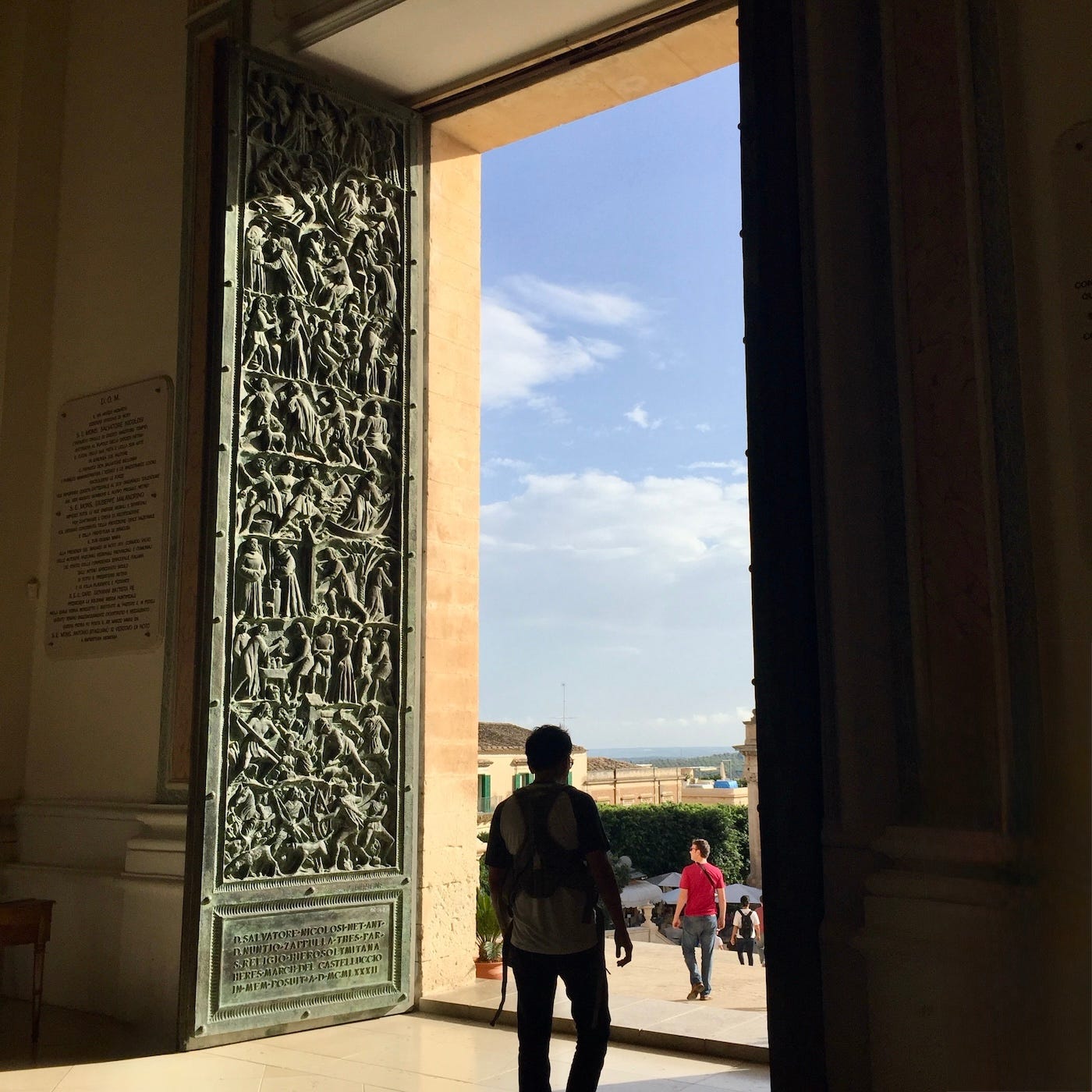
Belonging, Twice
What dual citizenship really means, and how Canada just made it easier to find out
GENEALOGY WITH A PURPOSE
Belonging, Twice
What dual citizenship really means, and how Canada just made it easier to find out
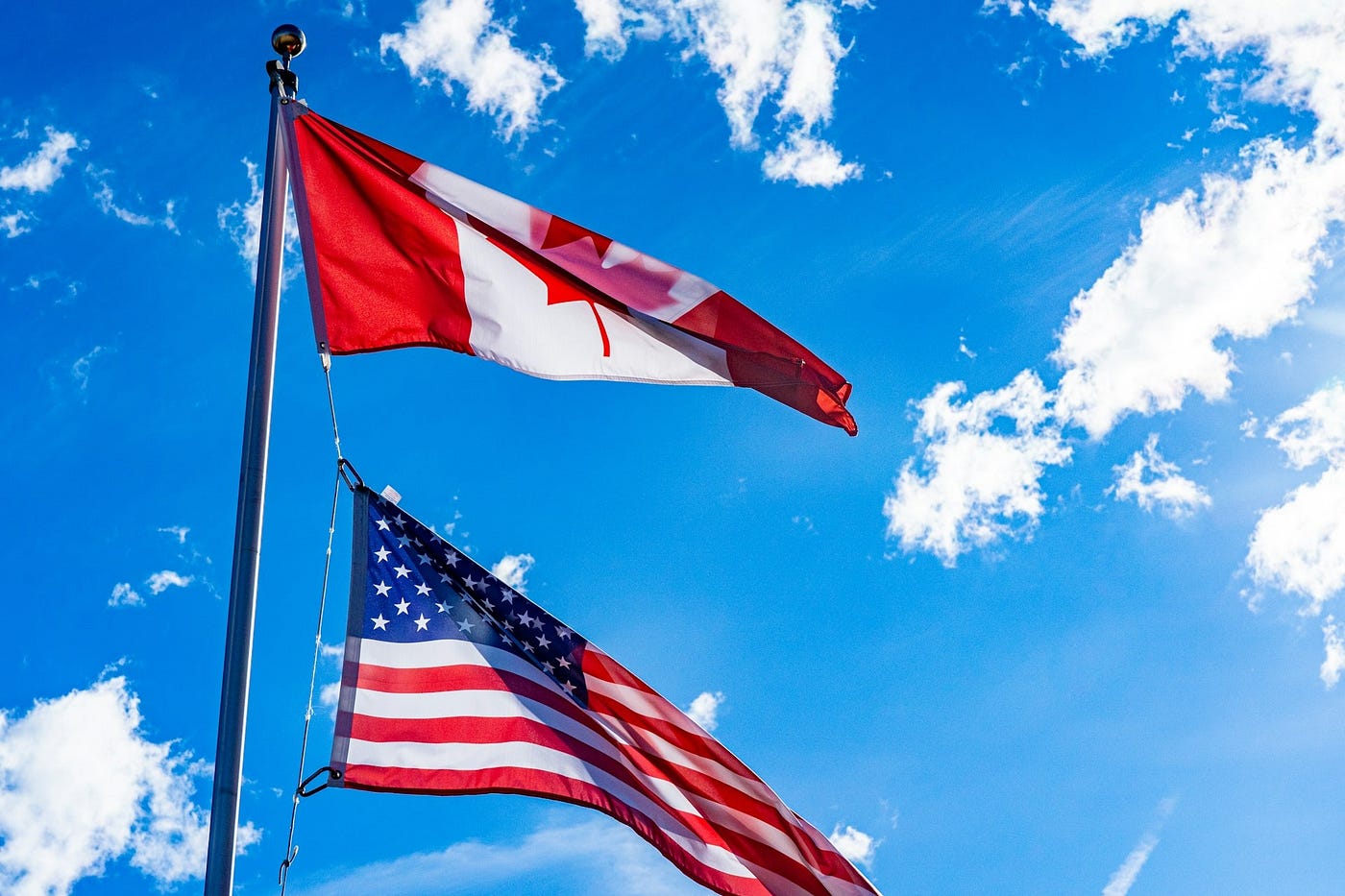
Photo by chris robert on Unsplash
Thanks to the colonial history of the United States — problematic as that history is — every American is a hyphenate of at least one other culture, whether they know it or not. But being an actual dual citizen of another country is a whole other matter. It means another nation counts you as one of their own. That you have another place to call home.
Dual citizenship might happen at birth if a parent registers you in their native country that you were not born in — or later, after they or you naturalize. There are also countries that recognize citizens by way of their ancestral lines, beyond your parents. To these countries, you are already a citizen. You just need to prove your lineage in order to be recognized. And based on a new law, thousands of US Americans are doing just that in order to become card-carrying Canadians.
Having gone through the steps to be recognized as an Italian citizen by descent, I know that it requires focus and commitment. Yet it was worth every ounce of sweat to have dual citizenship for my family, helping to provide options during uncertain times. And as a genealogist following the new Canadian law closely and helping clients pursue dual citizenship, I’m here to tell you it’s far simpler than what I went through.

Photo by Inkredo Designer on Unsplash
More than just a passport
Having a second citizenship expands your possibilities. You can vote, work, and own property in your other country — and receive benefits while you are resident there. Of course, living in your other country means you’re also paying taxes there. But in most countries outside the US, those taxes come with significant upsides, such as subsidized universal health care, more generous leave time, and other favorable laws.
Holding a second passport can also be a plus when it comes to freedom of travel. As of now, a Canadian passport ranks higher in the Henley Passport Index, while the US passport has been in steady decline over the past decade. Though for some, that bonus might be offset if their second country calls them for military duty (which neither Canada nor the US does today).
For many, holding dual citizenship is not simply a “nice to have.” It can be a matter of survival for those who belong to oppressed or discriminated populations, or those living under any form of severe duress. History has given us plenty of examples where people needed to escape perilous situations as refugees.
A second citizenship may be a lifesaver when your native country is taking away freedoms, or rounding up people who don’t fit a prescribed and “traditional” standard. Having the ability to reside and belong within the borders of a non-hostile country gives you (and your family) crucial options.
The complicated gift of being “both”

Photo by Justin Luebke on Unsplash
Where dual citizenship can become tricky is when your identity takes on the role of being “both.” Starting with language, if you aren’t a native speaker in your other country, feeling out of place is inevitable. Even when the primary languages are English, like between the US and Canada, idioms and accents will often mark you as “other.”
Language is just the beginning. Your loyalty might be questioned as well, particularly during turbulent times. Will you “stay and fight” for one country, or escape to the other one? To be clear, dual citizenship is a Yes, And — not an either/or. It doesn’t mean you “check out” of being a US American. Instead, your identity expands. If you approach dual citizenship holistically and thoughtfully, you adjust to holding that tension and opposition within your perspective.
Holding the notion of “both” can also give you a stronger footing and greater understanding when engaging with others. For example, I recently spent several weeks in Italy and encountered a lot of deep concern about what’s happening in the US, largely because Europeans are often directly impacted by US actions (or inaction). I was able to offer my perspective on where most Americans stand these days.
As a dual citizen, I was seen as more of a trusted “insider” as opposed to a random tourist with an opinion. Those exchanges inspired me to stay more current on news coming out of Europe, while looking at American news through a more globally inclusive lens.
But I don’t have Canadian roots…or do I?

Photo by Albert Stoynov on Unsplash
The new law in Canada opens the door to dual citizenship if you have a single direct ancestor who was born on what is now Canadian soil or who settled there before Canada was even a country. With very few exceptions, it doesn’t matter what year the ancestor was born, how many generations back they are from you, if any of their descendants naturalized in another country, or what country you live in today. All that matters is that you can prove — with documentation — their link to Canada and your link to them.
Since most US Americans (and others, for that matter) only know their ancestry back a few generations, they may be unaware that Canadian ancestry lurks in their family tree. Simple questions like these can reveal a potential connection to Canada:
- Deep roots in the Midwest? Many families descend from French Canadians who migrated south in the 17th and 18th centuries.
- Any New England ancestors? Perhaps they were among the nearly one million who came over from Quebec in the 1800s, during what’s known as The Great Hemorrhage.
- Cajun or Acadian heritage that might be disguised as deep southern roots? Thousands of Catholic Acadians were expelled from Nova Scotia in the mid-1700s after refusing an oath of loyalty to Britain. They scattered across the Atlantic colonies, France, and the Caribbean — with many eventually resettling in Louisiana as the ancestors of today’s Cajuns.
- A Loyalist in the family tree? Many who sided with Britain during the Revolution fled north into Canadian territory — and some of those families drifted back south, leaving the Canadian chapter behind.

Brion De La Tour, Louis, and Louis-Charles Desnos. Nouveau Mexique, Louisiane, Canada, et Nlle. Angleterre. Paris, Chez Desnos, 1766. Map. Library of Congress, Geography and Map Division.
It takes the wherewithal to find a direct path (or paths — many have more than one Canadian line) and it can be an involved process to gather the documents. Plenty of questions about names, spellings, and other details will come up. Thankfully, there is the “hive mind” to help! That includes growing online groups, such as the Canadian Citizenship Reddit group, or this one on Facebook, both of which have members numbering in the tens of thousands.
If the idea of becoming Canadian intrigues, start exploring the possibility — and the sooner the better! Since each application is scrutinized case by case, a surge of applicants is contributing to a growing backlog.
And there’s a cautionary tale from the countless Italian descendants who missed the boat, including some of my clients. They started the process only to be blindsided when the Italian law changed, severely limiting the criteria for recognizing citizens by descent. That’s unlikely to happen given the newness of the Canadian law, but in today’s unpredictable world, nothing’s a sure thing.
In the end, obtaining another citizenship is both a gift and a responsibility. It offers an opportunity to be an “ambassador” between countries where you can cross-pollinate the best of two cultures. And as I’m still discovering, it’s a journey that brings you to places in yourself you didn’t know were missing until you belonged somewhere else too.
Jacqueline Jannotta is the author of the award-winning Let’s Leave the Country! A Guide to Your Family Year Abroad. She helps people trace their roots and discover unexpected gifts in their family histories, including paths to dual citizenship they didn’t know existed. Learn more here.
Do you have an intercultural story or experience you want to share? We would love to hear it! **Contribute** to A-Culturated and join the community!
메타데이터
- post_id
- d1427d9d41b9
- slug
- belonging-twice-d1427d9d41b9
- url
- https://medium.com/a-culturated/belonging-twice-d1427d9d41b9
- canonical_url
- https://medium.com/a-culturated/belonging-twice-d1427d9d41b9
- author_url
- https://medium.com/@JacquelineJannotta
- status
- ok
- fetched_at
- 2026-06-11 11:25:07